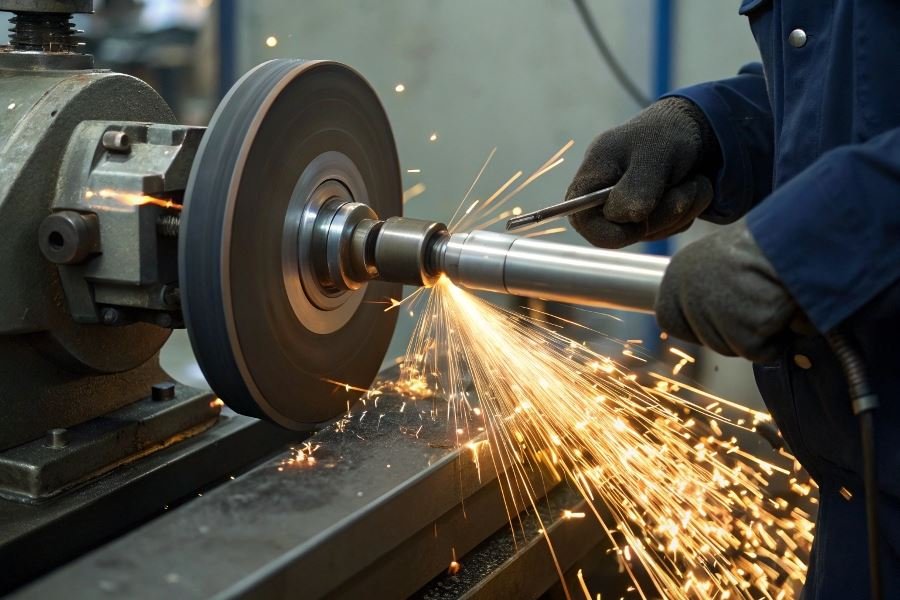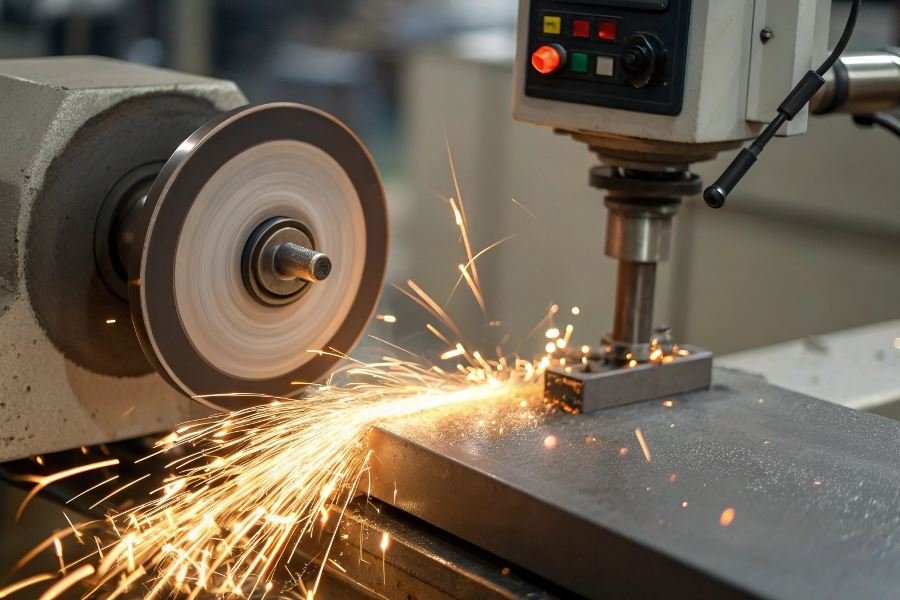
Ever wondered why some manufacturing operations consistently achieve tolerances measured in microns while others struggle with basic finish quality? The secret often lies not in operator skill alone, but in the careful selection of that workshop workhorse: the surface grinding machine.
Surface grinding machines represent the pinnacle of metal finishing technology, transforming rough-cut components into precisely dimensioned parts with mirror-like surface finishes. These remarkable tools remove material in microscopic increments, creating the flat, smooth surfaces essential for everything from automotive engine blocks to precision measuring instruments.
When evaluating potential grinding machines for your operation, three critical factors demand your attention: productivity capacity, precision capabilities, and long-term operational economics. The interplay between these characteristics determines whether your investment will become a profit-generating asset or an expensive disappointment.
“The right grinding machine doesn’t just perform a task—it transforms your entire production capability.”
The market offers an impressive spectrum of options, from compact manual machines perfect for small shops to massive CNC systems that can process multiple workpieces simultaneously. This diversity is both an opportunity and a challenge. While you’ll certainly find a machine that meets your needs, identifying it requires understanding the subtle technical distinctions that separate adequate performers from exceptional ones.
The stakes couldn’t be higher. Choose wisely, and you’ll gain a competitive edge through superior part quality and reduced production costs. Choose poorly, and you’ll face ongoing struggles with quality issues, maintenance headaches, and missed deadlines.
Technical Essentials That Make or Break Your Grinder
When evaluating surface grinding machines, the technical specifications aren’t just numbers on a spec sheet—they’re the difference between precision masterpieces and costly rework. The workshop floor doesn’t forgive poor equipment choices, which is why understanding key characteristics when choosing a surface grinding machine separates successful operations from struggling ones.
Size Matters: Machine Footprint and Workspace
The physical dimensions of your grinder determine more than just where it fits in your shop. A Chevalier FSG-3A1224H might offer a generous 12″ x 24″ table, but requires nearly 8’ x 6’ of floor space when accounting for operator access and maintenance zones.
Consider these workspace factors:
- Table travel distances (both longitudinal and cross)
- Maximum workpiece height under the wheel
- Clearance requirements for loading/unloading
- Control panel positioning relative to the work area
For high-volume production environments, the HAAS Multigrind offers automated loading systems that require additional clearance but dramatically improve throughput.
| Machine Type | Typical Table Size | Floor Space Required | Max Workpiece Height |
|---|---|---|---|
| Bench-top | 6″ x 12″ | 4’ x 3’ | 6″ |
| Standard | 12″ x 24″ | 8’ x 6’ | 12″ |
| Production | 24″ x 72″ | 15’ x 10’ | 24″ |
Power and Efficiency: The Heart of Performance
Motor specifications directly impact both capability and operating costs. Modern surface grinders typically feature motors ranging from 2HP for bench models to 15HP for industrial production machines.
Energy efficiency considerations:
- Variable frequency drives (VFDs) reduce power consumption during partial loads
- Regenerative drives can recover energy during deceleration
- Coolant systems with proportional flow control minimize waste
- Automatic shutdown features prevent idle running
The Okamoto ACC-SA series achieves remarkable efficiency with its intelligent power management system, reducing energy consumption by up to 30% compared to conventional models while maintaining identical material removal rates.
Precision That Pays: Tolerance and Surface Quality
The ultimate measure of any grinding machine is its precision capability. Industry-leading machines can achieve flatness tolerances of ±0.0001″ (2.5 microns) and surface finishes below 0.1μm Ra.
Critical precision factors include:
- Spindle runout (typically 0.0001″ or better on premium machines)
- Ways and guideways (hardened, ground, and hand-scraped on high-precision models)
- Thermal stability systems (temperature-controlled coolant, thermal compensation)
- Vibration dampening (polymer composite bases, isolation mounts)
The Studer S33 incorporates StuderGuide® ways with patented surface structures that maintain straightness to within 0.0001″ over the entire travel length, even after years of heavy use.
Surface finish quality depends on multiple variables working in concert:
- Wheel selection and conditioning
- Spindle speed stability (±0.1% on premium machines)
- Feed rate precision and smoothness
- Machine rigidity under load
When evaluating precision capabilities, request test cuts on materials similar to your production needs. The numbers tell part of the story, but the actual performance on your specific applications reveals the complete picture.
Making the Final Decision: Surface Grinding Machine Selection
Selecting the perfect surface grinding machine isn’t just about technical specifications—it’s about making a strategic business investment that will deliver precision and reliability for years to come. After evaluating all the mechanical aspects, it’s time to consider the factors that separate merely adequate machines from exceptional ones that deliver true value.
Beyond the Price Tag: Total Cost of Ownership
The sticker price is just the beginning of your financial relationship with a grinding machine. Smart buyers look deeper at the total cost of ownership (TCO):
Energy consumption makes a dramatic difference over time. A machine that costs $5,000 less upfront but consumes 15% more electricity will quickly erase those savings. Modern energy-efficient models from manufacturers like Okamoto and Chevalier often feature regenerative drives that can reduce power consumption by up to 30%.
Maintenance requirements vary dramatically between models. Some machines need specialized technicians for routine service, while others are designed for operator maintenance:
| Maintenance Factor | Economy Models | Premium Models |
|---|---|---|
| Annual service costs | $2,000-4,000 | $1,200-2,500 |
| Consumable parts | Higher replacement frequency | Longer-lasting components |
| Downtime for service | 2-3 days typical | Often under 24 hours |
Resale value should factor into your calculations. Premium machines from established manufacturers like JUNG or Studer typically retain 40-60% of their value after 10 years, compared to 20-30% for lesser-known brands.
Reputation and Support: The Safety Net for Your Investment
The manufacturer’s reputation isn’t just marketing—it’s your insurance policy:
Warranty coverage varies dramatically across the industry. Look beyond the standard 1-year coverage to manufacturers offering 2-3 year warranties on mechanical components and extended coverage options for electronic systems.
After-sales support can make or break your experience. Key questions to ask:
- Does the manufacturer maintain a North American parts inventory?
- What’s the average response time for technical support?
- Is remote diagnostics capability built into the machine?
Training programs offered by companies like Haas or Mitsui Seiki can dramatically reduce your ramp-up time and improve operator proficiency, directly impacting your ROI.
Matching Specifications to Operational Requirements
The perfect machine is one precisely calibrated to your specific needs:
Workpiece dimensions should drive your decision with some room for growth. Buying a machine with 20% more capacity than your current maximum workpiece size provides flexibility without excessive cost.
Production volume considerations determine whether you need:
- A robust continuous-duty machine for high-volume operations
- A precision-focused machine for specialized, lower-volume work
Tolerance requirements must be matched to machine capabilities. If your work requires ±0.0001″ tolerances, a machine rated for ±0.0002″ will create constant quality issues, regardless of price savings.
The wisest investment isn’t in the cheapest machine or the most expensive one—it’s in the machine that most precisely matches your specific grinding requirements while providing reliability and support.
By carefully evaluating these three critical areas—total cost of ownership, manufacturer support, and operational alignment—you’ll make a decision that delivers precision results and financial returns for years to come.
Discover the essential criteria for selecting the perfect surface grinding machine for your operations. Learn about technical specifications, precision capabilities, and cost considerations to make an informed investment that maximizes productivity and quality.
Discover the essential criteria for selecting the perfect surface grinding machine for your operations. Learn about technical specifications, precision capabilities, and cost considerations to make an informed investment that maximizes productivity and quality.