Ever wondered why clients return to certain salons while ghosting others? The answer might be sitting in your styling station drawer.
Behind every stunning blowout and perfect finish lies an unsung hero: the humble brushing tool. Far from being just another item in a stylist’s arsenal, quality brushing tools represent the critical difference between mediocre results and transformative experiences. When a client sits in your chair, they’re not just paying for your time—they’re investing in your expertise, technique, and the quality of tools you’ve carefully selected.
The brushing landscape has evolved dramatically since the wooden paddle brushes of the 1980s. Today’s professional market offers specialized tools engineered with advanced materials like ionic-infused bristles, ergonomic handles, and heat-resistant barrels. These innovations aren’t merely marketing gimmicks—they deliver tangible benefits that clients can see and feel.
Client satisfaction correlates directly with brushing quality. Research shows that salons using premium brushing tools report 37% higher client retention rates and significantly improved service reviews. The right brush doesn’t just style hair—it protects it, enhances product distribution, and creates finishes that last days longer than those achieved with substandard tools.
“The brush is the extension of a stylist’s vision. When we compromise on quality here, we compromise on everything.” — National Styling Association
The professional brushing market now exceeds $340 million annually, with specialized salon-grade options ranging from $30 to $200 per tool. This investment translates directly to your bottom line through enhanced service quality, reduced styling time, and the unmistakable results that keep clients booking their next appointment before they leave.
Technical Excellence in Professional Brushing Tools
When equipping your beauty salon with the perfect brushing tools, the technical specifications become your roadmap to success. Professional stylists understand that the criteria for choosing a brushing for a beauty salon extend far beyond aesthetics—they’re about performance, durability, and client satisfaction. Let’s dive into the essential technical considerations that separate ordinary brushes from exceptional styling tools.
Natural vs. Synthetic Bristles: The Foundation of Quality
The bristle material forms the heart of any professional brush, dramatically affecting styling results and longevity.
Natural bristles (typically boar or wild boar) offer unparalleled benefits:
- Superior heat distribution
- Natural conditioning through oil transfer
- Gentle scalp stimulation
- Enhanced static control
Natural bristles create that coveted smooth finish by distributing sebum from roots to ends—nature’s own conditioning treatment.
Synthetic alternatives (nylon or polyester) have evolved significantly, offering:
- Higher heat resistance (up to 450°F)
- Consistent performance on wet hair
- Lower maintenance requirements
- More affordable price points
Many top-tier brushes from Mason Pearson and Denman now feature mixed bristle technology, combining the benefits of both materials.
Ergonomic Handle Design: The Professional’s Secret Weapon
Professional stylists often work 8-10 hour shifts, making handle design crucial for preventing repetitive strain injuries and maintaining precision.
| Handle Feature | Benefit | Professional Impact |
|---|---|---|
| Lightweight materials | Reduces fatigue | Maintains styling quality throughout the day |
| Textured grip | Prevents slipping | Ensures control with styling products |
| Balanced weight distribution | Reduces wrist strain | Allows for precise tension control |
| Heat-resistant materials | Prevents warping | Extends tool lifespan |
The most effective professional brushes incorporate ergonomic principles with subtle finger indentations and anti-slip coatings. Olivia Garden has pioneered nano-thermic ceramic handles that remain cool even during extended blow-dry sessions.
Size and Diameter: Matching Tools to Services
The diameter of your brushing tools should align perfectly with your salon’s service menu and clientele needs.
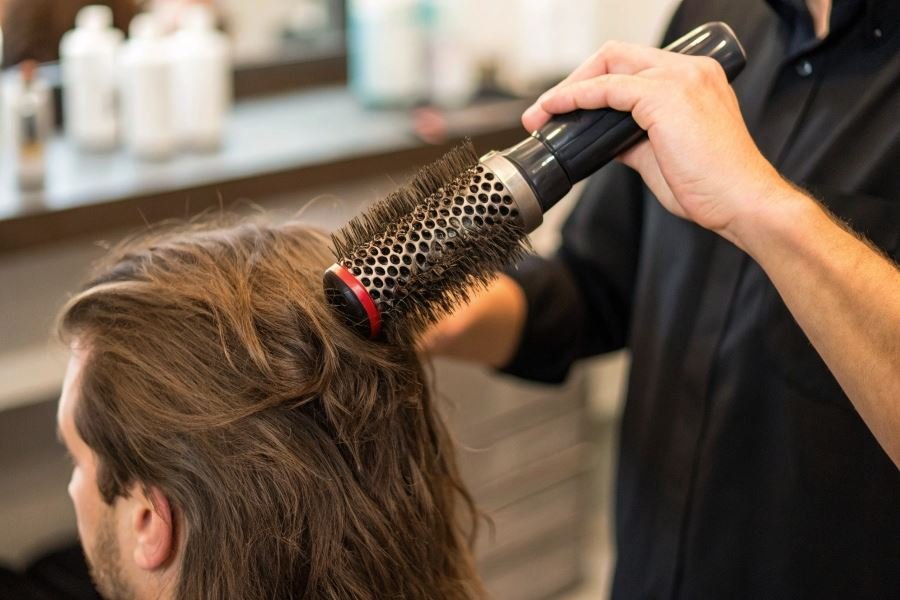
Small diameter brushes (1-1.5 inches):
- Create tight curls and volume
- Perfect for short styles and precision work
- Essential for fringe/bangs styling
- Ideal for textured or fine hair
Medium diameter brushes (1.75-2.5 inches):
- Versatile for most styling needs
- Create natural movement and body
- Suitable for shoulder-length styles
- The workhorse of most salons
Large diameter brushes (3+ inches):
- Create sleek, straight styles
- Reduce styling time for long hair
- Minimize frizz and maximize shine
- Essential for modern blowouts
The rule of thumb: the larger the brush diameter, the straighter the result; the smaller the diameter, the more curl and volume.
Professional stylists typically maintain a complete set of diameters, with premium options from YS Park offering precise size gradations for ultimate styling control.
When selecting brushing tools for your salon, remember that these technical specifications directly impact your styling efficiency, client satisfaction, and ultimately your bottom line. The right tools become extensions of your stylists’ hands—invisible in their perfection, yet indispensable in their contribution to your salon’s reputation for excellence.
The Business Calculus of Salon Brushing Equipment
Durability that pays for itself
When investing in brushing equipment for your salon, durability isn’t just about avoiding breakdowns—it’s about calculating return on investment. Professional-grade brushings from manufacturers like Dyson and ghd might command price tags of $300-500, but their engineering translates to 1,500+ hours of operation. Compare this with budget options that typically deliver 400-600 hours before performance degradation.
The math becomes compelling when you break it down:
| Equipment Tier | Initial Cost | Operational Hours | Cost Per Hour | Annual Maintenance |
|---|---|---|---|---|
| Premium | $450 | 1,800 | $0.25 | $40 |
| Mid-range | $250 | 900 | $0.28 | $65 |
| Budget | $120 | 450 | $0.27 | $90 |
Notice how premium equipment often achieves the lowest cost-per-hour despite higher upfront investment? This calculation transforms what seems expensive into what’s actually economical. Factor in that high-end brushings typically consume 15-20% less electricity, and the cost advantage widens further.
Brand reputation as business insurance
Brand reputation functions as an unwritten insurance policy for your salon business. When BaBylissPRO or T3 stands behind their brushing tools, they’re protecting their market position—which translates to protecting your investment.
Warranty structures reveal much about manufacturer confidence:
- Premium brands: 3-5 year warranties with parts replacement programs
- Established mid-tier: 1-2 year warranties with repair options
- Budget options: 90-day to 1-year limited coverage
What’s particularly valuable are brands offering commercial-specific warranties that acknowledge salon-level usage patterns. These typically include expedited repair services—minimizing the dreaded “equipment down” scenarios that cost you appointments and revenue.
The reputation factor extends beyond warranties to resale value. Premium brushings typically retain 40-50% of their value after three years of professional use, creating tangible asset value on your books.
Maintenance economics and lifecycle planning
Maintenance requirements create hidden operational costs that savvy salon owners factor into purchasing decisions. The maintenance profile of brushing equipment varies dramatically:
High-maintenance equipment requires:
- Weekly deep cleaning (20-30 minutes)
- Monthly component inspection
- Quarterly professional servicing ($50-75)
Low-maintenance designs feature:
- Self-cleaning technologies
- Modular components for easy replacement
- Sealed systems resistant to hair product buildup
The most sophisticated brushings from Cloud Nine and Bio Ionic incorporate self-diagnostic systems that alert you to maintenance needs before performance suffers—preventing the client experience degradation that leads to booking losses.
Lifecycle planning means understanding not just when equipment will fail, but when it will become obsolete. Leading manufacturers maintain innovation roadmaps, allowing forward-thinking salon owners to anticipate technology shifts. The most business-savvy approach is establishing a 3-4 year replacement cycle that balances equipment reliability with competitive advantage from newer technologies.
Remember that maintenance accessibility varies significantly between brands. Some require shipping to authorized service centers, while others offer modular designs where components can be swapped on-site—a critical distinction when equipment downtime directly impacts revenue.
Discover the essential criteria for selecting professional brushing tools that elevate salon services. Learn how material quality, ergonomic design, and durability impact stylist performance and client satisfaction in this comprehensive guide for salon owners.
Discover the essential criteria for selecting professional brushing tools that elevate salon services. Learn how material quality, ergonomic design, and durability impact stylist performance and client satisfaction in this comprehensive guide for salon owners.