Ever watched a commercial cleaning team transform a post-event convention hall from disaster zone to pristine space in mere hours? That’s not just skill—it’s the power of professional-grade equipment at work.
Professional cleaning equipment represents the specialized machinery, tools, and supplies designed specifically for commercial and industrial cleaning applications. Unlike consumer-grade products found in home closets, these workhorses are engineered for performance, durability, and efficiency in demanding environments.
The evolution of commercial cleaning technology tells a fascinating story of innovation. What began as simple mechanical sweepers in the early 1900s has transformed into sophisticated systems incorporating robotics, eco-friendly chemistry, and smart technology. The introduction of the first commercial vacuum cleaners in the 1910s revolutionized the industry, while the development of high-pressure water systems in the 1950s created new possibilities for deep cleaning.
Today’s professional cleaning equipment market exceeds $23 billion globally, with growth driven by heightened hygiene awareness, labor shortages, and sustainability demands. The market encompasses everything from industrial vacuum systems and floor scrubbers to specialized sanitizing equipment and robotic cleaners.
“The difference between consumer and professional equipment isn’t just about power—it’s about design philosophy. Professional equipment is built assuming it will be used for hours daily under challenging conditions.”
The most significant recent shift has been toward intelligent cleaning solutions that optimize resources, track performance metrics, and reduce environmental impact while delivering superior results.
What Makes Professional Cleaning Equipment Stand Out
Built to Last, Not Just to Clean
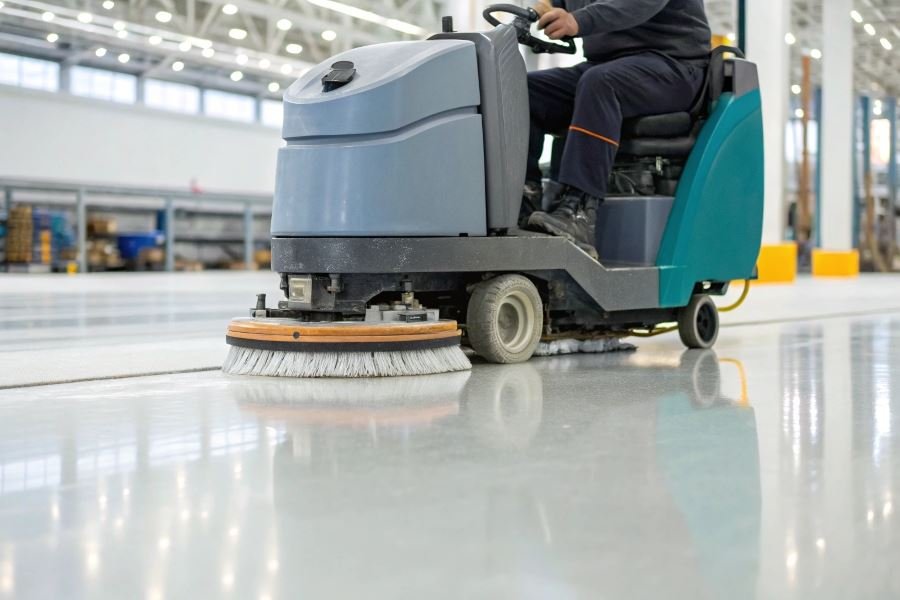
Professional cleaning equipment represents a significant investment for businesses that demand consistent performance day after day. The durability of these machines stems from industrial-grade materials—stainless steel frames, reinforced polymer housings, and commercial-rated motors designed for thousands of operational hours. Unlike consumer models, professional equipment undergoes rigorous testing under extreme conditions. Take the Kärcher B 250 R ride-on scrubber, which features a die-cast aluminum chassis that withstands years of daily use across warehouse environments where consumer-grade alternatives would fail within months.
The key characteristics of professional cleaning equipment extend beyond mere functionality to encompass longevity, efficiency, and operator-centered design. This trifecta of qualities separates true commercial-grade machines from their residential counterparts. Build quality manifests in details like sealed bearings, reinforced connection points, and modular components that facilitate maintenance without requiring complete replacement.
Performance That Transforms Efficiency
Performance metrics in professional cleaning equipment aren’t just marketing claims—they’re measurable standards that directly impact operational costs. Consider these critical measurements:
| Performance Metric | Consumer Equipment | Professional Equipment |
|---|---|---|
| Cleaning Path Width | 12-18 inches | 20-36+ inches |
| Solution Tank Capacity | 0.5-1 gallon | 5-30+ gallons |
| Productivity Rate | 2,000-4,000 sq ft/hr | 10,000-30,000+ sq ft/hr |
| Motor Life | 500-1,000 hours | 3,000-10,000+ hours |
The Tennant T500e walk-behind scrubber demonstrates this efficiency gap with its 70% water usage reduction compared to traditional methods while maintaining superior cleaning results. Professional equipment often incorporates smart technology that optimizes resource consumption—detergent dispensing systems that adjust automatically to floor conditions, vacuum motors that modulate power based on debris detection, and water flow controls that prevent waste.
Designed for the Human Element
Ergonomic considerations might seem secondary to cleaning power, but they directly influence productivity and workforce retention. Professional equipment designers understand that operator comfort translates to consistent performance over extended periods.
The most sophisticated professional cleaning machines feature:
- Adjustable control interfaces positioned at natural hand heights
- Vibration dampening systems that reduce operator fatigue
- Intuitive control layouts requiring minimal training
- Weight distribution engineering that minimizes physical strain
The Nilfisk SC6500 ride-on scrubber exemplifies this human-centered approach with its adjustable steering column, suspension seat with lumbar support, and one-touch control system that allows operators to manage complex functions without excessive hand movements or awkward positioning.
Integration of Smart Technology
Modern professional cleaning equipment increasingly incorporates IoT capabilities and data-driven optimization. Fleet management systems from Diversey allow facility managers to track equipment usage patterns, schedule preventive maintenance based on actual run time rather than calendar dates, and identify opportunities for route optimization. These intelligent systems transform cleaning from a reactive necessity to a proactive, measurable business process with clear ROI metrics.
The distinction between consumer and professional cleaning equipment isn’t merely about price—it’s about engineered purpose, operational longevity, and the recognition that cleaning efficiency directly impacts business outcomes.
Advanced Features That Define Professional Cleaning Equipment
Smart technology transforms cleaning operations
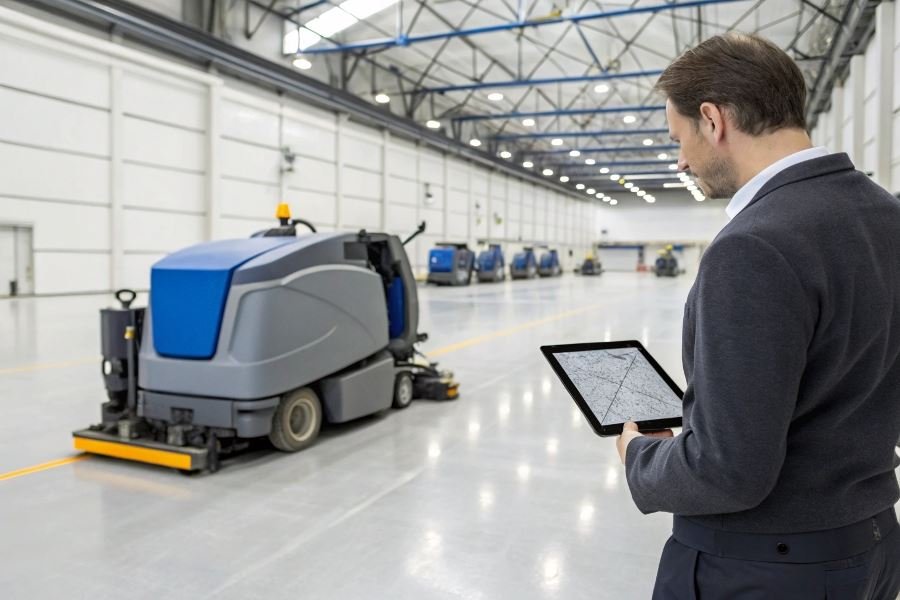
Professional cleaning equipment has undergone remarkable transformation through technological innovation. Modern commercial vacuum cleaners now incorporate IoT connectivity, allowing facility managers to track usage patterns, monitor maintenance needs, and optimize cleaning schedules through dedicated mobile applications. The Tennant T7AMR robotic floor scrubber exemplifies this evolution, using advanced sensors and AI algorithms to navigate complex environments autonomously while maintaining consistent cleaning quality.
Real-time performance monitoring has become standard in premium equipment, with machines providing instant feedback on cleaning effectiveness, battery life, and operational efficiency. The Kärcher KIRA B50 cleaning robot demonstrates how machine learning adapts cleaning patterns based on floor traffic and contamination levels, increasing efficiency by up to 30% compared to traditional methods.
Precision dosing systems represent another technological leap, automatically adjusting cleaning solution concentrations based on surface type and soil level. This not only improves cleaning results but significantly reduces chemical waste and environmental impact.
Sustainability features that deliver real impact
Environmental considerations now drive professional cleaning equipment design. Water-efficient systems like the Nilfisk SC6000 floor scrubber reduce water consumption by up to 70% compared to conventional models through recycling systems and precision application technology.
Energy efficiency has become paramount, with manufacturers developing equipment that maximizes runtime while minimizing power consumption. Battery technology has evolved dramatically, with lithium-ion batteries replacing lead-acid alternatives, offering:
| Battery Type | Runtime | Charging Time | Lifecycle |
|---|---|---|---|
| Traditional Lead-Acid | 2-3 hours | 8-10 hours | 300-500 cycles |
| Modern Lithium-Ion | 4-6 hours | 2-3 hours | 2,000+ cycles |
The shift toward biodegradable cleaning agents and HEPA filtration systems demonstrates the industry’s commitment to reducing environmental footprint while improving indoor air quality.
Lifetime value considerations beyond purchase price
The total cost of ownership for professional cleaning equipment extends far beyond the initial investment. Maintenance requirements vary significantly between consumer and professional-grade equipment:
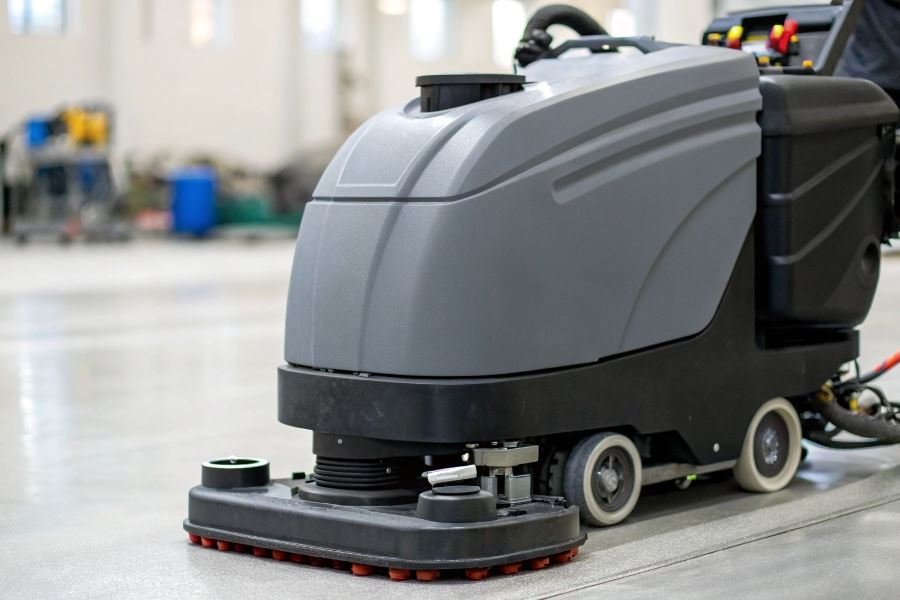
Professional-grade machines feature modular designs that facilitate quick component replacement without specialized tools. The Advance SC750 floor scrubber exemplifies this approach with tool-free brush changes and easily accessible maintenance points, reducing downtime by approximately 40%.
Durability metrics have become increasingly transparent, with manufacturers providing expected lifecycle data and component replacement schedules. Professional equipment typically offers 3-5 times longer operational life than consumer alternatives, despite more intensive use patterns.
Parts availability represents another critical factor in ownership costs. Leading manufacturers maintain spare parts availability for 7-10 years after model discontinuation, ensuring equipment remains serviceable throughout its extended lifecycle.
The most sophisticated cleaning equipment now includes predictive maintenance capabilities, alerting operators to potential issues before failures occur, dramatically reducing unexpected downtime and emergency repair costs.
When evaluating professional cleaning equipment, the convergence of smart technology, environmental sustainability, and optimized maintenance requirements creates machines that deliver exceptional performance while minimizing long-term operational costs.
Discover the 7 essential features that define top-tier professional cleaning equipment in 2025. Learn about durability, performance, ergonomics, smart technology, sustainability, and maintenance factors to make informed purchasing decisions.
Discover the 7 essential features that define top-tier professional cleaning equipment in 2025. Learn about durability, performance, ergonomics, smart technology, sustainability, and maintenance factors to make informed purchasing decisions.