Ever wondered why a $50,000 piece of equipment fails while a $5 multimeter keeps working? The difference often lies in proper calibration.
When accuracy means the difference between success and catastrophic failure, professional electrical measurement calibrators become your most trusted allies. These specialized instruments serve as the gold standard against which all other measurement tools are verified, ensuring that voltmeters, ammeters, and other devices provide readings you can stake your reputation on.
What exactly are electrical measurement calibrators?
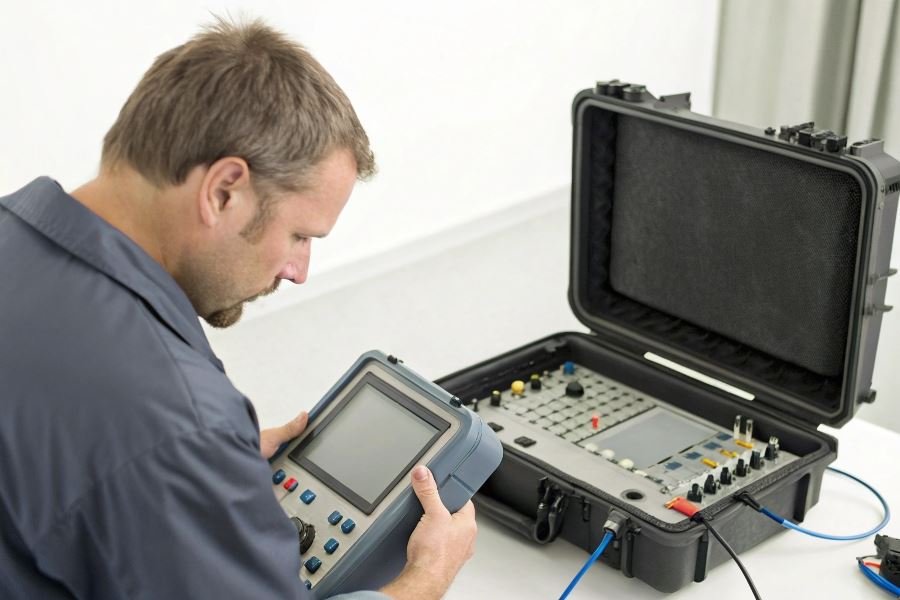
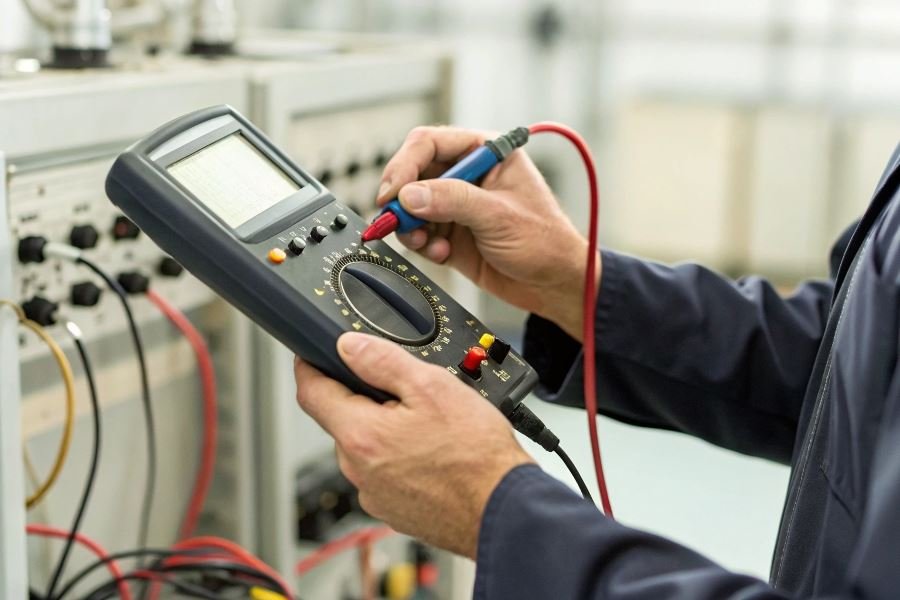
Electrical measurement calibrators are precision instruments designed to produce known electrical values—voltage, current, resistance, frequency—with exceptional accuracy. Think of them as the “truth-tellers” in a world where even small measurement errors can lead to costly mistakes, equipment damage, or safety hazards.
“The most expensive meter is the one that gives you wrong information with confidence.” — Industry wisdom that’s proven true countless times
The calibrator ecosystem
The market offers several distinct types of calibrators, each serving specific needs:
- Process calibrators – Workhorses for industrial settings, handling multiple signal types
- Multifunction calibrators – Versatile tools combining voltage, current, and resistance capabilities
- Specialty calibrators – Purpose-built for specific applications like temperature or pressure measurement
Decision drivers: Beyond the price tag
Selecting the right calibrator involves weighing several critical factors:
- Accuracy requirements – How precise do your measurements need to be? ±0.01% or ±0.001%?
- Measurement range – Will you be measuring microvolts or kilovolts?
- Portability needs – Field work demands different solutions than lab environments
- Certification requirements – Some industries mandate traceability to national standards
- Total cost of ownership – Consider calibration intervals, maintenance, and training
The right calibrator doesn’t just verify measurements—it provides confidence in every decision you make based on those measurements.
Technical Specifications That Make or Break Your Calibrator
When selecting an electrical measurement calibrator for professional applications, the technical specifications serve as the foundation for performance reliability. The difference between adequate and exceptional calibration often comes down to these critical parameters that determine how effectively your calibrator will perform across various measurement scenarios.
Accuracy, Resolution, and Stability: The Holy Trinity
Accuracy represents the calibrator’s ability to provide measurements that match the true value of what’s being measured. Professional-grade calibrators typically offer accuracy ratings between ±0.005% and ±0.1% of reading. When evaluating how to choose an electrical measurement calibrator for professional use, remember that higher-end models like the Fluke 5730A deliver accuracies approaching ±0.0025% for DC voltage—essential for precision-critical industries like aerospace and medical device manufacturing.
Resolution defines the smallest change in measurement a calibrator can detect and display. Look for:
- DC voltage resolution: 0.1 μV to 1 mV (depending on range)
- AC current resolution: 0.01 μA to 10 μA
- Resistance resolution: 1 μΩ to 10 mΩ
Stability—often overlooked but equally crucial—refers to how consistently the calibrator maintains its accuracy over time. Premium calibrators maintain stability specifications of less than 5 ppm/year (parts per million per year), ensuring reliable measurements between recalibration intervals.
Expert insight: The best calibrator isn’t necessarily the most accurate one, but rather the one whose specifications align perfectly with your application requirements.
Measurement Parameters and Ranges That Matter
Professional calibrators must cover the specific parameters relevant to your work:
| Parameter | Typical Professional Range | Premium Range |
|---|---|---|
| DC Voltage | 0-1000V | 0-1100V |
| AC Voltage | 1mV-1000V (10Hz-1MHz) | 1μV-1100V (0.01Hz-5MHz) |
| DC Current | 0-20A | 0-100A |
| AC Current | 10μA-20A | 10nA-100A |
| Resistance | 0-100MΩ | 0-10GΩ |
| Capacitance | 1nF-100μF | 0.1pF-1F |
Multi-function calibrators like the Transmille 3050 offer comprehensive parameter coverage, while specialized units from Time Electronics might excel in specific measurements like high-precision resistance.
Calibration Standards and Traceability: Your Quality Assurance
Every professional calibrator must maintain traceability to national or international standards. This creates an unbroken chain of comparisons leading to primary standards maintained by organizations like NIST (National Institute of Standards and Technology).
When evaluating calibrators, verify:
- Calibration certificates: Should include measurement uncertainties and coverage factors
- Traceability documentation: Clear path to SI units through national standards
- Calibration interval recommendations: Typically 12-24 months for professional equipment
Accreditation matters. Calibrators from manufacturers with ISO/IEC 17025 accreditation provide additional assurance of measurement capability and quality systems.
The Keysight Technologies calibrators offer exceptional documentation of uncertainty budgets and traceability, making them favorites among metrology laboratories and quality-focused manufacturing operations.
Remember that your calibrator’s specifications directly impact your measurement capability and, ultimately, your product or service quality. Investing in appropriate specifications isn’t just good metrology—it’s good business.
Making Smart Calibrator Choices for Professional Use
When selecting an electrical measurement calibrator for professional applications, the decision extends far beyond basic specifications. The right calibrator becomes an extension of your expertise—a trusted companion in the pursuit of precision. Let’s explore the practical considerations that separate adequate tools from exceptional ones.
Balancing budget with performance requirements
The calibrator market spans from $500 basic models to sophisticated systems exceeding $20,000. This price spectrum reflects genuine capability differences rather than mere marketing.
Investment perspective: Consider calibrators as long-term assets rather than expenses. A quality instrument from manufacturers like Fluke or Keysight typically maintains accuracy for 5-7 years before recalibration becomes necessary.
When evaluating cost versus performance:
- Entry-level calibrators (500−2,000): Suitable for basic voltage/current calibration with accuracies around 0.05% of reading
- Mid-range models (2, 000−8,000): Offer multi-function capabilities with accuracies approaching 0.01%
- Premium systems ($8,000+): Provide laboratory-grade precision (0.003% or better), automation capabilities, and specialized functions
The most expensive calibrator isn’t always the right choice—but the cheapest rarely is.
Consider your calibration workload: purchasing a calibrator that handles 95% of your needs while outsourcing the remaining specialized calibrations often proves more economical than investing in equipment that exceeds daily requirements.
Field readiness factors
Professional calibrators must perform reliably across diverse environments—from climate-controlled laboratories to industrial settings with extreme conditions.
Portability considerations:
- Weight (2-15 pounds depending on capability)
- Battery life (4-8 hours for field units)
- Protective cases and transportation options
Environmental resilience:
| Factor | Laboratory Grade | Industrial Grade |
|---|---|---|
| Operating Temperature | 18-28°C (controlled) | -10 to 50°C |
| Humidity Tolerance | 20-80% non-condensing | Up to 95% |
| Dust/Water Protection | Minimal (IP20) | Enhanced (IP54+) |
| Shock Resistance | Limited | MIL-STD-810G compliant |
Field technicians should prioritize models from Transmille or Time Electronics that feature ruggedized designs specifically engineered for industrial environments.
Beyond hardware capabilities
The software ecosystem and support infrastructure surrounding a calibrator significantly impact its long-term utility.
Software integration matters:
- Automated procedures reduce human error
- Data management capabilities streamline documentation
- Uncertainty calculation features ensure compliance with standards
Documentation quality varies dramatically between manufacturers. Comprehensive manuals with clear procedures, troubleshooting guides, and application notes dramatically reduce learning curves and improve calibration efficiency.
Support infrastructure becomes crucial when issues arise. Evaluate:
- Technical support responsiveness
- Calibration service turnaround times
- Availability of loaner equipment during repairs
- Training resources (both initial and ongoing)
Beamex and Additel have established reputations for exceptional customer support and comprehensive documentation that extends beyond basic operation manuals.
The ideal calibrator balances your budget constraints with performance needs while offering appropriate durability, intuitive software, and reliable manufacturer support. By carefully weighing these practical considerations, you’ll select an instrument that delivers value far beyond its initial cost.
Discover how to select the ideal electrical measurement calibrator for professional applications. Learn key technical specifications, accuracy requirements, and practical considerations to make an informed purchase decision for your calibration needs.
Discover how to select the ideal electrical measurement calibrator for professional applications. Learn key technical specifications, accuracy requirements, and practical considerations to make an informed purchase decision for your calibration needs.