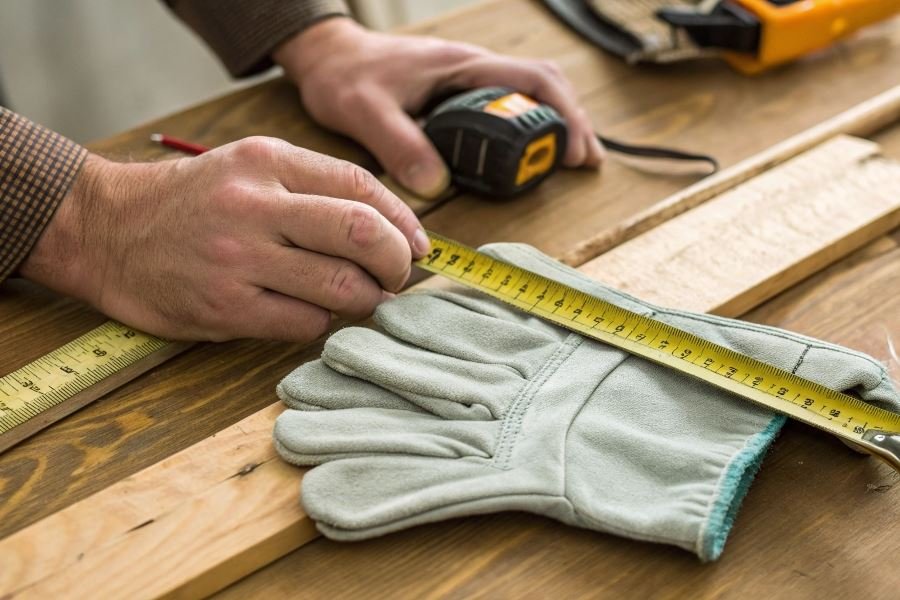
Your hands are irreplaceable tools—yet they’re often the most exposed part of your body on the job. Every year, over 150,000 hand injuries lead to emergency room visits in the United States alone, with many resulting in permanent disability.
Selecting the right professional gloves isn’t just about checking a safety requirement box—it’s about preserving your livelihood. Whether you’re handling caustic chemicals, operating power tools, or working with delicate electronic components, your choice of hand protection can mean the difference between confidence and catastrophe.
The protection-performance balance
The perfect work glove exists at the intersection of protection and performance. Consider these four critical factors:
- Material matters: From cut-resistant Kevlar to chemical-impervious nitrile, each material serves a specific purpose. The right choice depends on your primary hazards.
- Durability vs. cost: Premium gloves might cost more upfront but often deliver superior longevity and protection—saving money and preventing injuries over time.
- Dexterity requirements: Even the safest glove fails if workers remove it to perform precision tasks. Modern designs increasingly offer protection without sacrificing finger sensitivity.
- Protection level: ANSI cut levels, puncture resistance ratings, and chemical permeation times aren’t just technical jargon—they’re quantifiable measures of how well your hands will be protected.
Navigating industry standards
Different industries face different hazards, which is why organizations like OSHA, ANSI, and EN have developed specific standards. For example, ANSI/ISEA 105-2016 provides standardized testing methods for mechanical protection, while EN 374 governs chemical and microorganism protection.
“The right glove not only meets industry standards—it exceeds your specific workplace requirements.”
Industry-Specific Glove Selection: Protection Meets Performance
When safety meets productivity, your hands deserve nothing less than perfect protection. The right professional gloves don’t just prevent injuries—they enhance performance, extend working hours, and ultimately save money. Let’s dive into how to choose professional gloves for different types of work environments where specific hazards demand specialized protection.
Construction and Mechanical Work: Armor for Your Hands
Construction sites and mechanical workshops present a battlefield of hazards—from flying debris to sharp edges and crushing forces. The ideal gloves here must balance protection with dexterity.
Impact resistance has evolved dramatically in recent years. Modern construction gloves feature thermoplastic rubber (TPR) shields strategically placed over knuckles and fingers, absorbing up to 80% of impact forces. Look for gloves meeting ANSI/ISEA 138 standards, with Level 3 offering the highest impact protection.
Cut protection has become a science of its own. The ANSI cut resistance scale (A1-A9) provides a clear benchmark:
| Cut Level | Application | Materials Typically Used |
|---|---|---|
| A2-A3 | General construction | HPPE, Kevlar blends |
| A4-A5 | Sheet metal work | Steel/glass fiber composites |
| A7-A9 | Glass handling | Advanced engineered yarns |
For grip performance, the coating matters tremendously. Nitrile-dipped gloves from manufacturers like Mechanix provide excellent oil resistance, while sandy nitrile finishes offer superior grip on dry materials.
Chemical Handling and Laboratory Protection
Laboratory and chemical environments demand an entirely different approach to hand protection, where invisible threats can cause lasting damage.
Chemical resistance varies dramatically between materials. Butyl rubber gloves excel against ketones and esters but fail with hydrocarbons. Nitrile provides broad-spectrum protection against solvents but offers limited defense against strong oxidizers.
The chemical permeation breakthrough time is your critical metric—it measures how long it takes for a hazardous chemical to move through the glove material at a molecular level:
Always check manufacturer permeation charts for specific chemicals you handle.
Sensitivity requirements in laboratory settings often conflict with protection needs. For precision work, consider:
- Thickness measured in mils (1 mil = 0.001 inch)
- 4-6 mil gloves balance protection with tactile sensitivity
- Double-gloving with thin (2-3 mil) gloves provides enhanced protection while maintaining dexterity
Contamination prevention requires disciplined glove changing protocols and proper removal techniques. The best gloves feature extended cuffs that protect wrists and prevent chemical runoff onto skin.
Healthcare and Medical Applications
Medical environments present unique challenges where protection flows in both directions—protecting both the wearer and the patient.
Sterility standards are non-negotiable in surgical and many clinical settings. Sterile gloves undergo rigorous testing with Acceptable Quality Level (AQL) ratings indicating defect probability:
| AQL Rating | Meaning | Typical Use |
|---|---|---|
| 0.65 | Highest quality | Surgical procedures |
| 1.5 | Medical grade | Examination, procedures |
| 2.5 | Industrial grade | Non-critical medical tasks |
Tactile sensitivity becomes paramount during delicate procedures. Thickness measurements in healthcare gloves typically range from 2-8 mils, with specialized surgical gloves offering remarkable sensitivity at just 3-4 mils while maintaining barrier integrity.
Barrier protection against bloodborne pathogens requires gloves that meet ASTM F1671 standards for viral penetration resistance. Materials like Halyard’s advanced nitrile formulations provide superior protection compared to traditional latex while eliminating allergy concerns.
Selecting the right professional gloves requires understanding both the specific hazards of your industry and the performance characteristics of available materials. The investment in proper hand protection pays dividends in both safety and productivity.
Making the Final Decision on Professional Work Gloves
Selecting the right work gloves isn’t just about protection—it’s an investment in your productivity, comfort, and long-term health. After evaluating materials and understanding industry requirements, these final considerations will ensure you make a choice you won’t regret.
The true cost of hand protection
Professional gloves represent a classic “pay now or pay later” scenario. Premium options from manufacturers like Mechanix Wear or Ansell might cost $30-60 per pair compared to $10-15 for basic alternatives, but the calculus extends far beyond the price tag.
Consider this value equation:
| Cost Factor | Economy Gloves | Premium Gloves |
|---|---|---|
| Initial investment | Lower ($10-15) | Higher ($30-60) |
| Replacement frequency | Every 2-4 weeks | Every 3-6 months |
| Annual replacement cost | $120-390 | $60-240 |
| Productivity impact | Moderate to high | Minimal |
| Injury risk | Higher | Lower |
The hidden expense of inadequate protection often manifests in reduced dexterity, fatigue, and potential medical costs from preventable injuries. For welders, electricians, and mechanics, investing in task-specific gloves pays dividends through extended wear life and enhanced performance.
Finding your perfect fit
A glove that’s too tight restricts blood flow and causes fatigue. Too loose, and you sacrifice dexterity while creating dangerous snag hazards. Proper sizing is non-negotiable.
The difference between a good fit and a perfect fit can mean the difference between completing a task efficiently or struggling through it.
Most manufacturers use a simple hand circumference measurement, but the best approach includes:
- Measuring hand circumference at the widest point (excluding thumb)
- Measuring finger length from base to tip
- Considering the dominant hand (often slightly larger)
- Testing dexterity with task-specific movements
For specialized work like electrical installation or precision assembly, look for gloves with pre-curved fingers and anatomical cuts that reduce hand fatigue during extended wear.
Extending glove lifespan through proper care
Even the most durable work gloves require maintenance to deliver maximum value. Different materials demand specific care approaches:
-
Leather gloves: Apply conditioning treatments quarterly to prevent cracking and maintain suppleness. Obenauf’s Heavy Duty LP works wonders for maintaining leather’s protective properties.
-
Cut-resistant gloves: Wash in cold water with mild detergent to preserve fiber integrity. High heat can compromise aramid fibers.
-
Chemical-resistant gloves: Rinse thoroughly after each use and inspect for discoloration or material changes that indicate degradation.
The most expensive glove is the one that fails when you need it most.
Know when to replace your gloves by establishing clear criteria: visible wear patterns, punctures, tears, or diminished grip texture all signal replacement time. For chemical protection, implement a scheduled replacement program regardless of visible condition, as protective properties can degrade invisibly.
By approaching glove selection with this comprehensive framework—balancing cost against value, ensuring proper fit, and implementing appropriate care routines—you’ll maximize both protection and return on investment. Your hands are irreplaceable tools deserving of thoughtful protection.
Discover how to select the right professional work gloves for your industry in our comprehensive guide. Learn about materials, protection levels, and safety standards to ensure optimal hand protection, comfort, and compliance in construction, chemical handling, or healthcare environments.
Discover how to select the right professional work gloves for your industry in our comprehensive guide. Learn about materials, protection levels, and safety standards to ensure optimal hand protection, comfort, and compliance in construction, chemical handling, or healthcare environments.