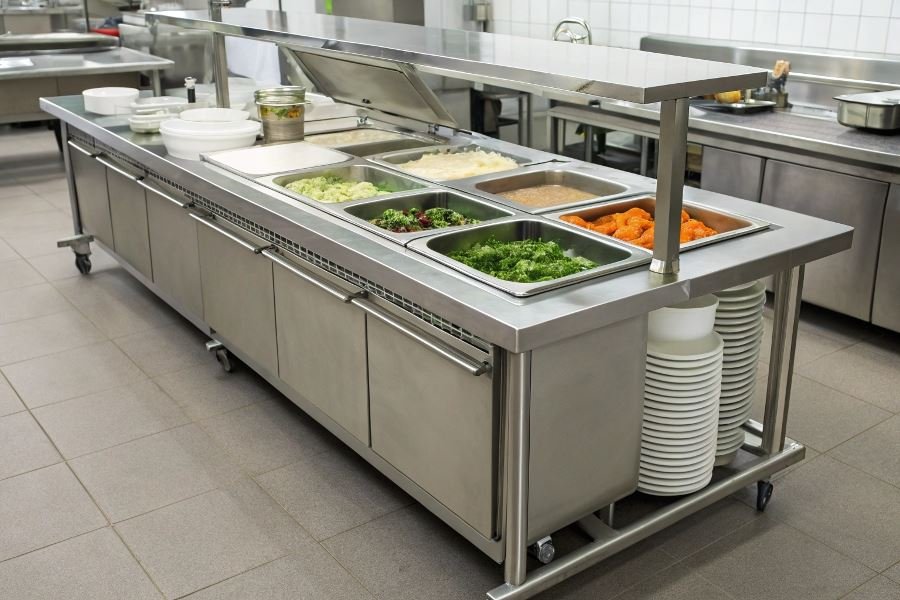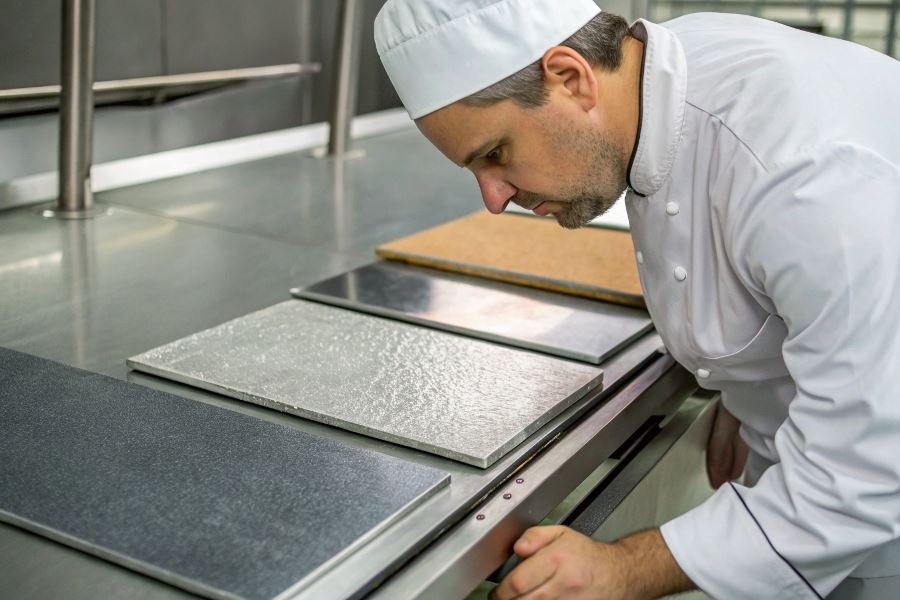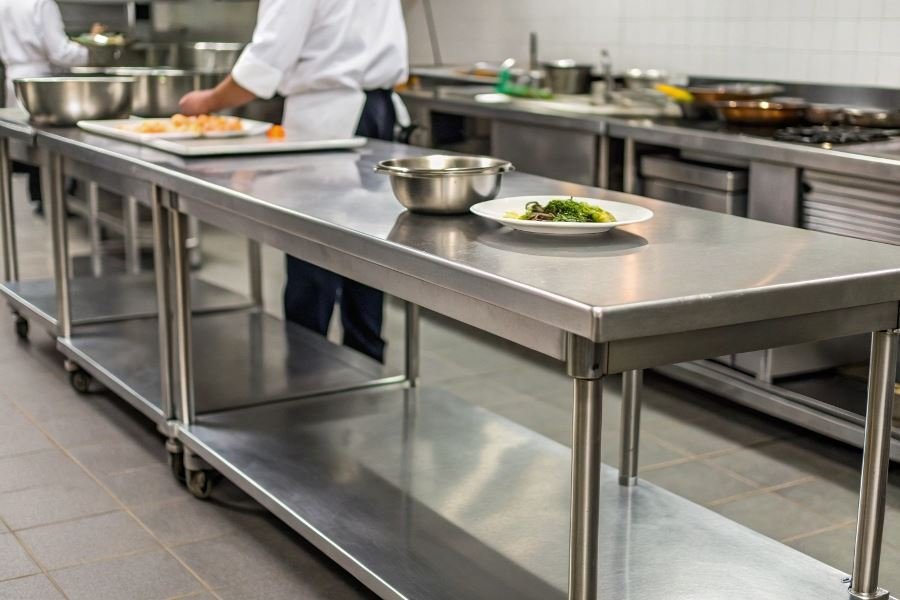
Ever watched a master chef’s knife glide through ingredients with surgical precision? That same level of efficiency is what separates thriving businesses from struggling ones in production environments. The right cutting table isn’t just furniture—it’s the foundation of your workflow.
Cutting tables serve as the command center for precision work across industries from garment manufacturing to sign making. These specialized surfaces are engineered specifically for cutting, measuring, and manipulating materials with accuracy that directly impacts your bottom line. Whether you’re slicing fabric, trimming signage, or preparing food products, the humble cutting table transforms raw materials into finished goods with minimal waste and maximum efficiency.
“The difference between a good cutting table and a great one can mean thousands of dollars in saved materials annually.”
The rim vs. rimless debate centers on a fundamental design choice that affects everything from material handling to cleanup. Rimmed tables feature raised edges that contain debris and prevent materials from sliding off, while rimless designs offer unobstructed access from all angles and easier material positioning. This seemingly simple feature dramatically influences workflow, ergonomics, and ultimately, productivity.
When production speeds falter or material waste increases, businesses often look to upgrade equipment or retrain staff—but the solution might be as straightforward as reconsidering the surface where the actual work happens. The right cutting table doesn’t just support your materials; it supports your entire operation.
Cutting Tables That Mean Business: Rim vs. Rimless
When your production floor efficiency hinges on the right equipment choices, cutting tables deserve your undivided attention. The seemingly simple decision between rimmed and rimless cutting surfaces can dramatically impact workflow, waste management, and ultimately your bottom line.
For many business owners, the question of cutting tables with or without a rim: which is more effective for your business depends entirely on what you’re cutting and how messy the process gets. This choice isn’t merely aesthetic—it’s fundamentally operational and can mean the difference between smooth production and constant cleanup delays.
Rimmed Tables: Containing the Chaos
Rimmed cutting tables shine brightest in environments where liquid containment is non-negotiable. These workhorses feature raised edges that create a basin-like surface, preventing runoff and spillage.
Industries that benefit most from rimmed designs:
- Food processing (meat, fish, produce)
- Laboratory sample preparation
- Floral arrangement
- Medical specimen handling
The primary advantage lies in fluid management. When cutting meat, for instance, a table from Hobart with a 1-inch rim can contain up to 2 gallons of liquid, keeping floors dry and reducing slip hazards. This containment also simplifies sanitation protocols, as liquids remain centralized rather than dispersed across workspaces.
“Our rimmed cutting stations reduced cleanup time by 37% and virtually eliminated cross-contamination concerns.” – Executive Chef at a major food processing facility
Rimmed tables also excel in material recovery scenarios. When processing valuable liquids or small components, the rim ensures nothing escapes the work surface, improving yield and reducing waste.
Rimless Tables: Unrestricted Movement
Conversely, rimless cutting tables offer unimpeded access and movement across the entire work surface—a critical advantage for certain applications.
Prime candidates for rimless designs:
- Textile cutting and pattern layout
- Large-format printing and trimming
- Woodworking and carpentry
- Assembly of large components
The absence of a rim allows materials to extend beyond the table edge, accommodating oversized items without awkward positioning. Craftspeople working with Festool cutting systems report 22% faster completion times on large projects when using rimless surfaces that permit unrestricted material movement.
Rimless designs also facilitate easy material clearing—debris can be swept directly into waste receptacles without navigating over raised edges, making them ideal for high-volume production environments where speed matters.
Industry-Specific Performance Factors
Your industry’s unique requirements should drive your decision:
| Industry | Recommended Type | Key Performance Factor |
|---|---|---|
| Butchery | Rimmed | Fluid containment, sanitation |
| Textiles | Rimless | Material handling, layout space |
| Electronics | Rimmed | Component containment, ESD protection |
| Woodworking | Rimless | Dust removal, material positioning |
| Floral | Rimmed | Water containment, stem collection |
Material thickness and weight also influence your choice. Heavier materials benefit from rimless designs that eliminate lifting over edges, while delicate or small components are better contained within rimmed workspaces.
The ultimate effectiveness metric isn’t the table itself, but how seamlessly it integrates into your specific production environment. The right cutting surface becomes virtually invisible in your workflow—enabling rather than impeding your team’s productivity and precision.
Making the Final Decision: The Ultimate Cutting Table Selection Guide
Assessing Your Business Requirements
Selecting between rimmed and rimless cutting tables isn’t just about preference—it’s about precision alignment with your operational needs. Smart business owners evaluate their requirements through these critical lenses:
Workflow analysis matters tremendously. Track your current cutting processes: Are materials frequently sliding off surfaces? Do you need containment for liquids or small parts? Rimmed tables excel here, while rimless options offer unlimited material positioning.
Material diversity should guide your decision. Businesses working with varied materials benefit from different table configurations:
| Material Type | Recommended Table | Key Benefit |
|---|---|---|
| Fabrics & Textiles | Rimless | Unrestricted material flow |
| Liquids & Foods | Rimmed | Containment of spills |
| Mixed Materials | Hybrid solutions | Versatility |
Space utilization remains a crucial factor. Measure your available floor space and consider future expansion. Rimless tables often require additional floor space for material overhang, while rimmed options contain everything within defined boundaries.
Cost-Benefit Analysis That Makes Sense
The financial equation extends far beyond the initial purchase price. A comprehensive cost-benefit analysis reveals:
Initial investment differences typically show rimless tables costing 15-20% less than their rimmed counterparts from manufacturers like Eastman Machine Company. However, this upfront saving can be misleading.
Operational efficiency gains often justify premium investments. Businesses report:
“Our rimmed cutting tables from Zund paid for themselves within 9 months through reduced material waste and faster production cycles.” – A common sentiment among manufacturing professionals
Labor cost reduction potential varies significantly. Rimmed tables can reduce cleanup time by up to 40% in messy operations, while rimless tables might improve material handling efficiency by 25% for large-format cutting.
Long-Term Operational Impact
The decision reverberates through your operation for years to come:
Maintenance requirements differ substantially. Rimmed tables with vacuum systems require more frequent cleaning of collection chambers and filters. Gerber Technology rimless tables typically need simpler maintenance but may require more frequent surface replacement due to edge wear.
Adaptability to changing business needs should factor heavily in your decision. Consider:
- Will your product line expand to new materials?
- Are you likely to increase production volume?
- Might you need to reconfigure your workspace?
Durability factors reveal themselves over time. High-quality stainless steel rimmed tables from manufacturers like JWEI commonly last 12-15 years with proper maintenance, while premium rimless tables typically offer 8-10 years of optimal performance before requiring significant refurbishment.
The most successful businesses approach this decision methodically, weighing immediate needs against long-term strategy. Your cutting table isn’t merely equipment—it’s infrastructure that will either empower or constrain your production capabilities for years to come. The right choice aligns perfectly with both your current workflow and your growth trajectory, delivering consistent returns through enhanced productivity and reduced operational friction.
Discover whether rimmed or rimless cutting tables better suit your business needs. Compare efficiency, applications, and ROI for different industries to make an informed investment in your operational workflow.
Discover whether rimmed or rimless cutting tables better suit your business needs. Compare efficiency, applications, and ROI for different industries to make an informed investment in your operational workflow.