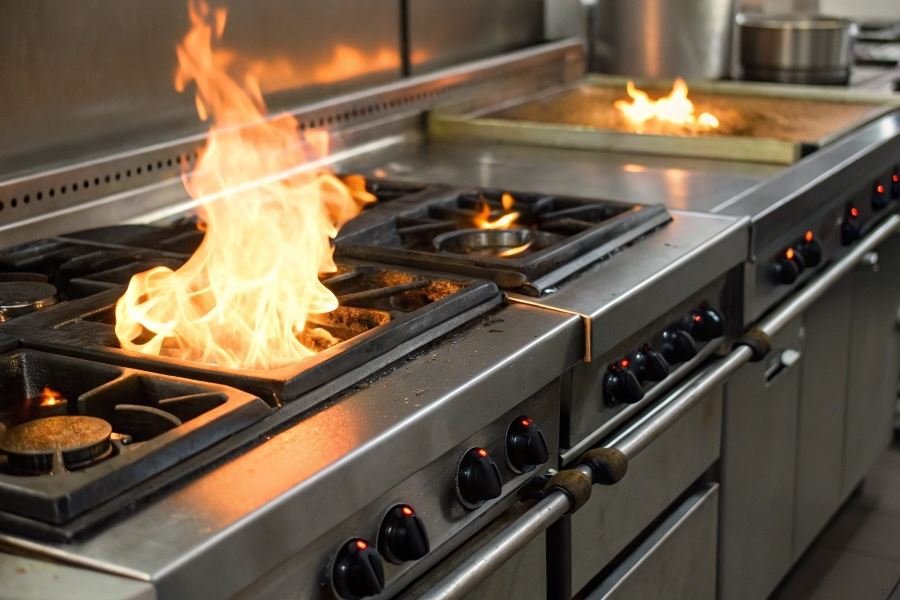
Ever watched a professional chef execute a perfect sear on a steak? Behind that culinary magic lies a critical decision made long before: gas or electric power? This choice fundamentally shapes everything from food quality to operational costs in commercial kitchens nationwide.
Thermal line modules form the backbone of professional food preparation systems. These specialized units—whether ranges, griddles, fryers, or ovens—transform raw ingredients into culinary masterpieces through precisely controlled heat application. The comparison of gas and electric modules for thermal lines isn’t just about energy sources; it’s about how these technologies fundamentally influence cooking performance, operational efficiency, and bottom-line results.
The commercial kitchen equipment market has evolved dramatically since the first gas ranges appeared in restaurants in the late 1800s. Today’s market represents a $33.4 billion industry that continues to grow as restaurants, hotels, and institutional kitchens seek equipment offering both performance and efficiency. Modern thermal lines feature modular designs allowing chefs to customize their cooking stations with precisely the tools they need.
Why the power source matters: Choosing between gas and electric modules isn’t merely a technical decision—it’s strategic. This selection impacts everything from food consistency and cooking techniques to utility costs and kitchen temperature. The right choice aligns with your culinary vision while the wrong one can silently drain profits through inefficiency or limit menu possibilities.
The decision between flame and element represents one of the most consequential equipment choices a kitchen operator will make.
Gas vs Electric Thermal Modules: The Ultimate Showdown
When selecting equipment for commercial kitchens or industrial food processing, few decisions impact your operation more than choosing between gas and electric thermal modules. This choice affects everything from your monthly utility bills to the quality of your final product.
The comprehensive comparison of gas and electric modules for the thermal line reveals significant differences that can make or break your operation’s efficiency. Let’s dive into what really matters when making this critical infrastructure decision.
Energy Efficiency and Operational Costs
Gas thermal modules typically offer lower operational costs in regions where natural gas prices remain competitive. A commercial gas module can cost 15-30% less to operate than its electric counterpart, particularly during extended cooking sessions.
Energy efficiency breakdown:
| Module Type | Initial Cost | Monthly Operating Cost | Energy Efficiency Rating |
|---|---|---|---|
| Gas | $3,500-7,000 | $200-450 | 70-80% efficiency |
| Electric | $2,800-6,000 | $300-600 | 85-95% efficiency |
While electric modules boast higher efficiency ratings (converting nearly all input energy to heat), the higher cost per BTU often negates this advantage in many markets. However, facilities with solar installations or access to renewable energy sources may find electric modules more economically viable long-term.
Temperature Control and Cooking Performance
Electric thermal modules shine brightest when precision matters. They offer:
- Temperature accuracy within ±2°F
- Faster recovery times after loading
- More uniform heat distribution
Gas systems counter with:
- Immediate heat response without warm-up periods
- Superior performance for high-temperature applications
- Better results for char-grilling and flame-required techniques
For bakeries and confectioneries where exact temperatures determine success, electric modules from manufacturers like Rational provide unmatched consistency. Conversely, restaurants specializing in high-heat cooking often prefer the instant power of Vulcan gas systems.
Installation Requirements and Spatial Considerations
Electric modules require:
- Adequate electrical infrastructure (often 208-240V, three-phase)
- Less ventilation (no combustion byproducts)
- No gas line installation
Gas systems demand:
- Proper gas line installation by certified professionals
- Enhanced ventilation systems
- Carbon monoxide detectors
The footprint difference is minimal, but installation costs can vary dramatically. Electric installations typically cost 15-25% less initially, though this advantage diminishes in facilities already equipped with gas infrastructure.
Maintenance Needs and Longevity
Gas thermal modules contain more mechanical components that require regular maintenance. Burners, gas valves, and ignition systems typically need inspection every 3-6 months. However, these systems often demonstrate impressive longevity, with many Blodgett gas ovens functioning reliably after 20+ years of service.
Electric modules feature:
- Fewer moving parts
- Less frequent maintenance intervals (6-12 months)
- Higher sensitivity to power fluctuations
The maintenance cost difference averages $350-500 annually in favor of electric systems.
Safety Features and Compliance Standards
Both systems must meet rigorous safety standards, but their compliance requirements differ significantly:
Gas modules require:
- NFPA 54 compliance
- Regular leak detection
- Flame failure protection systems
- Carbon monoxide monitoring
Electric modules must meet:
- UL 197 standards
- Overheating protection
- Ground fault protection
The NSF International certification is essential for both types in food service applications, ensuring they meet sanitation requirements regardless of heat source.
Ultimately, your specific application, location, and operational priorities should guide your selection between these thermal module options. The right choice balances initial investment against long-term operational costs while delivering the performance characteristics your operation demands.
Making the Smart Choice: Gas vs Electric Modules for Thermal Lines
Aligning with your business DNA
When selecting between gas and electric modules for your thermal line, the decision must align with your operation’s unique characteristics. High-volume establishments typically benefit from gas modules’ rapid heating capabilities and recovery times. A steakhouse serving 300+ covers nightly needs equipment that can handle peak demands without faltering.
Conversely, menu complexity plays a crucial role. Electric modules offer precise temperature control that’s invaluable for delicate preparations. Pastry chefs working with temperature-sensitive chocolates find that electric modules provide the ±1°F accuracy their creations demand.
Your kitchen workflow also dictates the optimal choice. Open kitchen concepts often favor electric modules for their reduced ambient heat and elimination of open flames. The Rational iCombi Pro combi oven exemplifies this advantage, operating silently with minimal heat radiation compared to its gas counterparts.
The dollars and sense of thermal equipment
The financial equation extends far beyond initial purchase price. While gas modules typically cost 15-20% less upfront, the complete ROI picture includes:
Energy efficiency differentials
Maintenance requirements
Equipment lifespan
Installation expenses
| Factor | Gas Modules | Electric Modules |
|---|---|---|
| Initial Cost | $8,000-15,000 | $10,000-18,000 |
| Energy Efficiency | 40-45% | 70-90% |
| Annual Maintenance | $800-1,200 | $400-700 |
| Average Lifespan | 8-10 years | 10-15 years |
| Installation | Complex (ventilation, gas lines) | Simpler (power requirements only) |
The ROI calculation reveals surprising truths. While gas equipment costs less initially, electric modules often deliver superior lifetime value. A Vulcan VHP Series gas range might save $3,000 upfront compared to its electric counterpart, but higher efficiency ratings can recoup this difference within 3-4 years of operation.
The smartest investment isn’t always the cheapest option—it’s the one that delivers the greatest value over its operational lifetime.
Future-proofing your thermal line investment
Making equipment decisions with longevity in mind requires considering several forward-looking factors:
Energy landscape evolution is reshaping kitchen economics. Many municipalities are implementing regulations that favor or mandate electric equipment. The Middleby Corporation has responded by developing hybrid systems that can adapt to changing energy requirements.
Technological advancement pace differs dramatically between gas and electric platforms. Electric modules integrate more readily with IoT systems, enabling features like remote monitoring and predictive maintenance. The Alto-Shaam Vector multi-cook ovens exemplify this advantage with cloud-based recipe management and operational analytics.
Sustainability requirements increasingly influence purchasing decisions. Electric modules powered by renewable energy sources can significantly reduce a kitchen’s carbon footprint—a compelling advantage as consumers and regulations push for greener operations.
The most future-proof approach often involves modular systems that allow component replacement without wholesale equipment changes. This strategy provides flexibility to adapt as technology evolves and business needs change, protecting your investment against premature obsolescence.
Discover the definitive comparison between gas and electric thermal line modules for professional kitchens. Learn about energy efficiency, temperature control, installation requirements, and ROI to make the best equipment choice for your culinary business.
Discover the definitive comparison between gas and electric thermal line modules for professional kitchens. Learn about energy efficiency, temperature control, installation requirements, and ROI to make the best equipment choice for your culinary business.