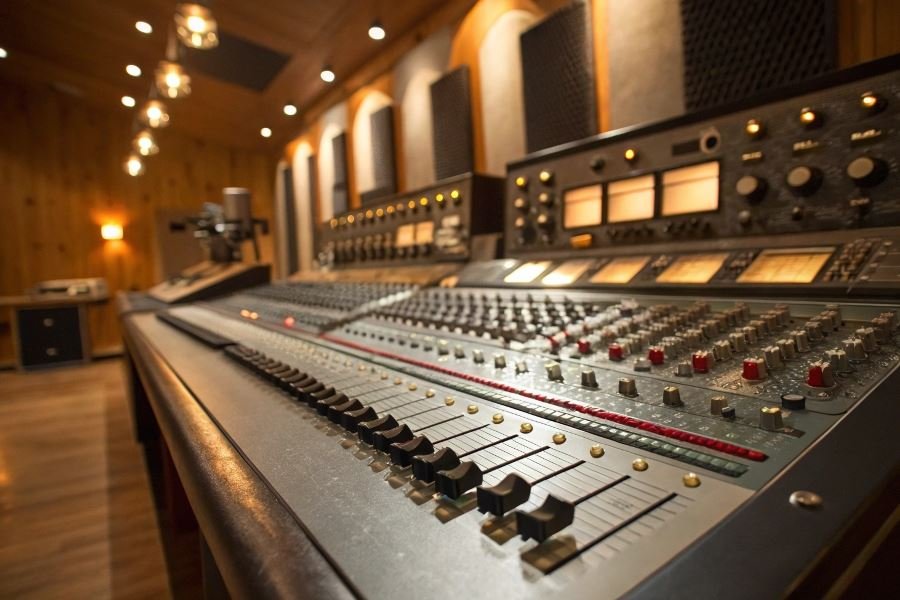
Ever stood in a world-class recording studio and wondered what makes the final mix sound so impossibly cohesive? The secret often lies in an unsung hero: the professional summator.
At its core, a summator is the critical junction where multiple audio signals converge into a unified whole. Think of it as the musical equivalent of a master chef who knows exactly how to blend distinct flavors into something greater than the sum of its parts. In commercial studios, summators serve as the final analog gateway before your carefully crafted sounds reach the outside world.
Why your summator choice matters more than you think
The difference between a mediocre summator and an exceptional one isn’t just subtle—it can be the defining factor in your studio’s signature sound. Professional engineers recognize that summators impart their own character to audio, with the finest models preserving transient detail while adding that elusive “glue” that binds tracks together.
When evaluating summators for your commercial environment, three factors demand your attention:
- Signal integrity – How faithfully does the unit maintain your carefully crafted audio?
- Headroom and dynamics – Does it handle peaks without compression or distortion?
- Tonal character – What subtle harmonic enhancements does it bring to your mix?
The most respected studios often build their reputation around their summation stage. It’s not merely a technical necessity—it’s a creative tool that shapes your studio’s sonic fingerprint in ways both subtle and profound.
The Technical Heart of Studio Summing
When evaluating professional summing mixers for commercial studios, the technical specifications become the deciding factors between good and exceptional sound. Experienced engineers know that the right summator can transform a digital mix into an analog masterpiece with depth, dimension, and character that plugins simply can’t replicate.
The criteria for choosing a professional summator for a commercial studio must begin with an honest assessment of your workflow needs, sonic preferences, and budget constraints. However, three technical aspects stand above all others: signal path quality, summing architecture, and channel capacity.
Signal Path Quality: The Uncompromising Standard
Signal path quality represents the summator’s ability to maintain audio transparency while adding desirable coloration. Premium units like the Dangerous 2-BUS+ feature ultra-low noise floor specifications (below -90dB) and minimal total harmonic distortion (often <0.005%).
What separates exceptional summators from merely adequate ones?
- Component quality: Look for high-grade resistors, capacitors, and transformers
- Circuit design: Shorter signal paths typically yield cleaner results
- Power supply isolation: Prevents noise contamination
- Headroom: At least +24dBu for professional applications
“The difference between ‘good enough’ and ‘exceptional’ often lies in the last 5% of technical specifications,” notes veteran mixing engineer Chris Lord-Alge, whose credits include Green Day, Muse, and Bruce Springsteen.
Summing Architecture: Active vs Passive Designs
The summing architecture debate centers around two primary approaches:
| Active Summing | Passive Summing |
|---|---|
| Uses op-amps or discrete amplifiers | Uses resistor networks without amplification |
| Higher output level, more headroom | Requires external amplification |
| More complex circuitry | Simpler signal path |
| Often more expensive | Generally more affordable |
| Examples: SSL Fusion | Examples: Roll Music Folcrom |
Active designs like the Neve 8816 provide immediate usability with built-in amplification stages, while passive units like the Dangerous Music Summing Station offer purists a theoretically cleaner signal path at the expense of requiring additional gain stages.
Channel Capacity: Room to Grow
Channel count flexibility remains crucial for studios handling diverse projects. While 16 channels might suffice for smaller productions, complex arrangements can easily demand 32+ inputs.
Consider these expandability factors:
- Base configuration: Most professional units start at 16 channels
- Expansion options: Can additional units be linked seamlessly?
- Stereo channels: Do stereo inputs count as one or two channels?
- Aux returns: Additional inputs for effects or submixes
- Master section features: Insert points, monitoring options
The API The Box offers 16 channels with expansion capabilities, while the Rupert Neve Designs 5059 provides 16 channels with transformer-coupled outputs in a single rack space.
When selecting your summator, prioritize signal integrity above all else. The finest units maintain pristine audio quality while imparting that elusive “glue” that transforms individual tracks into a cohesive mix. Your choice will ultimately depend on your studio’s specific needs, but investing in quality at this critical junction of your signal chain pays dividends in every project you complete.
Making the Right Summator Investment for Your Studio
Budget realities that shape your choices
Professional summators represent a significant investment for any commercial studio. Quality units typically range from $1,500 for entry-level models to upwards of $8,000 for premium solutions with advanced features. The key to smart budgeting isn’t finding the cheapest option—it’s identifying the sweet spot where performance meets value.
When calculating return on investment, consider how a summator’s capabilities directly impact your deliverables. Studios handling complex orchestral recordings or film scoring will see immediate returns from high-end summators with superior summing capabilities and headroom. Meanwhile, project studios focusing on vocal-centric productions might find mid-range options perfectly adequate.
The costliest mistake isn’t spending too much—it’s spending too little on equipment that fails to meet your actual workflow demands.
Many studio owners report that investing in quality analog summation has extended their competitive edge by offering clients a distinctive sound character that digital-only studios can’t match. This translates to higher rates and client retention, often recouping the investment within 12-18 months.
Integration with your existing ecosystem
The most brilliant summator becomes useless if it creates workflow bottlenecks. Compatibility assessment should begin with I/O considerations—does the summator offer enough channels for your typical projects? Can it handle your studio’s preferred connection types?
Modern studios typically require summators that can integrate with:
| Connection Type | Typical Usage | Compatibility Considerations |
|---|---|---|
| Balanced TRS/XLR | Analog gear connection | Signal level matching, impedance |
| DB25/D-sub | Multi-channel connections | Pin configuration standards |
| ADAT/Optical | Digital integration | Sample rate support, clock sync |
| USB/Thunderbolt | DAW integration | Driver stability, latency performance |
Dangerous Music summators excel at hybrid workflow integration, while Neve units offer exceptional compatibility with vintage equipment chains. The SSL Fusion provides seamless DAW integration for modern production environments.
Longevity and maintenance factors
Professional summators represent long-term investments, with quality units remaining viable studio centerpieces for 10+ years. This makes maintenance requirements and reliability crucial selection criteria.
Component quality directly impacts longevity. Summators built with premium capacitors, transformers, and switches typically require less frequent servicing. Units from manufacturers like Rupert Neve Designs and Manley Labs feature modular designs that facilitate easier component replacement when necessary.
Maintenance considerations should include:
- Availability of replacement parts
- Existence of authorized service centers in your region
- Manufacturer’s track record for supporting legacy products
- Heat generation and cooling requirements
- Power conditioning needs
Studios in remote locations should prioritize brands with robust remote support options and self-service documentation. The operational environment also matters—summators with passive cooling perform more reliably in dusty environments than fan-cooled alternatives.
Remember that reliability often correlates with circuit simplicity. Pure analog summators typically offer greater longevity than hybrid units with complex digital control systems, though they may sacrifice convenience features like recall and automation.
Discover the essential technical and practical criteria for selecting professional summators that enhance your commercial studio's sound quality. Learn about signal path transparency, summing architecture, and compatibility factors for optimal audio production results.
Discover the essential technical and practical criteria for selecting professional summators that enhance your commercial studio's sound quality. Learn about signal path transparency, summing architecture, and compatibility factors for optimal audio production results.