
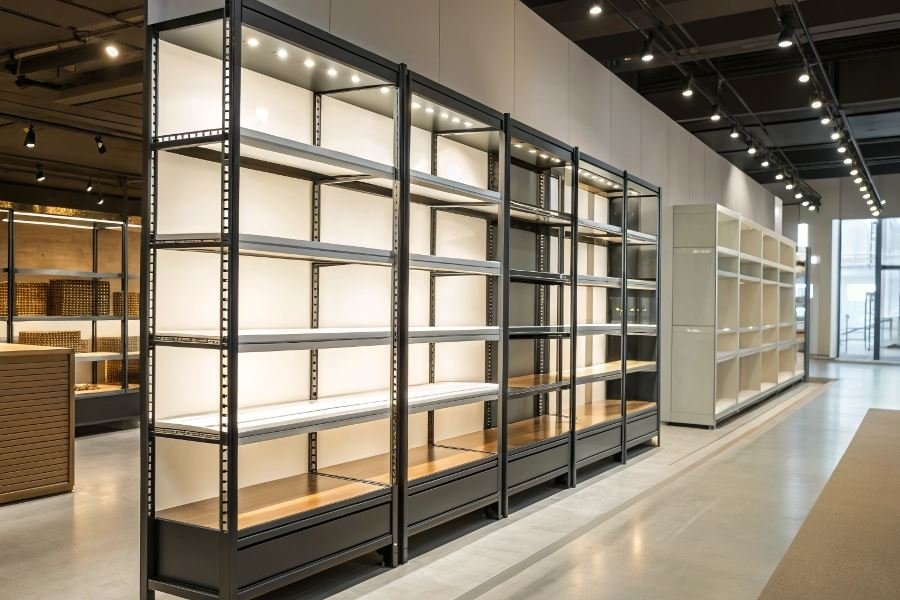
Ever wondered why some retail displays catch your eye while others fade into the background? The secret often lies not in what you see, but what you don’t consciously notice: the materials themselves.
Behind every successful retail environment stands a carefully considered material selection strategy. The shelving components that hold products aren’t just functional necessities—they’re silent salespeople, communicating quality, brand identity, and value proposition through their very substance. When a luxury boutique chooses brushed brass fixtures over plastic alternatives, they’re making a deliberate statement about their merchandise.
The material trinity: Durability, aesthetics, and cost
Successful retailers balance three critical factors when selecting shelving materials:
Durability determines longevity and maintenance requirements. High-traffic discount stores need materials that withstand constant handling and reorganization, while specialty boutiques might prioritize refined finishes over rugged construction.
Aesthetics create the emotional connection. The warm tones of wood shelving evoke craftsmanship and tradition, while sleek glass and metal combinations signal modernity and precision.
Cost considerations extend beyond initial purchase price to include installation complexity, maintenance requirements, and replacement frequency. A $5,000 investment in premium materials might deliver greater value than $2,000 spent on disposable options requiring frequent replacement.
Current material trends reshaping retail environments
The retail landscape is witnessing a fascinating evolution in material preferences. Sustainable options like bamboo and reclaimed wood have moved from niche to mainstream. Meanwhile, composite materials offering the appearance of premium surfaces at reduced weight and cost are gaining traction among mid-market retailers seeking to elevate their presentation without premium pricing.
Material Mastery for Retail Display Systems
When designing a retail space that captivates customers and showcases products effectively, the choice of shelving materials makes all the difference. The most popular materials for retail shelving components have evolved significantly, with each option offering unique advantages for different merchandising strategies. Let’s explore the top contenders that dominate the retail landscape today.
Metal: The Retail Workhorse
Metal shelving components remain the undisputed champions of retail displays, combining strength with versatility. Steel options provide exceptional durability with weight capacities often exceeding 500 pounds per shelf—perfect for hardware stores or grocery environments where product weight is substantial.
Chrome-plated steel delivers a sleek, modern aesthetic while resisting corrosion. Major retailers like Target have embraced chrome fixtures for their contemporary appeal and longevity.
Aluminum alternatives offer significant advantages:
- 1/3 the weight of steel
- Natural corrosion resistance
- Modern, clean appearance
- Easier installation and reconfiguration
The industrial-chic look of metal shelving has transcended purely utilitarian applications, becoming a design statement in high-end boutiques and flagship stores.
| Metal Type | Weight Capacity | Best For | Relative Cost |
|---|---|---|---|
| Steel | Very High | Heavy merchandise, durability | $$ |
| Aluminum | Medium | Frequent reconfigurations, lightweight | $$$ |
| Chrome | High | Visual appeal, moisture resistance | $$$ |
Wood: Warmth and Character
Wood and engineered wood components bring irreplaceable warmth to retail environments. Natural hardwoods like oak, maple, and walnut create an upscale, inviting atmosphere that particularly resonates in boutique settings.
Engineered alternatives like medium-density fiberboard (MDF) and plywood offer cost-effective solutions without sacrificing aesthetics:
“The tactile quality of wood creates an emotional connection with shoppers that simply can’t be replicated with other materials.”
Retailers like Anthropologie masterfully incorporate wooden shelving to enhance their bohemian aesthetic and create a residential feel that encourages customers to linger.
Modern wood treatments have addressed traditional limitations:
- Moisture-resistant sealants
- Fire-retardant coatings
- Reinforced construction techniques
- Custom staining options
The sustainability factor has also boosted wood’s popularity, with certified sustainable forestry products becoming increasingly important to environmentally conscious brands.
Glass and Acrylic: Transparency Sells
When visibility is paramount, glass and acrylic shelving solutions shine. These materials create the illusion of space while literally highlighting merchandise through transparency.
Tempered glass offers impressive strength (4-5 times stronger than standard glass) and safety features, making it ideal for displaying premium merchandise. When broken, it shatters into small, relatively harmless pieces rather than dangerous shards.
Acrylic alternatives provide:
- Impact resistance (17 times stronger than glass)
- Lightweight construction
- Lower cost than glass
- Easier fabrication for custom designs
Sephora exemplifies effective use of these materials, employing glass and acrylic displays that showcase colorful cosmetics while maintaining an unobstructed view throughout the store.
The clarity of these materials makes them particularly effective for:
- Jewelry displays
- Cosmetics presentations
- Electronics showcases
- Limited edition collections
The combination of proper lighting with glass or acrylic shelving creates dramatic product presentations that can significantly increase perceived value and customer engagement.
Each material choice represents not just a functional decision but a strategic one that communicates your brand’s values and enhances the overall shopping experience.
Making the Perfect Match: Retail Shelving Material Selection
Tailoring materials to retail environments
Selecting the right shelving materials isn’t just about durability—it’s about creating the perfect stage for your merchandise. Different retail environments demand different solutions. Luxury boutiques typically benefit from glass and high-grade wood components that communicate quality and craftsmanship. The natural warmth of maple or cherry wood shelving creates an inviting atmosphere that encourages customers to linger and explore premium merchandise.
For grocery and convenience stores, food-grade stainless steel and HDPE plastic components remain the gold standard. These materials withstand frequent cleaning with harsh chemicals while meeting strict health regulations. Pharmacies and healthcare retailers similarly benefit from antimicrobial materials like Microban-treated surfaces that inhibit bacterial growth—a feature that’s seen 47% increased demand since 2020.
Heavy merchandise retailers should prioritize structural integrity above all. Hardware stores and automotive parts retailers find that industrial-grade steel shelving with weight capacities exceeding 500 pounds per shelf provides the necessary support while communicating reliability to customers.
Cost versus benefit analysis
| Material | Initial Cost | Lifespan (Years) | Maintenance Cost | Best For |
|---|---|---|---|---|
| Wood | 5-10 | Medium | Boutiques, specialty retail | |
| Glass | $ | 7-15 | High | Luxury, cosmetics, jewelry |
| Steel | $$$ | 15-20+ | Low | Hardware, industrial, backroom |
| Aluminum | 10-15 | Low | Modern retail, adjustable systems | |
| HDPE Plastic | $$ | 8-12 | Very Low | Food retail, damp environments |
The true cost of shelving extends far beyond the initial purchase. While wood shelving might cost 30-40% more upfront than basic steel options, its aesthetic appeal can drive significantly higher sales in appropriate settings. Retail Design Institute research indicates that properly matched shelving materials can increase product turnover by up to 18%.
Aluminum systems represent the sweet spot for many retailers, offering excellent strength-to-weight ratios while remaining reconfigurable. Though typically 15-25% more expensive than steel, aluminum’s corrosion resistance and modern appearance often justify the investment, particularly in frequently redesigned spaces.
Tomorrow’s shelving innovations
The retail shelving landscape is evolving rapidly with several emerging trends:
-
Sustainable materials are gaining tremendous momentum. Recycled composite shelving made from post-consumer plastics offers durability comparable to virgin materials while reducing environmental impact. Trex Commercial Products has pioneered systems using 95% recycled materials that maintain commercial-grade performance.
-
Smart integration is transforming passive shelving into active retail tools. Embedded RFID technology and weight sensors allow shelving to communicate inventory levels in real-time, reducing stockouts by up to 30%.
-
Modular hybrid systems combining multiple materials are becoming the new standard. These systems allow retailers to quickly adapt to changing merchandise needs without complete fixture replacement—a critical advantage as product lifecycles continue to shorten.
-
Antimicrobial properties have moved from specialty to standard feature. Copper-infused surfaces and photocatalytic coatings that actively destroy bacteria and viruses represent the cutting edge of this trend, with adoption rates increasing 65% annually.
The most successful retailers are those who view shelving not merely as storage but as a strategic investment in their brand experience. By thoughtfully matching materials to both merchandise and environment, retailers create cohesive spaces that enhance product presentation while optimizing operational efficiency.
Discover the top 5 retail shelving materials that maximize display effectiveness and customer engagement. Compare metal, wood, glass, and acrylic options to find the perfect balance of durability, aesthetics, and cost for your store's unique needs.
Discover the top 5 retail shelving materials that maximize display effectiveness and customer engagement. Compare metal, wood, glass, and acrylic options to find the perfect balance of durability, aesthetics, and cost for your store's unique needs.