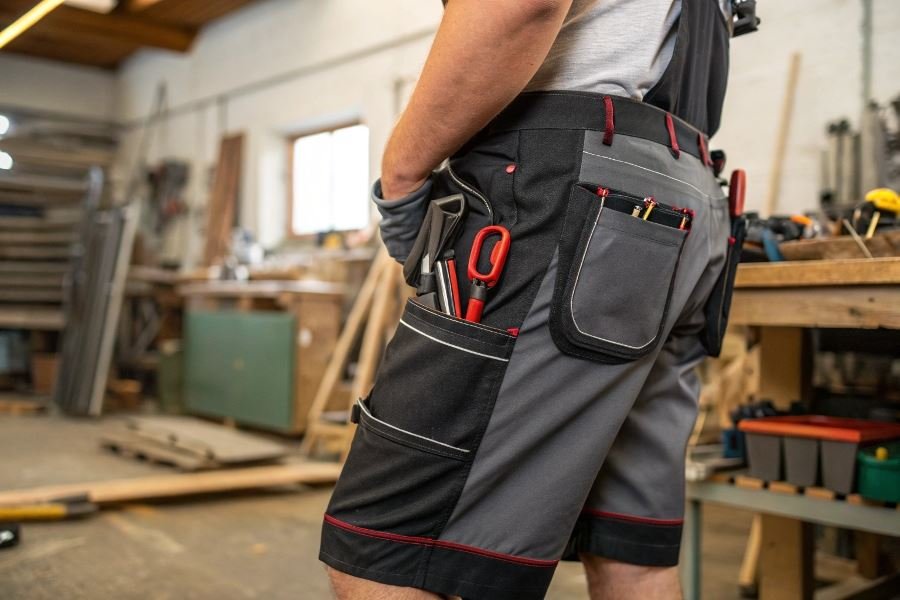
Ever stood in your workshop sweating through thick canvas shorts in July, or felt the bite of winter through thin fabric while on a job site in January? The right work shorts aren’t just about looking professional—they’re critical tools that directly impact your productivity, comfort, and even safety.
Selecting work shorts might seem straightforward, but it’s actually a nuanced decision that changes with the calendar. The perfect pair for a scorching summer day could leave you miserable during spring showers or fall temperature swings. Professional tradespeople know that adaptability is everything when it comes to workwear.
“The difference between a good day and a miserable one often comes down to what you’re wearing,” notes a veteran construction foreman with 25 years of experience.
When evaluating work shorts across seasons, three factors consistently determine success: material composition, functional design, and weather appropriateness. Cotton-polyester blends might offer durability year-round, but their moisture-wicking capabilities become crucial during summer months. Meanwhile, those reinforced knees and gusseted crotches that seem like luxury features become essential when you’re constantly moving between positions.
Temperature fluctuations demand different approaches—lightweight, breathable fabrics with UV protection for summer; water-resistant, quick-drying materials for spring; and slightly heavier, more durable options for fall. The best professionals maintain a seasonal rotation, understanding that this small investment pays dividends in comfort and performance.
Material Mastery for Work Shorts Across Seasons
When selecting work shorts that perform throughout the year, understanding fabric technology becomes your secret weapon. The right materials don’t just provide comfort—they actively support productivity by adapting to environmental conditions while maintaining durability where it counts.
Navigating how to choose work shorts for different seasons requires recognizing that each climate demands specific performance features. The construction methods, fabric weights, and technical properties that excel in July heat waves become liabilities during November chill. Let’s break down the essential considerations by season.
Summer Warriors: Breathability Above All
Summer work environments demand shorts that combat heat while maintaining professional standards. The gold standard materials include:
- Lightweight ripstop nylon (4-6 oz) with UPF 50+ protection
- Cotton-polyester blends (65/35 ratio) with moisture-wicking treatment
- Performance mesh panels strategically placed for ventilation
The technology behind summer-appropriate work shorts has advanced dramatically, with brands like Carhartt and Dickies incorporating cooling zones and quick-dry fabrics that can handle sweat without showing it.
The difference between standard cotton and modern moisture-wicking fabrics can mean up to 7°F in perceived temperature reduction during physical labor.
Look for gusseted crotches that prevent binding during movement and flat-lock seams that eliminate chafing—critical features when heat and humidity combine.
Spring/Fall Flexibility: Adaptable by Design
The shoulder seasons require versatility above all else. The best transitional work shorts feature:
- Mid-weight canvas (7-9 oz) with water-resistant finish
- Stretch-infused twill with mechanical stretch (2-3% elastane)
- Convertible designs with adjustable features
Duluth Trading Company excels in this category with their adaptable designs that include adjustable waistbands and convertible lengths.
Temperature fluctuations during spring and fall demand materials that perform across a 30°F range without requiring wardrobe changes. Look for shorts with:
| Feature | Benefit |
|---|---|
| Reinforced belt loops | Supports tool attachments as layers change |
| Hidden zippered pockets | Secures valuables during variable conditions |
| Articulated knees | Maintains mobility when squatting/kneeling |
| DWR coating | Repels morning dew and light precipitation |
Winter-Ready Options: Strategic Layering
Yes, work shorts can be winter-appropriate with the right approach. The key considerations include:
- Heavyweight duck canvas (10-12 oz) with wind-resistant properties
- Flannel-lined options providing insulation without bulk
- Thermal-compatible designs engineered for layering
5.11 Tactical offers winter-appropriate shorts designed specifically for layering with thermal base layers or knee-high work socks.
The most effective winter work shorts feature slightly longer inseams (typically 11-13 inches) and relaxed fits that accommodate thermal underwear without restricting movement. Look for reinforced hems that won’t fray when repeatedly contacting boot tops.
Smart design elements like side cargo pockets positioned to remain accessible even when wearing a heavy work jacket make winter shorts surprisingly practical for certain industries where indoor/outdoor transitions are frequent.
By selecting season-appropriate work shorts with these material and design considerations in mind, you’ll maximize both comfort and functionality—regardless of what the thermometer reads.
Essential Features That Define Superior Work Shorts
Durability That Outlasts The Job
Work shorts aren’t just casual wear with a different name—they’re specialized equipment designed to withstand punishment. The best pairs feature reinforced stitching at stress points, particularly the crotch gusset and pocket corners where failure typically begins.
Triple-stitched seams have become the gold standard in professional-grade work shorts, creating connections that resist splitting even under extreme tension. Look for brands that employ bartacking—a dense concentration of stitches that reinforces vulnerable areas like pocket corners and belt loops.
Material choice dramatically impacts year-round performance. While traditional cotton duck canvas (10-12oz weight) offers excellent abrasion resistance, modern blends incorporating mechanical stretch fibers provide superior flexibility without compromising durability:
| Material | Best Season | Durability Rating | Key Advantage |
|---|---|---|---|
| Cotton Duck Canvas | Spring/Fall | ★★★★★ | Maximum abrasion resistance |
| Ripstop Nylon Blend | Summer | ★★★★☆ | Quick-drying properties |
| Cotton/Spandex Blend | All Seasons | ★★★★☆ | Natural stretch without binding |
| CORDURA® Reinforced | Winter/Heavy Duty | ★★★★★ | Exceptional tear resistance |
The most thoughtful designs incorporate reinforcement panels at the knees and seat—areas that experience the most friction during a workday. Carhartt and Duluth Trading Co. have pioneered these reinforcement techniques, extending short lifespan by up to 30%.
Strategic Storage Solutions
The functionality of work shorts is largely defined by their pocket configuration. Beyond the standard five-pocket design borrowed from jeans, professional-grade work shorts offer specialized storage that adapts to seasonal needs.
Summer-oriented shorts typically feature mesh-backed pockets that provide ventilation while maintaining capacity. Winter and transitional season models prioritize deeper pockets with secure closures to prevent tool loss when layering.
The most innovative designs now include:
- Dedicated utility pockets sized for specific tools
- Reinforced holster pockets that stay open for easy access
- Hidden security pockets for valuables
- Integrated hammer loops positioned for natural movement
- Specialized phone pockets with water-resistant linings
5.11 Tactical has revolutionized tool organization with their patented multi-compartment cargo pockets that maintain a slim profile until expanded. This adaptive storage concept addresses the fundamental challenge of balancing capacity with comfort.
Movement Without Restriction
The defining characteristic separating premium work shorts from budget alternatives is their approach to mobility. Superior designs incorporate articulated patterns that follow the body’s natural movement rather than fighting against it.
Key mobility features to evaluate include:
- Crotch gussets that eliminate the four-way seam intersection where traditional shorts bind
- Mechanical stretch panels strategically placed at flex points
- Relaxed fit through the thigh without excessive bagginess
- Waistbands that incorporate partial elastic sections for bending comfort
Dickies pioneered the flex waistband technology that allows for up to 2″ of expansion during crouching or bending—a feature now widely adopted across premium work shorts.
For all-season comfort, the inseam length deserves careful consideration. While 9″ inseams represent the versatile middle ground, summer conditions may call for 7″ options that increase airflow, while transitional seasons benefit from 11″ lengths that provide additional coverage without restricting knee movement.
The most sophisticated designs now incorporate moisture-wicking properties in the waistband and pocket bags—areas where sweat accumulation creates discomfort regardless of season. This attention to microclimate management represents the cutting edge of work short engineering, ensuring comfort remains consistent throughout the workday.
Discover how to select the perfect work shorts for every season with our comprehensive guide. Learn about optimal materials, essential features, and comfort considerations to maximize performance and protection year-round in any working environment.
Discover how to select the perfect work shorts for every season with our comprehensive guide. Learn about optimal materials, essential features, and comfort considerations to maximize performance and protection year-round in any working environment.