
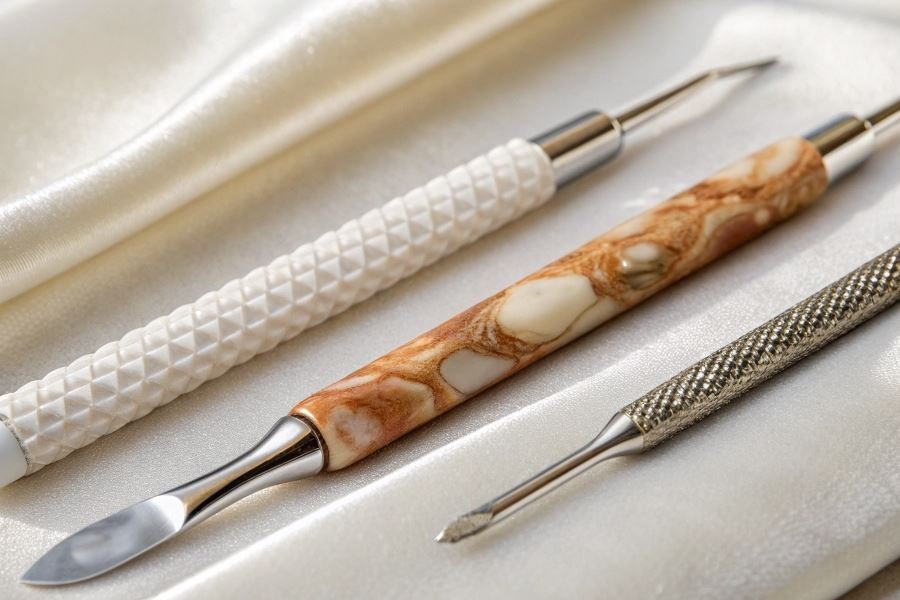
Ever wondered why some nail technicians can create flawless cuticle work while others struggle? The secret often lies not in their technique, but in what they’re holding. The humble manicure spatula—that small, unassuming tool—can make or break your nail care experience.
Behind every perfect manicure is a carefully selected set of tools. The spatula, used for pushing back cuticles and cleaning under nails, might seem simple but requires thoughtful material selection. Professional nail technicians know that choosing between stainless steel, titanium, or ceramic isn’t just about price—it’s about performance, longevity, and maintaining proper hygiene standards.
“The material of your manicure spatula affects everything from how it feels in your hand to how well it sanitizes between clients,” explains award-winning nail artist Mia Chen, who has worked with celebrities and high-profile clients for over a decade.
The material impacts three critical factors:
- Performance: How smoothly it glides across the nail bed and how precisely it pushes back cuticles
- Durability: Whether it will last through hundreds of manicures or need frequent replacement
- Hygiene: How easily it can be sanitized to prevent bacterial transfer
Today’s top professionals typically choose between three superior materials: surgical-grade stainless steel, lightweight titanium, and premium ceramic. Each brings distinct advantages to the manicure table, from the satisfying weight of steel to the gentle touch of ceramic. Understanding these differences transforms not just your tool selection, but your entire approach to nail care.
The Material Matters: Choosing Your Perfect Manicure Spatula
When precision meets artistry in nail care, the humble manicure spatula becomes an extension of your creative vision. Professional nail technicians know that the material of this essential tool significantly impacts both performance and results.
The nail industry has evolved dramatically, with manicure spatulas now available in various materials to suit different techniques and preferences. Examining the top 3 materials for manicure spatulas: advantages and disadvantages reveals how each option offers distinct benefits while presenting unique challenges for nail professionals and enthusiasts alike.
Stainless Steel: The Professional Standard
Unmatched durability makes stainless steel spatulas the workhorses of busy salons. These tools can withstand thousands of applications without showing significant wear, making them cost-effective despite higher initial investment.
The sterilization capabilities of stainless steel are particularly noteworthy in an era of heightened hygiene awareness. These spatulas can be fully sanitized through autoclave procedures, providing peace of mind for both technicians and clients.
Precision work becomes effortless with the rigid structure of steel spatulas, allowing for clean, defined lines when working with gels and acrylics.
However, the 1.5-2 ounce weight of standard stainless steel spatulas can cause hand fatigue during long sessions. Additionally, steel’s high thermal conductivity means these tools quickly transfer temperature—potentially causing discomfort when working with heat-sensitive products.
Quality stainless steel spatulas typically range from $15-45, representing a significant investment compared to alternatives.
Wooden Spatulas: Natural Comfort
Wooden spatulas have gained popularity for their ergonomic benefits. At just 0.5-0.8 ounces, these lightweight tools reduce hand strain during extended manicure sessions.
The natural texture provides excellent grip even with gloves, and many professionals appreciate the organic feel when manipulating products. With prices typically between $5-12 for quality options, wooden spatulas offer accessibility for beginners and budget-conscious professionals.
The drawbacks become apparent with regular use. Wood’s natural porosity can harbor bacteria if not properly sealed, creating potential hygiene concerns. Even well-maintained wooden spatulas typically last only 3-6 months with regular use before showing signs of wear.
Sterilization presents significant challenges as traditional autoclave methods would damage the wood. Most professionals rely on liquid disinfectants, which may not provide the same level of sanitation as methods used for non-porous materials.
Plastic/Acrylic: Versatile and Accessible
The lightweight nature of plastic spatulas (typically 0.3-0.6 ounces) makes them exceptionally comfortable for extended use. Their affordability—often priced between $3-10 for sets—makes them particularly attractive for beginners or as backup tools.
The variety of designs and colors available in plastic spatulas allows for personalization and easy organization by function or product type.
The durability issues become evident quickly, with most plastic spatulas showing wear after just 2-3 months of regular use. Some acrylics and gels can potentially interact with certain plastics, causing degradation of the tool over time.
Environmental considerations have become increasingly important, with traditional plastic spatulas contributing to industry waste. However, newer biodegradable options are emerging to address this concern, though often at premium prices.
Each material offers distinct advantages for different applications, techniques, and personal preferences—making the ideal choice highly individual for each nail professional.
Making the Perfect Choice: Your Ideal Manicure Spatula Material
Professional needs drive material selection
When selecting manicure spatulas, professionals understand that material choice directly impacts performance, durability, and client satisfaction. Each of the top three materials—stainless steel, glass, and ceramic—offers distinct advantages for specific nail care scenarios.
Stainless steel spatulas excel in precision work and product manipulation. Their rigid structure makes them ideal for technicians who need exact control when applying gels or acrylics. The metal’s natural antibacterial properties provide an added hygiene benefit that many professionals prioritize.
Glass spatulas shine when working with aggressive chemicals like acetone or harsh removers. Unlike metal alternatives, glass won’t react with these substances, ensuring product purity and consistent results. This makes them particularly valuable for salons specializing in gel removal and nail restoration.
Ceramic options balance the benefits of both worlds—offering chemical resistance similar to glass while providing more durability. They’re particularly suited for technicians who work with a wide variety of products and need versatile tools that can handle multiple applications.
The right spatula material isn’t just about preference—it’s about matching your specific workflow and service offerings to maximize efficiency and results.
Material-specific maintenance protocols
Each material demands different care routines to maintain optimal performance and longevity:
| Material | Cleaning Method | Sterilization | Special Considerations |
|---|---|---|---|
| Stainless Steel | Soap and water, alcohol wipes | Autoclave safe (121°C) | Check for rust spots regularly |
| Glass | Mild detergent, acetone-safe | UV sterilization recommended | Inspect for chips or cracks |
| Ceramic | Gentle cleansers, avoid abrasives | Chemical disinfection | Store carefully to prevent breakage |
Stainless steel maintenance requires vigilance against moisture exposure. After cleaning with alcohol or soap, thoroughly dry your tools to prevent oxidation. Quality stainless steel spatulas can withstand thousands of autoclave cycles without degradation when properly maintained.
Glass spatulas demand careful handling during cleaning. While chemically resistant, their physical fragility means they should be stored separately from other tools. Many professionals keep dedicated storage cases with soft linings to prevent accidental damage.
Ceramic tools benefit from gentle cleaning agents that won’t scratch their surface. Abrasive cleaners can create microscopic grooves that harbor bacteria and compromise the tool’s integrity. A weekly deep clean with specialized ceramic-safe disinfectants will extend their useful life significantly.
Value assessment and investment strategy
When evaluating the long-term value of your spatula investment, consider these factors:
Initial investment vs. replacement frequency: Stainless steel commands a higher upfront cost (typically 15 − 45forprofessional − gradetools)butcanlast5 + yearswithpropercare.Glassspatulasofferalowerentrypoint(8-25) but may need replacement every 1-2 years due to breakage risk. Ceramic falls between these extremes in both cost and longevity.
Client perception matters: Premium materials create an impression of professionalism that can justify higher service prices. Many successful nail technicians report that visible investment in quality tools allows them to command 15-20% higher rates for their services.
The environmental and economic calculation increasingly favors durable options. While disposable plastic spatulas might seem cost-effective initially, professionals who track their expenses find that quality stainless steel tools become more economical after approximately 8-12 months of regular use.
Your selection ultimately depends on your specific service mix, client base, and working style. Many leading technicians maintain a curated collection of all three materials, selecting the perfect tool for each specific application to deliver consistently exceptional results.
Discover the pros and cons of stainless steel, wood, and plastic manicure spatulas. Our comprehensive guide helps professionals choose the perfect tool based on durability, hygiene, and performance for flawless nail applications.
Discover the pros and cons of stainless steel, wood, and plastic manicure spatulas. Our comprehensive guide helps professionals choose the perfect tool based on durability, hygiene, and performance for flawless nail applications.
