
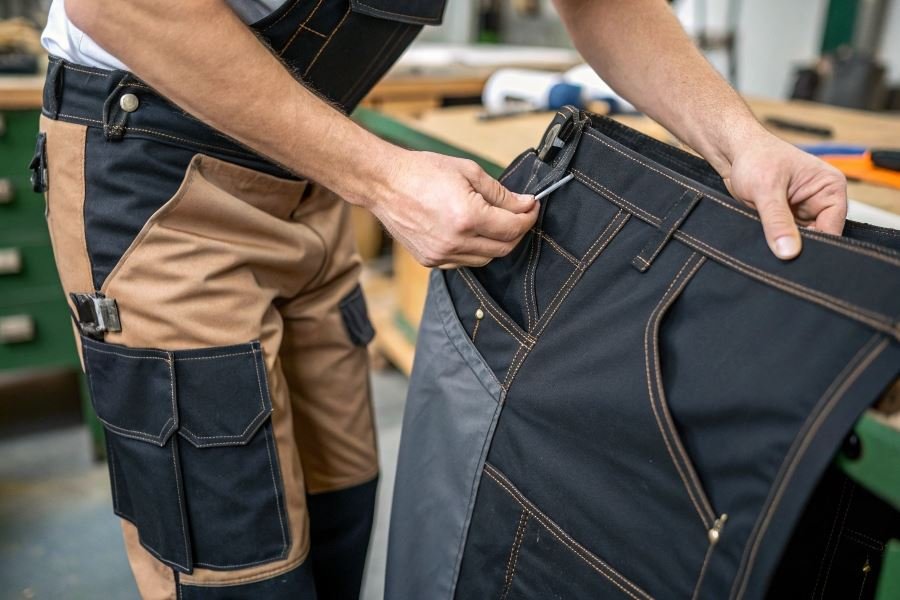
Ever wondered why some work trousers cost $25 while others command $250? The difference isn’t just marketing—it’s a complex equation of materials, construction, and functionality that directly impacts your workday comfort and safety.
When a construction worker kneels on concrete for the tenth time in an hour, or an electrician reaches into a tight space, their trousers become more than clothing—they’re essential tools. For carpenters, welders, plumbers, and countless other professionals, work trousers represent the critical interface between their bodies and often harsh environments.
The work trouser market divides naturally into three distinct tiers. Budget options (20−50) offer basic protection and moderate durability. Mid-range selections (50−120) balance longevity with specialized features. Premium offerings (120−300+) deliver exceptional durability with advanced materials and construction techniques that can withstand years of punishment.
What truly drives these price differences? Material quality stands as the primary factor—ripstop fabrics and reinforced panels dramatically outperform basic cotton. Construction techniques like triple-stitched seams and bartacking at stress points prevent premature failure. Functional elements such as ergonomic designs, specialized pockets, and integrated knee pad pouches transform ordinary pants into profession-specific tools.
“The bitterness of poor quality remains long after the sweetness of low price is forgotten.” – Benjamin Franklin
The true value equation extends beyond the price tag. A $150 pair that lasts three years proves more economical than three $50 pairs replaced annually—while offering superior protection and comfort throughout their lifespan.
The True Cost Behind Work Trousers: A Price-Quality Breakdown
When examining work trousers across different price points, the disparities extend far beyond the price tag. The comparison of work trousers in different price categories reveals that cost differences often reflect substantial variations in quality, functionality, and longevity that directly impact value over time.
Material Quality: The Foundation of Durability
Premium fabrics command premium prices – and for good reason. Entry-level work pants (20 − 40)typicallyfeaturebasiccottonorpolyesterblendsat7 − 8ozweight, whilemid − rangeoptions(50-90) upgrade to 10-12 oz canvas or ripstop materials. At the high end ($100-200+), you’ll find military-grade fabrics like Cordura or specialized blends from Carhartt offering 12-14 oz weight with advanced tear resistance.
The reinforcement techniques tell an equally compelling story:
| Price Range | Stitching | Reinforcement | Expected Lifespan |
|---|---|---|---|
| $20-40 | Single | Basic | 3-6 months |
| $50-90 | Double | Bartack | 1-2 years |
| $100-200+ | Triple | Riveted | 3+ years |
The difference between single and triple stitching isn’t just aesthetic – it can mean the difference between pants that fail after a few months versus those that withstand years of abuse.
Functional Features That Define Utility
Budget work trousers offer basic functionality – typically 4-6 pockets with minimal specialized storage. Mid-range options introduce thoughtful innovations like:
- Hammer loops and tool holders
- Reinforced utility pockets
- Basic articulated knees
Premium work pants transform into wearable toolboxes with sophisticated features including:
- CORDURA-reinforced tool pockets
- Integrated knee pad pockets compatible with certified protection inserts
- Gusseted crotch designs for enhanced mobility
- Hidden tech pockets for smartphones and devices
- Ventilation zones for temperature regulation
The Snickers Workwear 6241 AllroundWork Stretch Trousers exemplify this premium approach, with 15+ specialized pockets and mechanical stretch panels that justify their $130+ price point.
Brand Reputation and Manufacturing Standards
Manufacturing processes significantly impact pricing. Budget brands often outsource to facilities with minimal quality control, while premium manufacturers like Dickies and Blaklader maintain strict production standards.
The difference manifests in consistent sizing, color-fastness after washing, and structural integrity at stress points – details that become apparent only after weeks of wear.
Certifications That Matter
Higher-priced work trousers frequently carry industry certifications that budget options lack:
- OEKO-TEX® Standard 100 certification ensuring fabric safety
- EN 14404 compliance for knee protection
- ASTM F1671 certification for bloodborne pathogen resistance
- FR ratings for flame resistance in specialized industries
These certifications require rigorous testing and quality control measures that inevitably increase production costs – but provide crucial protection for specialized work environments.
The investment calculation becomes clear: premium work trousers might cost 3-4 times more upfront but deliver 5-6 times longer lifespan with superior functionality, making them the economical choice for professionals who depend on their gear daily.
Making Smart Investments in Work Trousers
When it comes to work trousers, the cheapest option rarely equals the best value. Your choice should reflect not just your current budget, but the demands of your specific work environment and long-term financial considerations. Let’s break down how to make truly informed decisions that balance performance, durability, and cost.
Value Champions for Different Work Environments
Different work settings demand different features from your workwear:
Construction and outdoor trades benefit most from mid-range to premium options ($75-150) with reinforced knees, water-resistant treatments, and multiple tool pockets. Brands like Carhartt and Dickies deliver exceptional value in this category.
Manufacturing and warehouse work often finds best value in the $50-90 range, where comfort, freedom of movement, and basic durability meet without unnecessary premium features.
Skilled trades requiring frequent kneeling (plumbing, flooring) see tremendous value in the $100-180 category where articulated knees and specialized padding prevent both discomfort and premature wear.
The sweet spot for value isn’t universal—it’s determined by matching features to your specific daily tasks.
Budget vs. Premium: The True Cost Calculation
When analyzing long-term costs, consider this revealing comparison:
| Price Category | Initial Cost | Average Lifespan | Cost Per Month | Replacement Frequency |
|---|---|---|---|---|
| Budget | $25-40 | 3-6 months | 5.00−13.33 | 2-4 pairs yearly |
| Mid-Range | $60-100 | 10-14 months | 4.29−10.00 | 1 pair yearly |
| Premium | $120-200 | 18-36 months | 3.33−11.11 | 1 pair every 1-3 years |
The numbers tell a compelling story: premium work trousers often deliver the lowest cost-per-wear despite higher upfront investment. A $150 pair lasting three years costs just $4.17 monthly, while replacing $30 trousers every four months costs $7.50 monthly—nearly 80% more expensive long-term.
Hidden costs of budget options include:
- Lost productivity during more frequent replacements
- Potential safety risks from premature wear
- Reduced comfort affecting work performance
Smart Selection Strategy
To select work trousers that truly meet your needs:
-
Identify your non-negotiable features based on daily tasks. Knee protection, flame resistance, and tool storage aren’t luxuries if they’re essential to your work.
-
Calculate your true budget using cost-per-month rather than sticker price. A 120pairlasting24months(5/month) is more budget-friendly than a 40pairlasting5months(8/month).
-
Consider seasonal rotation rather than single-pair solutions. Two specialized pairs (summer-weight and winter-weight) often outlast three all-season pairs.
-
Test before committing to multiple pairs. Many premium brands like Duluth Trading Co. offer satisfaction guarantees that let you verify performance.
The wisest approach isn’t finding the cheapest acceptable trousers—it’s identifying the most cost-effective solution for your specific work demands.
Remember that proper care dramatically extends lifespan across all price points. Even premium trousers will disappoint if subjected to improper washing, drying, or storage practices.
Discover what truly determines work trouser quality and pricing across budget to premium ranges. Compare materials, features, and durability to make smarter investments in workwear that meets your professional needs and lasts longer.
Discover what truly determines work trouser quality and pricing across budget to premium ranges. Compare materials, features, and durability to make smarter investments in workwear that meets your professional needs and lasts longer.

