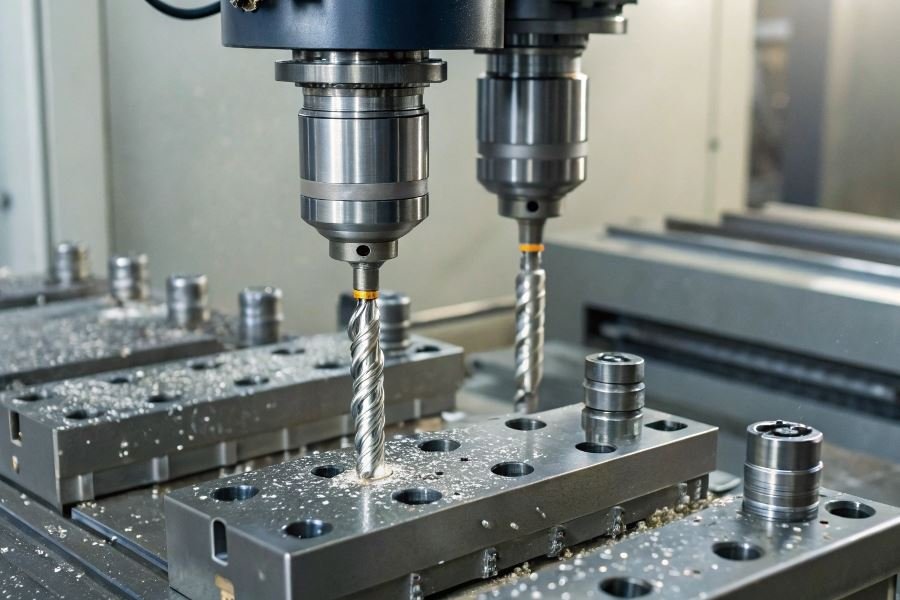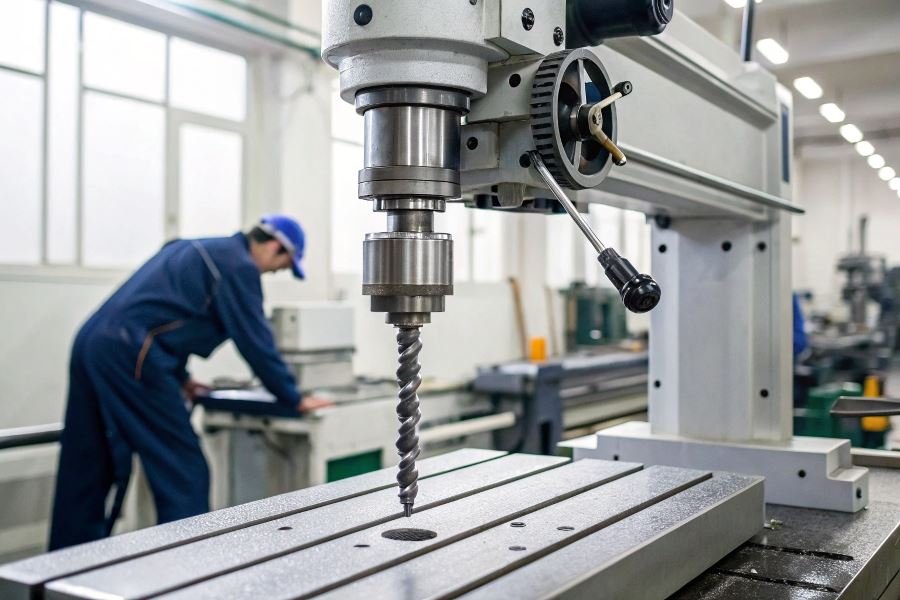
Ever wondered what makes those perfectly aligned holes in massive steel structures possible? The answer lies in a workshop powerhouse that combines brute force with ballet-like precision.
Radial drilling machines represent the pinnacle of hole-making technology in manufacturing and fabrication. These versatile workhorses allow operators to position a drilling head at virtually any point within a semicircular area without moving the workpiece—a game-changer for handling large, heavy components that would be impractical or impossible to reposition repeatedly.
From manual to magnificent
The evolution of radial drilling technology tells a fascinating story of industrial innovation. The first recognizable radial drills emerged in the late 1800s, with significant refinements during the industrial boom following World War II. What began as manually operated machines have transformed into computer-controlled precision instruments capable of micron-level accuracy.
The anatomy of precision
At their core, radial drilling machines feature five critical components working in harmony:
- A robust column anchored to the base
- A radial arm that can swing 180° around the column
- A drill head that travels along the arm
- A spindle assembly providing rotational force
- A work table for securing materials
This ingenious design creates a three-dimensional workspace where the drill can approach the workpiece from virtually any angle. The operator simply positions the arm and head, locks them in place, and executes the cut—achieving precision that would require multiple setups on conventional drilling equipment.
Core Features That Make Radial Drills Exceptional
Movement Freedom Redefined
Radial drilling machines stand apart in the metalworking world with their remarkable range of motion. Unlike conventional drill presses that keep workpieces dancing around the stationary drill head, radial drills flip the script entirely. The radial arm swings in a 180-degree arc while the drill head travels along this arm—creating a massive operational envelope without repositioning your workpiece.
This extraordinary flexibility transforms how fabrication shops approach complex drilling projects. Radial drilling machines: features and advantages become immediately apparent when working with oversized components like structural beams, heavy equipment frames, or industrial machinery parts. The drill comes to the work, not vice versa, saving countless hours of rigging and repositioning.
The movement capabilities break down into three critical dimensions:
- Arm rotation (typically 180° around the column)
- Radial travel (the head moving in/out along the arm)
- Vertical adjustment (column height changes)
This three-axis freedom creates virtually unlimited drilling positions within the machine’s working radius—often spanning 4 to 10 feet depending on the model.
Precision That Demands Respect
When discussing industrial drilling equipment, precision isn’t just nice to have—it’s essential. Modern radial drills deliver repeatability within 0.001 inches, maintaining this accuracy even at the furthest extension of the arm.
The secret lies in the counterbalanced design and rigid construction that eliminates deflection even under load.
This precision comes from several engineering achievements:
| Component | Contribution to Accuracy |
|---|---|
| Hardened spindle | Minimizes runout under load |
| Precision bearings | Eliminate wobble during operation |
| Digital positioning | Enables exact placement repeatability |
| Rigid arm construction | Prevents deflection at extension |
For fabrication shops working with tight tolerances, these accuracy specifications translate directly into reduced scrap rates and higher-quality finished products.
Power That Transforms Materials
The heart of any radial drill is its spindle—and these machines pack serious muscle. Modern units feature motors ranging from 5HP in smaller shop models to industrial behemoths exceeding 25HP.
This power translates into impressive material capabilities:
Mild Steel: Holes up to 3 inches in diameter without breaking a sweat
Cast Iron: Handles large-diameter holes with minimal chatter
Hardened Alloys: Processes specialized materials with proper tooling
Non-Ferrous Metals: Cuts through aluminum and copper with exceptional finish quality
The combination of torque and precision means these machines can handle delicate operations like reaming and tapping alongside brute-force drilling. Variable speed controls—typically ranging from 50 to 2,000 RPM—allow operators to dial in the perfect cutting parameters for any material.
What truly sets radial drills apart is their ability to maintain consistent performance across their entire working radius. Whether drilling at the column or at full extension, the power delivery remains constant—a critical advantage when working with large, complex components that require multiple operations without repositioning.
Maximizing Value with Radial Drilling Machines
Where radial drills truly shine
Radial drilling machines have carved out essential roles across multiple industries where precision boring operations are non-negotiable. In manufacturing facilities, these versatile workhorses handle everything from small-batch custom components to high-volume production runs. Aerospace manufacturers rely on radial drills for creating precise holes in aircraft frames and engine components, where tolerances are measured in thousandths of an inch. Similarly, shipbuilding operations leverage these machines for drilling through thick steel plates that form vessel hulls.
The automotive industry employs radial drilling machines for engine block manufacturing, transmission housings, and chassis components. Meanwhile, heavy equipment manufacturers depend on them for drilling operations on massive components like excavator booms and mining equipment frames.
The true value of a radial drill emerges when working with components too large or awkward to move easily—the machine adapts to the workpiece rather than forcing the opposite.
Oil and gas equipment fabricators particularly benefit from radial drills when creating pressure vessels, pipeline components, and drilling equipment that must withstand extreme conditions. The construction industry uses them for structural steel fabrication, where multiple precise holes must be created in beams and columns.
Investment considerations that matter
When evaluating the financial case for a radial drilling machine, several factors determine the return on investment timeline:
Initial acquisition costs typically range from $15,000 for basic used models to over $100,000 for advanced CNC-equipped systems. However, focusing solely on purchase price misses the broader economic picture.
Productivity gains often justify the investment, especially when compared with alternative drilling methods. A properly utilized radial drill can reduce labor hours by 30-50% compared to using multiple conventional drill presses for the same operations.
| Investment Factor | Basic Model | Advanced CNC Model |
|---|---|---|
| Initial Cost | $15,000-30,000 | $75,000-120,000 |
| Annual Maintenance | $1,200-2,500 | $3,000-7,000 |
| Expected Lifespan | 15-20 years | 12-15 years |
| Labor Savings | 30-35% | 40-60% |
| Energy Consumption | Moderate | Higher |
The versatility factor significantly impacts ROI calculations. A single radial drill can often replace multiple specialized machines, reducing floor space requirements and simplifying workflow. For job shops handling diverse projects, this adaptability translates directly to expanded capabilities and new revenue streams.
Maintaining performance for decades
The longevity of radial drilling machines is legendary, with many units remaining productive for 30+ years when properly maintained. This exceptional service life stems from their robust construction and relatively straightforward mechanical systems.
Preventive maintenance requirements include:
- Daily lubrication checks of all moving components
- Weekly inspection of belts, gears, and electrical connections
- Monthly verification of spindle alignment and column stability
- Quarterly assessment of hydraulic systems and coolant filtration
The most critical maintenance factor is spindle care—regular bearing inspection and replacement prevents catastrophic failures that could damage workpieces or cause extended downtime. Modern radial drills from manufacturers like SMTCL and Giddings & Lewis incorporate improved bearing designs that extend service intervals.
For operations considering used equipment, examining the condition of the column, arm, and base is essential—these components are difficult and expensive to repair if significantly worn. A well-maintained 20-year-old radial drill often delivers better value than a newer, lower-quality machine with questionable construction.
Discover the advanced features and operational advantages of radial drilling machines in modern manufacturing. Learn how these versatile tools deliver precision, power, and efficiency for complex industrial drilling applications.
Discover the advanced features and operational advantages of radial drilling machines in modern manufacturing. Learn how these versatile tools deliver precision, power, and efficiency for complex industrial drilling applications.