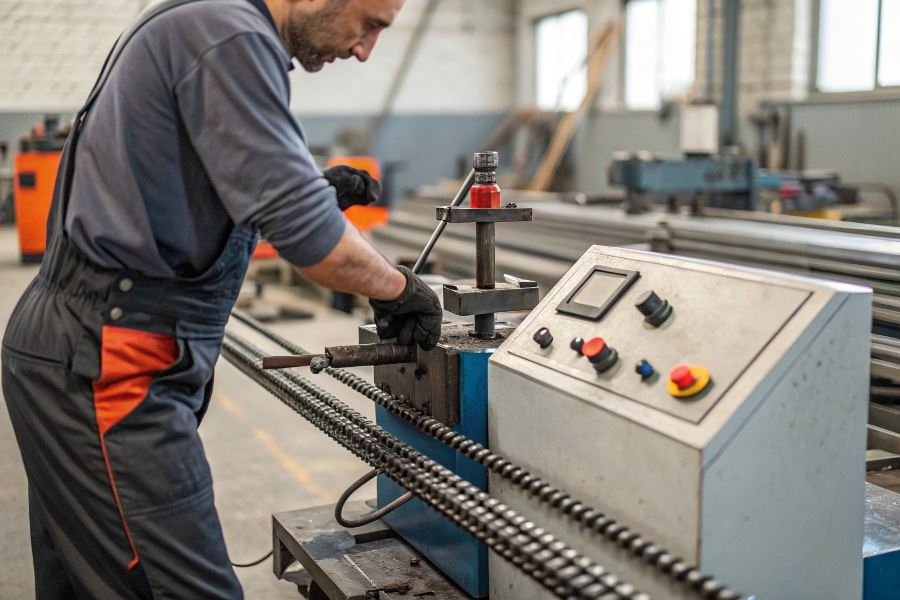
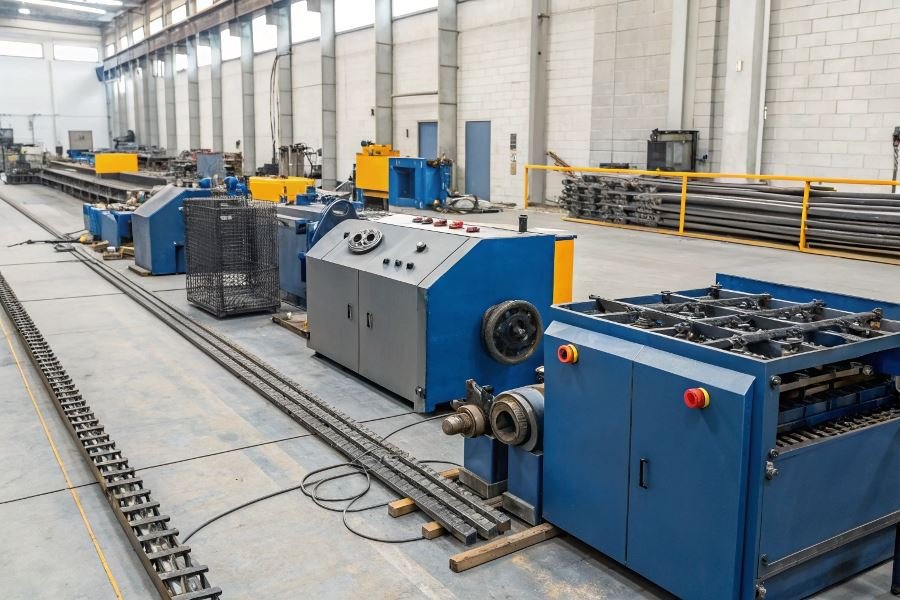
What if you could slash your rebar processing time by 70% while improving precision to near-perfect levels? This isn’t construction science fiction—it’s the reality of modern automatic rebar processing lines transforming job sites across America.
Automatic rebar processing lines represent sophisticated systems that combine cutting, bending, and fabrication operations into seamless production flows. At their core, these systems feature computer-controlled cutting stations, multi-angle bending units, straightening mechanisms, and integrated material handling systems—all orchestrated by advanced software that translates engineering specifications into precise fabrication instructions.
The journey to today’s high-efficiency systems began in the 1970s with rudimentary mechanical benders, but truly accelerated in the 1990s when computerized controls revolutionized precision and repeatability. What once required teams of skilled workers with manual tools has evolved into streamlined operations where a single operator can manage production that would have previously required an entire crew.
Today’s market offers remarkable diversity—from compact systems processing 5-8 tons daily for smaller operations to industrial powerhouses handling 20+ tons per shift. Major manufacturers like Schnell, MEP, and Pedax dominate the premium segment (150, 000−500,000), while emerging players from Asia provide entry-level alternatives starting around $80,000.
The technology continues advancing rapidly, with the newest systems featuring real-time production analytics, predictive maintenance capabilities, and integration with BIM (Building Information Modeling) platforms—transforming not just how rebar is processed, but how entire construction projects are conceived and executed.
The Game-Changing Power of Automatic Rebar Processing
When construction deadlines loom and precision matters, automatic rebar processing lines stand as marvels of modern fabrication technology. These sophisticated systems have revolutionized how reinforcement steel is prepared for construction projects across America, from skyscrapers in Manhattan to infrastructure projects spanning the heartland.
The construction industry has witnessed remarkable evolution in how rebar is processed and prepared. Automatic lines for rebar processing: advantages and disadvantages have become a central topic among construction professionals seeking to optimize their operations. While traditional manual methods still have their place in certain contexts, the compelling benefits of automation are driving widespread adoption across the industry.
Productivity That Transforms Timelines
The productivity gains from automatic rebar processing lines are nothing short of remarkable. A modern high-capacity system can process up to 3 tons of rebar per hour—a volume that would require 8-10 skilled workers using traditional methods.
Time comparison between manual and automatic processing:
| Process | Manual Method | Automatic Line | Efficiency Gain |
|---|---|---|---|
| Cutting | 2-3 min/piece | 15 sec/piece | 87% faster |
| Bending | 3-5 min/piece | 20 sec/piece | 93% faster |
| Stirrup making | 8-10 min/piece | 30 sec/piece | 95% faster |
This dramatic increase in throughput means construction projects can maintain tighter schedules and respond more nimbly to design changes or material delivery delays. The Schnell Progress Line, for example, can process complex rebar configurations at speeds that were unimaginable just a decade ago.
Precision That Defines Quality
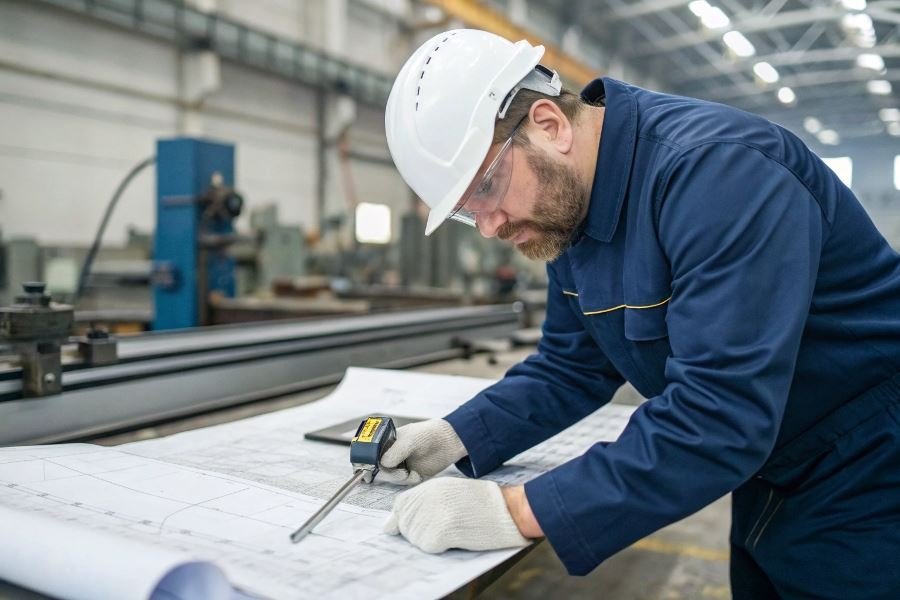
The enhanced precision offered by automatic rebar processing represents perhaps its most significant advantage for structural integrity. Modern systems achieve cutting accuracy within ±1mm and bending precision within ±1 degree—consistency levels impossible to maintain with manual methods.
Quality control becomes embedded in the process rather than applied afterward, with integrated measurement systems continuously verifying dimensions against digital specifications. This precision translates directly to structural reliability, particularly in seismically active regions where reinforcement details can make the difference between a building standing or failing during an earthquake.
The EVG POLARIS system exemplifies this precision, with optical scanning technology that verifies each piece against the original CAD specifications in real-time.
Safety and Labor Economics
Perhaps the most compelling advantage comes in the form of workplace transformation. Automatic processing lines dramatically reduce:
- Workplace injuries by eliminating manual handling of heavy materials
- Repetitive stress disorders common among manual rebar workers
- Exposure to noise and vibration associated with traditional cutting tools
The labor economics tell an equally powerful story. While the initial investment in a system like the MEP Forma can range from $500,000 to $2 million, the return on investment typically materializes within 2-3 years through:
- 70-80% reduction in direct labor costs
- Decreased worker compensation claims
- Lower training and turnover expenses
- Ability to operate with smaller crews during labor shortages
For construction firms facing chronic skilled labor shortages, these systems offer a strategic advantage that extends beyond mere efficiency—they represent resilience in an increasingly unpredictable labor market.
The transformation of rebar processing through automation represents not just an incremental improvement but a fundamental shift in how reinforced concrete structures are built—faster, more precisely, and with greater safety than ever before.
The Hidden Costs of Automation in Rebar Processing
Automatic rebar processing lines represent a significant technological advancement in construction and manufacturing. While their benefits are frequently celebrated, a clear-eyed assessment requires acknowledging their substantial limitations. Let’s dive into the challenges that might give potential investors pause before committing to these sophisticated systems.
The Financial Reality Check
The initial investment for a comprehensive automatic rebar processing line typically ranges from $250,000 to over $2 million, depending on capacity, functionality, and manufacturer specifications. This represents a substantial capital expenditure that many small to mid-sized operations struggle to justify.
The ROI equation isn’t simple: A fully automated line might take 3-5 years to reach breakeven, assuming consistent utilization above 70% capacity.
The financial calculation becomes particularly challenging for companies with fluctuating demand or seasonal work patterns. Schnell Machines and EVG systems, while offering exceptional quality, command premium prices that extend payback periods significantly.
Maintenance Complexities and Downtime Realities
Automated rebar processing equipment demands specialized maintenance protocols that many construction operations aren’t equipped to handle internally. Consider these operational challenges:
- Specialized technician requirements: Most systems require factory-trained personnel for proper maintenance
- Replacement part logistics: Critical components often have 2-4 week lead times
- Software updates and compatibility issues: Digital systems require regular updates
The true cost emerges when examining downtime implications. When an automatic line fails, production doesn’t merely slow—it stops completely. A single critical component failure can halt operations for days or weeks, creating cascading scheduling problems.
Maintenance cost comparison:
| System Type | Annual Maintenance Cost | Average Downtime | Technical Expertise Required |
|---|---|---|---|
| Manual Processing | $5,000-15,000 | 2-3 days/year | Basic mechanical |
| Semi-Automatic | $15,000-40,000 | 5-7 days/year | Intermediate mechanical/electrical |
| Fully Automatic | $40,000-120,000 | 7-14 days/year | Advanced mechanical/electrical/software |
The Flexibility Paradox
Perhaps the most significant limitation of automatic rebar processing lines is their adaptability constraints. These systems excel at high-volume, standardized production but struggle with specialized applications.
The flexibility limitations manifest in several ways:
- Diameter range restrictions: Most automatic systems handle only specific diameter ranges efficiently
- Complex bend limitations: Non-standard bends often require manual intervention
- Material variability challenges: Systems calibrated for specific steel grades may struggle with alternatives
For fabricators working with custom architectural elements or specialized infrastructure projects, these limitations can necessitate maintaining parallel manual processing capabilities—effectively doubling equipment investments and floor space requirements.
Pedax systems offer better flexibility than most competitors, but even their advanced offerings struggle with truly custom applications that deviate significantly from standard specifications.
The automation paradox becomes evident: the more specialized your rebar needs, the less value full automation provides. Companies serving niche markets or handling diverse project portfolios must carefully evaluate whether the efficiency gains in standard processing offset the limitations in specialized applications.
Discover how automatic rebar processing lines boost construction efficiency while balancing precision, productivity, and cost considerations. Explore the technology's advantages, limitations, and ROI potential for modern construction projects.
Discover how automatic rebar processing lines boost construction efficiency while balancing precision, productivity, and cost considerations. Explore the technology's advantages, limitations, and ROI potential for modern construction projects.