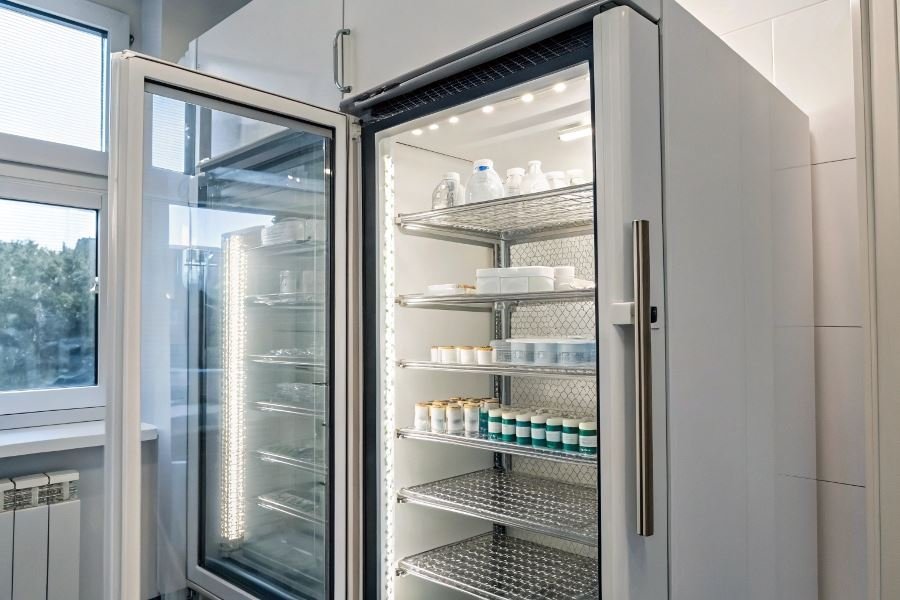
Ever walked into a store where the drinks weren’t quite cold enough or the ice cream was just a bit too soft? That’s the silent cost of poorly matched refrigeration equipment. Behind every perfectly chilled product is a carefully calculated decision about cabinet volume and power requirements.
Selecting the right refrigeration cabinet isn’t just about finding space for your products—it’s about creating the perfect environment where your merchandise thrives while your energy bills don’t skyrocket. The relationship between cabinet volume and cooling power is the foundation of this delicate balance.
The sizing equation: More than meets the eye
When determining appropriate cabinet size, consider not just current inventory but future growth. A cabinet filled to 70-80% capacity operates at optimal efficiency, while overpacked units struggle with airflow and temperature consistency.
The power requirements of your refrigeration system directly impact:
- Temperature stability during peak usage periods
- Recovery time after door openings
- Energy consumption over the equipment’s lifetime
- Product shelf life and quality preservation
The efficiency triangle
| Factor      | Impact on Performance           | Business Consequence        |
|------------------|-------------------------------------------|-----------------------------------|
| Proper sizing  | Consistent cooling, optimal air circulation| Extended product freshness    |
| Adequate power  | Quick temperature recovery        | Reduced energy costs       |
| Balance of both | Stable operating conditions        | Lower maintenance expenses    |
The most common mistake? Underestimating required power for the selected volume. This seemingly minor miscalculation can lead to premature compressor failure, inconsistent temperatures, and ultimately, compromised product quality that customers notice immediately.
Maximizing Storage: The Volume Equation for Refrigeration Cabinets
Finding the perfect refrigeration cabinet isn’t just about measurements—it’s about matching your business’s heartbeat to the right cooling solution. When restaurant owners and food retailers approach me about selecting refrigeration equipment, I always emphasize that volume requirements should drive the decision-making process, not the other way around.
Calculating Your True Storage Needs
The process of how to choose a refrigeration cabinet by volume and power begins with an honest assessment of your inventory requirements. This isn’t about guessing—it’s about precision planning.
Start by documenting your maximum daily inventory levels. For restaurants, this means calculating your peak storage needs during your busiest periods. Retail operations should account for delivery schedules and turnover rates.
The industry standard formula works like this:
- List all products requiring refrigeration
- Calculate their total volume in cubic feet
- Add a 15-25% buffer for air circulation and future growth
- Factor in seasonal fluctuations if applicable
A neighborhood deli might need just 15-20 cubic feet, while a busy restaurant could require upwards of 50 cubic feet per refrigeration unit. The difference is dramatic—and getting it wrong means either wasted energy or insufficient storage.
Standard Configurations and Their Real-World Applications
| Cabinet Type | Typical Volume Range | Best For |
|---|---|---|
| Under-counter | 5.5-10.5 cu. ft. | Small kitchens, bar areas, satellite stations |
| Reach-in (single door) | 20-25 cu. ft. | Medium restaurants, specialty shops |
| Reach-in (double door) | 40-50 cu. ft. | Large restaurants, small grocers |
| Walk-in | 100+ cu. ft. | Wholesale operations, large retailers |
The market offers remarkable specialization. True Manufacturing produces narrow-depth models that deliver surprising capacity in tight spaces. Meanwhile, Beverage-Air offers specialized configurations with adjustable shelving systems that can increase usable space by up to 30%.
Remember that net capacity (usable space) typically runs 20-30% less than gross interior volume due to shelving, air circulation requirements, and structural elements.
The Space Efficiency Equation
The relationship between cabinet volume and floor space isn’t always linear. A well-designed 40 cubic foot reach-in might require only 20% more floor space than a 25 cubic foot model, making it significantly more space-efficient.
Consider these space-optimization strategies:
- Vertical maximization: Taller units offer more volume per square foot of floor space
- Corner units: Specially designed L-shaped cabinets can utilize otherwise wasted corner spaces
- Combination units: Some models from Turbo Air feature half-freezer, half-refrigerator configurations that consolidate functions
When evaluating floor space requirements, don’t forget operational clearances. Most refrigeration cabinets need:
- Door swing clearance (typically equal to door width plus 2-3 inches)
- Rear clearance for ventilation (3-5 inches minimum)
- Side clearance if heat is vented laterally (manufacturer specifications vary)
The most successful businesses I’ve consulted with treat refrigeration cabinet selection as a strategic decision rather than a mere equipment purchase. By carefully matching volume to your specific storage needs, you’ll optimize both operational efficiency and energy consumption—a winning combination for your bottom line.
Power Matters: Selecting the Right Refrigeration Cabinet
Decoding energy efficiency ratings
Refrigeration cabinets might not be the most glamorous purchase, but their power specifications directly impact your bottom line. Energy efficiency ratings have evolved dramatically since the introduction of the Energy Star program in 1992. Today’s high-efficiency models consume up to 40% less electricity than standard units, translating to substantial savings over the equipment’s lifespan.
When evaluating power consumption, focus on the kilowatt-hours (kWh) rating. A typical commercial display refrigerator might consume between 5-15 kWh per day, depending on size and features. The lower this number, the more efficient the unit.
Energy efficiency is typically expressed through ratings like:
| Rating System | What It Measures | Why It Matters |
|---|---|---|
| Energy Star | Overall efficiency compared to minimum standards | Certified units save 20-30% on energy costs |
| EER (Energy Efficiency Ratio) | BTU output divided by watts consumed | Higher numbers (above 11) indicate better efficiency |
| Annual Operating Cost | Estimated yearly electricity expense | Allows direct comparison between models |
Smart refrigeration systems with digital temperature controls can further reduce energy consumption by up to 15% compared to mechanical thermostats.
Environmental factors and power requirements
Your operating environment dramatically influences how much power your refrigeration cabinet needs. A unit placed in a hot kitchen requires significantly more power than one in an air-conditioned space.
Consider these environmental factors when selecting power specifications:
- Ambient temperature range: Units rated for “Climate Class 4” can operate efficiently in environments up to 86°F (30°C), while “Climate Class 5” units handle up to 104°F (40°C).
- Air circulation: Poor ventilation forces compressors to work harder, increasing power consumption by up to 25%.
- Door opening frequency: High-traffic locations require more robust cooling systems with faster recovery times.
For locations with unstable power supplies, look for refrigeration cabinets with voltage stabilization features. These systems protect sensitive components from power fluctuations and can extend compressor life by up to 30%.
The economics of power efficiency
The initial sticker price tells only part of the story. A refrigeration cabinet’s true cost includes its lifetime energy consumption and maintenance requirements.
The most expensive refrigeration cabinet is often the one that costs the least upfront.
Consider this cost breakdown for a medium-sized commercial refrigeration cabinet:
- Initial purchase: 2, 000−5,000
- Annual energy costs: 300−800
- Expected lifespan: 8-12 years
- Lifetime energy expense: 2, 400−9,600
This means your energy costs could potentially exceed the initial purchase price by a significant margin. Investing in a unit with a higher Energy Star rating might add $500 to the purchase price but save $2,000+ over its lifetime.
Modern inverter compressors, though more expensive initially, can reduce power consumption by up to 30% compared to traditional compressors. They achieve this by adjusting their speed based on cooling demand rather than cycling on and off at full power.
When calculating total cost of ownership, factor in maintenance requirements as well. Units with easily accessible condensers and evaporators require less service time, reducing both downtime and maintenance expenses over their operational life.
Learn how to select the ideal refrigeration cabinet by accurately assessing volume needs and power requirements. Our comprehensive guide helps you balance storage capacity, energy efficiency, and operational costs for your specific business needs.
Learn how to select the ideal refrigeration cabinet by accurately assessing volume needs and power requirements. Our comprehensive guide helps you balance storage capacity, energy efficiency, and operational costs for your specific business needs.