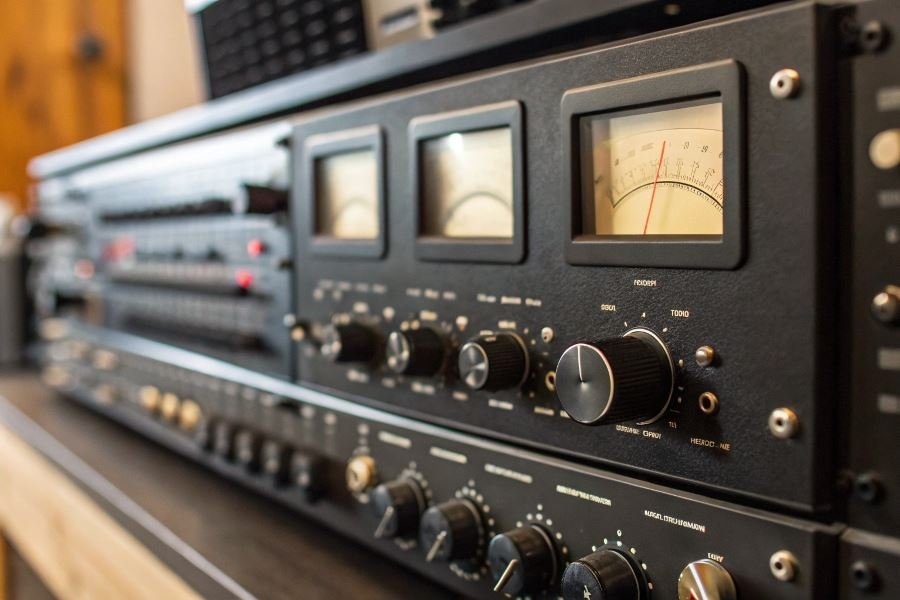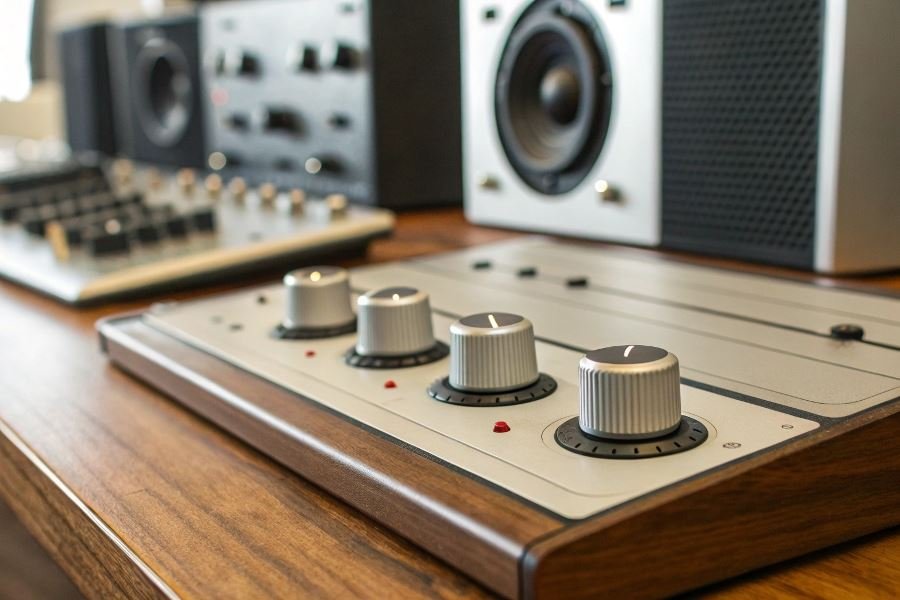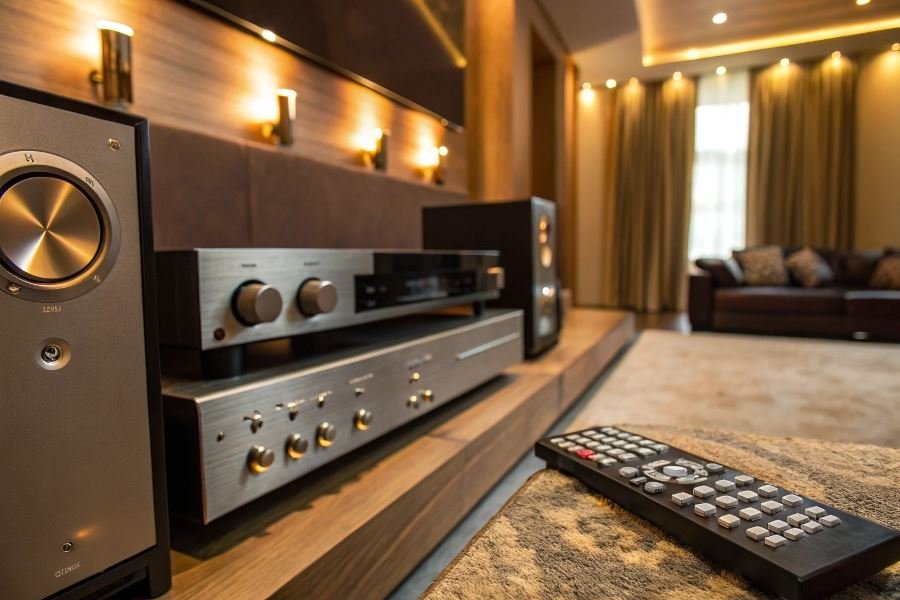
Ever walked across a room to adjust your speaker volume during a critical moment in your favorite song? Those days are rapidly becoming ancient history. Remote-controlled volume regulators have transformed how we interact with sound, offering precision control without interrupting the listening experience.
At their core, remote-controlled volume regulators are sophisticated devices that allow users to adjust audio levels from a distance. Unlike traditional manual knobs that require physical contact, these systems use infrared, Bluetooth, Wi-Fi, or proprietary wireless protocols to communicate between the controller and the audio equipment.
The evolution of this technology tells a fascinating story. The first rudimentary remote volume controls emerged in the 1950s with early television sets, but they were limited and unreliable. By the 1980s, infrared remotes became standard for home stereo systems, though they required line-of-sight to function. Today’s advanced systems can operate through walls, integrate with smartphones, and even respond to voice commands—a remarkable leap from their humble beginnings.
These versatile regulators have found their place across numerous settings. In home theaters, they create immersive experiences by allowing precise adjustments during different movie scenes. Commercial venues like restaurants and retail stores use them to maintain consistent ambient sound throughout the day. In industrial environments, they enable operators to control announcement systems from central locations, enhancing workplace safety and communication efficiency.
The true beauty of remote-controlled volume regulation lies in its seamless integration into our daily lives—transforming how we experience sound without drawing attention to the technology itself.
Unlocking the Power of Sound Control
Remote volume regulators have revolutionized how we interact with audio systems across homes and businesses. These smart devices offer unprecedented control over sound levels without requiring physical interaction with the equipment itself.
The advantages of remote-controlled volume regulators extend far beyond simple convenience. These sophisticated audio management tools allow users to adjust sound levels from anywhere in a room, integrate seamlessly with existing smart home ecosystems, and optimize energy usage while maintaining peak audio performance. For audiophiles and casual listeners alike, these devices represent a significant leap forward in how we experience sound in our environments.
Effortless Control at Your Fingertips
Remote volume regulators eliminate the need to physically approach your audio equipment, offering substantial benefits for various users:
- Accessibility advantages for individuals with mobility challenges
- Multi-room management from a single control point
- Precise adjustments without disrupting your current activity
For home theater enthusiasts, this means adjusting dialogue volume during quiet scenes without leaving the couch. For business owners, it enables sound level management across retail or restaurant spaces without staff leaving their stations.
“The ability to fine-tune audio levels from anywhere in the room isn’t just convenient—it fundamentally changes how we interact with our spaces.”
Seamless Smart Home Integration
Modern remote volume regulators don’t exist in isolation—they’re designed to become integral components of comprehensive smart home systems:
| Integration Feature | Benefit |
|---|---|
| Voice assistant compatibility | Hands-free operation via Amazon Alexa or Google Assistant |
| Automation capabilities | Sound adjustments based on time of day or occupancy |
| Mobile app control | Adjustment from anywhere via smartphone |
These integration capabilities allow for sophisticated audio management scenarios. Imagine your system automatically lowering volume when you receive a phone call, or gradually increasing morning music volume as part of your wake-up routine. The Sonos ecosystem exemplifies this integration, allowing users to create audio zones with individualized remote volume control throughout their homes.
Energy and Performance Optimization
Beyond convenience and integration, remote volume regulators deliver tangible efficiency benefits:
- Power consumption reduction through intelligent amplification management
- Extended equipment lifespan by preventing overdriving speakers
- Optimized audio quality through precise digital signal processing
Many premium systems like those from Marantz incorporate sophisticated algorithms that analyze audio signals and adjust power delivery accordingly, ensuring you’re never using more energy than necessary for your desired volume level.
The efficiency gains become particularly significant in commercial applications where audio systems operate continuously. Restaurants using Bose Commercial Solutions report energy savings of up to 15% after implementing smart volume regulation systems that adjust based on ambient noise levels and occupancy.
For discerning listeners, these regulators also preserve audio fidelity by preventing signal degradation that can occur with manual volume adjustments, ensuring that every note remains crystal clear regardless of playback level.
Making Smart Choices in Remote Volume Control
Technical specifications that truly matter
When diving into the world of remote-controlled volume regulators, understanding the technical specifications is like having a map before embarking on a journey. The signal-to-noise ratio (SNR) stands as perhaps the most critical specification – premium units boast SNRs of 100dB or higher, ensuring your audio remains pristine without unwanted background noise.
Frequency response range determines which sounds your system can reproduce. Look for regulators that cover the full human hearing spectrum (20Hz-20kHz) with minimal deviation (±0.5dB or less). This ensures bass notes remain punchy while high frequencies stay crisp and detailed.
The control range matters significantly – most quality regulators offer at least 60dB of attenuation, allowing for precise volume adjustments from whisper-quiet to room-filling sound. Some premium models from brands like Emotiva or JDS Labs offer up to 80dB of range with 0.5dB increments for truly granular control.
The difference between good and great volume regulation often comes down to the precision of the attenuation steps – look for units with at least 64 steps for smooth transitions between volume levels.
Don’t overlook input impedance (ideally 10kΩ or higher) and output impedance (preferably under 100Ω) specifications, as these determine how well your regulator will interact with the rest of your audio chain.
Ensuring seamless equipment compatibility
Compatibility issues can turn your audio upgrade into a frustrating experience. First, identify your connection types – modern regulators typically offer digital options (optical, coaxial, USB) alongside analog (RCA, XLR, 3.5mm). The Schiit Audio Saga+ exemplifies versatility with multiple input/output options.
Remote protocol compatibility deserves attention – some regulators use proprietary remote systems while others support universal IR codes. The latter allows integration with universal remotes or smart home systems like Control4 or Logitech Harmony.
For digital integration, check if the regulator supports HDMI ARC/eARC for TV audio or Bluetooth aptX/LDAC for wireless streaming. These features future-proof your investment.
Installation and maintenance considerations
Installation complexity varies dramatically between models. Passive regulators require minimal setup but offer fewer features, while active regulators deliver more functionality but need power and potentially more complex wiring.
| Regulator Type | Power Requirements | Feature Set | Typical Price Range |
|---|---|---|---|
| Passive | None | Basic volume control | $50-200 |
| Active (Basic) | Wall adapter | Volume, input switching | $200-500 |
| Active (Advanced) | Dedicated power | Volume, EQ, DSP, networking | $500-2,000+ |
Consider physical dimensions and ventilation requirements – some high-end units generate significant heat and need adequate airflow. The Marantz AV7706 processor, for example, requires at least 5 inches of clearance above its chassis.
Maintenance typically involves occasional firmware updates for digital models and potentiometer cleaning for analog designs. Look for units with user-replaceable parts if longevity is a priority. Some manufacturers like McIntosh design their equipment for decades of service with minimal maintenance.
Finally, evaluate the warranty period – quality manufacturers typically offer 2-5 years of coverage, reflecting their confidence in product reliability. This often correlates directly with build quality and expected lifespan.
Discover the benefits of remote-controlled volume regulators for seamless audio management. Learn about smart integration options, key features, and how to select the perfect system for your home or business audio setup.
Discover the benefits of remote-controlled volume regulators for seamless audio management. Learn about smart integration options, key features, and how to select the perfect system for your home or business audio setup.