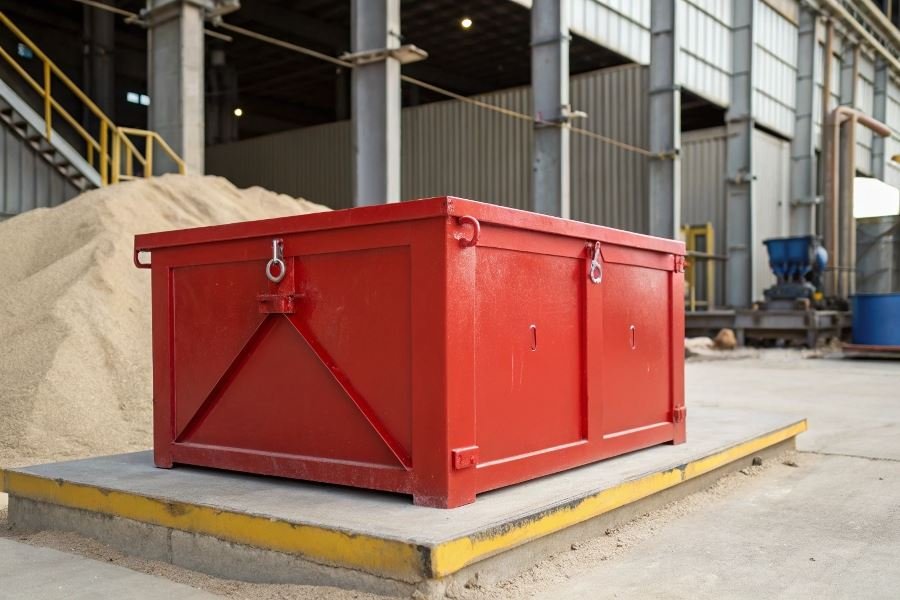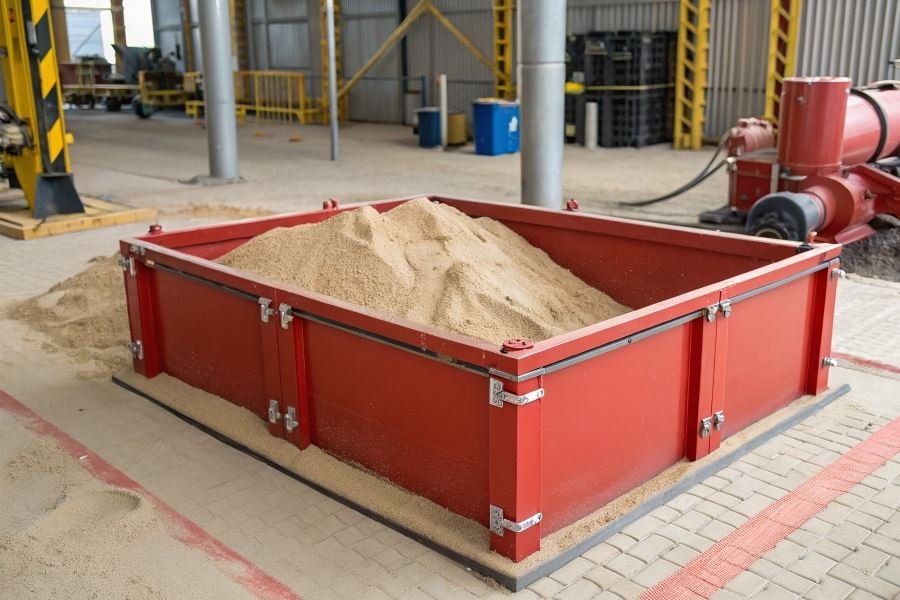
Ever wondered why those simple boxes of sand are strategically placed throughout warehouses, construction sites, and industrial facilities? They’re not just collecting dust—they’re saving lives. When flames erupt and seconds count, these unassuming containers become critical emergency response tools.
Fire safety professionals recognize that sand boxes represent one of the most reliable low-tech solutions in our high-tech world. Unlike complex fire suppression systems that can fail during power outages, sand remains ready 24/7, requiring no electricity, maintenance, or technical expertise to deploy.
The regulatory landscape
OSHA and NFPA guidelines mandate specific requirements for sand boxes in commercial settings. Since the comprehensive fire safety amendments of 2018, businesses must maintain properly positioned sand containers in areas where Class D metal fires pose risks. These regulations specify minimum sand quantities based on facility square footage and potential hazard levels.
What makes a sand box effective?
When evaluating sand box options, three factors determine compliance and effectiveness:
- Accessibility – Containers must be positioned within 30 feet of potential fire hazards
- Visibility – Clear labeling and high-contrast colors ensure quick identification
- Quality – Not all sand is created equal; fire-grade sand must be:
- Completely dry (moisture reduces effectiveness)
- Properly sieved (consistent particle size improves coverage)
- Silica-based (for optimal heat absorption)
“The right sand box in the right location can mean the difference between a minor incident and a catastrophic event.” – National Fire Protection Association
Selecting appropriate sand boxes isn’t merely about checking regulatory boxes—it’s about creating a reliable first line of defense when other systems fail.
Essential Features for Fire Safety Sand Boxes
When fire emergencies strike, having the right equipment can mean the difference between a minor incident and a catastrophic event. Quality sand boxes stand as silent sentinels in facilities, ready to provide a first line of defense against specific types of fires. Selecting the appropriate sand box requires understanding several critical features that contribute to its effectiveness during emergencies.
Material Construction That Withstands the Test of Time
The foundation of any effective fire safety sand box begins with its construction materials. Premium sand boxes typically feature corrosion-resistant metals like galvanized steel or aluminum that maintain structural integrity even in harsh environments. When evaluating how to choose a sand box for fire safety, material durability should top your priority list as it directly impacts long-term reliability.
High-quality models incorporate:
- Powder-coated finishes that resist chipping and peeling
- Weather-resistant seals that prevent moisture infiltration
- Reinforced corners that withstand impacts during emergency use
The most dependable units feature double-walled construction with fire-resistant properties that prevent the container itself from becoming a hazard during high-temperature situations. Industry leaders like Kidde and Amerex offer models with temperature ratings exceeding 1000°F—essential for environments where intense heat exposure is possible.
Size and Capacity: Matching Protection to Risk Level
Sand box dimensions aren’t arbitrary—they should align precisely with your facility’s specific requirements and risk assessment findings.
| Facility Type | Recommended Capacity | Typical Dimensions |
|---|---|---|
| Small Office | 100-150 lbs | 24″W × 18″D × 24″H |
| Manufacturing | 250-400 lbs | 36″W × 24″D × 30″H |
| Chemical Storage | 500+ lbs | 48″W × 30″D × 36″H |
The National Fire Protection Association recommends sizing based on the largest potential flammable liquid spill area in your facility. For every 16 square feet of potential fire area, approximately 100 pounds of fire-fighting sand provides adequate coverage at the recommended 1-inch depth.
Undersized units create a dangerous false sense of security, while oversized ones waste valuable floor space and resources.
Design Elements That Save Critical Seconds
The most sophisticated sand boxes incorporate thoughtful design elements that enhance accessibility during the chaos of an emergency situation.
Quick-access lids featuring:
- Single-motion opening mechanisms
- Ergonomic handles positioned at optimal heights (32-36 inches)
- Self-closing hinges that prevent contamination
Strategic deployment tools including:
- Integrated scoops sized for efficient application
- Extendable handles that reduce user proximity to flames
- Color-coded components that remain visible in smoke conditions
The placement of your sand box deserves equal consideration. Position units within 50 feet of potential fire hazards but away from areas where flames might block access. Mount clear signage at eye level (approximately 5 feet) using high-contrast colors and internationally recognized symbols.
Modern sand boxes from manufacturers like JL Industries feature modular designs that allow customization based on specific facility layouts. Some advanced models incorporate wheels with locking mechanisms, enabling rapid deployment to different areas during developing emergencies.
By prioritizing material quality, appropriate sizing, and accessibility features, you transform a simple sand container into a critical component of your comprehensive fire safety strategy—one that stands ready to perform when every second counts.
Maximizing Fire Safety with Strategic Sand Box Implementation
Strategic Placement for Rapid Response
The difference between containing a small fire and facing a catastrophic blaze often comes down to seconds. Strategic placement of fire safety sand boxes throughout your facility creates a critical first-response network that can dramatically reduce response time during emergencies.
Position sand boxes at high-risk ignition points first—near electrical panels, machinery with moving parts, and chemical storage areas. The ideal placement follows the “30-second rule”: no employee should need more than 30 seconds to reach a sand box from any location in your facility.
For multi-level facilities, each floor requires dedicated sand boxes, with additional units at stairwells and elevator banks. Manufacturing environments benefit from a grid-based approach, ensuring coverage across production zones while maintaining clear visibility lines.
The most effective sand box placement isn’t about quantity—it’s about strategic positioning that anticipates where fires are most likely to start.
Selecting and Maintaining Effective Fire Sand
Not all sand offers equal fire-suppression capabilities. The most effective fire safety sand is dry, silica-based material with particles between 0.5-2mm in diameter. This specific composition allows for optimal oxygen displacement when applied to Class A, B, and D fires.
| Sand Type | Best For | Maintenance Frequency | Replacement Indicators |
|---|---|---|---|
| Silica Sand | Class A, B, D fires | Quarterly inspection | Visible moisture, clumping |
| Dry Chemical Sand | Class B, C fires | Bi-annual testing | Color change, hardening |
| Volcanic Sand | High-heat applications | Annual replacement | Particle breakdown |
Maintenance protocols must include regular moisture testing—even minimal humidity can cause sand to clump, rendering it ineffective during emergencies. Implement a monthly inspection schedule where designated safety personnel check for:
- Moisture content (should be <0.5%)
- Debris contamination
- Proper sand level (boxes should be 85-90% filled)
- Integrity of container seals
During seasonal transitions, particularly in humid environments, increase inspection frequency to bi-weekly. Document all inspections using digital tracking systems that alert maintenance teams when replacement is needed.
Integrating Sand Boxes into Comprehensive Safety Systems
Sand boxes represent just one component of an effective fire safety ecosystem. Their true value emerges when integrated with broader emergency response protocols and employee training programs.
Develop a color-coded emergency response map displaying sand box locations alongside other fire safety equipment. This visual guide should be prominently displayed throughout your facility and incorporated into mobile safety applications accessible to all employees.
Employee training must go beyond theoretical knowledge to include hands-on practice sessions where team members physically handle sand application techniques. These quarterly drills should simulate various fire scenarios, teaching proper scooping techniques and application patterns for different fire types.
The most sophisticated implementations connect sand box usage to broader emergency notification systems. When a sand box is accessed, it can trigger automated alerts to safety personnel and facility managers, creating a coordinated response that maximizes the effectiveness of this simple yet powerful fire safety tool.
Remember that sand boxes complement—rather than replace—modern fire suppression systems from manufacturers like Ansul or Kidde. The integration of traditional and contemporary fire safety approaches creates a robust defense system that addresses fires at every stage of development.
Discover essential features for selecting effective fire safety sand boxes that meet regulatory requirements. Learn about proper materials, optimal sizing, strategic placement, and maintenance protocols for emergency preparedness.
Discover essential features for selecting effective fire safety sand boxes that meet regulatory requirements. Learn about proper materials, optimal sizing, strategic placement, and maintenance protocols for emergency preparedness.