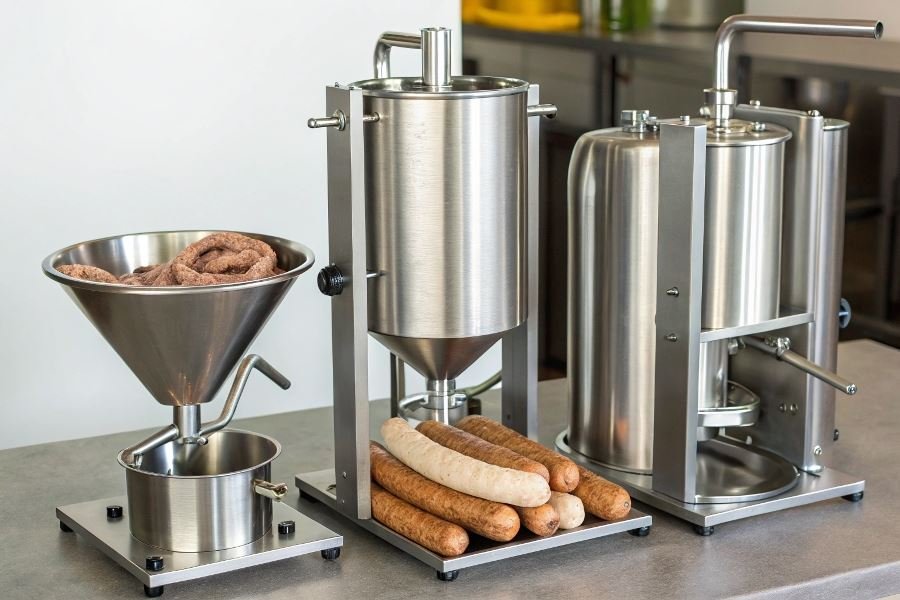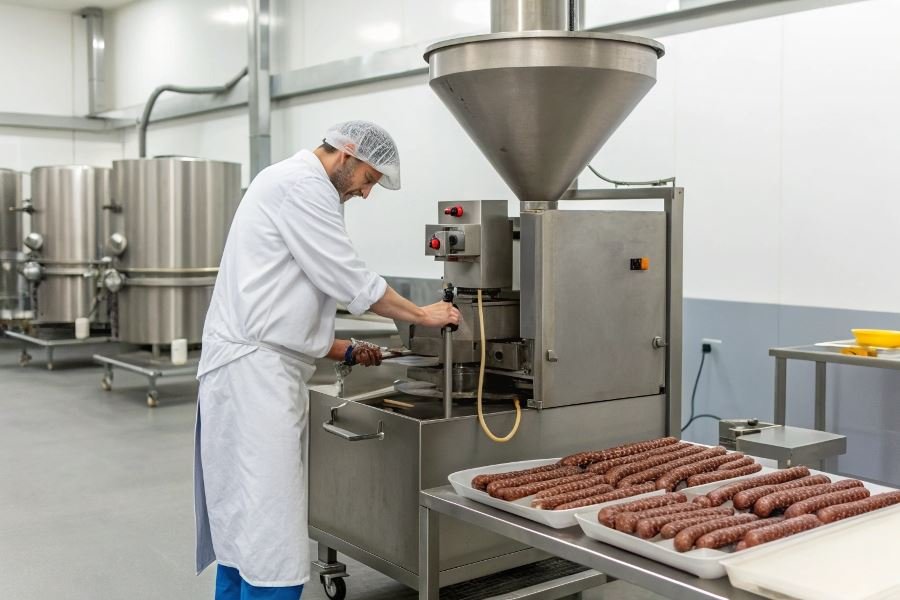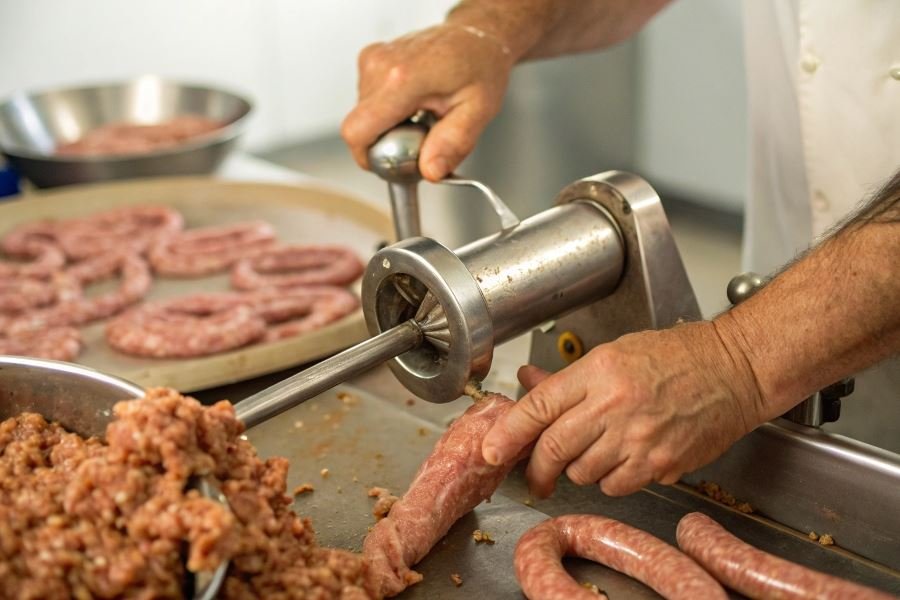
Ever watched a master butcher transform simple ingredients into artisanal sausages that sell out within hours? The secret isn’t just in the recipe—it’s in the equipment.
Behind every successful small-scale sausage operation lies a critical decision: choosing the right sausage stuffer. This seemingly simple piece of equipment can be the difference between producing consistent, high-quality products that build customer loyalty and struggling with inefficient processes that compromise your craftsmanship.
Why your stuffer choice matters more than you think
When artisanal meat producers invest in proper equipment, they’re not just buying machinery—they’re securing their reputation. A quality stuffer ensures consistent filling density, minimal air pockets, and precise portion control. These factors directly influence texture, shelf life, and ultimately, customer satisfaction.
As third-generation butcher Thomas Keller notes, “The stuffer is the heart of your sausage operation. When it works seamlessly, everything else falls into place.”
Key selection factors that drive success
Selecting the ideal stuffer requires balancing several critical considerations:
- Production volume: How many pounds will you process weekly?
- Available space: Will it fit comfortably in your workspace?
- Power source: Manual, electric, or hydraulic?
- Material quality: Food-grade stainless steel prevents contamination and extends equipment life
The efficiency equation
The right stuffer transforms your production line. Small producers who upgrade from basic to professional-grade stuffers frequently report:
“We cut our production time by 40% while improving consistency. The investment paid for itself within six months.” — Artisanal meat producer from Vermont
When your equipment matches your production needs, you’ll experience fewer breakdowns, more consistent products, and the freedom to focus on what matters most—creating exceptional sausages that keep customers coming back.
The Definitive Guide to Selecting Your Ideal Sausage Stuffer
When setting up a small-scale sausage production operation, the equipment you choose can make or break your business. Selecting the right sausage stuffer isn’t just about finding a machine that pushes meat into casings—it’s about investing in a tool that will become the backbone of your production line. Let’s dive into the critical factors that will help you make an informed decision.
Production Volume Dictates Capacity Needs
The first question to ask yourself when choosing a sausage stuffer for small production is: “How much sausage do I need to produce in a typical session?” This single consideration will narrow your options significantly.
For artisanal operations producing under 50 pounds per day, a 5-15 pound capacity stuffer may suffice. Mid-range operations handling 50-200 pounds daily should consider 15-30 pound models. If you’re approaching commercial-scale production of 200+ pounds, you’ll need 30+ pound capacity machines with higher throughput rates.
| Production Level | Daily Output | Recommended Capacity | Typical Throughput |
|---|---|---|---|
| Hobby/Artisanal | Under 50 lbs | 5-15 lbs | 10-20 lbs/hour |
| Small Business | 50-200 lbs | 15-30 lbs | 30-60 lbs/hour |
| Commercial | 200+ lbs | 30+ lbs | 60-100+ lbs/hour |
Remember that undersizing leads to constant refilling and workflow disruptions, while oversizing means wasted investment and potentially more product waste during cleaning.
Material Matters: Stainless Steel vs. Plastic
The construction material of your stuffer directly impacts durability, sanitation, and longevity. Stainless steel components represent the gold standard for several compelling reasons:
- Corrosion resistance – Withstands exposure to salt and acidic ingredients
- Sanitization – Non-porous surface prevents bacterial growth
- Temperature stability – Maintains structural integrity during temperature fluctuations
- Longevity – Typically lasts decades with proper maintenance
While plastic components reduce weight and cost, they’re generally unsuitable for commercial applications. Plastic cylinders can scratch, harbor bacteria, and degrade over time. If budget constraints are real, look for hybrid models with stainless steel food-contact surfaces and non-critical plastic components.
Power Source: Manual vs. Electric Models
The manual-versus-electric decision hinges on three factors: production volume, labor availability, and budget.
Manual stuffers from brands like LEM Products offer excellent control and require no electricity, making them ideal for artisanal producers creating small batches of specialty sausages. The physical effort required becomes significant beyond 50 pounds of production.
Electric models from manufacturers such as Hakka Brothers dramatically increase efficiency, with some units processing up to 120 pounds per hour. They typically offer:
- Consistent pressure application
- Reduced operator fatigue
- Higher throughput rates
- More precise filling
The efficiency gains often justify the higher initial investment for businesses producing more than 100 pounds weekly.
Speed Control for Product Versatility
Different sausage varieties demand different filling speeds. Delicate casings like sheep intestines require gentle, slow filling, while fibrous casings can handle faster speeds.
Look for stuffers offering at least 2-3 distinct speed settings. Variable speed controls allow you to adapt to different products without changing equipment. The most versatile models feature:
- Stepless speed adjustment
- Reverse function for decompression
- Foot pedal controls for hands-free operation
- Programmable presets for consistent results
These features become particularly valuable when producing diverse product lines requiring different handling techniques.
Maintenance Requirements and Sanitation
The final consideration—and perhaps the most overlooked—is cleaning and maintenance. Food safety regulations demand thorough sanitization between production runs.
Quick-disassembly designs save hours weekly. Look for tool-free disassembly, minimal crevices where meat can hide, and dishwasher-safe components. Some modern stuffers feature air-release valves that prevent meat from backing up into mechanical components.
Manufacturers like Weston often provide detailed cleaning guides and replacement parts, ensuring your investment remains serviceable for years to come.
By carefully evaluating these five critical factors, you’ll select a sausage stuffer that not only meets your current production needs but can scale with your business as it grows.
Top 3 Sausage Stuffers That Deliver Professional Results
When scaling up from kitchen experiments to consistent small-batch production, your choice of sausage stuffer becomes a critical business decision. The right equipment doesn’t just fill casings—it determines your production speed, product consistency, and ultimately, your reputation. After testing dozens of models and consulting with successful artisanal producers, I’ve identified three standout performers that deliver exceptional value at different price points.
Entry-Level Excellence for Artisanal Startups
The Hakka 7Lb Vertical Stuffer delivers remarkable performance for producers just entering the commercial space. Priced around $189, this stainless steel vertical stuffer strikes the perfect balance between affordability and capability.
Key specifications that matter:
- 7-pound capacity (approximately 3.2kg)
- Two-speed mechanical operation
- Four stainless steel stuffing tubes (10mm, 16mm, 22mm, 32mm)
- Air-release valve to prevent casing blowouts
What separates this model from typical home units is its all-metal gears and piston design. While plastic components are common in sub-$150 models, they quickly wear under commercial use. The Hakka’s metal construction ensures you’ll still be producing consistent links after thousands of pounds of meat.
The air-release valve alone prevents countless dollars in wasted casings and product—a feature missing from many competitors in this price range.
Mid-Range Marvel for Growing Operations
As production volumes increase, the LEM Products 20-Pound Motorized Stuffer becomes a game-changer at approximately $899. This electric-powered workhorse dramatically increases throughput while reducing operator fatigue.
| Feature | Benefit |
|---|---|
| 20-pound capacity | Fewer refills during production runs |
| Variable speed motor | Precise control for different casing types |
| Foot pedal operation | Keeps both hands free for casing management |
| Removable cylinder | Simplified cleaning and sanitation |
The LEM’s 110-volt motor delivers consistent pressure regardless of meat density or temperature—a crucial advantage over manual models when working with challenging mixtures like emulsified hot dogs or high-fat content blends.
Production insight: Users report stuffing approximately 100 pounds per hour with this model, compared to 30-40 pounds with manual alternatives. For growing businesses, this efficiency gain often pays for the price difference within months.
Premium Performance for Established Producers
The Mainca EC-12 Hydraulic Stuffer represents the gold standard for small commercial operations serious about scaling production. At approximately $3,200, it’s a significant investment that delivers professional-grade results.
This Spanish-manufactured marvel features:
- 26.5-pound (12kg) capacity
- Hydraulic pressure system for unmatched consistency
- Programmable portion control
- Twist-link automation capability
- Stainless steel construction certified for food production
What justifies the premium price: The hydraulic system maintains perfect pressure regardless of how full the cylinder is—eliminating the inconsistent density that plagues lesser machines. For producers creating premium products with exacting standards, this consistency is invaluable.
The EC-12’s portion control function alone can reduce labor costs by 15-20% while improving product uniformity.
The machine’s serviceability also deserves mention—with readily available parts and a design that allows for quick maintenance, downtime is minimized compared to less expensive alternatives that often become disposable when problems arise.
For established operations producing 500+ pounds weekly, the Mainca’s efficiency, consistency, and durability make it not just a purchase but a strategic business investment that typically delivers ROI within 12-18 months of regular use.
Discover the top 5 sausage stuffers perfect for small-scale meat production. Learn essential selection criteria including capacity, materials, and power options to maximize efficiency and product quality in your meat processing business.
Discover the top 5 sausage stuffers perfect for small-scale meat production. Learn essential selection criteria including capacity, materials, and power options to maximize efficiency and product quality in your meat processing business.