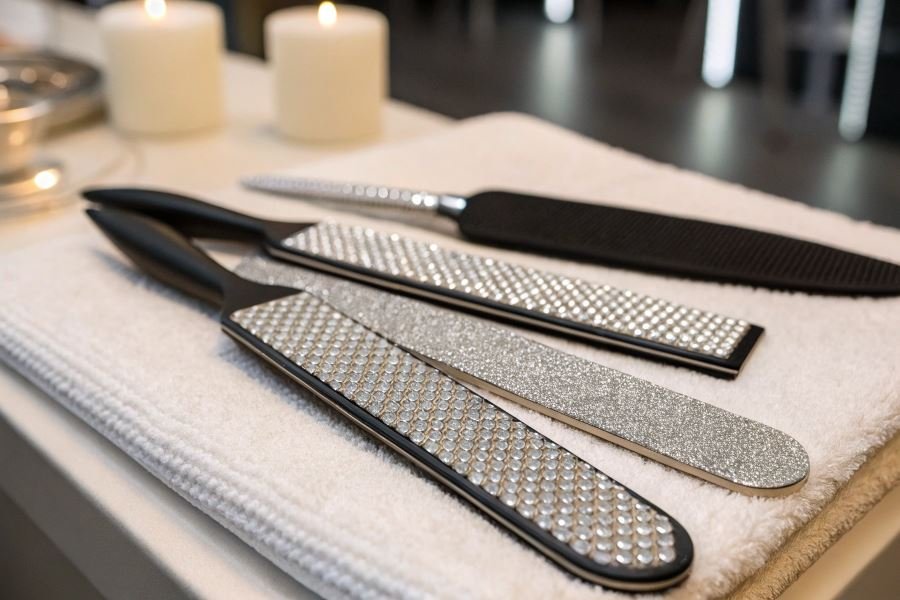
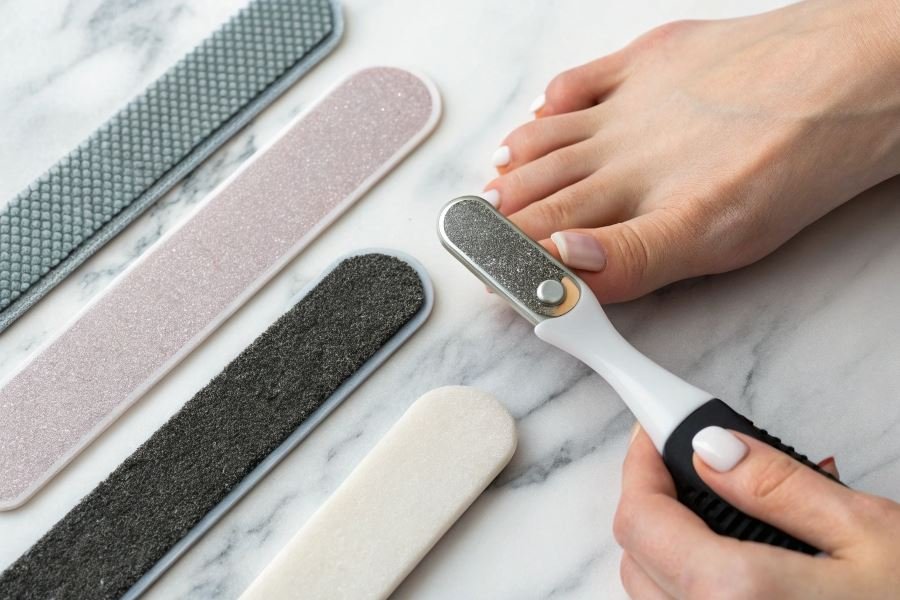
Ever wondered why some pedicure files leave your feet silky smooth while others barely make a difference? The secret lies in understanding abrasiveness—the invisible factor that determines whether your at-home pedicure will be a triumph or a disappointment.
When selecting pedicure tools, abrasiveness isn’t just a technical detail—it’s the difference between effective foot care and potential skin damage. Think of abrasiveness as the “strength setting” of your file. Too gentle, and you’ll be filing forever; too aggressive, and you risk removing healthy skin along with calluses.
Grit numbers: The universal language of abrasiveness
Pedicure file abrasiveness is measured in “grit”—a numerical system that indicates how many abrasive particles exist per square inch. The lower the grit number, the coarser and more aggressive the file. For perspective:
| Grit Range | Abrasiveness Level | Best Used For |
|---|---|---|
| 60-100 | Extra coarse | Removing thick calluses |
| 100-180 | Coarse to medium | General callus reduction |
| 180-240 | Fine | Smoothing and finishing |
| 240+ | Extra fine | Polishing and sensitive skin |
Material matters: How composition affects your filing experience
The material of your pedicure file dramatically influences its performance. Glass files (also called crystal) offer precision and durability, maintaining their grit level for years when properly cared for. Metal files deliver aggressive removal but can create micro-tears if used improperly. Emery boards—the traditional standby—are inexpensive but wear down quickly, becoming less effective with each use.
The most versatile option? Ceramic files, which combine durability with gentle-yet-effective abrasion, making them ideal for regular maintenance without risking skin integrity.
Understanding these fundamentals transforms your approach to foot care, ensuring you select tools that deliver professional results without compromising safety.
The Ultimate Grit Guide for Perfect Pedicures
Finding the right pedicure file can transform your foot care routine from painful to pleasurable. The secret lies in understanding abrasiveness of pedicure files: what you need to know when choosing depends largely on your specific foot conditions and goals. Let’s dive into the fascinating world of grit ratings and discover how to match the perfect file to your feet.
Gentle Touch: Low Abrasiveness Files (180-240 grit)
Low abrasiveness files operate in the 180-240 grit range, offering the gentlest approach to foot care. These fine-grit options excel at:
- Finishing touches after using coarser files
- Maintaining already smooth feet
- Addressing sensitive skin conditions
- Buffing and polishing callus-free areas
Pro tip: Low grit files are your best friend for weekly maintenance rather than major callus removal. They prevent over-filing while giving feet that salon-smooth finish.
For optimal results, use these files on dry skin with light, sweeping motions. The Glass Nail File represents the gold standard in this category, offering durability that outlasts traditional emery boards by years while providing consistent, gentle abrasion.
Never wash these files with soap—simply rinse with warm water and disinfect with alcohol between uses to maintain their effectiveness.
Workhorse Wonders: Medium Abrasiveness Files (100-180 grit)
Medium abrasiveness files (100-180 grit) represent the versatile middle ground in foot care tools. These all-purpose champions handle:
- Moderate callus reduction
- Regular maintenance for normal skin
- Smoothing rough patches and dry heels
- Preparing feet for moisturizing treatments
The technique matters tremendously with medium files. Apply moderate pressure in short, controlled strokes rather than aggressive sawing motions. Work in one direction to prevent micro-tears in the skin.
| Grit Range | Best For | Pressure Level | Frequency |
|---|---|---|---|
| 100-120 | Stubborn calluses | Medium | Monthly |
| 120-150 | Regular maintenance | Light-Medium | Bi-weekly |
| 150-180 | Sensitive feet | Very Light | Weekly |
The Diamancel Foot Buffer stands out in this category with diamond particles embedded in the file surface, offering superior durability and consistent results across multiple uses.
Heavy Hitters: High Abrasiveness Files (60-100 grit)
High abrasiveness files in the 60-100 grit range are the power tools of pedicure implements. These intensive options should be used with caution and purpose:
- Removing thick, hardened calluses
- Initial treatment for severely neglected feet
- Addressing plantar keratosis
- Tackling extreme heel roughness
Safety first: These aggressive files require careful handling. Never use them on thin skin, between toes, or on any area without significant callus buildup. Limit sessions to 2-3 minutes per foot to prevent over-filing.
The most effective approach involves short, gentle strokes rather than applying heavy pressure. Always follow with a medium or fine grit file to smooth the surface and finish with intensive moisturizing.
For those with diabetes or circulation issues, consult a podiatrist before using high-abrasiveness files. The Medicool Pro Power 30K offers professional-grade results with adjustable speed settings for controlled callus removal.
Remember: the perfect pedicure comes from matching the right tool to your specific needs—not from using the most aggressive option available.
Making the Right Choice for Perfect Feet
When it comes to achieving salon-quality results at home, understanding pedicure file abrasiveness isn’t just helpful—it’s essential. The difference between baby-soft heels and disappointing results often comes down to selecting the right grit for your specific needs. Let’s dive into the professional insights that will transform your at-home pedicure game.
Three Critical Factors for Home Pedicure Success
Selecting the perfect pedicure file involves more than grabbing whatever’s on sale. Consider these game-changing factors:
-
Skin condition assessment: The state of your feet dictates your file needs. For callused, thickened skin, start with coarser files (80-100 grit) before moving to medium grits. For maintenance on already smooth feet, medium to fine grits (180-240) prevent over-filing and skin damage.
-
Foot area specificity: Different zones require different approaches. The thick skin on heels can handle coarser abrasives, while the delicate sides of feet need gentler files. Using the wrong abrasiveness in sensitive areas can lead to painful micro-tears and irritation.
-
Progressive filing technique: Professional results come from methodical work. Begin with the coarsest appropriate grit, then systematically move to finer grits. This “stepping down” approach removes dead skin efficiently while gradually refining the surface for a polished finish.
The most common home pedicure mistake is using a single abrasiveness level for the entire foot, which either removes too little from tough areas or damages sensitive zones.
Professional vs Consumer Files: Understanding the Difference
The gap between professional-grade and consumer tools extends beyond price:
| Feature | Professional-Grade Files | Consumer-Grade Files |
|---|---|---|
| Grit range | 60-240 grit | Usually 100-180 grit |
| Material quality | Industrial-grade minerals, diamond dust | Standard emery, aluminum oxide |
| Durability | 100+ uses with proper care | 15-30 uses before degradation |
| Base construction | Washable, sanitizable materials | Often porous materials |
| Precision | Consistent abrasiveness across surface | May have uneven abrasive distribution |
Professional files from brands like Gehwol and Diamancel offer precision-engineered surfaces that maintain consistent abrasiveness throughout use. Consumer options from Revlon and Sally Hansen provide good results but typically require more frequent replacement.
Maintaining Optimal Abrasiveness Levels
Even the finest pedicure file becomes ineffective—or worse, potentially harmful—without proper maintenance:
Cleaning protocol: After each use, thoroughly brush away skin debris with a stiff brush. For non-porous files, sanitize with 70% isopropyl alcohol. Allow to air dry completely before storage to prevent bacterial growth.
Replacement indicators: Watch for these signs that your file needs replacement:
- Visible smoothing of the abrasive surface
- Decreased effectiveness despite proper technique
- Uneven results across the filing surface
- Any signs of cracking or peeling of the abrasive coating
Storage best practices: Store files in dry, ventilated containers—never in sealed plastic bags where moisture can degrade the abrasive surface. Professional-grade files often come with protective cases that extend their lifespan.
Most quality files should be replaced every 3-6 months with regular use, though professional-grade options may last significantly longer with proper care. The investment in timely replacement pays dividends in both results and foot health.
Discover the perfect pedicure file grit for your foot care needs. Learn how to interpret abrasiveness levels from 60-240 grit, match files to specific foot conditions, and maintain professional results at home.
Discover the perfect pedicure file grit for your foot care needs. Learn how to interpret abrasiveness levels from 60-240 grit, match files to specific foot conditions, and maintain professional results at home.