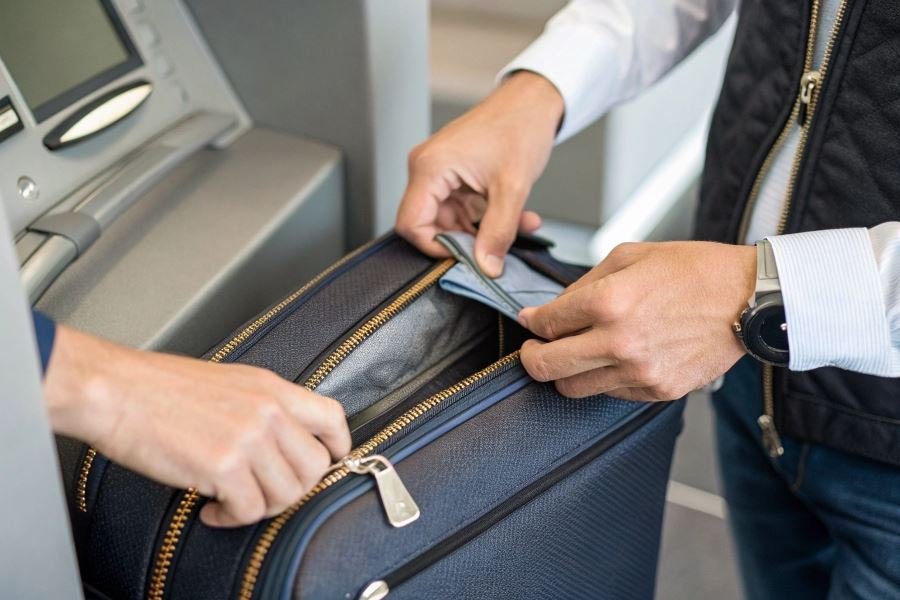
$75 billion in cash is transported across America every day. Behind this staggering figure lies a critical business tool most owners rarely think about until it’s too late: the humble cash collection bag.
These specialized security containers represent the first line of defense in your cash management system. Whether you’re a retail store owner making nightly deposits or a restaurant manager handling large cash volumes, the right collection bag doesn’t just carry money—it protects your business’s lifeblood.
What exactly are cash collection bags?
Cash collection bags are tamper-evident security pouches specifically designed to safely transport currency, checks, and other valuable documents between locations. Unlike ordinary bags, these specialized containers incorporate multiple security features that create visible evidence if anyone attempts unauthorized access.
“The difference between a standard bag and a proper cash collection bag can mean the difference between secure transactions and devastating losses.”
Why your choice matters
The FBI reports that businesses lose millions annually through cash-in-transit theft. The right collection bag serves as both a physical and psychological deterrent against theft while providing crucial evidence if tampering occurs.
Essential selection criteria
When evaluating cash collection bags, focus on these critical factors:
- Material durability – Look for tear-resistant polyethylene or similar materials
- Security features – Tamper-evident seals, sequential numbering, and void indicators
- Size appropriateness – Match to your typical cash volume
- Compliance standards – Ensure bags meet financial institution requirements
Your cash deserves protection that matches its value. The right collection bag isn’t just an expense—it’s an investment in your business’s security infrastructure.
Security Features That Define Elite Cash Collection Bags
The difference between a standard cash collection bag and a security powerhouse often comes down to three critical elements: tamper-evident seals, material durability, and tracking capabilities. These aren’t just features—they’re your financial institution’s first line of defense against theft and fraud.
When evaluating how to choose cash collection bags: main criteria, security features should top your priority list. The right bag doesn’t just transport cash; it creates an unbroken chain of custody that protects both assets and reputation. Financial institutions reported a 23% reduction in transit losses after upgrading to high-security collection bags with advanced tamper-evident features.
Tamper-Evident Seals That Mean Business
Modern tamper-evident seals have evolved far beyond simple plastic strips. Today’s elite cash collection bags employ multi-layered security:
- Chemical-reactive adhesives that permanently discolor when exposed to solvents
- Void-revealing technology that displays “VOID” or “OPENED” messages when tampering occurs
- Thermochromic inks that change color when exposed to heat manipulation attempts
The most effective closure mechanisms feature dual-validation systems requiring both mechanical sealing and unique identifier verification. Rifkin Security bags, for instance, incorporate patented ArmorTough™ seals that leave microscopic evidence of any tampering attempt.
Material Construction That Withstands Attack
Material selection represents the physical barrier between your assets and potential threats:
| Material Type | Puncture Resistance | Cut Resistance | Environmental Durability |
|---|---|---|---|
| Standard Polyethylene | Low | Low | Moderate |
| High-Density Polyethylene | Moderate | Moderate | High |
| Laminated Polyethylene | High | High | Very High |
| Kevlar-Reinforced | Exceptional | Exceptional | Exceptional |
The industry benchmark now includes bags with at least 6-mil thickness and multi-layer construction. Premium options from TripLOK incorporate aramid fibers (similar to those used in bulletproof vests) that can withstand direct attacks with cutting tools while maintaining a manageable weight profile.
Tracking Systems That Leave Nothing to Chance
Modern identification systems have transformed cash collection bags from simple containers to sophisticated tracking platforms:
- Sequential barcoding enables real-time scanning and location verification
- RFID integration allows passive tracking throughout transport routes
- Alphanumeric serial numbers with embedded security codes create unique identifiers
- QR code systems provide instant access to chain-of-custody information
Leading financial institutions now implement dual-tracking redundancy—combining physical serial numbers with digital tracking. This creates an unbroken verification chain from collection point to final destination.
The most sophisticated bags from Tamper-Evident Products now incorporate blockchain-verified tracking that creates immutable records of each handling event, effectively eliminating disputes about custody transitions.
When selecting cash collection bags, remember that security features work as an integrated system rather than isolated elements. The most effective solutions combine physical barriers, visual deterrents, and digital tracking to create a comprehensive security ecosystem that protects assets at every stage of transport.
Making the Final Decision on Cash Collection Bags
Selecting the right cash collection bag isn’t just a procurement decision—it’s a strategic investment in your business’s security infrastructure. After evaluating materials, security features, and compliance requirements, you’re now at the critical juncture: making that final decision. Let’s dive into how to align your choice with your specific operational needs.
Matching bags to your business reality
The volume of cash your business handles daily should directly influence your selection. A small artisan shop processing under $2,000 weekly might find tamper-evident plastic bags sufficient, while a retail chain with daily deposits exceeding $10,000 requires reinforced canvas or synthetic bags with advanced security features.
Consider your cash handling patterns:
| Business Type | Daily Cash Volume | Recommended Bag Type |
|---|---|---|
| Small boutique | 100−500 | Single-seal tamper-evident bags |
| Mid-sized retailer | 500−2,000 | Dual-seal bags with tracking features |
| Large operation | $2,000+ | Heavy-duty canvas with electronic tracking |
Your deposit frequency matters too. Businesses making daily bank runs might prioritize convenience and disposability, while those with weekly deposits need durability and enhanced security features like steel-reinforced handles or GPS tracking capabilities.
The security-practicality balance
Security features are crucial, but they must align with operational realities. The most secure bag available—perhaps a Rifkin Safety Sac with multiple security features—becomes a liability if it’s too cumbersome for staff to use correctly every time.
Balance these considerations:
- Ease of use: Can your team consistently follow proper sealing procedures?
- Processing compatibility: Will your bank accept your chosen bag format?
- Storage requirements: Do you have secure space for unused bags?
- Environmental impact: Are reusable options viable for your operation?
The perfect cash collection bag combines robust security with seamless integration into your existing cash handling procedures.
Maintenance and replacement protocols
Even the highest quality cash collection bags have a finite lifespan. Establishing clear maintenance and replacement schedules prevents security vulnerabilities from developing over time.
For reusable bags:
- Inspect seams and closures before each use
- Clean fabric bags quarterly using manufacturer-approved methods
- Replace any bag showing signs of wear immediately
- Conduct full replacement every 12-18 months regardless of visible condition
For tamper-evident disposable bags:
- Store unused inventory in secure, limited-access locations
- Implement strict inventory control with sequential numbering
- Establish a maximum shelf life (typically 24 months) before replacement
- Rotate stock to use oldest inventory first
Document your maintenance procedures and incorporate them into your cash handling training. The most sophisticated security features become worthless if compromised through improper maintenance or extended use beyond recommended lifecycles.
Remember that your cash collection bag system should evolve with your business. What works for your current operation might need reassessment as transaction volumes change or new security technologies emerge. Schedule annual reviews of your cash handling procedures, including bag selection, to ensure your protection measures remain aligned with both threats and operational needs.
Discover essential criteria for selecting secure cash collection bags that protect your business assets. Learn about tamper-evident seals, durable materials, and tracking features to make informed security decisions.
Discover essential criteria for selecting secure cash collection bags that protect your business assets. Learn about tamper-evident seals, durable materials, and tracking features to make informed security decisions.