
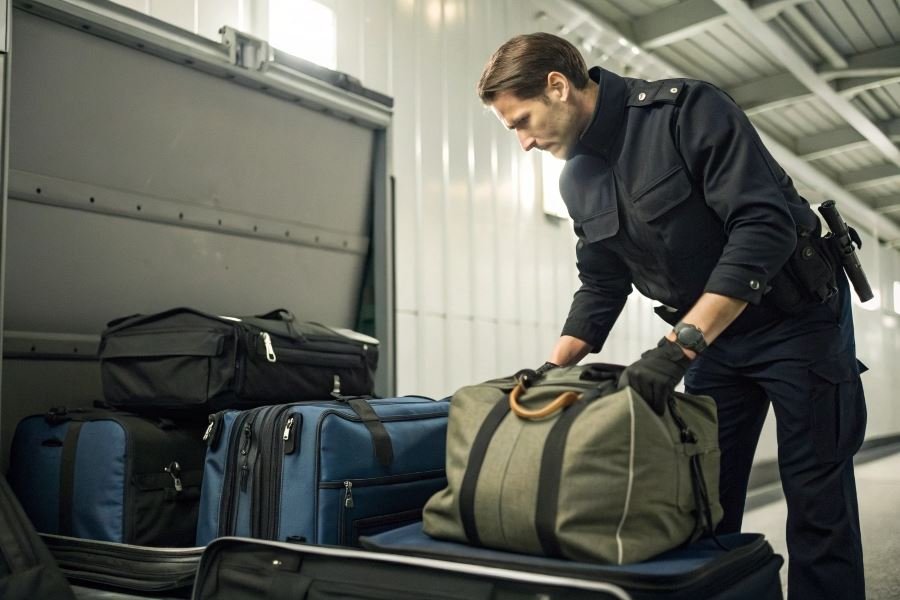
Ever wonder what happens to the $1.08 trillion in physical currency circulating through the U.S. economy? Much of it travels in specialized containers designed for one critical purpose: secure transport.
Cash-in-transit (CIT) bags represent the first line of defense in the movement of currency between locations. These specialized security containers aren’t just ordinary bags—they’re engineered fortresses designed to protect valuable contents while providing tamper-evident features that immediately signal unauthorized access. From retail deposits to bank transfers, these purpose-built solutions maintain the integrity of financial transactions happening thousands of times daily across America.
Choosing the right transport volume isn’t just about convenience—it’s about security optimization. Overfilled bags risk tears and compromise, while underfilled ones waste resources and create inefficiencies. The volume requirements for a small artisan shop differ dramatically from those of a large retail chain or financial institution. Smart businesses match their typical currency loads with appropriately sized solutions.
Security beyond the surface
Modern CIT bags incorporate multiple security layers:
- Tamper-evident seals that change color or pattern when compromised
- Sequential numbering for tracking and accountability
- Specialized materials resistant to cutting, tearing and water damage
- Compliance with Federal Reserve and financial institution requirements
The best security solutions balance robust protection with practical usability. With cash theft attempts becoming increasingly sophisticated, selecting the right transport solution represents a critical business decision that protects not just assets, but reputation and operational continuity.
Selecting the Right Cash-in-Transit Bag by Volume
When security meets logistics, the details make all the difference. Cash-in-transit bags aren’t just containers—they’re the first line of defense in your secure cash management system. The volume capacity of these specialized security bags directly impacts their functionality, security features, and appropriate use cases.
Selecting the right cash-in-transit bags for different transport volumes requires understanding both your operational needs and security requirements. The market offers specialized options ranging from compact pouches for daily deposits to reinforced large-capacity bags for substantial cash movements. Each size category comes with distinct features designed to address specific security challenges while maintaining operational efficiency.
Small-Volume Bags: Daily Deposit Champions
Small-volume cash-in-transit bags typically hold between 2, 000−10,000 in mixed denominations and are the workhorses of daily deposit operations. These compact solutions (usually 9″×12″ or smaller) excel in environments with:
- Quick-service restaurants
- Small retail operations
- Convenience stores
- Service businesses
Key features to look for:
- Tamper-evident seals with unique serial numbers
- Tear-resistant polyethylene construction
- Clear chain-of-custody documentation
- Compact design for discreet transport
Small bags from Rifkin Safety Sacs offer excellent portability while maintaining security standards that satisfy most financial institutions’ requirements for daily deposits. Their lightweight design doesn’t compromise on the tamper-evident features that make unauthorized access immediately apparent.
Medium-Volume Solutions: Retail Powerhouses
Medium-volume transit bags handle approximately 10, 000−50,000 and serve as the backbone of retail and branch banking operations. These versatile containers (typically 12″×16″ to 14″×18″) balance capacity with manageable transport requirements.
Ideal applications include:
- Multi-register retail environments
- Bank branches
- Grocery stores
- Entertainment venues
What sets quality medium bags apart:
- Reinforced seams and stress points
- Multiple security features (seals plus locking mechanisms)
- Internal compartments for organizing different denominations
- Durable handles and carrying options
Medium-capacity options from Armored Security feature dual-security systems—tamper-evident seals plus keyed or combination locks—providing layered protection during transport between locations or to central counting facilities.
Large-Volume Carriers: High-Value Specialists
Large-volume cash-in-transit bags accommodate $50,000+ and are engineered for substantial cash movements. These heavy-duty solutions (18″×24″ or larger) incorporate advanced security features to protect high-value transfers.
| Volume Category | Typical Capacity | Ideal Use Case | Key Security Features |
|---|---|---|---|
| Small | 2K−10K | Daily deposits | Tamper-evident seals |
| Medium | 10K−50K | Retail/branch operations | Dual security systems |
| Large | $50K+ | High-value transfers | Advanced anti-theft technology |
Premium large-volume features include:
- GPS tracking integration capabilities
- Cut-resistant materials (often Kevlar-reinforced)
- Advanced locking mechanisms requiring multiple credentials
- Dye-pack compatibility for theft deterrence
The Dunbar Security Products large-format transit bags incorporate proprietary anti-theft technology that makes them virtually impossible to access without proper authorization. Their reinforced construction withstands physical attack methods while maintaining a manageable weight even when fully loaded.
When selecting any cash-in-transit bag, remember that the right volume isn’t just about capacity—it’s about matching your security needs with operational efficiency. The best solution balances protection with practicality, ensuring your cash moves securely without creating unnecessary logistical challenges.
Mastering Your Cash-in-Transit Bag Selection
Selecting the right cash-in-transit bag isn’t just a security decision—it’s a strategic business move that impacts operational efficiency, staff safety, and financial accountability. After exploring various options across transport volumes, let’s synthesize what truly matters when making this critical choice.
Selection criteria that actually matter
The foundation of any sound cash-in-transit decision rests on three pillars: security features, volume capacity, and material durability. Tamper-evident seals remain the non-negotiable baseline for any transport solution, with progressive security levels adding layers of protection through sequential numbering, barcoding, and RFID tracking.
Volume requirements should be assessed with precision rather than estimation. A retail operation processing $5,000 daily requires fundamentally different solutions than a casino moving $500,000 nightly. The most successful implementations match bag capacity to actual need rather than overprovisioning “just in case.”
Material selection creates the critical balance between security and practicality:
| Material Type | Security Level | Durability | Cost Range |
|---|---|---|---|
| Vinyl/Plastic | Moderate | 1-2 years | 0.50−3 per bag |
| Canvas | High | 3-5 years | 15−40 per bag |
| Laminated Fabric | Very High | 5+ years | 30−75 per bag |
| Armored/Reinforced | Maximum | 10+ years | 100−300+ per bag |
Implementation practices that prevent problems
The most successful cash-in-transit systems incorporate rigorous chain-of-custody protocols. Documentation isn’t bureaucracy—it’s protection. Implement dual-control verification at both departure and arrival points, with mandatory signature capture and time-stamping.
Staff training represents the most overlooked aspect of cash transport security. Personnel should understand not just the “how” but the “why” behind protocols. Regular security drills and scenario training have been shown to reduce transport incidents by up to 37% according to security industry data.
Route randomization delivers outsized security benefits relative to implementation costs. Even simple variations in timing, personnel, and pathways significantly reduce predictability—the enemy of secure transport.
For multi-location businesses, centralized tracking systems like Brink’s CompuSafe or Loomis SafePoint provide real-time visibility across the entire cash ecosystem, though proprietary solutions can be developed for specific needs.
Tomorrow’s transport security landscape
The integration of blockchain technology into cash transport tracking represents the most transformative development on the horizon. Immutable ledgers create unprecedented accountability while eliminating reconciliation disputes.
Smart bags with embedded IoT capabilities are transitioning from novelty to necessity. These solutions incorporate geofencing, unauthorized access alerts, and even dye-pack deployment triggered by movement pattern anomalies.
Biometric authentication is rapidly becoming standard for high-value transports, with fingerprint, facial recognition, and even vascular mapping technologies replacing traditional key-and-code systems.
The most forward-thinking operations are already exploring the integration of cash-in-transit systems with broader treasury management platforms, creating seamless cash visibility from point-of-sale through banking reconciliation.
Selecting the right cash-in-transit solution ultimately requires balancing security requirements against operational realities. The most successful implementations aren’t necessarily the most expensive or technologically advanced—they’re the ones most precisely calibrated to your specific transport volumes, security needs, and operational workflows.
Discover how to select the optimal cash-in-transit bags based on your transport volume needs. Learn about security features for small, medium, and large cash transfers to ensure compliance and protection for your valuable assets.
Discover how to select the optimal cash-in-transit bags based on your transport volume needs. Learn about security features for small, medium, and large cash transfers to ensure compliance and protection for your valuable assets.


