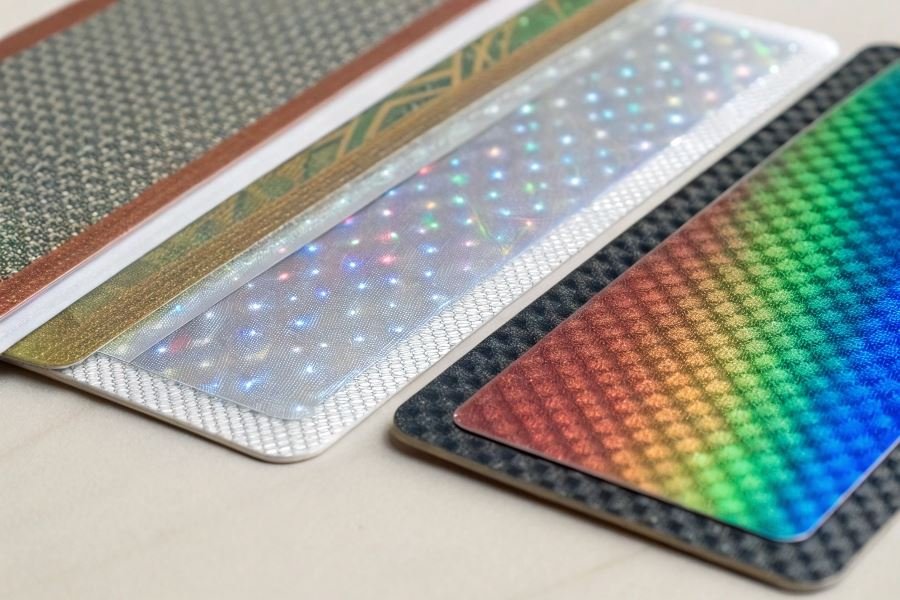
Ever dropped your ID card in a puddle or accidentally sent it through the washing machine? The survival of that crucial piece of plastic isn’t just luck—it’s materials science at work. Behind every durable identification card lies a carefully selected substrate that balances security, functionality, and resilience.
ID cards face a gauntlet of daily threats: UV exposure, wallet friction, moisture, and the occasional coffee spill. For organizations issuing thousands of credentials annually, choosing the right material isn’t just about longevity—it’s about protecting substantial investments. A card that fails prematurely can cost between $15-30 to replace when accounting for production, distribution, and administrative expenses.
The durability equation isn’t simple. Three critical factors determine how long your ID cards will last: material composition, printing technology, and environmental exposure. While all three matter, the foundation—the material itself—makes the most significant difference in a card’s lifespan.
The industry has converged on three exceptional materials that consistently outperform others in real-world conditions:
- PVC (polyvinyl chloride): The traditional workhorse
- Composite PVC: The sophisticated hybrid
- Polycarbonate: The virtually indestructible premium option
Each material offers distinct advantages depending on your security requirements, budget constraints, and expected usage conditions. Understanding these differences can mean the difference between ID cards that last for years versus those that need frequent replacement.
The Material Matters: Durability in ID Card Design
When security and longevity collide in the identification world, material selection becomes the foundation of everything that follows. The physical composition of an ID card determines not just how long it will last, but how well it can resist tampering, environmental damage, and daily wear.
For organizations seeking to optimize their identification systems, understanding the top 3 materials for making durable ID cards is essential knowledge that directly impacts security protocols and budget planning. Each material offers distinct advantages in specific applications, from basic membership cards to high-security government credentials.
PVC: The Versatile Standard
Polyvinyl Chloride (PVC) remains the most widely used material in ID card production, and for good reason. This thermoplastic polymer offers an impressive balance of affordability and performance.
Key advantages of PVC cards:
- Cost-effective for large-volume production
- Excellent printability for vibrant colors and sharp images
- Compatible with standard card printers
- Typical lifespan of 1-3 years with normal use
PVC cards perform admirably in controlled environments but have limitations. They’re susceptible to cracking in extreme cold and can warp when exposed to heat above 140°F. For organizations with moderate security needs and regular card replacement cycles, PVC provides excellent value.
“PVC remains the workhorse of the ID card industry, offering the best balance of cost and functionality for most standard applications.”
Composite PET/PVC: The Durability Upgrade
When organizations need extended card life without jumping to premium materials, composite PET/PVC cards deliver impressive performance. These hybrid cards feature a polyethylene terephthalate (PET) core sandwiched between PVC outer layers.
Composite card benefits:
- 3-5 year typical lifespan
- Superior resistance to bending and cracking
- Enhanced temperature stability (-40°F to 160°F)
- Improved resistance to chemicals and UV exposure
| Feature | PVC | Composite PET/PVC |
|---|---|---|
| Lifespan | 1-3 years | 3-5 years |
| Temp Range | 32°F-140°F | -40°F-160°F |
| Bend Resistance | Moderate | High |
| Cost Factor | 1x | 1.5-2x |
Composite cards have become the go-to choice for universities, healthcare facilities, and corporations where cards experience daily handling but don’t require the highest security features. The additional durability justifies the modest price increase for most applications.
Polycarbonate: The Security Champion
When maximum durability meets uncompromising security, polycarbonate ID cards stand alone. Used in government-issued IDs, driver’s licenses, and high-security access credentials, polycarbonate offers unmatched performance.
Polycarbonate superiority:
- Exceptional 7-10 year lifespan
- Virtually impossible to delaminate (single-layer fusion)
- Superior tamper resistance
- Enables laser-engraved personalization
- Extreme temperature resistance (-40°F to 284°F)
The defining characteristic of polycarbonate is its monolithic structure. Unlike layered cards, polycarbonate IDs are fused into a single structure, making them nearly impossible to separate without destruction. This, combined with the ability to incorporate laser-engraved personalization, creates credentials with the highest security profile available.
The premium durability comes with premium pricing—typically 3-5 times the cost of standard PVC cards—but for high-security applications, the investment delivers unmatched protection and longevity.
Making the Right Choice: ID Card Materials That Last
The Material Showdown: PVC vs. Composite vs. Polycarbonate
When durability meets identity verification, not all materials perform equally. The top three contenders in the ID card arena—PVC, composite PET/PVC, and polycarbonate—each bring distinct advantages to the table.
PVC (Polyvinyl Chloride) remains the industry standard for a reason. With a typical lifespan of 1-3 years, these cards offer decent durability at an entry-level price point. PVC cards maintain good printability for both direct-to-card and retransfer printing methods, producing vibrant colors and acceptable image resolution. However, they’re susceptible to cracking in extreme temperatures and show wear along edges with frequent use.
Composite PET/PVC cards represent the middle ground, combining polyethylene terephthalate with traditional PVC. This hybrid construction creates a more flexible card that resists cracking and extends lifespan to 3-5 years. The layered structure allows for higher-quality printing while providing improved resistance to chemicals, moisture, and temperature fluctuations.
Polycarbonate stands as the premium option, delivering unmatched durability with lifespans exceeding 10 years. These cards aren’t simply more robust—they’re fundamentally different in construction. Polycarbonate cards feature a monolithic structure where layers are fused rather than laminated, creating a tamper-evident card that will break rather than delaminate when compromised.
Cost vs. Performance: The Investment Perspective
| Material | Average Cost Per Card | Lifespan | Best Applications |
|---|---|---|---|
| PVC | 0.15−0.30 | 1-3 years | Temporary IDs, membership cards, limited-use badges |
| Composite PET/PVC | 0.35−0.60 | 3-5 years | Corporate IDs, university cards, frequent-use access cards |
| Polycarbonate | 1.00−3.00 | 10+ years | Government IDs, driver’s licenses, high-security credentials |
The cost differential becomes less significant when considering the total cost of ownership. While polycarbonate cards command a premium of roughly 5-10 times the price of standard PVC, their extended lifespan often justifies the investment for high-security applications or cards that must withstand harsh conditions.
Composite cards offer perhaps the most balanced value proposition, delivering approximately triple the lifespan of PVC at roughly double the cost—making them increasingly popular for corporate environments where both durability and budget considerations matter.
Matching Materials to Mission-Critical Requirements
Your selection should ultimately align with specific usage requirements:
For high-security environments, polycarbonate delivers unmatched security features. Its structure allows for laser-engraved personalization that becomes part of the card body—impossible to alter without visible damage. Organizations requiring tamper-evident credentials should accept no substitutes.
For moderate-use scenarios with regular handling, composite cards provide the sweet spot of durability and cost-effectiveness. Their resistance to cracking makes them ideal for cards that live in wallets or badge holders and experience daily use.
For temporary identification needs or controlled environments, standard PVC remains perfectly adequate. Organizations with annual reissuance cycles or limited handling requirements can maximize budget efficiency without sacrificing necessary functionality.
The most durable card is ultimately the one that meets your specific security requirements while balancing longevity against budget constraints.
When selecting your ID card material, consider not just the initial investment but the total lifecycle cost—including replacement frequency, printer compatibility, and security features required for your specific application.
Discover the top 3 materials for creating long-lasting ID cards: PVC, Composite PET/PVC, and Polycarbonate. Learn key durability factors and make the best choice for your identification needs based on cost and specific requirements.
Discover the top 3 materials for creating long-lasting ID cards: PVC, Composite PET/PVC, and Polycarbonate. Learn key durability factors and make the best choice for your identification needs based on cost and specific requirements.