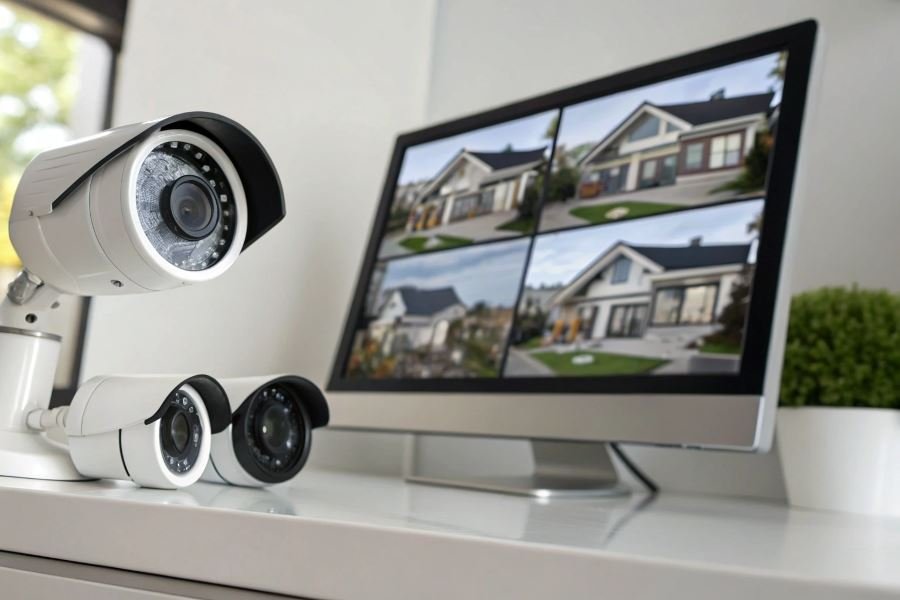
Ever wondered what happens to all that surveillance footage after your cameras capture it? The answer lies in one critical component that many security system buyers overlook.
Video recorders serve as the central nervous system of any effective surveillance setup. They’re not just storage devices—they’re sophisticated data management systems that determine how effectively you can monitor, review, and act on security events. Now that high-definition cameras and AI-powered analytics have transformed security capabilities, choosing the right recorder has become more crucial than ever.
The foundation: Understanding NVRs vs. DVRs
At its core, your choice begins with understanding the difference between Network Video Recorders (NVRs) and Digital Video Recorders (DVRs). DVRs connect directly to analog cameras via coaxial cables, while NVRs work with IP cameras over network connections. This fundamental distinction affects everything from installation complexity to future scalability.
Beyond storage: What your recorder actually does
Your video recorder performs several critical functions:
- Video processing and compression: Converts raw footage into manageable file sizes
- Storage management: Organizes and maintains video archives
- Playback capabilities: Allows searching and reviewing footage
- Remote access: Enables monitoring from anywhere
- Integration: Connects with other security systems and devices
Matching capabilities to your security needs
The right recorder depends entirely on your specific requirements. A small retail shop might need just 4-8 channels with basic motion detection, while a manufacturing facility might require 32+ channels with advanced analytics for perimeter monitoring. Consider not just your current needs, but where your security requirements might be in 3-5 years.
The recorder you select today will determine what’s possible tomorrow—from facial recognition to automated alerts to seamless cloud integration.
Technical Specifications That Make or Break Your Surveillance System
When selecting the backbone of your surveillance setup, understanding the technical specifications of video recorders becomes crucial. The right recorder doesn’t just store footage—it determines what you can see, how long you can keep it, and how easily your system can grow with your needs.
Navigating the process of how to choose a video recorder for a video surveillance system requires attention to three critical specifications that professionals prioritize: storage capacity, resolution compatibility, and scalability options. These factors will determine whether your system delivers crystal-clear evidence or frustrating pixelated approximations when you need footage most.
Storage Capacity: The Foundation of Surveillance Value
Storage capacity directly translates to how much history your system remembers. Professional installations typically require:
- Minimum 2TB for residential systems with 4 cameras recording continuously
- 8TB or higher for business environments with multiple high-resolution cameras
The recording duration equation isn’t just about raw storage—it’s about intelligent allocation. Modern recorders use variable bitrate technology that allocates more data to scenes with movement and less to static views.
The smartest systems don’t just record everything—they record everything that matters.
A practical calculation: A 4TB recorder managing four 1080p cameras with motion detection can typically store 30-45 days of footage, while the same setup with continuous recording might only retain 10-14 days.
Resolution and Frame Rate: The Clarity Equation
Your recorder must support the resolution and frame rate of your cameras—otherwise, you’re paying for quality you’ll never see.
| Resolution | Typical Frame Rate | Storage Impact | Best Use Case |
|---|---|---|---|
| 1080p (2MP) | 15-30fps | Moderate | General surveillance |
| 4K (8MP) | 15-30fps | Very High | Facial recognition, license plates |
| 5MP | 15-20fps | High | Detailed monitoring of larger areas |
Frame rate considerations matter more than many realize. While 30fps provides smooth motion ideal for tracking fast movements, many systems can operate effectively at 15fps for general surveillance, cutting storage requirements nearly in half.
Channel Count and Future-Proofing Your Investment
The number of channels determines how many cameras your system can support simultaneously. The key consideration isn’t just your current needs—it’s anticipating future expansion.
Smart scaling strategies include:
- Purchase N+4 channels: If you need 8 cameras now, consider a 12-channel recorder
- Explore hybrid NVRs that support both IP and analog cameras during transition periods
- Verify PoE budget on NVRs with built-in switches—not all channels may power high-demand cameras simultaneously
Network bandwidth requirements scale dramatically with resolution. A 16-channel 4K system can demand up to 80Mbps of sustained network throughput—a specification often overlooked until the system begins dropping frames.
The most sophisticated recorders now offer AI-enhanced recording that can identify people, vehicles, and objects, storing high-resolution footage only when relevant subjects appear, dramatically extending storage duration without sacrificing quality where it matters.
When evaluating specifications, remember that the recorder is the central nervous system of your surveillance infrastructure—investing appropriately here prevents the frustration of a system that can’t deliver when you need it most.
Advanced Features That Transform Your Surveillance System
Remote access changes everything
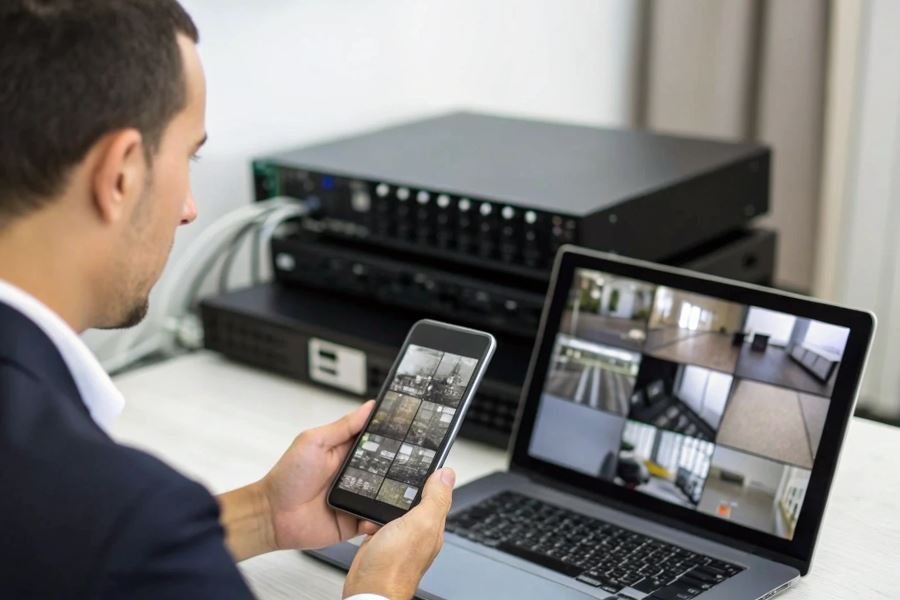
The days of being chained to a security room are long gone. Modern Network Video Recorders (NVRs) and Digital Video Recorders (DVRs) offer robust remote access capabilities that transform how you monitor your property. The best systems provide dedicated mobile apps that deliver real-time footage directly to your smartphone or tablet.
Look for recorders offering multi-platform compatibility – iOS, Android, Windows, and macOS. Hikvision and Dahua lead the market with intuitive apps that allow you to view multiple camera feeds simultaneously, receive instant motion alerts, and even control PTZ (pan-tilt-zoom) cameras remotely.
The difference between basic and premium remote access often comes down to connection quality and user experience. Premium recorders maintain stable connections even with fluctuating internet speeds and offer bandwidth management tools to prevent data overages.
Seamless integration with existing infrastructure
The most expensive recorder becomes worthless if it can’t communicate with your cameras. Before purchasing, create an inventory of your current equipment:
| Component | Details to Document |
|---|---|
| Cameras | Resolution, protocol (ONVIF, proprietary), connection type |
| Network | Available bandwidth, PoE capabilities, router specifications |
| Storage | Current capacity, expansion needs, backup solutions |
ONVIF compliance has become the gold standard for interoperability. This open protocol ensures your recorder can communicate with cameras from different manufacturers. Axis Communications has been a pioneer in promoting ONVIF standards across the industry.
For businesses with legacy analog systems, hybrid recorders like those from Swann bridge the gap by accepting both IP and analog inputs. This allows for gradual system upgrades without requiring a complete overhaul.
Future-proofing your investment
The surveillance landscape evolves rapidly, making future-proofing essential. Smart buyers look beyond current needs to anticipate tomorrow’s requirements.
Storage expandability ranks among the most critical future-proofing features. Select recorders with multiple drive bays or external storage options. Enterprise-grade systems from Synology offer scalable storage that can grow from terabytes to petabytes as your needs evolve.
Consider these future-proofing factors:
-
AI capabilities – Recorders with built-in artificial intelligence can distinguish between humans, vehicles, and animals, dramatically reducing false alarms. Many systems now offer facial recognition and object detection.
-
Resolution support – Even if your current cameras are 1080p, choose a recorder that supports 4K or even 8K to accommodate future camera upgrades.
-
Analytics integration – Business intelligence features like heat mapping, people counting, and dwell time analysis transform surveillance systems into valuable data sources.
-
Cybersecurity features – Look for systems with encryption, multi-factor authentication, and regular security updates. Verkada has made cybersecurity a cornerstone of their recorder design.
The most forward-thinking recorders now offer cloud integration options, creating hybrid systems that maintain local recording while leveraging cloud storage for backup and remote access. This dual approach provides redundancy while minimizing bandwidth requirements.
When evaluating long-term value, consider total cost of ownership rather than just purchase price. A $1,200 recorder with five years of reliable service delivers better value than a $600 unit that needs replacement after two years.
Learn how to select the perfect video recorder for your surveillance system with our comprehensive guide. Compare storage capacity, resolution options, remote access features, and compatibility to make an informed security investment decision.
Learn how to select the perfect video recorder for your surveillance system with our comprehensive guide. Compare storage capacity, resolution options, remote access features, and compatibility to make an informed security investment decision.