
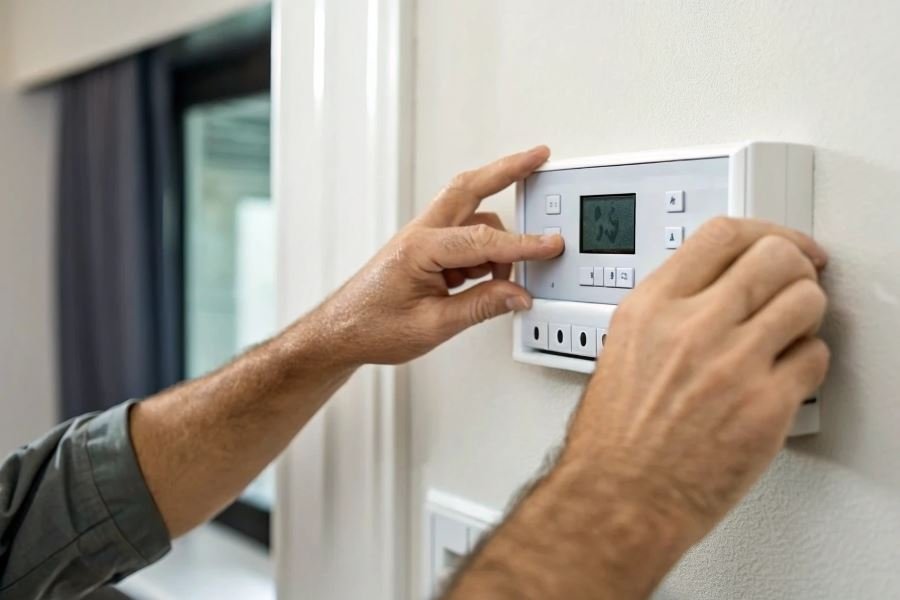
Ever walked into a room that felt just right temperature-wise, without even noticing the system making it happen? That’s the magic of well-controlled fan coil units. These unsung heroes of climate control work silently behind the scenes in offices, hotels, and high-end residences across America.
Fan coil units (FCUs) are essentially heat exchangers with fans that circulate air through a heating or cooling element. But the real intelligence lies in their control systems—the brains that determine when, how much, and at what temperature air should flow. Think of them as the conductors of your indoor climate orchestra, ensuring every instrument plays in perfect harmony.
The control system you select doesn’t just affect comfort—it dramatically impacts energy consumption and operational costs. Studies from the American Society of Heating, Refrigerating and Air-Conditioning Engineers (ASHRAE) suggest that optimized control systems can reduce energy usage by up to 30% compared to basic systems. That’s thousands of dollars saved annually in larger installations.
When selecting a control system, three factors reign supreme:
-
Application requirements – Is this for a luxury home where individual room control is paramount, or a commercial space with predictable occupancy patterns?
-
Integration capabilities – Will your system need to communicate with building automation systems or smart home platforms?
-
Control precision – How tight must your temperature tolerances be? Medical facilities might require ±1°F precision, while standard offices can function with wider ranges.
The difference between a good and great fan coil control system often comes down to how intelligently it responds to changing conditions—not just reacting to them, but anticipating needs before they arise.
The Control Revolution: Mastering Fan Coil Systems
When selecting the perfect climate control solution for your space, understanding fan coil control systems becomes a critical decision point that can dramatically impact comfort, efficiency, and long-term operating costs. The technology governing these systems has evolved significantly, offering unprecedented levels of precision and integration capabilities that weren’t possible even a decade ago. Fan coil control systems: what’s important to know when choosing between different types often comes down to understanding the fundamental differences in how they operate and communicate.
Let’s dive into the three primary control system categories that dominate today’s market, examining their unique characteristics and ideal applications.
Analog Control: Reliable Simplicity
Analog control systems represent the traditional approach to fan coil management, utilizing physical components like thermostats with mechanical dials or sliders to regulate temperature. These systems operate on variable resistance principles, translating user inputs into proportional voltage signals.
Key advantages:
- Lower initial investment costs (typically 30-40% less than digital alternatives)
- Straightforward installation requiring minimal specialized knowledge
- Exceptional reliability with fewer potential points of failure
- Independence from network connectivity issues
The limitations become apparent in more demanding environments, however. Analog systems lack precise temperature control (±2°F variance is common), offer minimal speed options (typically just 3-4 settings), and cannot be integrated into broader building systems without additional hardware.
These systems shine in smaller applications like individual offices, retail spaces under 2,000 square feet, and residential settings where simplicity and cost-effectiveness take priority over advanced functionality.
Digital Control: Smart Performance
Digital control systems represent a quantum leap forward, employing microprocessors and digital communication protocols to deliver exceptional precision and programmability.
Standout capabilities:
- Temperature control accuracy within ±0.5°F
- Programmable schedules with multiple setpoints throughout the day
- Remote operation via dedicated apps or web interfaces
- Detailed performance analytics and energy consumption tracking
“The difference between analog and digital control is like comparing a flip phone to a smartphone—both make calls, but one transforms the entire experience.”
Integration with Nest thermostats, Ecobee systems, and similar smart home platforms has become increasingly seamless. These systems typically add $200-500 to initial costs but can deliver 15-30% energy savings through more intelligent operation.
The primary consideration with digital systems is ensuring compatibility with existing infrastructure and planning for potential firmware updates that may be required periodically.
BMS Integration: Enterprise-Level Control
For larger commercial applications, Building Management System integration represents the pinnacle of fan coil control sophistication. These systems connect fan coils to centralized building automation platforms using protocols like BACnet or Modbus.
Integration benefits:
- Centralized monitoring and control of all HVAC components
- Automated responses to occupancy patterns and external conditions
- Preventative maintenance alerts based on performance metrics
- Comprehensive energy management across entire facilities
| Protocol | Communication Method | Typical Range | Industry Adoption |
|---|---|---|---|
| BACnet | IP/MSTP/Ethernet | Building-wide | 80% of commercial |
| Modbus | RTU/TCP | 1,200 meters | 65% of industrial |
| KNX | Twisted pair/RF | 700 meters | 40% of European |
The primary considerations for BMS integration include ensuring protocol compatibility, addressing potential latency issues, and budgeting for the significant upfront investment in hardware, software, and specialized installation expertise.
For enterprise facilities, educational campuses, and healthcare environments, the operational efficiencies and enhanced control capabilities typically justify the 40-60% premium over standalone digital systems.
Making the Right Decision for Fan Coil Control Systems
Balancing Budget with Building Needs
Selecting the optimal fan coil control system requires a strategic approach that balances immediate costs against long-term value. The most successful implementations begin with a clear assessment of three critical factors: available budget, specific building requirements, and future operational goals.
Budget considerations extend beyond initial purchase price. A comprehensive financial analysis should include:
- Installation costs (labor and materials)
- Ongoing maintenance requirements
- Energy consumption projections
- Expected system lifespan
- Potential rebates or incentives for energy-efficient systems
Building requirements form the technical foundation of your decision. Modern facilities demand control systems that integrate seamlessly with existing infrastructure while providing the flexibility to adapt to changing needs. When evaluating building compatibility, focus on:
- Existing HVAC infrastructure
- Building automation system (BAS) compatibility
- Space constraints for controllers and sensors
- Occupancy patterns and zoning requirements
- Indoor air quality standards
The most expensive control system isn’t always the best choice—the ideal solution aligns perfectly with your specific building requirements while delivering measurable ROI.
Evaluation Framework for Implementation Success
Successful implementation begins with a structured evaluation process. Consider creating a weighted scoring matrix that prioritizes your most critical requirements. This approach transforms subjective preferences into objective decision criteria.
For optimal results, follow this evaluation framework:
- Document current performance metrics to establish a baseline
- Engage multiple stakeholders including facility managers, financial officers, and maintenance staff
- Request detailed demonstrations from at least three vendors
- Conduct site visits to similar installations
- Develop a phased implementation plan to minimize disruption
When implementing your chosen system, prioritize comprehensive training for maintenance and operations staff. The most sophisticated control system will underperform if your team lacks the knowledge to optimize its capabilities.
Tomorrow’s Technology Today
The fan coil control landscape continues to evolve rapidly, with several emerging trends poised to reshape the industry:
| Technology Trend | Key Benefits | Implementation Timeline |
|---|---|---|
| AI-powered predictive maintenance | Reduces downtime by 30-45% | Mainstream adoption by 2027 |
| Wireless mesh networking | Simplifies retrofits, reduces installation costs | Currently available |
| Digital twin integration | Enables scenario testing and optimization | Early adoption phase |
| Indoor air quality optimization | Improves occupant health and productivity | Rapidly expanding market |
Edge computing is transforming how fan coil systems process data. By performing calculations locally rather than in the cloud, these systems deliver faster response times and enhanced reliability, even during network disruptions. Solutions like Johnson Controls EDGE controllers exemplify this approach.
Interoperability standards continue to gain traction, with open protocols becoming increasingly important. Systems built on platforms like BACnet or KNX offer greater flexibility and future-proofing than proprietary alternatives.
The most forward-thinking facility managers are already exploring demand-response capable systems that can participate in utility programs, generating revenue while supporting grid stability. This capability transforms HVAC from a cost center to a potential revenue source.
When making your final decision, remember that the most successful implementations balance immediate needs with strategic vision. The right fan coil control system doesn’t just solve today’s challenges—it positions your facility for tomorrow’s opportunities.
Discover how to select the ideal fan coil control system for your building's needs. Compare analog, digital, and BMS-integrated options to maximize efficiency, comfort, and cost-effectiveness in your HVAC infrastructure.
Discover how to select the ideal fan coil control system for your building's needs. Compare analog, digital, and BMS-integrated options to maximize efficiency, comfort, and cost-effectiveness in your HVAC infrastructure.