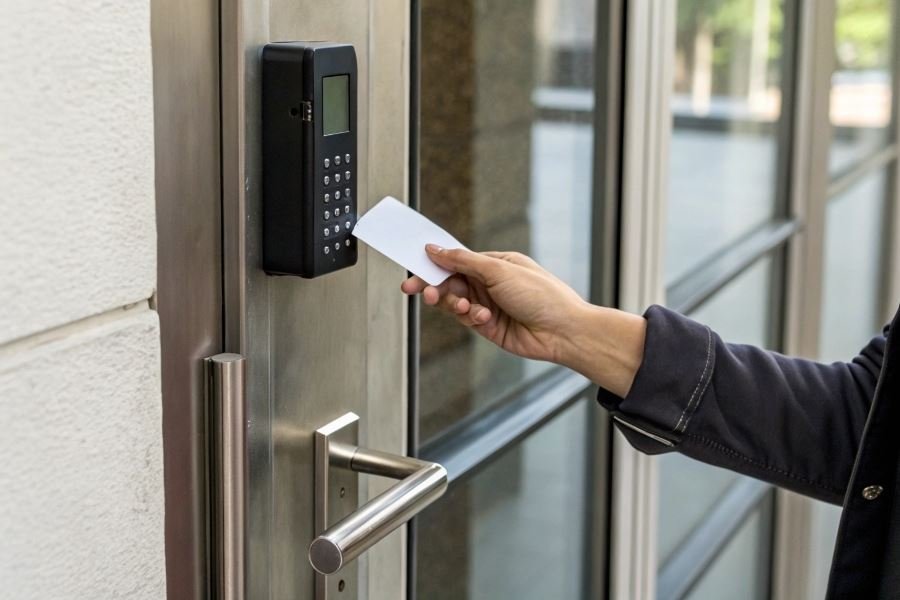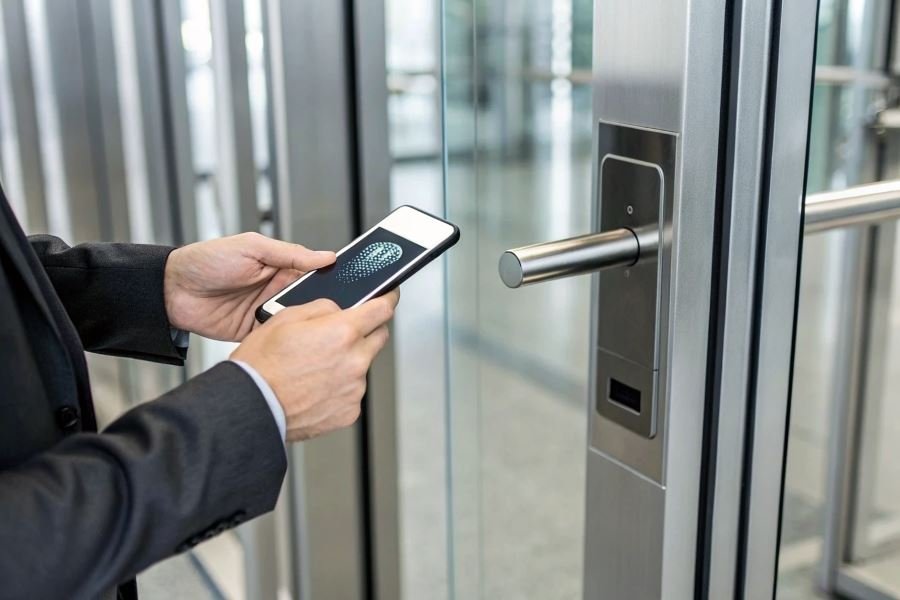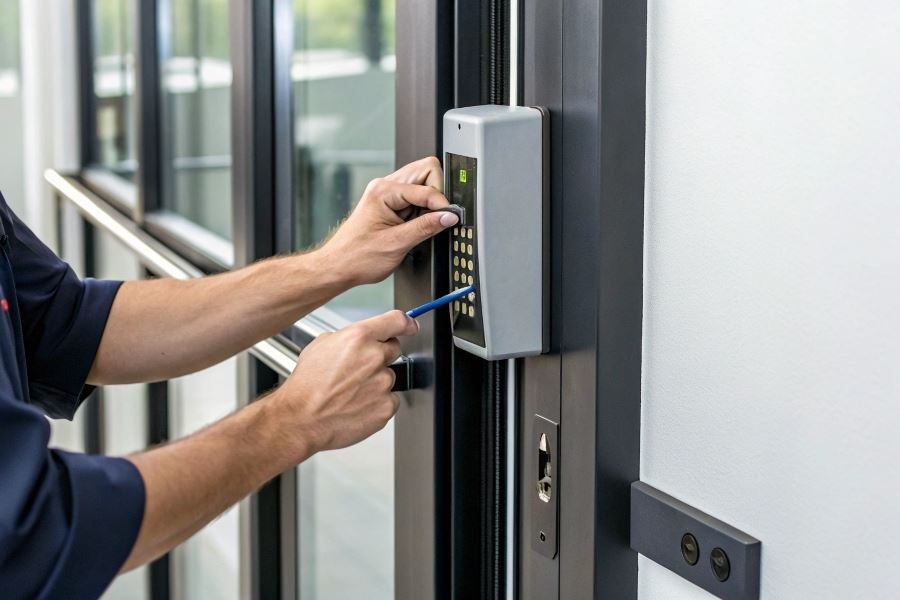
Ever walked up to a door, badge in hand, only to experience that awkward moment when nothing happens? Behind that frustrating experience lies a critical business decision someone got wrong. Access control readers—those unassuming devices that grant or deny entry—are the silent sentinels of your security infrastructure, and choosing the wrong ones can cost you far more than just convenience.
Security professionals know that reader selection isn’t just a technical checkbox—it’s a strategic business decision with ripple effects throughout an organization. These devices serve as the primary interface between users and your security system, determining who goes where and when. But their importance extends beyond simple access management; they’re the foundation upon which your entire security ecosystem operates.
The integration challenge is real. Many businesses find themselves trapped between aging legacy systems they’ve invested in for years and the need to adopt newer technologies. This creates a technological tug-of-war where compatibility becomes the battlefield. A reader that can’t communicate effectively with your existing infrastructure creates security gaps, frustrated employees, and potential compliance nightmares.
Consider what happened at Meridian Financial when they upgraded their readers without proper integration planning: 200 employees locked out for three hours, resulting in $45,000 in lost productivity. Or contrast that with Westfield Manufacturing, whose thoughtful reader selection enabled them to phase in new security features while maintaining compatibility with their existing door controllers—saving over $120,000 in replacement costs.
The business impact of proper reader selection extends beyond dollars and cents. It affects operational efficiency, security posture, and even employee satisfaction. When readers work seamlessly with your existing systems, security becomes invisible—exactly as it should be.
Technical Compatibility: The Backbone of Successful Reader Integration
When selecting access control readers for your existing security infrastructure, technical compatibility isn’t just a checkbox—it’s the foundation that determines whether your system will function seamlessly or become a costly headache. The right reader can elevate your security posture, while the wrong one can lead to integration nightmares and performance bottlenecks.
Establishing clear criteria for selecting readers for integration with existing security systems requires a deep understanding of three critical compatibility factors: communication protocols, power infrastructure, and credential technology support. These elements form the technical trinity that security professionals must navigate to ensure successful deployments.
Speaking the Same Language: Communication Protocols
The communication protocol is essentially the “language” your reader uses to talk to your access control system. Choose incorrectly, and your components will be like strangers attempting conversation without a common tongue.
Wiegand remains the industry workhorse—a simple, unidirectional protocol that’s been around since the 1980s. While lacking encryption and bidirectional capabilities, its widespread adoption makes it a safe bet for legacy systems.
OSDP (Open Supervised Device Protocol) represents the future with its bidirectional communication, encryption, and supervision capabilities. OSDP readers can detect tampering and support firmware updates—features Wiegand simply cannot match.
RS-485 offers excellent noise immunity and supports longer cable runs (up to 4,000 feet compared to Wiegand’s typical 500-foot limitation), making it ideal for campus environments.
| Protocol | Encryption | Direction | Max Distance | Supervision |
|---|---|---|---|---|
| Wiegand | No | One-way | 500 ft | No |
| OSDP | Yes | Two-way | 4,000 ft | Yes |
| RS-485 | Optional | Two-way | 4,000 ft | Optional |
Power Considerations: Meeting Infrastructure Limitations
Your existing power infrastructure can make or break your reader deployment. Modern readers typically require 12-24V DC power, but consumption varies dramatically based on functionality.
Basic proximity readers might draw as little as 60mA, while advanced biometric readers can demand 400mA or more. This difference becomes critical when calculating:
- Power supply capacity
- Voltage drop over distance
- Backup power requirements
- Heat generation in enclosures
Pro tip: Always add a 20% buffer to your power calculations to account for startup surges and future feature additions.
Credential Technology: The User Experience Frontier
The credential technology you select determines not just security levels but also user convenience and future flexibility.
Proximity (125 kHz) technology from manufacturers like HID Global offers simplicity and compatibility with legacy systems, but lacks encryption and is vulnerable to cloning.
Smart card (13.56 MHz) credentials provide superior security through encryption and mutual authentication. MIFARE DESFire EV3 cards, for example, offer AES-128 encryption and protection against sophisticated attacks.
Mobile credentials eliminate physical cards entirely, leveraging smartphones via Bluetooth or NFC. Solutions from Openpath and Brivo can dramatically reduce credential management overhead while improving user satisfaction.
Biometric readers from companies like Suprema provide the ultimate in non-transferable authentication but require careful consideration of privacy regulations and fallback authentication methods.
The most forward-thinking installations now support multiple credential technologies simultaneously, creating migration paths from legacy to modern systems without disrupting operations. This multi-technology approach provides breathing room for phased upgrades while maintaining seamless user experiences.
Making the Strategic Investment: Reader Selection for Integrated Security
The true cost beyond the price tag
When evaluating readers for your security ecosystem, the sticker price is merely the tip of the financial iceberg. Total cost of ownership (TCO) encompasses installation expenses, ongoing maintenance, and inevitable upgrade paths. Organizations that focus solely on acquisition costs often find themselves trapped in a cycle of unexpected expenses.
Installation costs vary dramatically based on reader complexity. While basic proximity readers might require minimal wiring and configuration, advanced biometric systems demand specialized expertise. A comprehensive installation assessment should include:
| Installation Component | Cost Consideration | Long-term Impact |
|---|---|---|
| Physical mounting | Labor hours and hardware | Durability and tampering resistance |
| Wiring requirements | Cable types and distances | Future expansion capability |
| Configuration time | IT personnel hours | System reliability |
| Testing procedures | Validation protocols | Compliance verification |
Maintenance represents another critical TCO factor. Modern HID Global readers typically require minimal physical maintenance, but firmware updates and security patches demand ongoing attention. Budget for quarterly security reviews and annual hardware inspections to prevent costly emergency interventions.
The most overlooked TCO component? Training costs for security personnel who must become proficient with new reader technologies.
Building for tomorrow while solving for today
Scalability isn’t just about adding more readers—it’s about creating an ecosystem that evolves with your security needs. Future-proofing begins with selecting readers that support multiple credential technologies simultaneously.
The most forward-thinking organizations are implementing readers that accommodate:
- Legacy credentials (proximity cards)
- Current standards (smart cards)
- Emerging technologies (mobile credentials)
- Biometric authentication options
This multi-technology approach creates a migration pathway rather than forcing disruptive rip-and-replace scenarios. Suprema and Allegion offer particularly versatile reader platforms that support credential evolution without wholesale hardware replacement.
The most expensive reader is the one you’ll need to replace before its expected end-of-life because it can’t adapt to new security requirements.
Consider your physical expansion plans as well. Will your organization add facilities or reconfigure existing spaces? Readers with standardized wiring schemes and open protocols provide the flexibility to grow without starting from scratch.
Compliance as competitive advantage
Proper reader selection directly impacts your compliance posture and risk profile. Different industries face varying regulatory requirements—healthcare facilities must consider HIPAA implications, financial institutions face PCI DSS constraints, and government contractors navigate FIPS 201 standards.
The right readers transform compliance from burden to benefit by:
- Automating access logging for audit trails
- Enforcing separation of duties through multi-factor authentication
- Preventing credential sharing through biometric validation
- Enabling immediate privilege revocation when employment status changes
Genetec and Lenel offer particularly robust compliance reporting tools that integrate seamlessly with properly selected readers.
Security directors who prioritize compliance in their reader selection criteria report significantly lower incident rates and faster audit completions. This translates to tangible cost savings and reduced organizational risk.
By approaching reader selection through these strategic lenses—total cost, scalability, and compliance—you transform what could be a tactical purchasing decision into a cornerstone of your security strategy. The right readers don’t just control access; they create the foundation for a security ecosystem that protects your most valuable assets while adapting to tomorrow’s challenges.
Learn how to select compatible access control readers for seamless integration with existing security systems. Discover key technical criteria including protocol compatibility, power requirements, and credential technology support to maximize security effectiveness.
Learn how to select compatible access control readers for seamless integration with existing security systems. Discover key technical criteria including protocol compatibility, power requirements, and credential technology support to maximize security effectiveness.