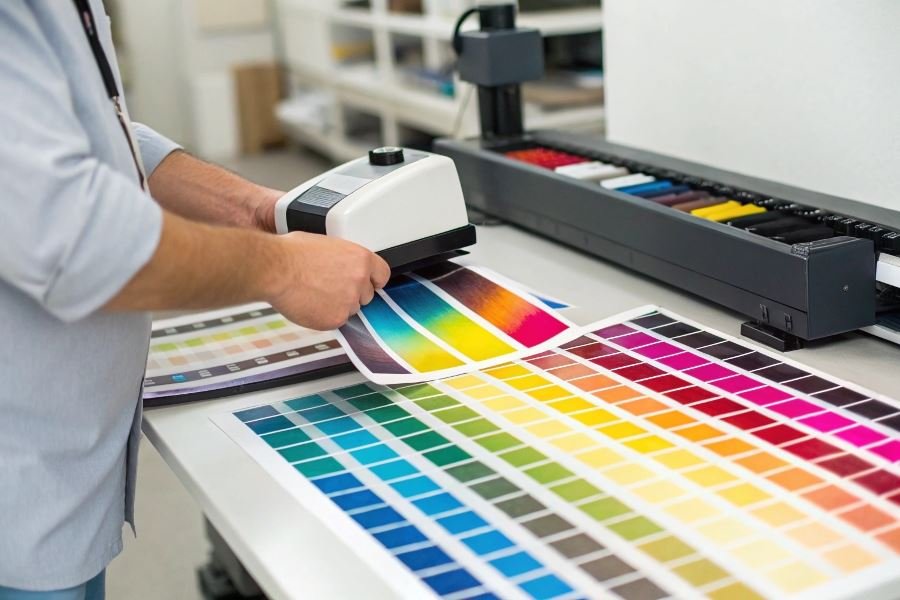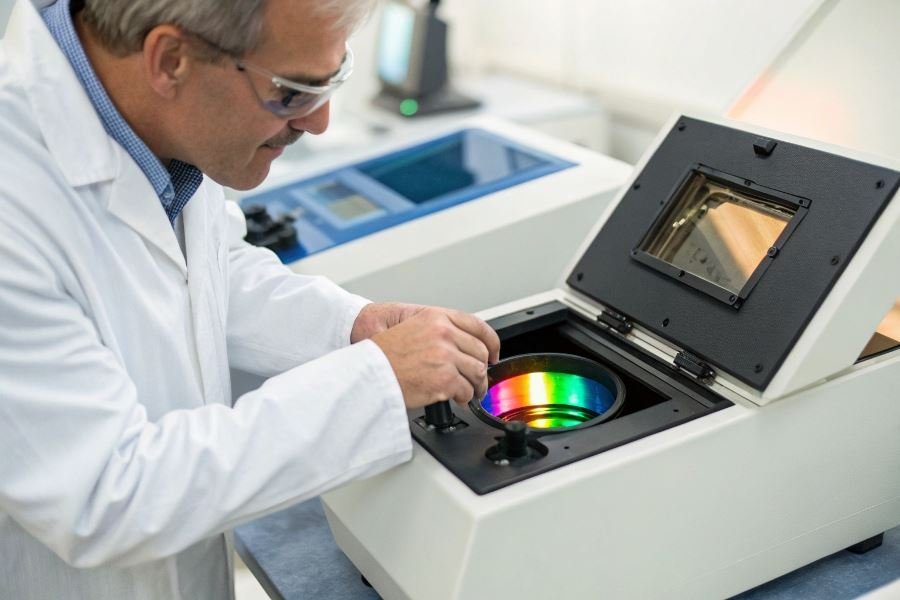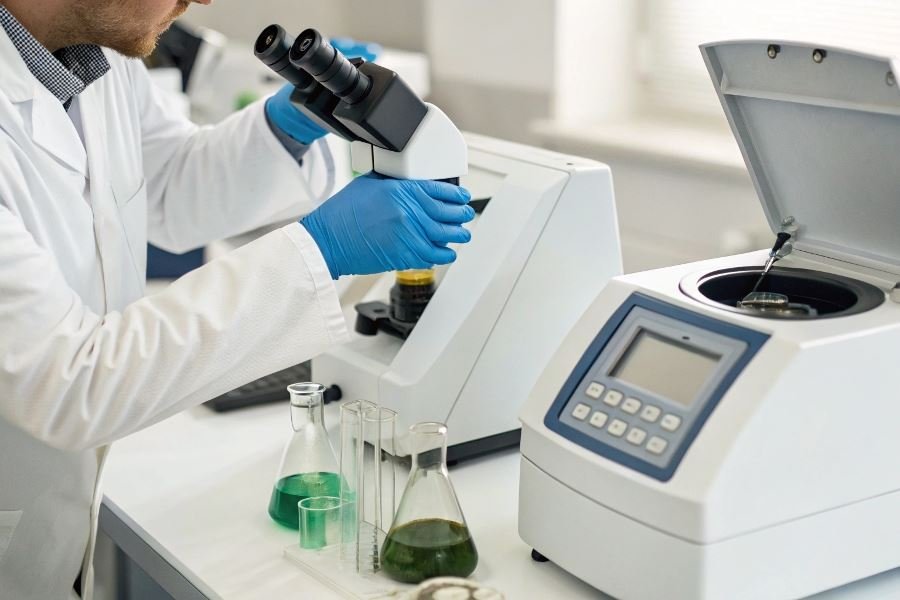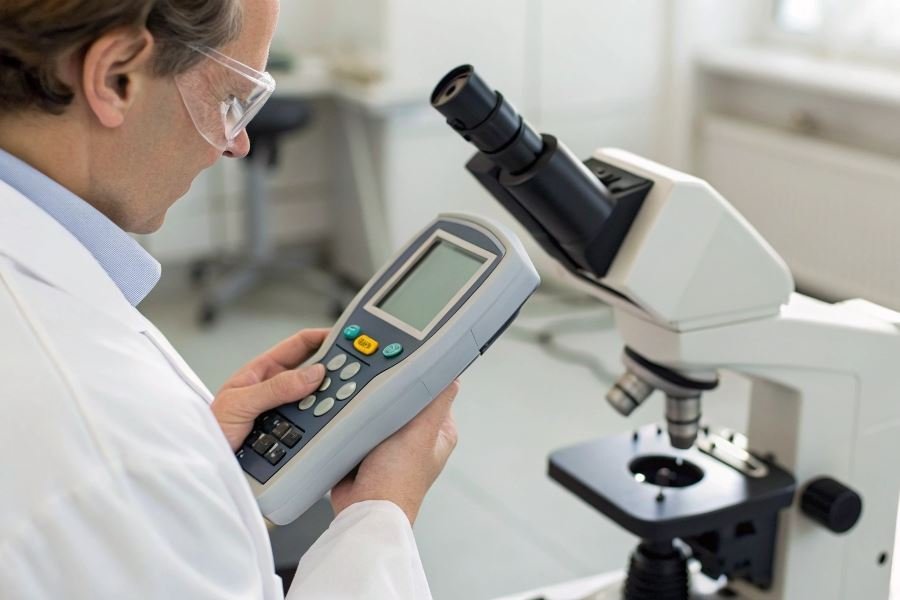
Ever wondered how companies ensure the exact same shade of red appears on every can of Coca-Cola worldwide? The answer lies in a powerful yet often overlooked tool: the spectrophotometer. This precision instrument doesn’t just measure color—it quantifies light itself, revolutionizing quality control across industries.
Spectrophotometry fundamentally works by measuring how materials interact with light across different wavelengths. When light strikes an object, certain wavelengths are absorbed while others reflect back—creating what we perceive as color. A spectrophotometer captures this spectral fingerprint with remarkable precision, translating it into numerical values that eliminate subjective human judgment.
The evolution of these instruments tells a fascinating story of technological advancement. Early spectrophotometers from the 1940s filled entire laboratory benches, requiring specialized training and controlled environments. By the 1980s, desktop models brought this technology to more businesses, but still demanded dedicated space and careful calibration. The real breakthrough came in the early 2000s with the introduction of truly portable devices—some no larger than a smartphone—bringing laboratory-grade precision directly to production floors, field sites, and quality control checkpoints.
Today’s market offers two distinct paths: portable units prioritizing flexibility and immediate results versus stationary systems delivering uncompromising accuracy and expanded measurement capabilities. While portable units dominate in industries requiring on-site verification—like automotive paint matching and textile production—stationary systems remain the gold standard for research applications and critical color formulation where controlled conditions matter most.
Technical Showdown: Portable vs Stationary Spectrophotometers
Precision in your pocket or power on your bench?
When professionals need to measure how materials interact with light, they face a fundamental choice between mobility and capability. The comparison of portable and stationary spectrophotometers reveals critical differences that impact everything from research outcomes to quality control decisions. These instruments serve as the eyes of science, detecting subtle color variations and chemical compositions that human vision simply cannot perceive.
Accuracy and precision form the bedrock of spectrophotometric analysis. Stationary models like the Shimadzu UV-2600 typically deliver photometric accuracy within ±0.002 Abs units, while portable units such as the X-Rite Ci64 might offer ±0.01 Abs units. This seemingly small difference becomes magnified in applications requiring detection of minute color variations or trace compounds.
Why the gap? Stationary systems benefit from:
- Temperature-controlled environments
- Vibration-isolated optical benches
- Higher-grade optical components
- More sophisticated calibration systems
Wavelength capabilities that define possibilities
The spectral range and resolution capabilities between these instrument classes create distinct operational boundaries:
| Feature | Portable Spectrophotometers | Stationary Spectrophotometers |
|---|---|---|
| Typical wavelength range | 400-700nm (visible spectrum) | 190-3300nm (UV through NIR) |
| Resolution | 10-20nm | 0.1-2nm |
| Stray light | 0.1-0.5% | <0.005% |
| Scanning speed | Limited | Up to 29,000nm/min |
This expanded range allows stationary instruments to tackle applications from DNA analysis (requiring UV capabilities) to polymer identification (needing NIR sensitivity). The Agilent Cary 7000 exemplifies this versatility with its 175-3300nm range and resolution down to 0.04nm.
Sample handling: Flexibility versus versatility
Sample handling capabilities represent perhaps the most practical difference between these instrument classes. Portable devices excel with:
- Non-destructive in-situ measurements
- Irregular surfaces and large objects
- Field measurements of immovable objects
- Quick go/no-go quality checks
Meanwhile, stationary systems offer:
Superior sample preparation options including:
“The ability to control sample presentation is often the difference between reliable data and questionable results.”
- Temperature-controlled sample chambers
- Multiple measurement geometries (transmittance, reflectance, integrating sphere)
- Automated sample changers for high-throughput testing
- Specialized accessories for solids, liquids, powders, and films
The PerkinElmer Lambda 1050+ demonstrates this versatility with its three-detector module system that can accommodate virtually any sample type with minimal reconfiguration.
For applications requiring both field mobility and laboratory-grade precision, hybrid solutions like the Konica Minolta CM-5 offer a compelling middle ground, though they still require performance compromises compared to dedicated benchtop systems.
The choice ultimately depends on whether your priority is bringing the instrument to the sample or preparing the sample for the instrument—a decision that shapes both workflow and results.
Where Spectrophotometers Shine: Application-Based Comparison
Portable Spectrophotometers: Field Warriors
Portable spectrophotometers have revolutionized on-site color measurement across multiple industries. In manufacturing, quality control technicians use devices like the X-Rite eXact to verify color consistency directly on production lines, eliminating the delay of laboratory testing. The immediate feedback allows for real-time adjustments, reducing waste and rework by up to 30%.
In the food industry, portable units enable field inspections of agricultural products, determining ripeness and quality parameters without sample destruction. Farmers and food processors leverage this technology to make harvesting decisions based on objective data rather than visual assessment alone.
The construction and architectural sectors benefit tremendously from portable spectrophotometers when matching paints and finishes on-site. Restoration specialists working on historical buildings can precisely match aged materials to their original specifications, preserving authenticity while ensuring structural integrity.
Field advantage: Portable units typically weigh between 1-3 pounds and operate on battery power for 6-8 hours, making them ideal for environments where mobility trumps absolute precision.
Stationary Spectrophotometers: Laboratory Champions
When ultimate precision becomes non-negotiable, stationary spectrophotometers dominate the landscape. Research laboratories rely on bench models like the Shimadzu UV-2600 for pharmaceutical development, where detecting concentration differences as small as 0.001% can determine a medication’s efficacy and safety profile.
Academic institutions leverage stationary spectrophotometers for materials science research, analyzing optical properties across multiple wavelength ranges with repeatability measured in nanometers. The controlled environment of a laboratory maximizes these instruments’ capabilities, with temperature and humidity regulation ensuring measurement stability.
Forensic laboratories depend on stationary spectrophotometers’ superior wavelength accuracy when analyzing trace evidence. The ability to distinguish between nearly identical dyes or pigments can provide critical evidence in criminal investigations.
The precision difference is measurable: high-end stationary models offer wavelength accuracy of ±0.1nm compared to portable units’ typical ±0.5nm specification.
ROI Considerations: Making the Investment Decision
| Factor | Portable | Stationary |
|---|---|---|
| Initial Investment | $5,000-15,000 | $15,000-50,000+ |
| Annual Calibration | $500-1,000 | $1,000-2,500 |
| Sample Throughput | 50-100/day | 200-500+/day |
| Precision (avg) | ±0.5% | ±0.1% |
| Environment Impact | Moderate | Minimal |
The ROI calculation extends beyond purchase price. Organizations processing high sample volumes find stationary systems more economical despite higher upfront costs. A pharmaceutical quality control lab processing 300 samples daily might recoup the additional investment in a stationary system within 8-12 months through labor efficiency alone.
Conversely, businesses with distributed operations often achieve better returns with multiple portable units. A paint manufacturer with six regional facilities might invest $60,000 in portable units versus $180,000 for stationary systems at each location, while maintaining acceptable quality parameters.
Decision driver: The critical question isn’t portable versus stationary—it’s matching capability to application requirements. Organizations increasingly adopt hybrid approaches, using portable units for routine verification and reserving laboratory analysis for critical specifications or dispute resolution.
The spectrophotometer decision ultimately balances precision requirements against operational constraints, with the highest ROI coming from selecting instruments that deliver exactly what’s needed—no more, no less.
Discover the key differences between portable and stationary spectrophotometers to make the right investment for your needs. Compare accuracy, wavelength capabilities, and industry applications to determine which technology delivers better ROI.
Discover the key differences between portable and stationary spectrophotometers to make the right investment for your needs. Compare accuracy, wavelength capabilities, and industry applications to determine which technology delivers better ROI.