Ever picked up a stamping polish only to find it thick, gloopy, and practically unusable? That perfect manicure design—ruined before it began. The culprit isn’t necessarily the product quality, but how it’s been stored.
Stamping polishes differ fundamentally from regular nail lacquers. Their unique formulation—thicker consistency, higher pigment concentration, and specialized viscosity—allows them to transfer intricate designs perfectly from plate to nail. This specialized chemistry, however, makes them particularly vulnerable to environmental factors.
The lifespan of your stamping polish collection isn’t predetermined. With proper storage techniques, these specialized formulas can remain workable for 2-3 years rather than the typical 6-12 months. The difference comes down to understanding three critical factors: light exposure, temperature fluctuation, and air infiltration.
The science behind stamping polish degradation
Stamping polishes contain volatile solvents that evaporate when exposed to air, causing thickening. Additionally, pigments can separate or clump when subjected to temperature extremes. UV light exposure accelerates these chemical breakdowns, permanently altering the formula’s stamping capabilities.
Storage mistakes that sabotage your investment
The most damaging storage errors include:
- Horizontal positioning: Allows polish to dry in the neck of the bottle, creating seal issues
- Bathroom storage: Humidity and temperature swings accelerate solvent evaporation
- Windowsill placement: Direct sunlight exposure degrades ingredients rapidly
- Inconsistent cap tightening: Permits air exchange that thickens the formula
Understanding these principles doesn’t just extend your polish lifespan—it ensures consistent performance for those detailed nail art designs that require precision and reliability.
Essential Storage Methods for Stamping Polish Longevity
Stamping polish isn’t just another beauty product—it’s a specialized formula designed for precise nail art transfer. The difference between a crisp, clean stamp and a smudged disappointment often comes down to how you’ve stored your polishes. Proper storage techniques can transform your stamping experience and significantly extend the lifespan of these specialized formulations.
Understanding how to store stamping polishes to extend their lifespan requires attention to three critical factors: temperature control, light management, and proper bottle maintenance. These elements work together to preserve the unique viscosity and pigmentation that make stamping polishes effective for detailed nail art transfer.
The Temperature Sweet Spot
Stamping polishes are remarkably sensitive to temperature fluctuations. Store them between 65-75°F (18-24°C) for optimal preservation. Extreme temperatures trigger chemical reactions that permanently alter their consistency.
Heat exposure risks:
- Separation of pigments
- Thickening of formula
- Reduced transfer capability
- Shortened shelf life by up to 70%
Never store stamping polishes in bathrooms where shower steam creates temperature swings, or near windows that receive direct sunlight.
Refrigeration, contrary to popular belief, isn’t recommended for long-term storage. While it can temporarily revive a thickening polish, the condensation created during temperature changes introduces moisture—the enemy of perfect stamping consistency.
Light Exposure Management
UV light is particularly damaging to stamping polish formulations, causing premature thickening and color alteration. Even artificial lighting can impact polish quality over time.
| Light Source | Damage Level | Protection Method |
|---|---|---|
| Direct sunlight | Severe | Opaque containers |
| Indirect sunlight | Moderate | Dark cabinets |
| LED lighting | Minimal | Drawer storage |
| Fluorescent | Moderate | Original packaging |
Store your collection in opaque containers or dedicated polish organizers placed in cool, dark locations. Many professional nail artists use specialized Makartt Nail Polish Organizers with UV-protective properties to maximize their investment protection.
Bottle Maintenance for Maximum Preservation
The integrity of your stamping polish begins and ends with proper bottle maintenance. Even perfect temperature and light conditions can’t overcome poor sealing practices.
Essential bottle maintenance protocol:
- Wipe the neck clean after each use to prevent dried polish from compromising the seal
- Tighten caps firmly but avoid over-tightening which can crack plastic caps
- Store bottles upright to prevent leakage and maintain even consistency
- Roll bottles between palms instead of shaking to prevent air bubbles
The “thread check” technique involves examining the bottle threads monthly for polish buildup that might prevent proper sealing.
For polishes showing early signs of thickening, add 2-3 drops of Seche Restore or dedicated stamping polish thinner—never use regular polish remover or acetone as these break down the specialized formula permanently.
By implementing these storage practices consistently, your stamping polishes can remain in optimal condition for 18-24 months—nearly double their typical useful lifespan. This preservation not only protects your investment but ensures your nail art maintains the precision and clarity that makes stamping techniques so appealing.
Advanced Stamping Polish Storage: Extending Life and Performance
Smart Organization Systems That Work
The difference between a frustrating nail art session and a masterpiece often comes down to how you’ve stored your stamping polishes. Creating an efficient organization system isn’t just about aesthetics—it’s about preserving your investment.
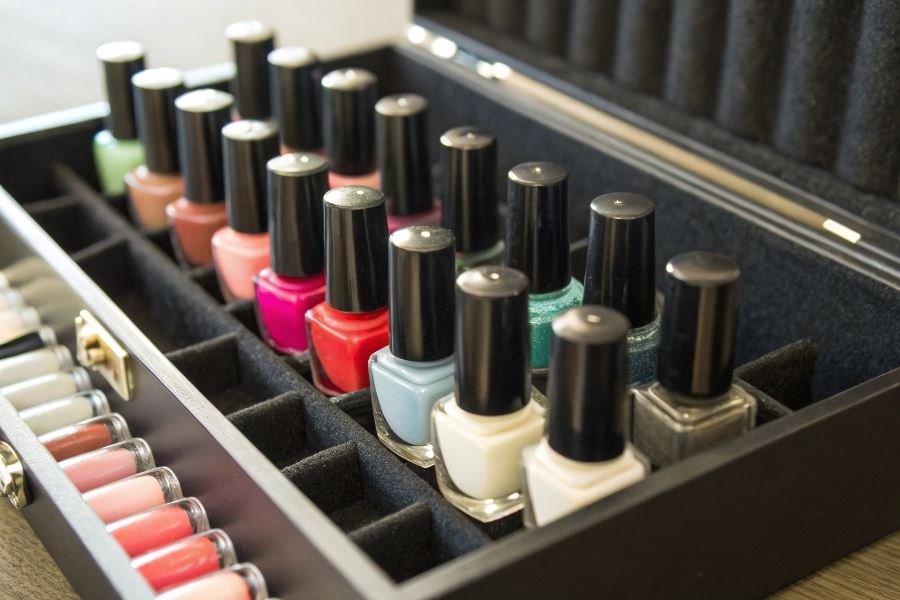
The most effective storage approach is temperature-controlled, categorized storage. Maintain your stamping polishes at a consistent 65-75°F (18-24°C) in dedicated nail polish racks or specialized storage cases. Avoid bathroom storage at all costs, as humidity fluctuations dramatically accelerate formula breakdown.
Many professional nail artists swear by color-coding systems combined with accessibility factors:
| Storage Method | Pros | Cons | Best For |
|---|---|---|---|
| Acrylic Wall Racks | Visible inventory, easy access | Limited capacity, requires wall space | Daily users with 20-50 polishes |
| Drawer Systems with Dividers | Protected from light, organized by color/brand | Not immediately visible, requires opening | Collections of 50+ polishes |
| Specialized Polish Cases | Portable, protective, organized | Limited capacity, higher cost | Travel or mobile nail artists |
The key is consistency—whatever system you choose, maintain it religiously. Label the bottoms of bottles with purchase dates using a fine-point permanent marker to track age and prioritize usage of older products.
Reviving Aging Stamping Polishes
Even perfectly stored stamping polishes eventually thicken or separate. The good news? Most can be saved with the right techniques.
When a stamping polish becomes too thick:
- Add 2-3 drops of Seche Restore or dedicated polish thinner (never use acetone or nail polish remover!)
- Roll the bottle between palms for 30 seconds (never shake—this creates bubbles)
- Test on a stamping mat before using on a design
For separated polishes, use stainless steel mixing balls to gently reintegrate the formula. One mixing ball is sufficient for most 5-15ml bottles—more can actually damage the formula through excessive agitation.
The moment you notice a stamping polish becoming difficult to work with is the moment to intervene—don’t wait until it’s completely dried out.
For stubborn formulas, try the “warm water bath” technique: place the tightly closed bottle in a cup of warm (not hot) water for 5 minutes, then roll between palms to redistribute pigments and restore consistency.
Long-term Storage Solutions for Seasonal Collections
Seasonal stamping polishes deserve special attention to maintain their quality during dormant periods. The enemies here are light, heat, and oxygen—all accelerate degradation.
For polishes you use only occasionally:
- Store upright in light-blocking containers (wooden boxes or opaque plastic)
- Before long-term storage, ensure caps are completely clean of polish residue
- Apply a thin layer of petroleum jelly to the threads of the bottle for an airtight seal
- Consider refrigeration for extremely valuable or limited-edition polishes—just allow them to return to room temperature for 30 minutes before use
Vacuum-sealed storage bags can dramatically extend shelf life by removing oxygen exposure. Some professional collectors report maintaining perfect consistency for 3+ years using this method combined with cool, dark storage.
For your most precious rarely-used stamping polishes, consider creating “mini versions” in small 3ml bottles with tight-sealing caps, keeping the original bottle sealed until needed. This approach minimizes air exposure to the main supply while giving you access to the product when inspiration strikes.
Discover expert techniques for storing stamping polishes properly to maximize their lifespan. Learn temperature control, light management, and organization systems that prevent thickening and separation, keeping your nail art supplies in perfect condition.
Discover expert techniques for storing stamping polishes properly to maximize their lifespan. Learn temperature control, light management, and organization systems that prevent thickening and separation, keeping your nail art supplies in perfect condition.