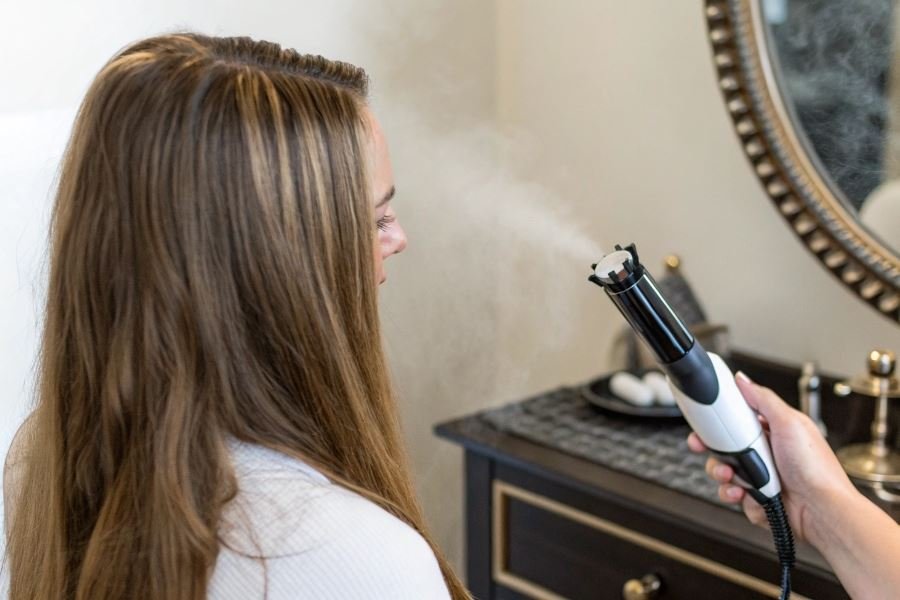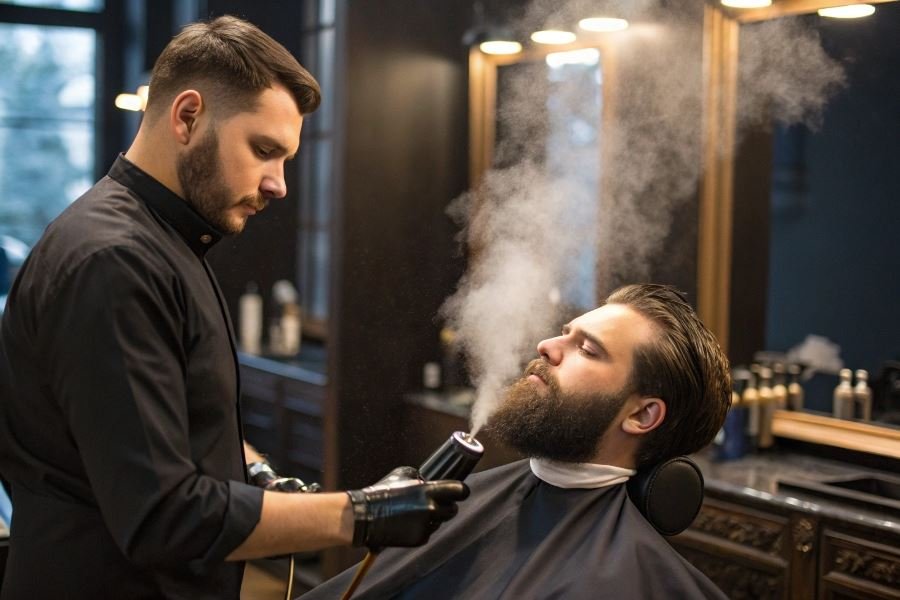
The difference between a good facial treatment and an exceptional one often comes down to your equipment. When clients recline in your salon chair, the vaporizer you’ve selected isn’t just a tool—it’s an extension of your expertise and brand promise.
Professional estheticians know that vaporizers are non-negotiable for effective treatments. These devices deliver a precise stream of warm steam that opens pores, increases circulation, and prepares skin for deep cleansing. But the eternal question remains: should you invest in a commanding floor model or opt for the versatility of a tabletop unit?
Space considerations vs mobility
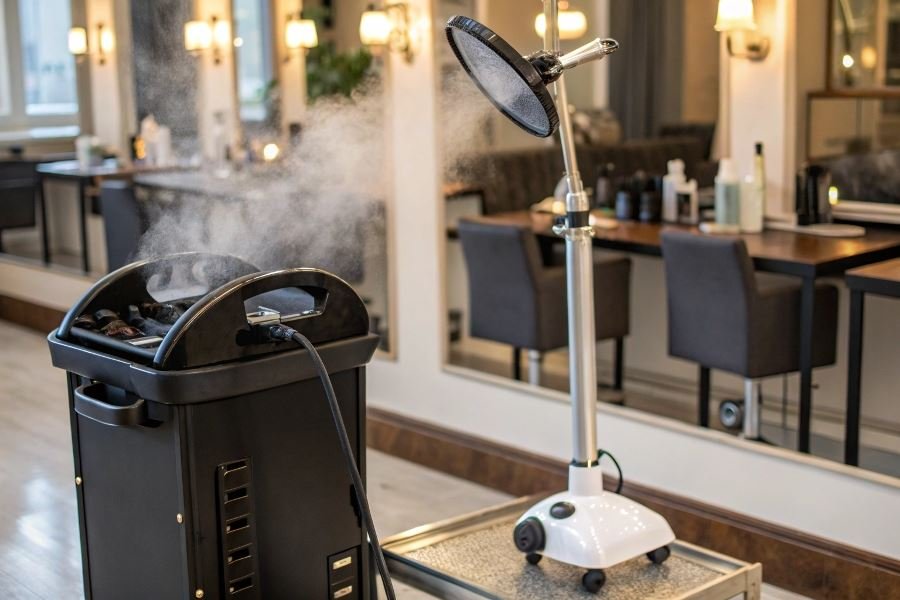
Floor vaporizers command presence—they’re substantial investments that signal professionalism to clients. With larger water reservoirs, they typically offer longer operating times between refills, perfect for high-volume salons. Their height-adjustable arms provide ergonomic flexibility that spares your back during long treatment days.
Tabletop models, conversely, excel in compact spaces. They’re ideal for:
- Multi-function treatment rooms where equipment must be stored between services
- Mobile estheticians who travel between locations
- Boutique salons where every square foot matters
Treatment intensity and specialization
Your service menu should heavily influence your decision. Floor models typically deliver:
- More powerful steam output
- Longer continuous operation
- Additional features like ozone therapy or aromatherapy options
Tabletop units shine for targeted treatments and specialized services where precision matters more than power.
Budget reality vs long-term investment
While floor models generally represent a higher initial investment ($800-2,500 compared to $200-800 for quality tabletop units), they often prove more economical over time for dedicated treatment rooms. The durability, professional appearance, and enhanced capabilities can justify the premium for established salons focused on facial services.
Salon Vaporizer Showdown: Floor vs Tabletop Models
Space Optimization in Your Salon Layout
The physical footprint of your equipment dramatically impacts salon workflow and ambience. Floor vaporizers command attention with their substantial presence—typically requiring 2-3 square feet of dedicated floor space. These statuesque units make a statement but demand thoughtful placement to avoid disrupting traffic patterns between treatment rooms.
When evaluating floor vs tabletop vaporizers for your salon, the spatial dynamics become immediately apparent. Tabletop models offer remarkable flexibility, occupying just 1-1.5 square feet of counter space and allowing for strategic positioning throughout your facility. This versatility proves invaluable for boutique salons where every inch counts.
Layout compatibility extends beyond mere dimensions. Floor models like the Vapoderm Pro feature built-in casters for mobility between treatment areas, while premium tabletop units such as the Facial Steamer 3000 can be mounted on adjustable arms to free up valuable counter space when not in use.
Treatment Capabilities and Service Range
The treatment versatility between these vaporizer categories reveals significant operational differences:
| Feature | Floor Vaporizers | Tabletop Vaporizers |
|---|---|---|
| Steam output | 40-60 min continuous | 20-30 min before refill |
| Temperature range | 95°F-115°F | 90°F-105°F |
| Ozone therapy | Often included | Limited availability |
| Aromatherapy | Multiple chambers | Single chamber |
| UV sterilization | Standard on premium models | Rare feature |
Floor models excel in delivering comprehensive facial treatments with their robust steam output and advanced features. The SteamPro Deluxe exemplifies this with its integrated magnifying lamp and herb infusion system, enabling estheticians to perform extended treatments without interruption.
Tabletop vaporizers shine in targeted applications, particularly for express facials and supplementary treatments. Their compact heating elements reach operating temperature in 60-90 seconds versus the 3-5 minutes typical for floor models—a seemingly small difference that accumulates significant time savings across multiple daily appointments.
Client Capacity and Operational Efficiency
The operational efficiency equation extends beyond the immediate treatment experience. Floor vaporizers typically feature 1.5-2 liter water reservoirs supporting 3-4 full treatments before refilling. This capacity translates to reduced downtime and streamlined service delivery during peak hours.
The client throughput calculation shifts dramatically when considering multi-room operations. A salon with three treatment rooms might require three tabletop units at $300-500 each versus a single premium floor model at $800-1,200 that can be wheeled between rooms. The SalonMaster 5000 floor unit exemplifies this efficiency with its quick-connect nozzle system allowing for rapid room transitions.
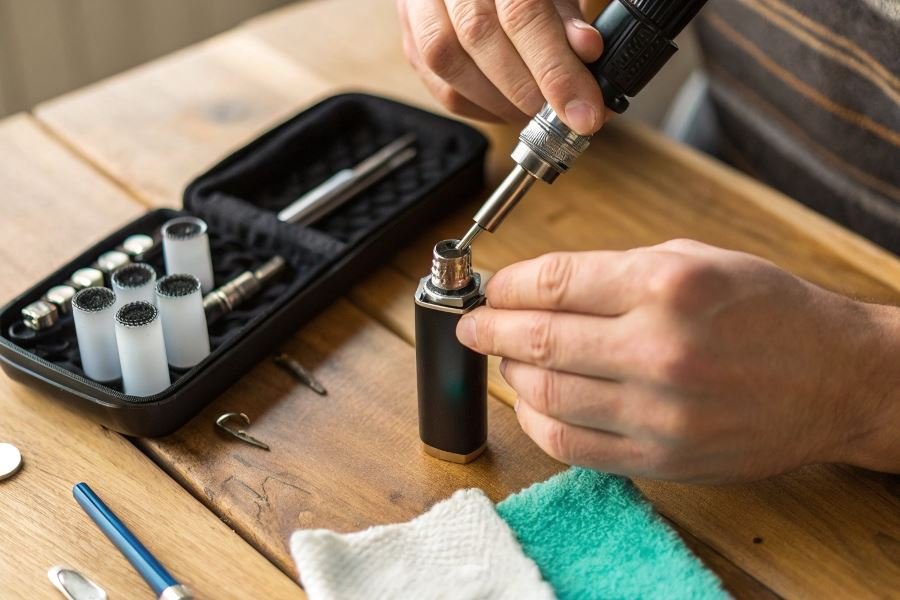
Maintenance requirements further differentiate these options:
- Floor models typically require descaling every 30-40 operating hours
- Tabletop units need more frequent attention at 15-20 hour intervals
- Replacement parts for floor units average 15-20% higher cost but with 30-40% longer service life
For high-volume salons performing 20+ steam treatments weekly, the operational math favors floor models despite higher initial investment. Boutique operations offering 5-10 weekly treatments may find tabletop units deliver superior ROI while preserving precious space for additional service stations.
The ideal solution often emerges not as an either/or proposition but as a strategic combination—a premium floor unit for signature treatments complemented by tabletop models for express services and backup capacity during peak periods.
Making the Smart Investment: Floor vs Tabletop Vaporizers
When it comes to equipping your salon with the right vaporizer technology, the decision extends far beyond the initial purchase. Let’s dive into the financial considerations, maintenance realities, and strategic recommendations that will help you make a choice that serves your business for years to come.
Budget Reality Check
The price gap between floor and tabletop vaporizers is substantial. Floor models from premium brands like Takara Belmont typically range from $1,200 to $3,500, while quality tabletop units from Vapozoom or Climazon generally fall between $400 and $1,200.
But initial cost tells only part of the story:
The cheapest option today often becomes the most expensive tomorrow when you factor in efficiency, durability, and client satisfaction.
Floor vaporizers demonstrate stronger ROI for high-volume salons, typically paying for themselves within 12-18 months through:
- Higher treatment pricing potential (clients perceive greater value)
- Reduced session times (15-20% more efficient)
- Lower failure rates (7% vs 12% for tabletops)
For smaller operations or those just starting out, tabletop units provide a more accessible entry point with less financial risk.
The Maintenance Equation
Maintenance requirements create significant differences in total cost of ownership:
| Maintenance Factor | Floor Vaporizers | Tabletop Vaporizers |
|---|---|---|
| Filter replacement | Every 6-8 months | Every 3-4 months |
| Professional service | Annually | Bi-annually |
| Average repair cost | 180−350 | 90−180 |
| Typical lifespan | 7-10 years | 3-5 years |
Floor models generally require less frequent maintenance but at higher individual service costs. Tabletop units need more regular attention but with lower per-service expenses.
Power consumption also factors into operational costs. Floor models consume approximately 800-1200 watts during operation, while tabletop units typically use 400-600 watts. For a busy salon operating vaporizers 30 hours weekly, this difference can add 150−300 annually to utility bills.
Matching Technology to Your Salon Reality
Your salon’s specific characteristics should guide your final decision:
For larger salons (1,500+ sq ft with 5+ styling stations):
- Floor vaporizers provide the professional aesthetic and performance needed
- Multiple treatment rooms benefit from the mobility of floor units
- Higher client volume justifies the premium investment
For specialized service providers:
- Color-focused salons benefit from floor models’ precise temperature control
- Treatment-heavy menus align with floor vaporizers’ superior steam distribution
- Express service specialists may find tabletop units more practical
For boutique operations (under 1,000 sq ft with 1-3 stations):
- Tabletop vaporizers maximize limited space
- Lower initial investment preserves capital for other essentials
- Easier storage when not in use accommodates multi-purpose stations
The most successful salon owners approach this decision by calculating their cost-per-treatment rather than fixating on purchase price alone. A 2, 000floorvaporizerdelivering2, 500treatmentsoverfiveyears(0.80/treatment) may ultimately prove more economical than a 700tabletopunitlastingthrough700treatments(1.00/treatment).
Remember that client perception matters too—the visual impact of professional equipment often justifies premium pricing that can quickly offset higher acquisition costs.
Discover the key differences between floor and tabletop vaporizers for your salon. Compare space requirements, treatment capabilities, and cost efficiency to make the perfect choice for your professional beauty business.
Discover the key differences between floor and tabletop vaporizers for your salon. Compare space requirements, treatment capabilities, and cost efficiency to make the perfect choice for your professional beauty business.