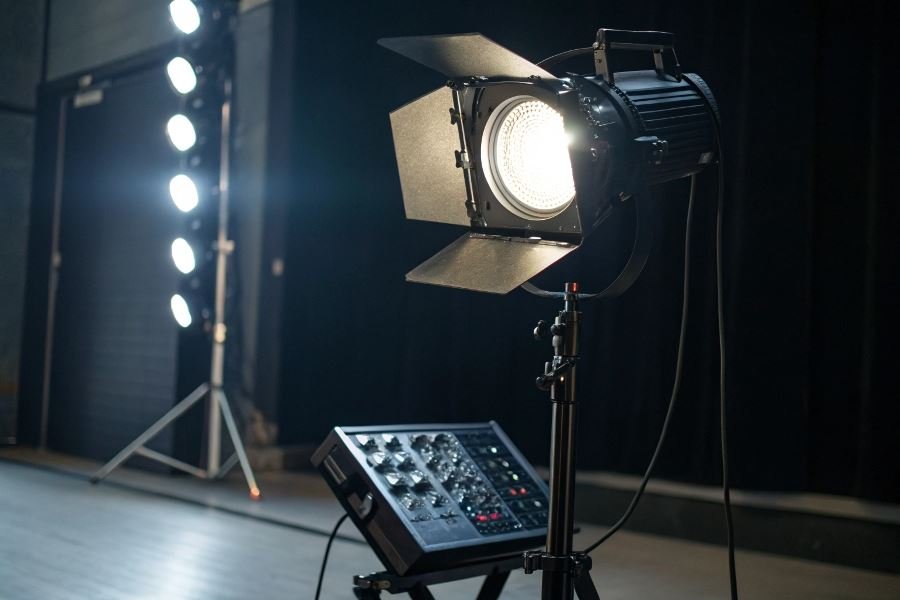
Remember when strobes simply flashed and nothing more? Those days are long gone. Today’s professional lighting equipment has evolved into sophisticated systems that can transform your creative vision into reality.
The humble strobe has undergone a remarkable transformation since its inception in the early 20th century. What began as simple flash units have evolved into intelligent lighting systems with capabilities that would have seemed like science fiction to photographers of the past. From the groundbreaking Speedotron systems of the 1960s to today’s wireless-enabled, smartphone-controlled powerhouses, strobe technology has consistently pushed boundaries.
The current landscape offers unprecedented choice – from compact battery-powered units perfect for location work to robust studio systems capable of freezing motion at 1/50,000th of a second. Major manufacturers like Profoto, Godox, and Broncolor now compete not just on power output, but on feature integration. Remote triggering, high-speed sync, TTL metering, and color consistency are becoming standard rather than premium features.
“The right strobe isn’t about maximum power – it’s about finding the perfect balance of features that enhance your specific workflow.”
Selecting appropriate strobe equipment requires understanding both your current needs and future growth. Will you need to overpower the sun for outdoor portraits? Are you shooting fast-moving subjects requiring ultra-short flash durations? Does your workflow demand seamless integration with your camera system?
The additional features now available – from built-in modeling lights to Bluetooth connectivity – aren’t just bells and whistles. They’re practical tools that can dramatically improve efficiency, expand creative possibilities, and ultimately deliver superior results for your clients.
Technical Essentials for Advanced Strobes
When selecting a professional strobe with additional features, the technical specifications can make or break your shooting experience. Photographers who understand these critical elements gain a significant advantage in capturing precisely the images they envision.
Flash duration represents perhaps the most crucial technical consideration when evaluating strobes with additional features: what to pay attention to when buying often determines whether you’ll freeze motion effectively or end up with unwanted blur. High-end units offer durations as brief as 1/50,000 second, while budget options might only manage 1/1000 second. For sports and action photography, anything slower than 1/2000 second will likely disappoint.
Power output that delivers
Power output, measured in watt-seconds (Ws), determines your strobe’s effective range and ability to overcome ambient light. Consider these typical power ranges:
| Power Range | Typical Use Case | Approximate Price Range |
|---|---|---|
| 100-300 Ws | Portrait, small studio | $200-500 |
| 400-600 Ws | Medium studio, location | $500-1200 |
| 800+ Ws | Large sets, overpowering sun | $1200-3000+ |
The Profoto B10 offers 250Ws in a compact form factor, while the Godox AD600Pro delivers 600Ws with remarkable consistency—both representing different approaches to the power-portability equation.
Recycle and battery performance
Recycle time directly impacts your shooting rhythm. Professional-grade strobes recycle to full power in under 2 seconds, while economy models might require 4-8 seconds—an eternity when capturing decisive moments.
Battery life deserves equal scrutiny, particularly for location work. Modern lithium-ion powered units like the Broncolor Siros L can deliver 440 full-power flashes per charge, while some budget alternatives might provide only 200 flashes before requiring replacement batteries.
Seamless integration matters
Compatibility considerations extend beyond simply fitting your camera’s hot shoe. Evaluate:
- Wireless triggering protocols: Proprietary systems often offer enhanced features but lock you into an ecosystem
- TTL and HSS support: Essential for dynamic shooting environments
- Remote power adjustment: Saves countless ladder climbs during setup
Mounting options vary significantly between manufacturers. The Elinchrom ELB 500 TTL features an integrated umbrella mount with 7mm and 8mm receptacles, while others require separate brackets for modifiers.
Built for challenging conditions
Weather resistance becomes critical for outdoor photographers. IP ratings provide standardized protection measurements:
- IP54: Protected against dust and water splashes
- IP65: Dust-tight and protected against water jets
- IP67: Dust-tight and protected against temporary immersion
Construction materials significantly impact longevity. Aluminum housings offer superior heat dissipation compared to plastic, while reinforced mounting points prevent costly failures during transportation.
The most durable units incorporate gasket-sealed battery compartments, weather-resistant connector ports, and cooling systems designed to prevent overheating during extended sessions. These features might add cost initially but deliver substantial long-term value through reduced replacement expenses and increased reliability in challenging environments.
Advanced Strobe Features That Truly Matter
Wireless Control Transforms Emergency Response
Modern strobes have evolved far beyond simple flashing lights. Today’s wireless connectivity options allow for unprecedented control and flexibility. The Feniex Fusion series exemplifies this evolution, offering Bluetooth connectivity that extends control range up to 300 feet. This means emergency responders can activate and adjust their vehicle’s warning system without returning to the driver’s seat—a critical advantage during roadside incidents.
Bluetooth isn’t the only player in the wireless game. WiFi-enabled strobes like the Whelen CenCom Core system allow for control via smartphone apps, providing intuitive interfaces that replace complicated switch panels. Some advanced systems even incorporate mesh networking technology, enabling multiple vehicles to synchronize their lighting patterns automatically when in proximity—creating a unified warning presence at large-scale emergencies.
The difference between basic and advanced strobes often comes down to control flexibility. When seconds count, fumbling with manual switches isn’t just inconvenient—it’s potentially dangerous.
Customization Beyond Basic Flashing
The programmability of modern strobes represents perhaps their most significant advancement. Leading models now offer hundreds of flash patterns rather than the handful available in basic units.
What makes this truly valuable isn’t just variety, but context-awareness. The Code 3 Matrix system, for instance, allows users to program different patterns for different scenarios:
| Scenario | Recommended Pattern | Benefit |
|---|---|---|
| Highway Traffic Stop | Directional Sweep | Improves traffic flow around stopped vehicle |
| Accident Scene | High-Intensity Burst | Maximum visibility in chaotic environments |
| Low-Priority Patrol | Subtle Alternating | Maintains presence without distraction |
This level of customization extends to intensity and timing as well. Many premium strobes now feature day/night sensors that automatically adjust brightness—preventing unnecessary glare at night while ensuring visibility during daylight hours.
System Integration Creates Safety Ecosystems
The most sophisticated strobes don’t operate in isolation—they function as nodes in comprehensive safety systems. The Federal Signal Smart Siren platform demonstrates this approach by integrating strobe control with:
- Vehicle diagnostic systems
- GPS location services
- Radio communication equipment
- Automated reporting systems
This integration delivers tangible benefits. When a vehicle’s airbags deploy, integrated systems can automatically activate emergency strobes at maximum intensity. Some systems even transmit the vehicle’s precise location to dispatch centers without driver intervention.
The integration extends to installation simplicity as well. Modern CAN-bus compatible strobes significantly reduce wiring complexity, with some systems requiring just power and a single data connection rather than dedicated wiring for each function.
For facilities rather than vehicles, building management system integration allows strobes to coordinate with access control, surveillance, and public address systems—creating comprehensive emergency response protocols that activate automatically when triggered.
When evaluating advanced strobes, look beyond the initial flash pattern and consider how the entire system will function within your existing safety infrastructure. The most valuable features aren’t always the most visible—they’re the ones that seamlessly connect to create a cohesive safety ecosystem.
Discover essential factors for selecting high-performance strobes with advanced features. Learn about flash duration, wireless capabilities, and integration options to make an informed investment in professional lighting equipment.
Discover essential factors for selecting high-performance strobes with advanced features. Learn about flash duration, wireless capabilities, and integration options to make an informed investment in professional lighting equipment.