Ever knelt down during an operation only to have your knee pads slide sideways, leaving you exposed to sharp debris and potential injury? That moment—when protection fails—is precisely why tactical knee pad sizing isn’t just a comfort issue, it’s a mission-critical decision.
Studies from the National Tactical Officers Association show that nearly 40% of field operators report knee injuries that could have been prevented with properly fitted protective gear. The difference between adequate protection and vulnerability often comes down to millimeters.
Selecting tactical knee pads isn’t simply about grabbing a “one-size-fits-most” option. It’s about understanding the intricate relationship between your unique anatomy and the gear designed to protect it. Many users mistakenly prioritize padding thickness over proper fit, not realizing that even the most advanced impact-resistant materials become ineffective when they don’t stay positioned over the vulnerable patella and surrounding tissues.
The consequences of ill-fitting knee protection extend far beyond momentary discomfort. Knee pads that shift during movement create dangerous gaps in protection. Meanwhile, overly tight models restrict blood flow and limit mobility—potentially transforming protective equipment into a liability during critical moments when agility matters most.
“The right knee pad should feel like an extension of your body, not an afterthought strapped to your leg.” — Veteran tactical instructor
Mastering Tactical Knee Pad Measurements
When protection meets mobility on the battlefield or training ground, the difference between comfort and distraction often comes down to millimeters. Tactical knee pads that slip, pinch, or leave gaps can compromise your performance when it matters most. The science of finding your perfect fit isn’t complicated, but it demands precision and understanding of your unique needs.
Getting the sizing right for tactical knee pads involves more than grabbing whatever’s available on the shelf. How to properly choose the size of tactical knee pads requires systematic measurement and consideration of multiple factors that affect both protection and mobility. Let’s break down the measurement process into actionable steps that ensure your knees get the coverage they deserve.
Measuring Knee Circumference With Precision
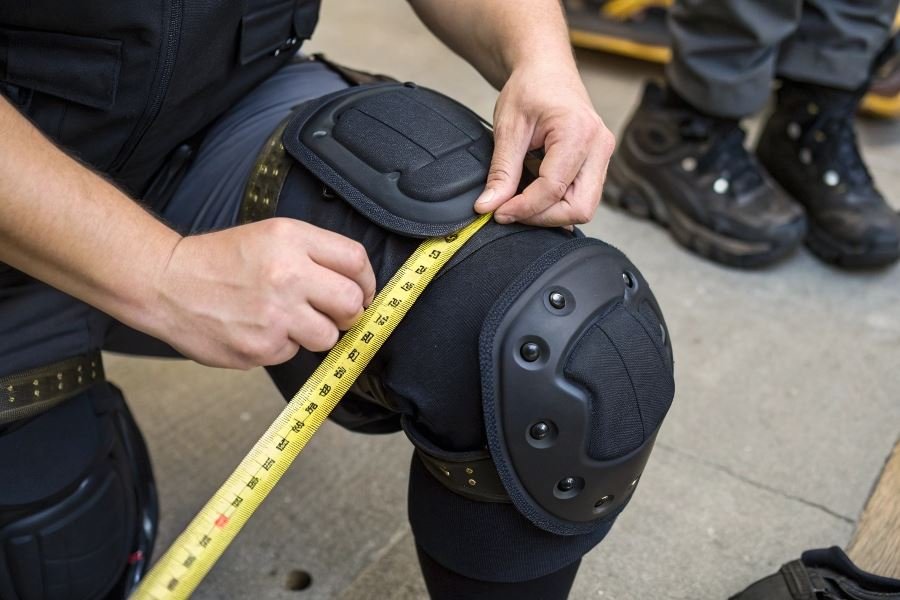
The foundation of proper knee pad sizing begins with accurate circumference measurement. Here’s the technique professionals use:
- Position your leg with a slight bend (approximately 30 degrees) to mimic active stance
- Wrap a flexible measuring tape around the center of your knee cap
- Note the measurement in inches (or centimeters if using metric)
Remember that your dominant leg might measure slightly different from your non-dominant one. Always size based on the larger measurement.
Most tactical knee pads come in size ranges that accommodate specific circumference measurements:
| Size | Circumference Range (inches) | Best For |
|---|---|---|
| Small | 12-14″ | Slim builds |
| Medium | 14-16″ | Average builds |
| Large | 16-18″ | Athletic builds |
| XL | 18-20″+ | Larger builds |
Length and Width Dimensions for Complete Coverage
Circumference alone doesn’t guarantee optimal protection. The vertical and horizontal coverage area determines how effectively the knee pad shields your joint during movement.
Vertical measurement (length): Measure from 2 inches above your kneecap to 4 inches below. Quality tactical knee pads should cover this entire zone without restricting movement at the thigh or shin.
Horizontal measurement (width): Your knee pad should extend approximately 1-1.5 inches beyond each side of your kneecap when centered.
Pro tip: The ideal tactical knee pad creates a protection zone that extends beyond your knee’s impact points without creating mobility restrictions during crawling, kneeling, or running.
Accounting for Clothing Layers
The most overlooked aspect of knee pad sizing is accounting for what you’ll be wearing underneath. Different operational scenarios demand different approaches:
- Direct-to-skin measurement: Add 0.5″ to your knee circumference for comfort
- Light clothing (standard BDUs): Add 0.75-1″ to your measurements
- Cold weather gear: Add 1.5-2″ to accommodate thermal layers
Seasonal adjustment strategy: Some professionals maintain two sets of tactical knee pads—one sized for warm-weather operations and another for cold-weather deployments with additional clothing layers.
When testing fit, perform a “dynamic assessment” by:
- Kneeling for 60 seconds (checking for pressure points)
- Performing a short sprint (checking for slippage)
- Transitioning from standing to prone position (checking for interference)
Your tactical knee pads should feel like a natural extension of your body—present when needed but forgotten during movement. With these precise measurement techniques, you’ll find that sweet spot between protection and performance that elite operators demand.
Testing and Fine-Tuning Your Tactical Knee Pads
Finding the perfect tactical knee pads is only half the battle—proper testing and adjustment before field deployment can mean the difference between comfortable protection and a day of distraction and pain. Let’s dive into the critical final steps that ensure your knee pads perform exactly as needed when it matters most.
The Pre-Field Testing Protocol
Before taking your tactical knee pads into action, conduct a comprehensive testing session that mimics your expected movements and conditions:
-
Wear them for at least 30 minutes indoors – Initial comfort can be deceiving; extended wear reveals pressure points and circulation issues.
-
Perform your movement triad – Complete 10 repetitions each of:
- Deep knee bends
- Crawling on various surfaces
- Transitioning from standing to kneeling and back
- Conduct the “sprint test” – Run 100 yards with full gear to check for slippage during dynamic movement.
The most revealing test is often the simplest: forget you’re wearing them. If you can complete tasks without constantly adjusting or even thinking about your knee pads, you’ve likely found your match.
Recognizing Perfect Fit Indicators
When tactical knee pads fit correctly, they display several unmistakable characteristics:
Positive Indicators:
- Zero gap between the pad and knee when kneeling
- No rotation or shifting during lateral movements
- Ability to maintain a kneeling position for 5+ minutes without discomfort
- No red marks or indentations after removal (beyond light pressure marks)
- Full range of motion maintained in both standing and crouching positions
| Fit Aspect | Correct Fit Signs | Poor Fit Warning Signs |
|---|---|---|
| Positioning | Centered over kneecap | Slides down or to sides |
| Pressure | Evenly distributed | Hot spots or pinching |
| Mobility | Moves with you, not against you | Restricts natural movement |
| Circulation | Normal sensation throughout wear | Numbness or tingling |
Troubleshooting and Adjustment Techniques
Even premium tactical knee pads like 5.11 Tactical or Crye Precision models may require personalized adjustments:
For Slipping Pads:
- Try the “cross-strap technique” – crisscross the upper straps for additional stability
- Apply silicon grip strips to the interior facing (available at most outdoor retailers)
- Consider compression sleeves underneath for additional friction
For Pressure Point Issues:
- Identify the exact pressure location using the “chalk test” (apply chalk to the interior and check transfer points)
- Add strategic padding using 3mm neoprene strips at pressure points
- Gradually stretch overly tight straps using the “progressive tension method”
For Range of Motion Limitations:
- Ensure straps are positioned in the natural flex zones behind the knee
- Try the “offset mounting position” – slightly higher placement can improve mobility
- Consider articulated designs if standard models consistently restrict movement
Remember that break-in periods are real. Premium materials like D3O impact protection or ballistic nylon shells may require 8-10 hours of wear before reaching optimal comfort.
The ultimate measure of properly fitted tactical knee pads isn’t just comfort—it’s forgettability. When your protection becomes an extension of your body rather than an addition to it, you’ve achieved the perfect fit that allows you to focus entirely on the mission at hand.
Discover how to properly measure and select tactical knee pads that fit perfectly. Learn essential sizing techniques, avoid common mistakes, and ensure maximum protection and comfort during tactical operations.
Discover how to properly measure and select tactical knee pads that fit perfectly. Learn essential sizing techniques, avoid common mistakes, and ensure maximum protection and comfort during tactical operations.