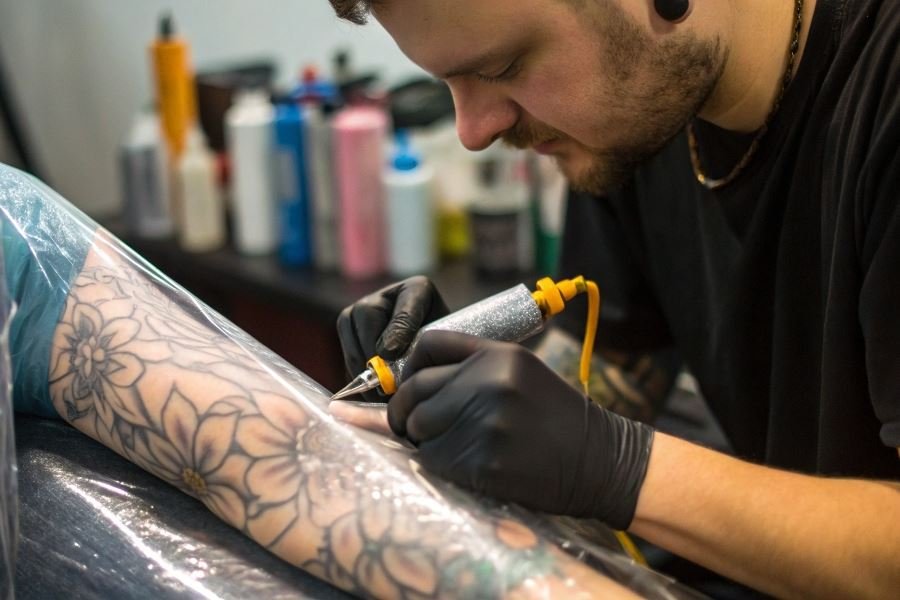
Ever wondered why some fresh tattoos heal flawlessly while others struggle? The secret often lies not in the artist’s skill alone, but in what happens during those crucial first days after leaving the studio. Occlusive protective films have quietly transformed tattoo aftercare, creating a protective microenvironment that can dramatically improve healing outcomes.
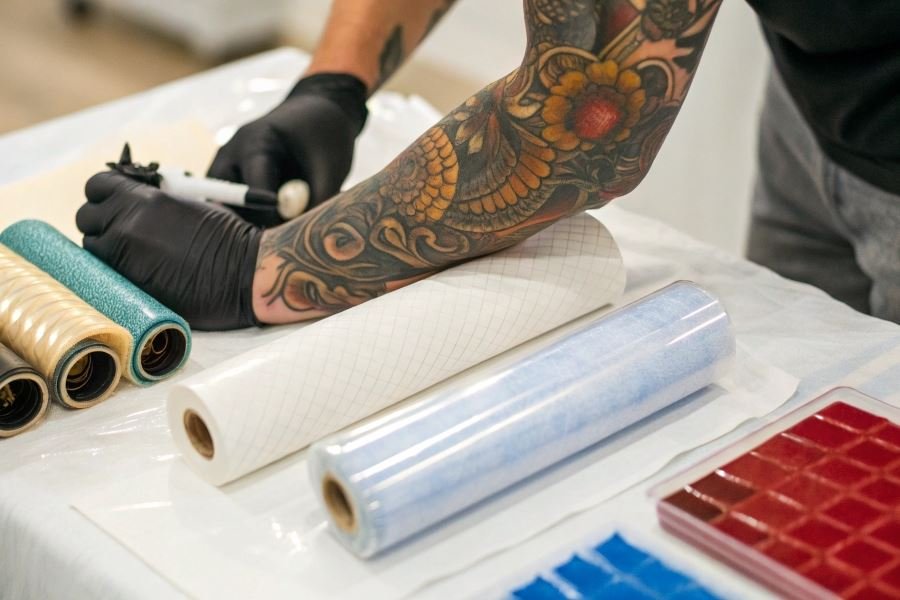
Occlusive protective film is essentially a transparent, adhesive membrane designed to create a barrier between your new tattoo and the outside world. Unlike traditional methods involving lotions and frequent washing, these films create a sealed environment that allows the skin to heal naturally while keeping contaminants out. The science is compelling: these films maintain optimal moisture levels while allowing the skin to breathe, creating ideal conditions for healing artwork.
The benefits extend far beyond convenience. These films significantly reduce scabbing and color loss, decrease infection risk, and eliminate the mess of traditional aftercare methods. Many artists report that tattoos healed under occlusive films retain more vibrant color saturation and clearer line work. Perhaps most appreciated by clients is the ability to shower normally without worrying about damaging fresh ink.
Today’s market offers several distinct options:
- Medical-grade polyurethane films – Hospital-quality protection with excellent transparency
- Tattoo-specific brands like Saniderm and Recovery Derm Shield – Formulated with tattoo healing in mind
- Silicone-based alternatives – Offering gentler adhesion for sensitive skin types
Each type balances factors like breathability, adhesion strength, and wear time differently, giving artists options to match their clients’ specific needs.
The Ultimate Guide to Occlusive Film for Fresh Tattoos
Getting a new tattoo is just the beginning of your journey. What happens in the hours and days after your session can make or break the final result. Professional tattoo artists have embraced occlusive protective film as a game-changing aftercare solution that protects healing skin while allowing it to breathe. How to properly use occlusive protective film when tattooing involves understanding the right preparation, application techniques, and timing for optimal results.
Preparing the Canvas
Before applying occlusive film, proper preparation of the tattooed area is non-negotiable:
-
Clean thoroughly – Once the tattoo is complete, the artist should clean the area with antibacterial soap and warm water, removing all excess ink, blood, and plasma.
-
Gentle pat-dry – Using sterile paper towels, pat (never rub) the area completely dry. Any moisture trapped under the film can create a breeding ground for bacteria.
-
Allow breathing time – Let the tattooed skin breathe for 10-15 minutes before applying the film. This helps reduce excessive initial plasma buildup.
“The preparation phase is where most aftercare mistakes happen,” notes veteran tattoo artist Mark Reynolds. “Skip this, and you’re compromising healing before it even begins.”
Application Techniques That Stick
The application process requires precision and attention to detail:
-
Size matters – Cut the film at least 1-2 inches larger than the tattooed area on all sides. This ensures complete coverage and prevents premature edge lifting.
-
Smooth application – Remove the backing paper while gently stretching the film. Apply from one end to the other, avoiding air bubbles and wrinkles.
-
Secure the edges – Press firmly around the perimeter to create a proper seal. The film should adhere completely to intact skin surrounding the tattoo.
| Common Application Mistakes | How to Avoid Them |
|---|---|
| Air bubbles trapped under film | Apply from center outward with gentle pressure |
| Wrinkles in the film | Stretch film slightly during application |
| Insufficient coverage | Cut film 1-2 inches larger than tattoo area |
| Poor edge sealing | Press firmly around all edges after application |
Timing Is Everything
Determining how long to keep the film on requires balancing protection with skin health:
-
First film application – The initial covering should remain in place for 24-48 hours. This critical period protects against environmental contaminants while the skin is most vulnerable.
-
Signs it’s time for removal – If you notice excessive fluid buildup, any green or yellow discharge, or unusual odor, remove immediately regardless of timing.
-
Second application duration – If applying a second film after cleaning, this can typically remain in place for 3-5 days, depending on:
- Location of tattoo – Joint areas may require earlier removal
- Skin sensitivity – Those with sensitive skin may need shorter wear times
- Healing progress – Once the tattoo stops weeping, film benefits diminish
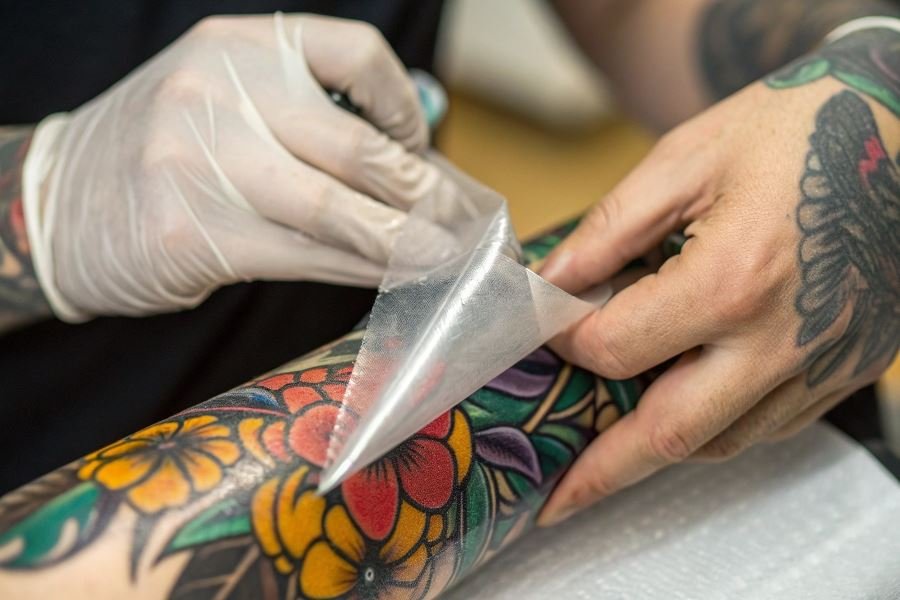
Pro tip: When removing the film, do so in the shower with warm water running over it. Pull parallel to the skin rather than away from it to minimize discomfort.
Remember that while occlusive film technology has revolutionized tattoo aftercare, it’s not a substitute for other essential healing practices like avoiding sun exposure and maintaining proper hydration. Your investment in quality aftercare directly impacts the longevity and vibrancy of your tattoo for years to come.
Mastering Occlusive Film: Best Practices for Tattoo Aftercare
Avoiding Common Occlusive Film Mistakes
When it comes to tattoo aftercare, even experienced artists can slip up with occlusive film application. The most frequent error? Applying the film with trapped air bubbles. These pockets create perfect environments for bacteria and can disrupt the healing process. Always smooth the film from the center outward, applying gentle pressure to eliminate any air.
Another critical mistake is improper sizing. Film that’s too small leaves edges of the tattoo exposed to contaminants, while oversized film creates unnecessary folds and weak adhesion points. Measure twice, cut once—allow for at least 1-2 inches of coverage beyond the tattooed area on all sides.
Timing errors also plague many artists. Removing the film too early (before 24 hours) or leaving it on too long (beyond 5 days) can compromise healing. The sweet spot typically falls between 3-5 days for the initial application, depending on the tattoo size and location.
The difference between proper and improper occlusive film application can mean the difference between a vibrant, well-healed tattoo and one requiring touch-ups.
Client Aftercare Instructions
Educating clients about occlusive film care ensures optimal healing results. Provide these clear instructions:
-
Leave the initial film undisturbed for at least 24 hours, preferably 3-5 days if using premium breathable films like Saniderm or Second Skin.
-
Watch for fluid buildup. Small amounts of plasma and ink are normal during the first day. However, excessive fluid requires film removal and reapplication after gentle cleaning.
-
When removing the film, do so in the shower under warm running water, pulling parallel to the skin rather than upward to minimize discomfort.
-
If reapplying a second film, ensure the area is completely clean and dry before application.
-
After final film removal, transition to traditional aftercare with fragrance-free, alcohol-free moisturizers.
Professional Product Recommendations
Not all occlusive films deliver equal results. Professional-grade options offer superior breathability, adhesion, and comfort.
Top-tier occlusive films for tattoo professionals:
| Product | Breathability | Adhesion Strength | Wear Time | Best For |
|---|---|---|---|---|
| Saniderm | Excellent | High | 3-7 days | Large pieces, sensitive areas |
| Recovery Derm Shield | Very Good | Medium-High | 2-5 days | Medium-sized tattoos |
| Dermalize Pro | Excellent | Very High | 3-6 days | High-movement areas |
| Second Skin | Good | Medium | 2-4 days | Budget-friendly option |
When selecting products for your studio, consider client comfort and skin sensitivity. Films with medical-grade adhesives reduce allergic reactions while maintaining proper adhesion. The most effective products feature waterproof barriers while allowing oxygen exchange—essential for reducing maceration and promoting proper healing.
Storage matters: Keep your occlusive films in climate-controlled environments. Extreme temperatures can degrade adhesive properties and compromise sterility. Most premium films maintain optimal performance for up to two years when stored properly.
Discover the complete guide to occlusive protective film for tattoo aftercare. Learn proper application techniques, optimal wear time, and professional recommendations to ensure your tattoo heals perfectly with this modern method.
Discover the complete guide to occlusive protective film for tattoo aftercare. Learn proper application techniques, optimal wear time, and professional recommendations to ensure your tattoo heals perfectly with this modern method.