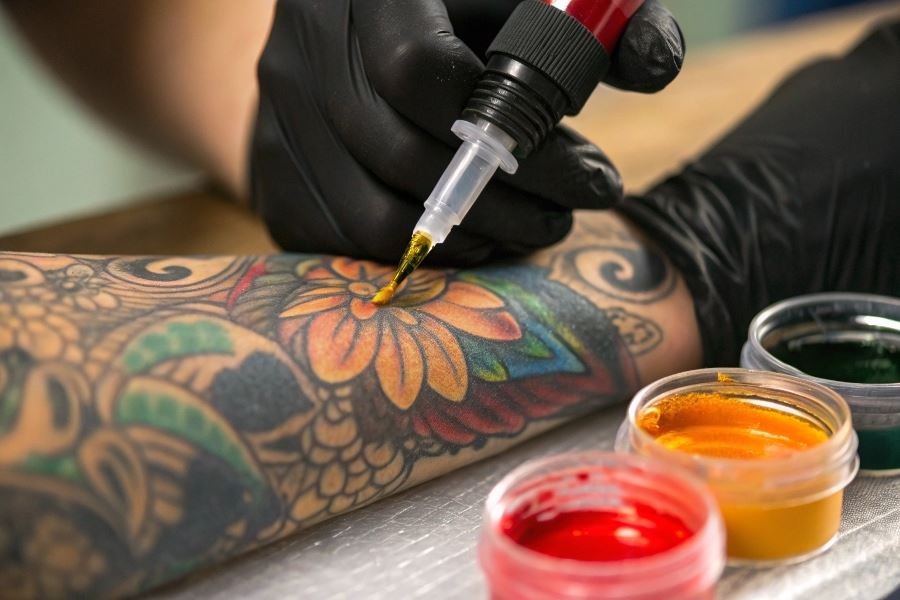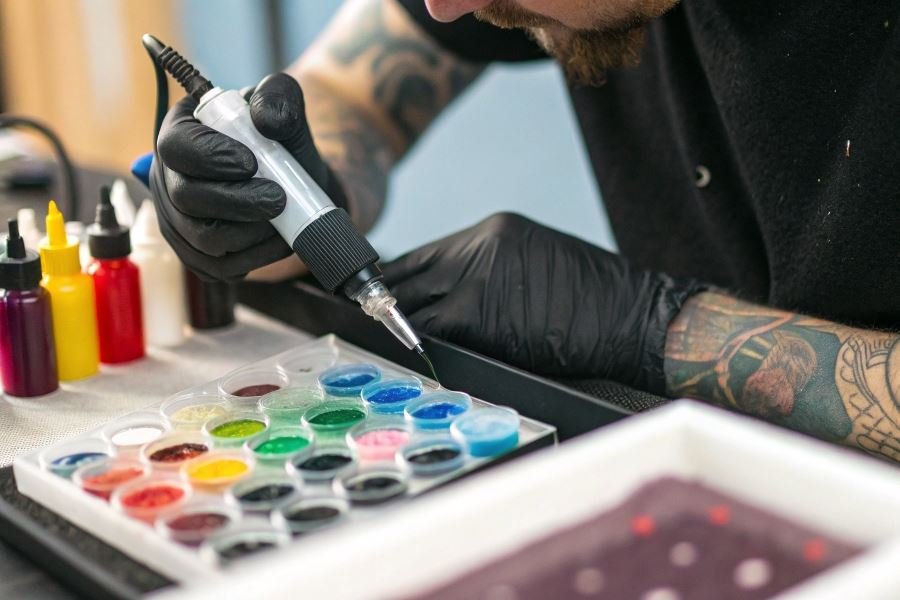
Ever watched a tattoo artist repeatedly dip their needle into a small container during a session? That’s not just routine—it’s a critical step in creating tattoo masterpieces that stand the test of time. The clear gel they’re using prevents pigment from drying out during the tattooing process, and choosing the right one can make all the difference between a vibrant, long-lasting piece of art and a faded disappointment.
Tattoo pigments begin drying the moment they’re exposed to air. Without proper protection, they can thicken and clog needles, creating uneven lines and patchy color distribution. The right gel doesn’t just keep your artist working smoothly—it literally preserves the integrity of every line and shade being embedded in your skin.
The longevity connection
Quality gels create the optimal environment for pigment transfer, allowing colors to settle more evenly into the dermis. This proper placement means your tattoo will heal more predictably and maintain its vibrancy years longer than work done with inferior products. Studies from the National Tattoo Association show that properly applied pigments using premium gels can maintain up to 40% more color intensity after five years.
What separates exceptional gels from mediocre options?
When selecting a gel against pigment drying, focus on these critical factors:
- Viscosity – The gel should be thick enough to prevent evaporation but fluid enough not to impede needle movement
- Skin compatibility – Premium formulations minimize irritation and support faster healing
- Sterility standards – Look for products manufactured in certified facilities with sealed, single-use packaging
- Ingredient transparency – Avoid products with unlisted additives or known irritants
The difference between an ordinary tattoo and an extraordinary one often comes down to these seemingly small details that professionals never overlook.
Essential Factors for Choosing the Perfect Tattoo Pigment Gel
When preserving tattoo vibrancy becomes your mission, selecting the right gel against pigment drying transforms from a simple purchase into a critical decision. Professional tattoo artists understand that the difference between mediocre and exceptional results often lies in the details of their auxiliary products.
The process of how to choose a gel against pigment drying for tattoos requires understanding several key factors that influence both application quality and long-term results. The right product not only enhances the tattooing experience but also contributes significantly to color retention and overall healing. Let’s dive into the essential considerations that should guide your selection process.
Ingredient Composition and Safety Standards
The foundation of any quality tattoo pigment gel starts with its formulation. Medical-grade ingredients should top your priority list when evaluating options.
Look for products containing glycerin, propylene glycol, and hamamelis extract, which provide optimal moisture retention without compromising pigment integrity. These ingredients create a protective barrier that prevents premature drying while allowing proper skin absorption.
Safety certifications represent non-negotiable credentials in this industry:
| Certification | What It Ensures | Why It Matters |
|---|---|---|
| FDA Approval | Meets U.S. safety standards | Legal compliance and basic safety |
| GMP Certification | Manufactured under strict quality controls | Consistency between batches |
| Dermatologically Tested | Skin-friendly formulation | Reduced risk of adverse reactions |
| Vegan/Cruelty-Free | Ethical production standards | Aligns with modern ethical practices |
Products from established manufacturers like Eternal Ink and Intenze typically maintain these standards, though always verify current certifications regardless of brand reputation.
Viscosity and Application Properties
The perfect viscosity balance makes or breaks your tattooing experience. Too thin and the gel won’t adequately protect pigments; too thick and it interferes with needle precision and visibility.
Professional-grade gels typically offer:
- Medium viscosity (3,000-5,000 cPs) for versatile application
- Non-drip formulation that stays where applied
- Transparent appearance for unobstructed workspace visibility
- Quick absorption that doesn’t leave residue on equipment
Artists working in detailed portraiture or fine linework should prioritize gels with slightly lower viscosity, while those focusing on bold traditional styles might prefer thicker formulations that extend working time.
Compatibility Factors
Not all gels work universally with every pigment type or skin condition. This compatibility matrix determines both immediate results and long-term satisfaction.
When evaluating compatibility, consider:
The ideal pigment gel adapts to your specific working conditions rather than forcing you to adapt your technique to accommodate the product.
For different pigment types:
- Organic pigments benefit from gels with antioxidant properties
- Inorganic/mineral-based pigments work best with pH-balanced formulations
- Combination pigments require versatile gels that won’t cause separation
Skin condition compatibility is equally crucial:
- Sensitive skin requires hypoallergenic, fragrance-free formulations
- Oily skin benefits from gels with mattifying properties
- Dry skin needs extra humectants like aloe vera and vitamin E
The investment in finding your perfect pigment gel pays dividends in client satisfaction, reduced touch-up sessions, and your professional reputation as an artist who delivers consistently exceptional results.
Top 3 Professional Recommendations for Tattoo Pigment Protection
Preventing pigment drying during the tattooing process isn’t just a minor technical detail—it’s the difference between artwork that maintains its vibrancy for years and designs that fade prematurely. Let’s dive into the professional recommendations that can transform your tattooing experience.
Industry Leaders in Pigment Protection
The market offers several standout gel options that have become studio staples for good reason:
Hustle Butter has revolutionized the industry with its vegan-friendly formula. What sets it apart is the perfect balance of shea, mango, and aloe butters that create a protective barrier while allowing the skin to breathe. Tattoo artists report significantly reduced healing time and enhanced color retention.
H2Ocean offers a water-based gel that’s particularly effective for sensitive skin. Its proprietary blend includes sea salt minerals that help maintain pigment suspension while providing natural antibacterial properties—a dual-action benefit that’s hard to match.
After Inked delivers exceptional performance with its grape seed oil base. The molecular structure penetrates deeply without clogging pores, creating the ideal environment for pigment stability during lengthy sessions.
“The right pigment protection gel doesn’t just prevent drying—it creates the optimal canvas for your art to thrive both during application and throughout the healing process.”
Value versus Investment Analysis
When evaluating cost against performance, consider these factors:
| Gel Type | Average Price Range | Sessions Per Container | Cost Per Session |
|---|---|---|---|
| Premium Organic | $22-30 | 40-50 | $0.50-0.75 |
| Mid-Range Synthetic | $15-22 | 30-40 | $0.45-0.65 |
| Economy Options | $8-15 | 20-30 | $0.40-0.50 |
The data reveals something counterintuitive: premium gels often provide better value despite higher upfront costs. Why? They typically require less product per application, offer superior pigment protection, and reduce the likelihood of touch-up sessions.
Concentration matters. Higher-quality gels with concentrated formulas might cost $28 for a 2oz container but require only a pea-sized amount per 3-inch area. Economy options priced at $12 might require double the application volume, effectively negating the initial savings.
Application Techniques for Maximum Effectiveness
The finest gel in the world won’t perform if applied incorrectly. Master these techniques:
-
The thin-layer approach – Apply a whisper-thin layer before beginning work. Too much product creates a slippery surface that compromises needle control and pigment placement.
-
Sectional application – For larger pieces, work in 4-6 inch sections, applying fresh gel only to the immediate working area. This prevents premature drying in areas waiting to be tattooed while avoiding excessive product buildup.
-
The blot-not-wipe technique – When removing excess ink during the session, blot gently rather than wiping aggressively. This preserves the protective gel layer while still providing visibility.
Timing is everything. Reapply gel when you notice the skin beginning to appear slightly tacky—typically every 15-20 minutes during active tattooing. Waiting until the area feels dry means you’ve already compromised pigment stability.
The difference between amateur and professional results often comes down to these seemingly small details in product selection and application technique. By investing in quality products and mastering proper application methods, you’re not just preventing pigment drying—you’re elevating your entire tattooing process.
Discover the top 5 tattoo gels that prevent pigment drying and enhance tattoo quality. Learn how to select the perfect gel based on ingredients, viscosity, and compatibility with different skin types and pigments.
Discover the top 5 tattoo gels that prevent pigment drying and enhance tattoo quality. Learn how to select the perfect gel based on ingredients, viscosity, and compatibility with different skin types and pigments.