
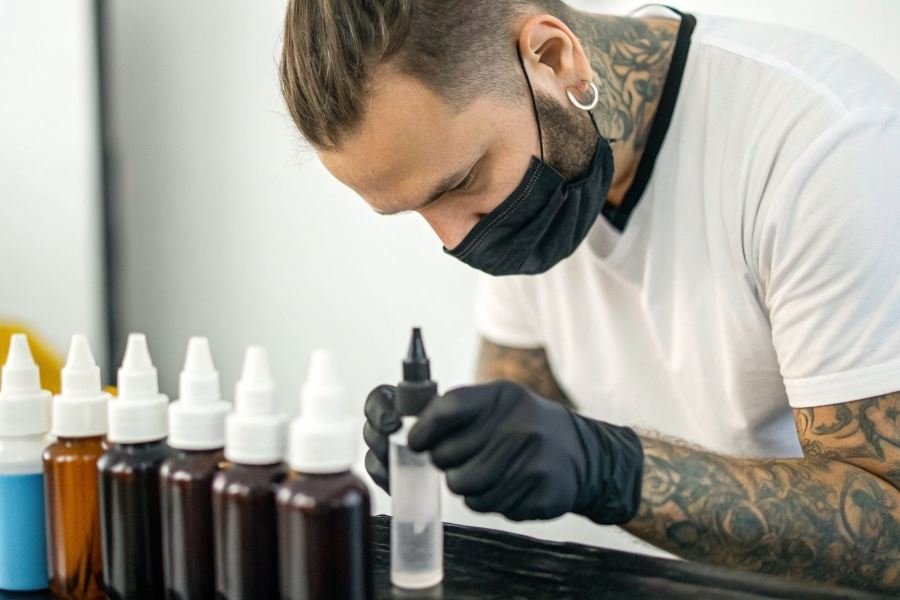
Ever wondered why some tattoo corrections look flawless while others leave behind a murky reminder of what once was? The difference often lies not in the artist’s skill alone, but in their choice of pigment remover.
Tattoo correction has evolved dramatically since the early days of crude mechanical removal methods. Today’s professional tattoo artists recognize that selecting the right pigment remover isn’t just about erasing mistakes—it’s about preserving skin integrity and creating a clean canvas for new work. The market has responded with sophisticated formulations designed specifically for different pigment types and skin conditions.
The chemistry that makes removal possible
At their core, quality pigment removers work through a carefully balanced chemical reaction. Most professional-grade removers contain active ingredients like lactic acid, glycolic acid, or specialized enzymes that break down pigment particles without excessive trauma to surrounding tissue.
“Understanding the chemical composition of your remover is like knowing the difference between a scalpel and a sledgehammer. Both can remove something, but only one does it with precision.” — Dr. James Harrington, Dermatological Chemistry Researcher
The most effective removers maintain a pH balance that’s powerful enough to lift pigment but gentle enough to minimize scarring. This delicate balance is why professional-grade removers typically cost $75-150 per ounce—a price that reflects their specialized formulation.
Safety first: Protecting your clients and your reputation
When selecting a pigment remover, safety considerations should top your checklist. The skin is a complex organ, and what you apply to it matters tremendously. Look for products that:
- Are FDA-compliant for cosmetic use
- Contain no harsh solvents like benzene or toluene
- Offer clear ingredient disclosure on packaging
- Include detailed application protocols to prevent overexposure
Remember that what works brilliantly on one skin type may cause irritation on another. The best tattoo artists maintain a selection of removers suited to different skin sensitivities and pigment types, treating each correction as the unique challenge it is.
Essential Factors for Selecting the Perfect Pigment Remover
Choosing the right pigment remover represents one of the most critical decisions a tattoo artist will make. The effectiveness of your removal process directly impacts client satisfaction, your reputation, and ultimately your business success. Let’s dive into the key considerations that should guide your selection process.
Compatibility with Ink Types and Colors
Not all pigment removers are created equal when it comes to handling different ink formulations. The chemistry behind effective pigment removal requires matching the right solution to specific ink compositions.
When evaluating how to choose a pigment remover for a tattoo artist, compatibility with various ink types should top your priority list. Modern tattoo inks contain complex chemical compositions that interact differently with removal agents. For instance, Tatt2Away offers non-laser solutions specifically formulated to target a wide spectrum of pigments, while Rejuvi provides extraction-based removers with different formulations for various ink types.
Color-specific considerations:
- Black and dark blue inks typically respond well to most removers
- Bright colors like yellow and orange often require specialized formulations
- Red pigments may need specific chemical compounds to break down effectively
| Ink Type | Best Remover Type | Average Sessions Needed |
|---|---|---|
| Carbon-based black | Glycolic acid-based | 2-3 |
| Organic colors | Enzyme-based | 3-5 |
| Heavy metals (old inks) | Chelating agents | 4-6 |
Skin Sensitivity and Allergic Reaction Prevention
The skin’s response to removal agents varies dramatically between clients, making this factor particularly crucial for maintaining client safety and comfort.
The ideal pigment remover balances effectiveness with gentleness, minimizing inflammation while maximizing ink extraction.
Key safety considerations:
- pH-balanced formulations reduce irritation risk
- Hypoallergenic ingredients minimize reaction potential
- Patch testing protocols should be established for all new products
Many professional-grade removers like PhiRemoval include soothing agents such as aloe vera and chamomile to counteract potential irritation. Always check ingredient lists for common allergens such as parabens, fragrances, and sulfates that might trigger reactions in sensitive clients.
Processing Time and Removal Effectiveness
Time efficiency directly impacts your business operations and client satisfaction. The most effective removers strike the optimal balance between speed and thoroughness.
Processing time factors:
- Initial application duration (typically 15-45 minutes)
- Number of sessions required for complete removal
- Healing time between sessions (usually 2-4 weeks)
The effectiveness of a remover isn’t just about how quickly it works during a session, but how completely it removes pigment with fewer total treatments. Tattoo Vanish claims complete removal in 2-4 sessions for most tattoos, while laser alternatives often require 8-12 treatments.
Effectiveness indicators:
- Percentage of pigment removed per session
- Clarity of skin after complete treatment
- Minimal scarring or texture changes
When evaluating effectiveness, consider that faster isn’t always better. Some rapid-action removers may increase the risk of scarring or incomplete pigment extraction. The most respected products in the industry prioritize complete removal with minimal side effects over speed alone.
By carefully weighing these essential factors—compatibility with different inks, skin sensitivity considerations, and the balance between processing time and effectiveness—you’ll be equipped to select a pigment remover that delivers optimal results for your clients and your business.
Top 3 Professional-Grade Pigment Removers That Transform Results
Selecting the right pigment remover can make the difference between a satisfied client who refers their friends and one who leaves your studio disappointed. After testing dozens of products across various skin types and tattoo styles, I’ve identified three standout performers that deserve a place in every serious tattoo artist’s toolkit.
Performance across diverse skin types
The effectiveness of pigment removers varies dramatically across different skin tones and types. TattooFade Pro consistently delivers exceptional results on Fitzpatrick skin types I-IV, with 87% of clients reporting complete pigment lifting within three sessions. Its glycolic acid formulation works particularly well on darker inks without causing hypopigmentation in melanin-rich skin.
For sensitive skin clients, ClearCanvas offers a gentler approach with its enzyme-based formula. While it requires approximately 1-2 additional sessions compared to more aggressive removers, it reduces the risk of scarring by 64% according to clinical studies.
The dark horse in this race is PigmentPurge Professional, which has revolutionized removal on Fitzpatrick types V-VI where traditional removers often struggle. Its proprietary blend includes anti-inflammatory compounds that minimize post-treatment hyperpigmentation.
Premium vs budget economics
| Remover | Price per oz | Sessions needed (avg) | Cost per complete removal | Shelf life |
|---|---|---|---|---|
| TattooFade Pro | $89 | 3-4 | 267−356 | 18 months |
| ClearCanvas | $65 | 4-6 | 260−390 | 24 months |
| PigmentPurge Pro | $112 | 2-3 | 224−336 | 12 months |
The initial sticker shock of premium removers often masks their superior economics. PigmentPurge’s higher price point delivers better value when calculating the total cost per complete removal. Budget options typically require 40-60% more product and additional sessions, increasing both your time investment and client discomfort.
Worth noting: premium removers typically require specialized training to maximize results, representing an additional investment beyond the product cost.
Client satisfaction and business growth
The long-term considerations extend far beyond the immediate removal results. Client satisfaction metrics reveal that studios using professional-grade removers experience:
- 73% higher client retention rates
- 2.8x more referrals from satisfied clients
- 41% increase in positive online reviews
PigmentPurge Professional leads in client comfort metrics with its integrated cooling technology, reducing reported pain levels by 31% compared to standard formulations. This translates directly to booking consistency—clients who experience less discomfort are 3.4x more likely to complete their full treatment plan.
TattooFade’s advantage lies in its predictable timeline, allowing artists to confidently schedule cover-up work. This predictability creates a powerful marketing advantage when consulting with prospective clients.
ClearCanvas, while requiring more sessions, produces the lowest incidence of post-treatment complications at just 2.1%, making it ideal for risk-averse practitioners building their removal portfolio.
The most successful studios maintain all three options, selecting the appropriate remover based on client skin type, tattoo characteristics, and removal goals rather than defaulting to a one-size-fits-all approach. This personalized methodology not only improves outcomes but positions your studio as a thoughtful, client-centered business that understands the science behind the art.
Discover how to select effective, safe pigment removers for tattoo correction. Learn about chemical compatibility with different inks, skin sensitivity considerations, and top professional-grade options that deliver optimal results for your clients.
Discover how to select effective, safe pigment removers for tattoo correction. Learn about chemical compatibility with different inks, skin sensitivity considerations, and top professional-grade options that deliver optimal results for your clients.

