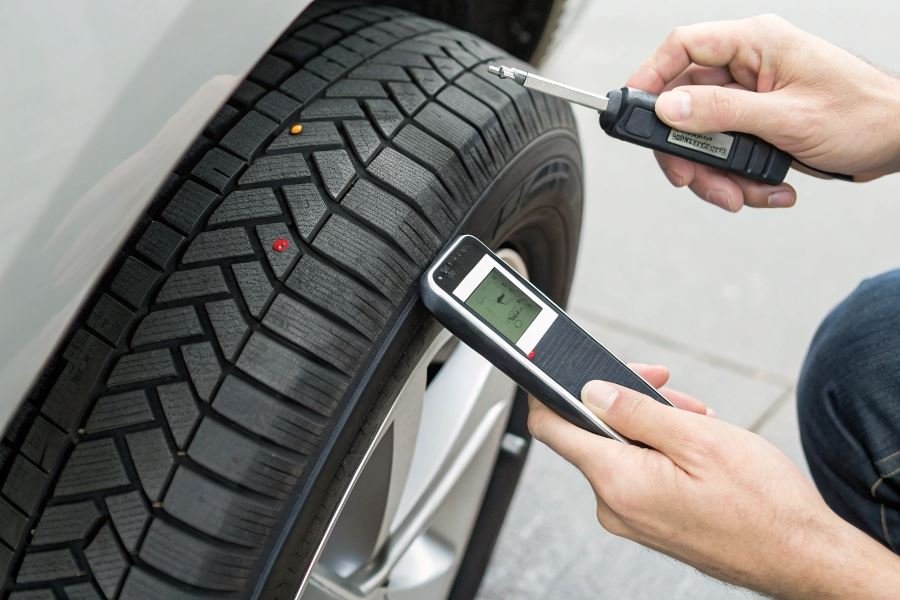
Ever wondered why some tire shops deliver consistently better service? The secret often lies in their measuring tools. At 2.0mm, a tire might pass inspection in one shop but fail in another—a discrepancy that could mean life or death on wet roads.
Tread depth measurement isn’t just a routine check; it’s the frontline defense against hydroplaning, poor traction, and blowouts. The National Highway Traffic Safety Administration reports that vehicles with worn tires are 3x more likely to be involved in crashes during rainy conditions. Your gauge choice directly impacts customer safety and your professional reputation.
The measurement arsenal
Professional tire fitters typically choose between three primary gauge types:
- Dial gauges: Offering precision readings to 0.01mm with a rotating needle display
- Digital gauges: Providing instant digital readouts with memory functions
- Probe-style gauges: Simple, affordable tools with sliding measurement bars
Each serves different needs in the modern tire shop. Digital models have gained popularity for their ease of use and data logging capabilities, while traditional dial gauges remain the gold standard for accuracy in high-volume operations.
Selection criteria that separate professionals from amateurs
When evaluating tread depth gauges, consider these critical factors:
“The difference between a $15 gauge and a $150 gauge becomes apparent after measuring your thousandth tire.” — Veteran tire technician
- Measurement range: Must accommodate both new tires (10-11mm) and legally worn tires (2/32″ or 1.6mm)
- Calibration stability: Quality gauges maintain accuracy through thousands of measurements
- Durability: Can it withstand drops, impacts, and tire shop conditions?
- Readability: Clear displays prevent misreadings during busy service periods
The right gauge doesn’t just measure tread—it builds customer trust and protects your business from liability.
Top 3 Tread Depth Gauge Types for Professional Tire Fitting
When precision meets safety in the automotive world, the right measurement tools become non-negotiable assets. For professionals handling tire maintenance, selecting which tread depth gauge to choose for tire fitting can dramatically impact both efficiency and accuracy of service delivery. Let’s dive into the three primary contenders that dominate professional garages across America.
Digital Tread Depth Gauges: Precision at Your Fingertips
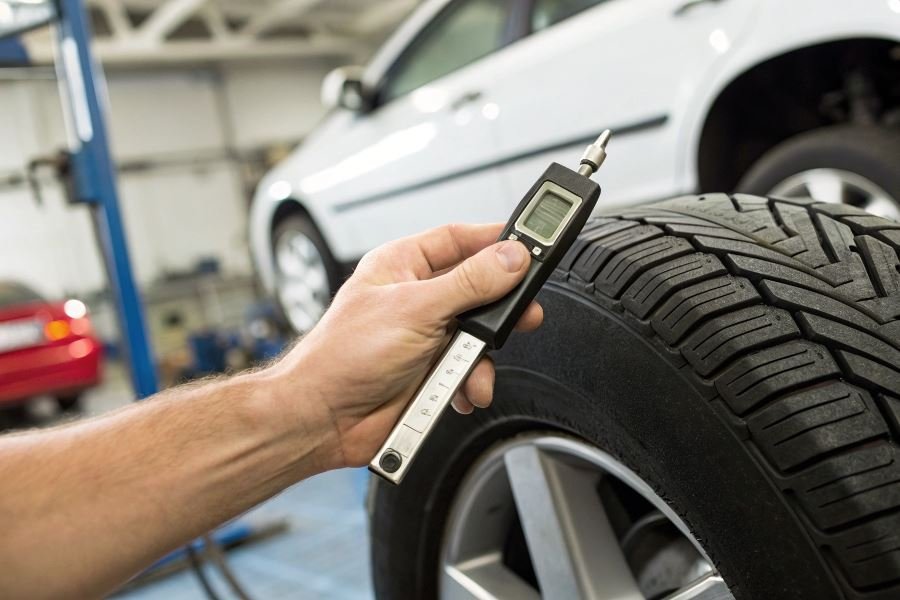
Digital gauges represent the cutting edge of tread measurement technology. With LCD displays showing measurements to 0.01mm precision, these tools eliminate the guesswork that plagues traditional methods.
Key advantages:
- Instant digital readouts with exceptional accuracy
- Memory functions to store multiple measurements
- Automatic conversion between imperial and metric units
- Backlit displays for low-light working conditions
Most premium models like the Mitutoyo 547-217S feature IP54 dust and water resistance, making them suitable for busy shop environments. However, their electronic components require battery maintenance and can be vulnerable to extreme conditions.
“Digital gauges deliver laboratory-grade precision in a shop-floor package, but that precision comes with responsibility—regular calibration is essential.”
Dial Tread Depth Gauges: The Reliable Workhorses
Dial gauges strike the perfect balance between precision and durability. With their analog display featuring a rotating needle indicator, these mechanical marvels require no batteries yet deliver consistent readings.
Performance characteristics:
| Feature | Benefit |
|---|---|
| Mechanical operation | Functions in any environment without power |
| Large dial face | Easy reading even with grease-covered hands |
| Robust construction | Typically survives drops and impacts |
| Consistent accuracy | Generally accurate to 0.05mm with proper care |
Professionals who choose Starrett S799 or similar models appreciate their longevity—many dial gauges remain in service for decades with minimal maintenance. Their primary limitation is the slightly reduced precision compared to digital alternatives, though this rarely affects practical applications.
Slide-Type Tread Depth Gauges: Simplicity Meets Reliability
The humble slide-type gauge remains the most widely used tool in tire shops nationwide. These pocket-sized instruments feature a simple sliding bar with measurement markings.
Why they endure:
- Virtually indestructible with no moving parts to fail
- Zero maintenance requirements
- Instant readings without setup time
- Cost-effective enough to place at every service bay
Basic models from Milton Industries start under $10, while premium versions with ergonomic grips and enhanced visibility markings might reach $30. Their primary limitation is user-dependent accuracy—the measurement depends on how the technician positions and reads the tool.
For high-volume shops processing dozens of vehicles daily, the slide gauge’s combination of speed, reliability, and affordability makes it an indispensable tool despite its relative simplicity. Many professionals keep one in their pocket as a backup even when more sophisticated options are available.
Each gauge type serves distinct needs within the tire service ecosystem, with the best choice depending on your specific requirements for precision, durability, and operational efficiency.
Making the Right Tread Depth Gauge Investment
Value vs. Cost: Breaking Down the Price Points
When selecting a tread depth gauge, the price spectrum tells an important story. Entry-level digital gauges typically range from $15-30, while professional-grade precision instruments can command 80 − 200.Thesweetspot?Mid − rangedigitalgauges(40-70) from manufacturers like Mitutoyo and Fowler deliver exceptional accuracy without breaking the bank.
What separates a $20 gauge from a $100 one? Precision tolerances. Budget models offer ±0.2mm accuracy, while premium gauges deliver ±0.01mm precision. For most tire shops handling 20+ vehicles daily, that difference matters tremendously over time.
Price-to-performance ratio peaks in the mid-range segment, where you’ll find features like:
- IP54 dust/water resistance
- Memory functions for multiple readings
- Backlit displays for low-light environments
- USB connectivity for data logging
Durability and Calibration Considerations
The lifespan of your tread depth gauge directly impacts your long-term operational costs. Durability factors break down into three critical areas:
| Durability Factor | Budget Models | Professional Models |
|---|---|---|
| Housing Material | ABS Plastic | Aluminum/Steel Composite |
| Moisture Resistance | Minimal | IP54-IP67 Rated |
| Impact Resistance | Low | High (1m+ drop tested) |
| Calibration Interval | 3-6 months | 12-24 months |
Calibration maintenance represents the hidden cost of ownership. Premium gauges from Starrett and Insize maintain calibration up to 24 months under normal use, while budget options require quarterly verification against calibration blocks.
The true cost of ownership extends beyond the purchase price to include recalibration services, which average $40-60 per service.
Matching the Tool to Your Operation
Your shop’s specific needs should drive your selection process. Consider these scenarios:
High-Volume Tire Centers (40+ vehicles daily)
Professional digital gauges with data logging capabilities prove invaluable. The ability to store and transfer measurements to customer records streamlines operations and reduces human error. Look for models with quick-change batteries and rapid measurement capabilities.
Mobile Tire Services
Durability trumps all other factors. Tire Tread Depth Pro and similar ruggedized gauges with extended battery life and impact-resistant housing withstand the rigors of mobile service environments.
Specialty/Performance Shops
Precision becomes paramount. Digital gauges with resolution to 0.001″ (0.02mm) allow for detecting subtle wear patterns critical for performance alignment and handling characteristics. Digital Micrometers offers specialized models for racing applications.
Multi-Location Operations
Standardization matters. Select gauges that balance durability, ease of use, and consistent measurement methodology across technicians. Training time decreases dramatically when all locations use identical equipment.
The ideal tread depth gauge isn’t necessarily the most expensive option, but rather the one that aligns with your specific operational requirements while delivering consistent, accurate measurements year after year. The right investment pays dividends through improved efficiency, customer confidence, and regulatory compliance.
Discover the top 3 professional tire tread depth gauges for your fitting shop. Compare digital, dial, and slide-type models based on precision, durability, and value to make the best choice for your specific workshop needs and volume.
Discover the top 3 professional tire tread depth gauges for your fitting shop. Compare digital, dial, and slide-type models based on precision, durability, and value to make the best choice for your specific workshop needs and volume.