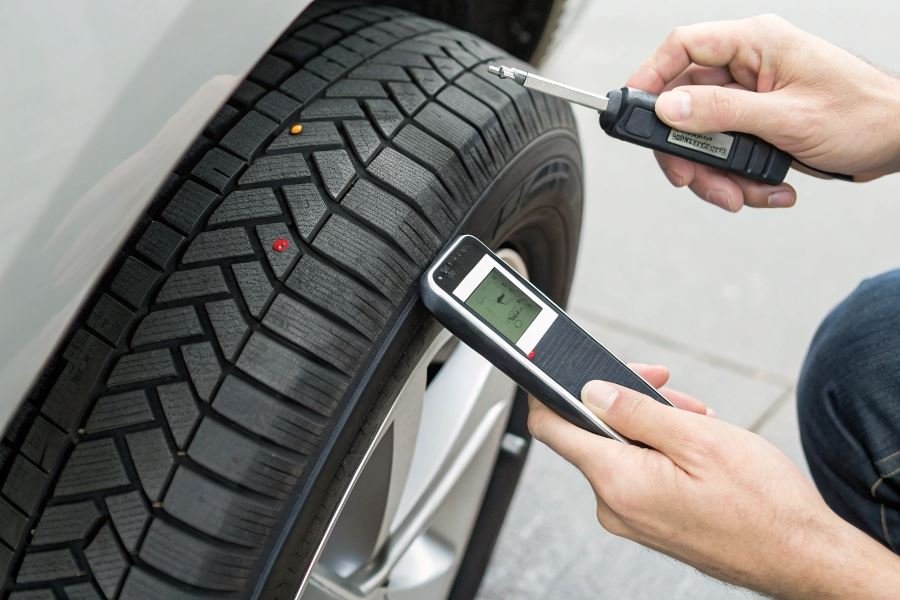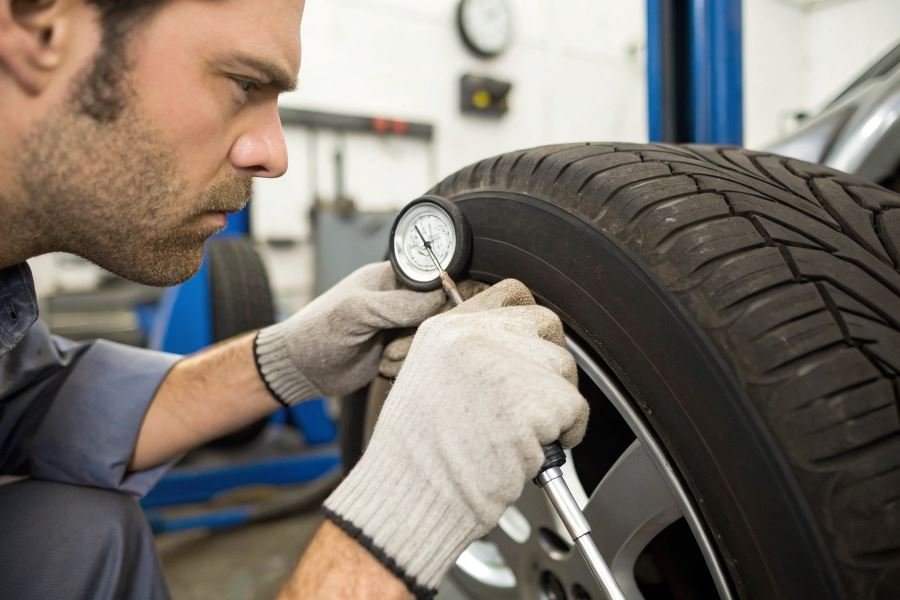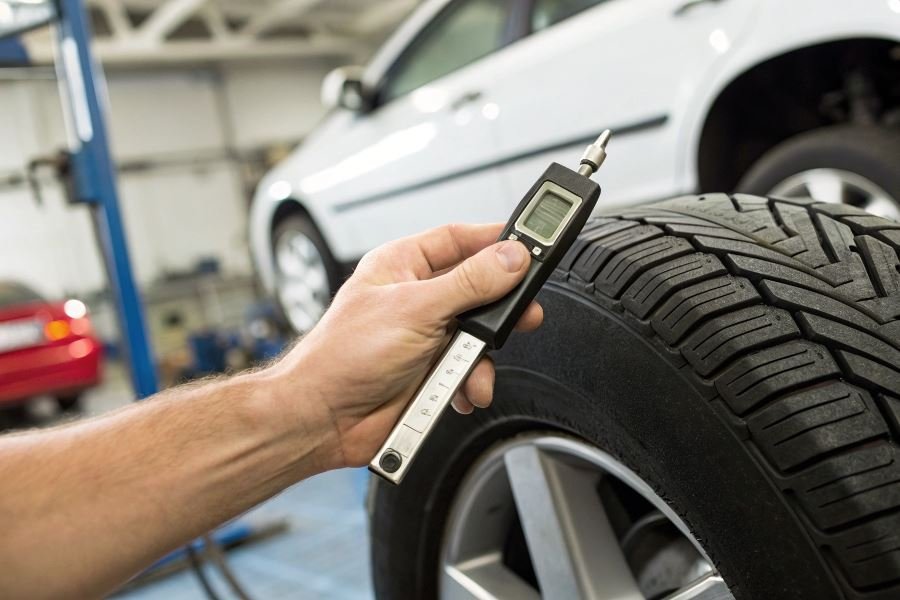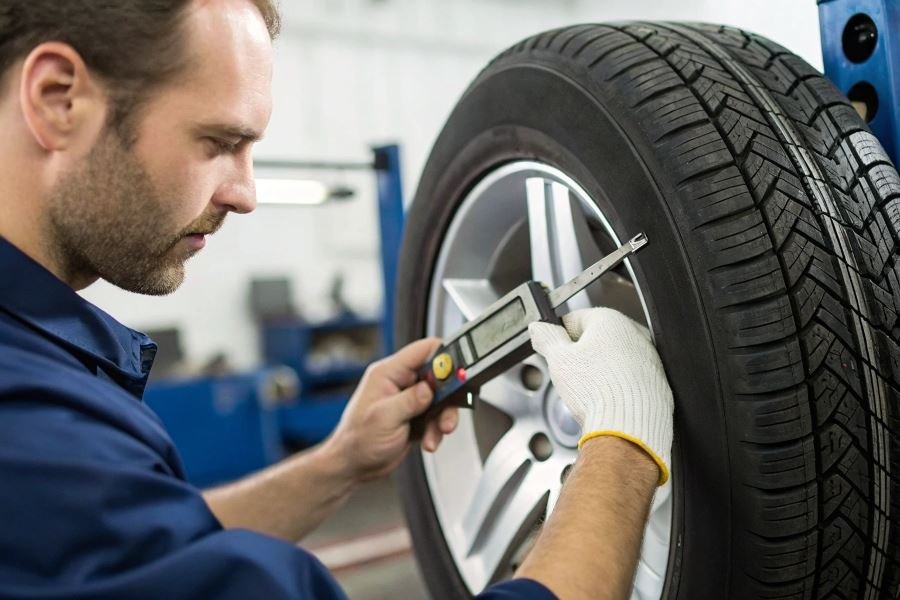
Ever wondered what stands between your vehicle and a potentially catastrophic skid on wet pavement? Just 2/32 of an inch—the legal minimum tread depth in most states. This microscopic measurement makes the difference between stopping safely and hydroplaning into danger.
Tread depth gauges have evolved from simple coin tests to sophisticated precision instruments that detect wear patterns invisible to the naked eye. For auto service professionals, these tools aren’t just accessories—they’re essential diagnostic instruments that provide objective evidence of tire condition.
“The difference between a good measurement and a great one isn’t just about numbers—it’s about customer safety and your reputation.”
The safety imperative
When tires reach critical wear levels, stopping distances increase dramatically. Research from the National Highway Traffic Safety Administration shows that vehicles with worn tires require up to 87% more distance to stop on wet roads compared to new tires. Each 1/32-inch reduction in tread depth correlates with measurable decreases in traction and handling performance.
Building trust through precision
Auto service providers who invest in high-accuracy gauges demonstrate commitment to detail that customers notice. Digital gauges with resolution down to 0.001 inches allow technicians to identify uneven wear patterns that might indicate alignment issues before they become serious problems.
What defines truly accurate gauges
The most reliable professional tread depth gauges share several critical features:
- Calibration stability that maintains accuracy through thousands of measurements
- Environmental compensation for temperature variations that can affect readings
- Ergonomic design allowing consistent measurement pressure
- Data logging capabilities that track tire wear over time
These precision instruments transform routine maintenance into data-driven preventive care—protecting both vehicles and the people who depend on them.
Top 3 Tread Depth Gauges That Revolutionize Auto Service Accuracy
When precision meets efficiency in automotive maintenance, the right measurement tools become invaluable assets. Auto service professionals understand that accurate tire tread depth measurement directly impacts customer safety and satisfaction. The most accurate tread depth gauges for auto services combine innovative technology with practical design, allowing technicians to deliver confident assessments and recommendations to vehicle owners.
Digital precision gauges with electronic displays
Digital tread depth gauges have transformed how technicians evaluate tire condition. The Fowler 54-255-333 stands out with its 0.001-inch resolution and IP54 water/dust resistance rating. This gauge features instant conversion between imperial and metric measurements, with readings displayed on a crystal-clear LCD screen.
What separates premium digital gauges from basic models is calibration stability. The ATD Tools 5519 maintains accuracy within ±0.001 inches even after thousands of measurements, making it ideal for high-volume shops.
Key advantages of digital gauges:
- Instant, precise readings without interpretation errors
- Data logging capabilities for tracking tire wear patterns
- Backlit displays for working in dimly lit wheel wells
Professional-grade dial indicator gauges
For technicians who prefer analog reliability, dial indicator tread depth gauges deliver exceptional accuracy through mechanical precision.
The Starrett 1010Z features a large 2-inch dial face with clear markings at 1/32-inch intervals. Its balanced design includes a thumb roller for smooth depth rod movement and a protective case that doubles as an extension handle.
What makes dial indicators special is their consistency regardless of temperature fluctuations or battery status—critical factors in busy service environments.
| Gauge Model | Accuracy | Range | Special Features |
|---|---|---|---|
| Starrett 1010Z | ±0.0005″ | 0-1″ | Jeweled movement |
| Milton S-448 | ±0.001″ | 0-1.5″ | Magnetic base option |
| OEMTOOLS 25025 | ±0.001″ | 0-1″ | Shock-resistant housing |
These professional-grade tools typically feature hardened stainless steel probes that resist wear even when measuring abrasive rubber compounds day after day.
Laser-based measurement systems
The cutting edge of tread measurement technology employs laser scanning for unprecedented speed and accuracy.
The Hawkeye TreadSpec system captures complete tread profiles across the entire tire surface in seconds. This technology creates a detailed 3D model showing uneven wear patterns that might be missed by single-point measurements.
Revolutionary aspects of laser systems include:
- Comprehensive tread visualization across multiple channels
- Automatic detection of irregular wear patterns
- Integration with shop management software for documentation
For multi-bay operations, the Hunter QuickTread drive-over system can be installed at the service entrance, capturing tread measurements automatically as vehicles enter. This system measures multiple points across each tire simultaneously, providing a complete assessment without technician intervention.
While laser systems represent a significant investment starting at $3,500, they deliver ROI through increased inspection throughput and enhanced upsell opportunities by providing customers with visual evidence of tire condition.
Each of these measurement technologies offers distinct advantages depending on service volume, technician preferences, and budget considerations. What remains constant is that investing in quality measurement tools directly translates to confident recommendations and satisfied customers who trust your expertise.
Precision Matters: Selecting Tread Depth Gauges That Deliver
Accuracy specifications that separate the pros from pretenders
When it comes to measuring tire tread depth, precision isn’t just a preference—it’s a professional necessity. The most accurate tread depth gauges deliver readings within ±0.001 inches (0.025mm) of the actual measurement. This level of precision ensures compliance with safety standards and provides customers with reliable information about their tire condition.
The gold standard for professional auto services is digital gauges with resolution capabilities of 0.001 inches. Analog gauges, while serviceable, typically offer resolution of 1/32-inch increments—adequate for basic inspections but insufficient for detecting subtle wear patterns that might indicate alignment or suspension issues.
Calibration frequency directly impacts measurement reliability. Premium gauges from manufacturers like Mitutoyo and Starrett maintain their calibration longer, often requiring verification only quarterly rather than weekly. This translates to fewer service interruptions and more consistent readings across technicians.
The difference between a good gauge and a great one isn’t just in the decimal places—it’s in the consistency of those decimal places over thousands of measurements.
Built for the daily grind of professional use
Auto service environments are punishing on precision tools. The most reliable tread depth gauges incorporate several key durability features:
- IP54 or higher dust/moisture resistance for withstanding shop conditions
- Shock-resistant housing that protects internal components during inevitable drops
- Stainless steel measuring surfaces that resist wear from repeated contact
The Fowler X-Tread Pro exemplifies this durability-focused design with its reinforced contact points and sealed electronics compartment. Similarly, the Digital Micrometers TreadPro 5000 features a machined aluminum body that dissipates impact forces rather than transferring them to sensitive components.
Battery life represents another critical reliability factor. Professional-grade digital gauges should deliver at least 2,000 hours of operation before requiring battery replacement—enough for approximately six months of daily use.
The economics of precision measurement
The cost-benefit equation for high-precision tread depth gauges becomes clear when examining the full financial picture:
| Gauge Type | Initial Investment | Annual Calibration Cost | Expected Lifespan | Cost Per Year |
|---|---|---|---|---|
| Economy Digital | $50-100 | $75-100 | 1-2 years | $125-175 |
| Mid-Range Digital | $150-250 | $50-75 | 3-5 years | $65-125 |
| Premium Digital | $300-500 | $25-50 | 7-10 years | $55-100 |
The premium gauges from Snap-on or Mac Tools might initially cause sticker shock, but their superior accuracy prevents costly errors. Consider that a single incorrect tire recommendation could cost hundreds in unnecessary replacements or—worse—thousands in liability if premature tire failure occurs.
Measurement speed also factors into the ROI equation. High-end gauges with instant digital readouts can save 15-20 seconds per tire compared to analog alternatives. Across 50 vehicles daily, this efficiency gain recovers nearly two hours of productive technician time.
The most compelling argument for investing in precision comes from customer retention. Auto services using high-precision measurement tools demonstrate a commitment to accuracy that builds trust. When customers believe their safety is being measured with precision, they return for future service—and that recurring revenue makes even the most expensive gauge a bargain in the long run.
Discover the top 5 professional tread depth gauges that deliver unmatched precision for auto services. Compare digital, dial, and laser measurement tools to enhance safety diagnostics and build customer trust with accurate readings.
Discover the top 5 professional tread depth gauges that deliver unmatched precision for auto services. Compare digital, dial, and laser measurement tools to enhance safety diagnostics and build customer trust with accurate readings.