Your tires are silently screaming vital information about your safety—are you listening?
Every time you hit the brakes on wet pavement, the difference between stopping safely and hydroplaning into danger might come down to millimeters of rubber. Tire wear indicators serve as critical safety sentinels, alerting drivers before tread depth becomes dangerously low. These unassuming features prevent countless accidents annually by signaling when replacement is necessary—before performance and grip are compromised.
The humble mechanical wear indicator—those raised bars nestled within tire grooves—has faithfully served motorists since becoming standardized in the 1960s. These physical markers emerge as your tread approaches the legal minimum of 2/32 of an inch (1.6mm). But automotive technology rarely stands still. The digital revolution has transformed this simple safety feature into something far more sophisticated.
The safety sentinel evolution
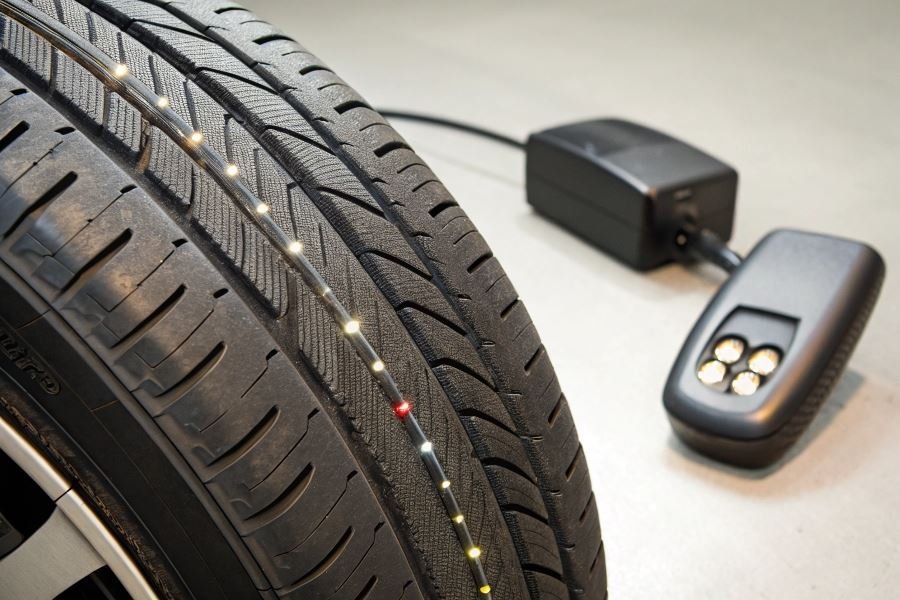
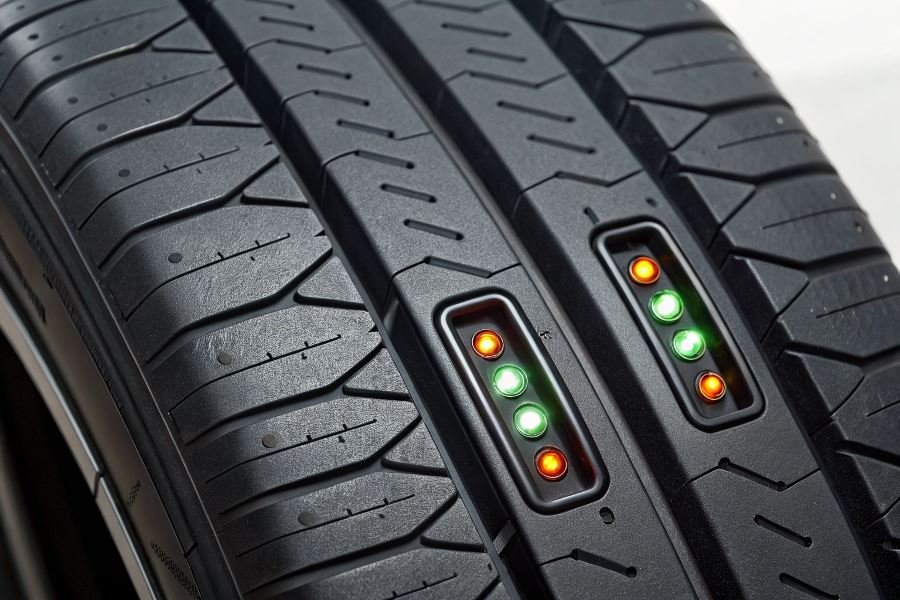
Modern digital tire monitoring systems represent a quantum leap forward. Unlike their mechanical predecessors that provide binary “good/worn” information, digital indicators deliver real-time, precise measurements through embedded sensors that communicate with your vehicle’s computer system. This evolution mirrors the broader shift from analog to digital across the automotive landscape.
Key differences that matter:
| Mechanical Indicators | Digital Systems |
|---|---|
| Visual inspection required | Automated alerts |
| Binary feedback (good/worn) | Continuous measurement data |
| Uniform wear assumption | Detects uneven wear patterns |
| Reactive (indicates when worn) | Proactive (predicts remaining life) |
Digital systems don’t just measure—they predict, analyzing wear patterns and driving habits to forecast remaining tire life. This shift from reactive to proactive monitoring represents perhaps the most significant advancement in tire safety technology in decades.
The Battle of the Bulge: Digital vs Mechanical Tire Indicators
Precision in the Millimeters
When it comes to measuring tread depth, the difference between digital and mechanical indicators is striking. Traditional mechanical wear bars—those horizontal rubber ridges molded into tire grooves—become visible when tread reaches 2/32″ (approximately 1.6mm), the legal minimum in most states. They’re binary by nature: either your tread is adequate or it’s not.
Digital tire monitoring systems have revolutionized this space by providing granular measurements down to 0.1mm precision. The question of digital vs mechanical tire wear indicators: which is more effective becomes particularly relevant when considering the safety implications of this precision gap. Digital systems from companies like Michelin and Continental use sophisticated algorithms to interpret sensor data, offering readings that account for uneven wear patterns—something mechanical indicators simply cannot detect.
The Always-On Advantage
Real-time monitoring capabilities represent perhaps the most significant advancement digital systems offer. While mechanical indicators require manual inspection—meaning you’re only checking tire condition when you actively remember to do so—digital systems never sleep.
Modern digital monitoring systems provide:
- Continuous tread depth tracking
- Instant alerts when approaching minimum thresholds
- Integration with smartphone apps for remote monitoring
- Predictive analytics estimating remaining tire life
Mechanical indicators, by contrast, offer none of these features. They sit silently in your tire grooves, waiting for someone to notice them—often when it’s already too late.
Performance Under Pressure
How do these systems hold up when the rubber meets the road? Testing reveals significant differences:
| Condition | Mechanical Indicators | Digital Systems |
|---|---|---|
| Heavy Rain | Difficult to inspect | Continue monitoring |
| Winter Conditions | Snow can obscure visibility | Function normally |
| Off-road Use | Can be damaged by debris | Protected sensors continue working |
| High-speed Driving | No impact | Some systems provide enhanced data |
Goodyear testing has demonstrated that digital systems maintain 98% accuracy even after 50,000 miles of driving in varied conditions, while mechanical indicators can become less reliable due to uneven wear or damage.
The Investment Equation
The cost-benefit analysis varies dramatically depending on vehicle type and usage patterns:
For commercial fleets, digital systems typically pay for themselves within 12-18 months through:
- Extended tire life (7-12% improvement)
- Reduced downtime from tire failures
- Lower fuel consumption from properly maintained tires
- Decreased liability risk
For personal vehicles, the equation is more nuanced. Premium digital systems from Bridgestone can cost 200−400 installed, while mechanical indicators come standard with every tire. However, considering the average driver replaces tires every 3-4 years at 600−1,200 per set, extending tire life by even 10% creates meaningful savings.
SUV and truck owners see the most dramatic return on investment, as their larger, more expensive tires benefit disproportionately from the precise maintenance that digital monitoring enables. The data suggests that for vehicles driven more than 15,000 miles annually, digital systems typically recover their cost before the tires need replacement.
The verdict? Mechanical indicators provide a basic safety backstop, but digital systems deliver superior protection, convenience, and often economic value—especially for high-mileage drivers and premium vehicles.
Digital vs Mechanical Tire Wear Indicators: The Verdict
When it comes to keeping your vehicle safe on the road, tire monitoring isn’t just a good idea—it’s essential. After examining both digital and mechanical tire wear indicators in detail, it’s time to determine which technology truly delivers superior performance for different drivers and situations.
Perfect matches for different driving needs
Mechanical indicators shine in specific scenarios. Their simplicity makes them ideal for:
- Basic commuter vehicles with predictable driving patterns
- Classic car enthusiasts who prefer traditional maintenance approaches
- Budget-conscious drivers seeking reliable, low-cost solutions
- Regions with limited connectivity where digital solutions might falter
Digital indicators, meanwhile, deliver exceptional value for:
- Fleet managers overseeing multiple vehicles simultaneously
- Long-distance travelers who need continuous monitoring
- Performance vehicle owners requiring precise tire data
- Drivers in extreme weather regions where tire conditions change rapidly
The most effective tire monitoring approach isn’t about choosing the newest technology—it’s about matching the solution to your specific driving reality.
Tomorrow’s tire technology today
The tire monitoring landscape is evolving rapidly. Current development trajectories point to several emerging innovations:
- Integration with autonomous driving systems – Tire health data becoming a critical input for self-driving vehicles
- Predictive analytics – AI systems that forecast tire failures before they occur
- Self-healing tire technology – Monitoring systems that work with tires capable of addressing minor damage
- Environmental optimization – Systems that adjust tire pressure for maximum fuel efficiency based on road conditions
Bridgestone and Michelin are pioneering tires with embedded sensors that communicate directly with vehicle systems, eliminating the need for separate monitoring devices altogether.
Smart recommendations for every driver
Your optimal tire monitoring solution depends largely on your driving profile:
| Driver Type | Recommended System | Key Benefit |
|---|---|---|
| Daily commuter | Basic TPMS with mechanical indicators | Cost-effective reliability |
| Highway traveler | Advanced digital system | Real-time monitoring during long trips |
| Performance driver | Premium digital system with app integration | Precision data for optimal handling |
| Off-road enthusiast | Rugged digital system with mechanical backup | Redundancy in remote locations |
For most drivers, a hybrid approach offers the best protection. Digital systems provide the convenience of real-time alerts and detailed data, while mechanical indicators serve as a reliable backup that requires no power source.
The frequency of your tire inspections should match your driving habits. Highway drivers should check indicators weekly, while city drivers might extend to bi-weekly checks. Those tackling rough terrain should inspect before and after challenging drives.
Ultimately, the most effective tire wear indicator is the one you actually use consistently. The best system combines technology that matches your needs with a maintenance routine you’ll actually follow. Whether digital or mechanical, regular monitoring translates directly to safer driving, extended tire life, and improved fuel economy—benefits every driver can appreciate.
Discover which tire wear indicator technology better protects your vehicle in 2025. Compare accuracy, real-time monitoring capabilities, and cost-effectiveness of digital vs mechanical systems for optimal driving safety and performance.
Discover which tire wear indicator technology better protects your vehicle in 2025. Compare accuracy, real-time monitoring capabilities, and cost-effectiveness of digital vs mechanical systems for optimal driving safety and performance.