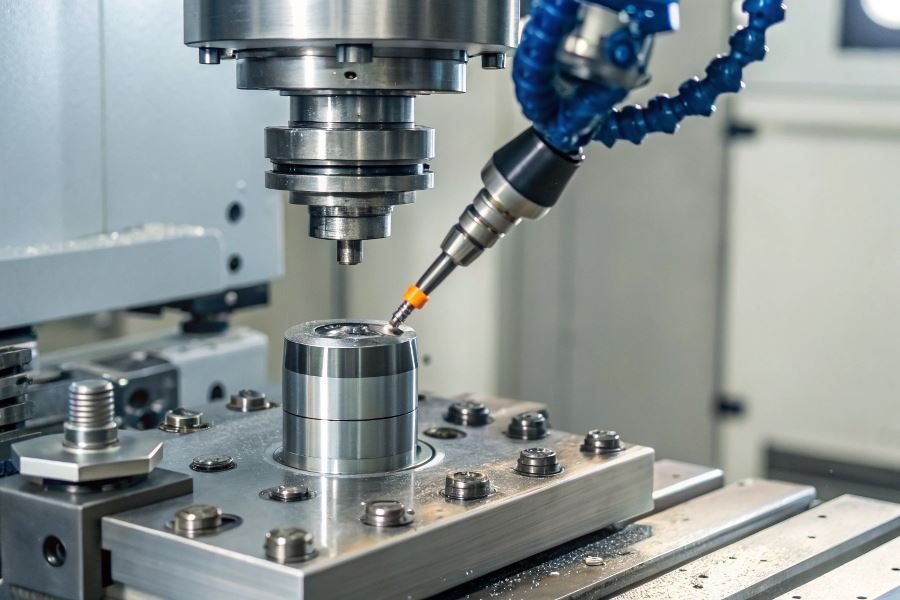
What if your manufacturing line could switch tools in seconds instead of minutes? This isn’t just a convenience—it’s a competitive advantage that separates industry leaders from the pack.
Time is literally money on the production floor. Every minute spent changing tools represents lost output, increased labor costs, and missed opportunities. The most efficient manufacturers have recognized this critical bottleneck and transformed it into a strategic advantage through advanced quick tool change solutions.
When a typical CNC machine spends up to 20% of its operational time in tool changes, the math becomes compelling. Reducing changeover time by even 50% can increase annual production capacity by thousands of units without adding a single piece of equipment. This efficiency gain translates directly to the bottom line—manufacturers implementing modern quick-change systems report productivity increases of 15-30% and ROI periods often measured in months, not years.
The evolution of tool change technology
The journey from manual tool changes to today’s sophisticated systems tells a fascinating story of industrial innovation. In the 1980s, the introduction of automatic tool changers represented a quantum leap forward. By the early 2000s, standardized tooling interfaces had emerged, and today’s systems incorporate precision engineering, digital monitoring, and predictive maintenance capabilities.
Modern quick-change solutions don’t just swap tools faster—they create entire ecosystems of efficiency. From hydraulic clamping systems to robotic tool management, these technologies have transformed what was once an unavoidable production delay into a nearly seamless transition, keeping machines producing value rather than waiting for the next setup.
Revolutionizing CNC Productivity Through Tool Change Solutions
The Power of Automatic Tool Changers
Automatic Tool Changers (ATC) have transformed modern manufacturing by eliminating the productivity-killing downtime associated with manual tool changes. These sophisticated systems allow CNC machines to swap cutting tools in seconds—often under 10 seconds for high-performance models—without operator intervention. The core advantage lies in maintaining continuous production cycles, where the best solutions for quick tool change in machines deliver up to 40% improvement in overall equipment effectiveness.
ATCs come in several configurations, each offering distinct advantages. Carousel-type changers, the most common variety, typically hold 20-60 tools in a circular arrangement, providing excellent reliability at moderate cost. For higher-capacity needs, chain-type systems can accommodate 100+ tools while maintaining rapid exchange speeds. The premium umbrella-type changers, though more expensive, offer the fastest change times—often below 2 seconds—making them ideal for high-volume production environments.
Real-world productivity gains from implementing quality ATC systems are substantial. A medium-sized manufacturing operation typically sees ROI within 8-14 months through reduced labor costs and increased throughput. The Haas Automation side-mount ATC, for example, delivers consistent 1.6-second tool changes while maintaining ±0.0002″ repeatability—specifications that translate directly to bottom-line improvements.
Quick-Change Toolholders Transform Setup Times
The toolholder interface represents another critical component in the tool change equation. Standardized quick-change toolholding systems have revolutionized setup procedures by creating universal mounting platforms that maintain precise positioning.
The evolution from traditional toolholding to modern quick-change systems marks one of manufacturing’s most significant efficiency improvements.
| Toolholder Type | Change Time | Runout Accuracy | Relative Cost |
|---|---|---|---|
| HSK-A63 | 2-4 seconds | ±0.0001″ | High |
| CAT40/BT40 | 3-5 seconds | ±0.0002″ | Medium |
| Capto C6 | 2-3 seconds | ±0.0001″ | High |
| ER Collet | 30+ seconds | ±0.0003″ | Low |
The Sandvik Coromant Capto system exemplifies this approach with its self-centering polygonal interface that delivers both torque transmission and positioning accuracy. Similarly, the HSK (Hollow Shank Taper) system provides exceptional rigidity and repeatability by engaging both the taper and face simultaneously, maintaining accuracy even at high spindle speeds.
Smart Tool Management Systems
The third pillar of efficient tool changing comes through digital integration. Smart tool management systems coordinate the entire tooling ecosystem, from inventory control to predictive maintenance.
Modern systems like Zoller TMS integrate with ERP platforms to track tool life, predict failures before they occur, and automatically schedule replacements. The efficiency gains are remarkable—shops implementing comprehensive tool management typically report:
- 30% reduction in tool inventory costs
- 25% improvement in tool life
- 15-20% decrease in unexpected tool failures
RFID-enabled tooling takes this further by embedding identification chips directly into holders. These systems automatically update central databases with usage data, eliminating manual tracking errors and ensuring optimal tool utilization. When combined with presetting equipment, these systems can reduce setup times by up to 70% while virtually eliminating setup errors.
The integration of cloud-based tool libraries allows operators to access optimal cutting parameters instantly, ensuring consistent performance regardless of who’s operating the machine. This standardization of processes represents perhaps the most significant long-term advantage of comprehensive tool management systems—creating repeatable excellence rather than operator-dependent results.
Implementing Quick Change Tooling That Actually Works
Diagnosing your tool change pain points
The machine shop floor tells no lies. When I visited Advanced Precision Components last quarter, their operators were spending nearly 40% of production time on tool changes. This wasn’t just inefficient—it was bleeding money. Before implementing any quick-change solution, you need a surgical assessment of your current process.
Start by timing every step of your tool changes across different operators and shifts. Document not just the total time, but break it down into specific actions: tool removal, cleaning, alignment, insertion, and verification. The patterns that emerge will surprise you.
The most expensive bottleneck is the one you don’t know exists.
Common bottlenecks typically include:
- Excessive alignment procedures
- Inadequate tool organization systems
- Inconsistent change protocols between operators
- Poor accessibility to tool change areas
- Outdated or worn tool holders
Pro tip: Record video of your tool changes from multiple angles. What feels like a 30-second process often reveals itself as a 3-minute ordeal when viewed objectively.
Running the numbers on quick change investments
Quick-change tooling systems aren’t cheap—but neither is machine downtime. A proper cost-benefit analysis requires looking beyond the sticker price.
| System Type | Initial Investment | Time Savings | Payback Period |
|---|---|---|---|
| Hydraulic Tool Holders | 2, 500−5,000 | 65-75% | 4-6 months |
| Modular Quick-Change | 3, 800−7,500 | 70-85% | 3-5 months |
| Automatic Tool Changers | 15, 000−30,000 | 85-95% | 8-12 months |
When calculating ROI, factor in:
- Direct labor savings from reduced change times
- Increased machine capacity (more billable hours)
- Reduced scrap rates from more consistent setups
- Energy savings from less idle machine time
- Extended tool life from proper mounting
One mid-sized fabricator in Michigan implemented Kennametal KM quick-change tooling and recovered their $12,000 investment in just 11 weeks through a 72% reduction in setup times.
Making it stick: training and maintenance
The finest quick-change system becomes worthless without proper training and maintenance. Implementation failure almost always stems from human factors, not technical limitations.
Develop a standardized training program that includes:
- Hands-on practice sessions with each tool type
- Visual reference guides at each workstation
- Peer-to-peer coaching between experienced and new operators
- Regular refresher sessions (quarterly at minimum)
Maintenance considerations are equally critical. Schunk quick-change systems, for example, require specific torque settings and regular cleaning of interface surfaces to maintain their impressive 0.002mm repeatability.
Create a maintenance calendar that includes:
- Weekly cleaning of all tool interfaces
- Monthly inspection of hydraulic or pneumatic components
- Quarterly calibration checks
- Bi-annual replacement of wear components
Remember that environmental factors like coolant type, chip material, and ambient temperature all affect quick-change system performance. Document these variables and adjust maintenance schedules accordingly.
The most successful implementations create a culture of ownership around the new system. When operators understand not just how but why the system works, compliance and results improve dramatically.
Discover the top 5 quick tool change solutions that boost CNC productivity. Learn how automatic tool changers, quick-change toolholders, and smart management systems can minimize downtime and maximize manufacturing efficiency.
Discover the top 5 quick tool change solutions that boost CNC productivity. Learn how automatic tool changers, quick-change toolholders, and smart management systems can minimize downtime and maximize manufacturing efficiency.