Ever stood at a bus stop, wondering if your ride vanished into thin air? Transport displays transform this uncertainty into confidence, serving as the digital heartbeat of modern transit systems.
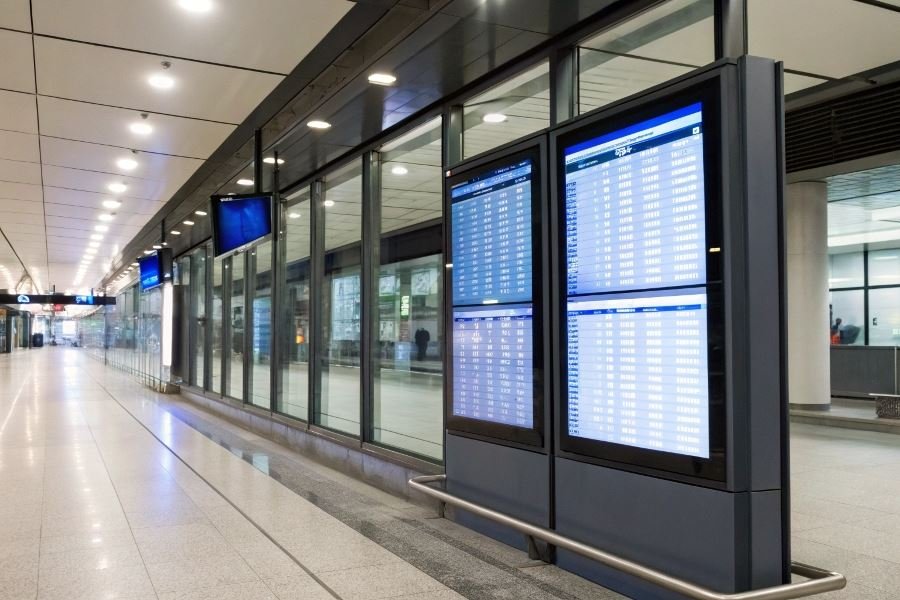
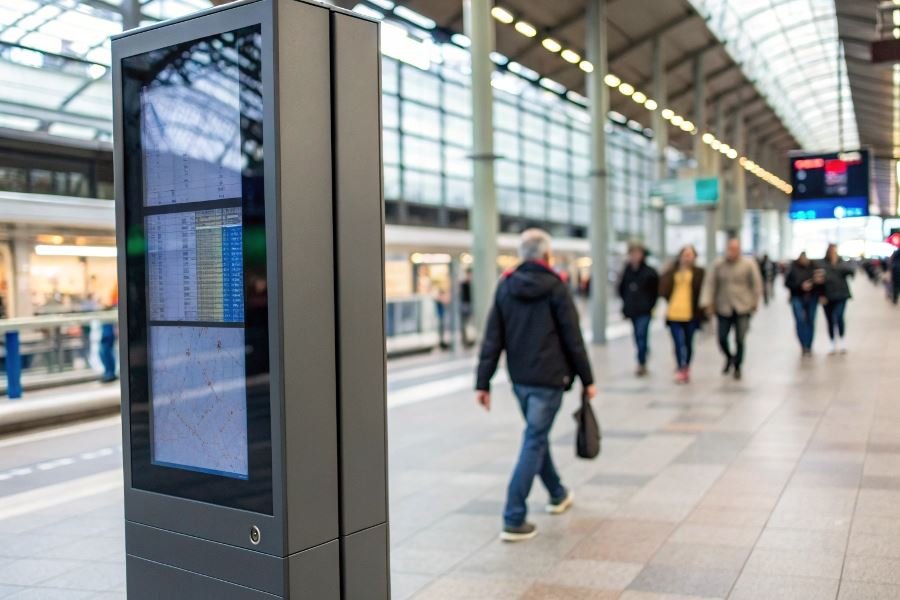
Transport displays are the specialized screens and signage systems that communicate real-time information to passengers across public transportation networks. They’re not just convenience features—they’re critical infrastructure that determines whether a transit system feels intuitive or frustrating. Now that cities are competing to offer smarter mobility solutions, the quality of information delivery has become a key differentiator in public transportation excellence.
The technology landscape
Today’s transport display ecosystem offers remarkable diversity:
- LED displays dominate outdoor environments with their brightness and durability
- LCD screens provide high-resolution information in sheltered locations
- E-paper displays offer energy efficiency with excellent readability in direct sunlight
- Smart glass solutions integrate seamlessly into modern transit architecture
Each technology presents distinct advantages depending on installation environment, power availability, and information complexity requirements.
Decision-making ecosystem
The selection of transport displays typically involves multiple stakeholders with sometimes competing priorities:
“The best display systems emerge when technical requirements meet human-centered design principles.” — Transit Technology Review
Transit authorities establish functional requirements, while operations teams focus on reliability metrics. Meanwhile, accessibility advocates ensure information reaches all passengers regardless of ability. The procurement teams balance these needs against budget constraints, creating a complex decision matrix that shapes the passenger experience for years to come.
Essential Factors for Transport Display Selection
Visibility That Commands Attention
When selecting displays for public transit systems, visibility stands as the cornerstone of effectiveness. Indoor displays operate in controlled lighting environments, while outdoor displays battle the elements daily. The distinction is crucial—outdoor displays require significantly higher brightness ratings, typically 2500+ nits compared to indoor displays’ 400-700 nits.
The process of how to choose a transport display for public transport hinges on understanding viewing distance requirements. Front-facing displays mounted on buses need legibility from 50+ feet away, demanding larger pixel pitch and font sizes. Meanwhile, in-vehicle information screens require clarity from just 3-6 feet, allowing for more detailed content presentation.
Sunlight readability represents perhaps the most challenging visibility hurdle. High-brightness LCD displays with anti-glare coatings offer one solution, while E Ink technology provides exceptional readability in direct sunlight with minimal power consumption. The latest transflective displays from manufacturers like Lumineq combine the best of both worlds—maintaining visibility in both bright sunlight and nighttime conditions.
Built to Withstand Everything
Transit environments punish equipment mercilessly. Displays must withstand:
- Temperature extremes (-40°F to 140°F)
- Constant vibration
- High humidity
- Dust infiltration
- Potential vandalism
Industry standards provide a framework for durability specifications:
| Protection Rating | Description | Typical Application |
|---|---|---|
| IP65 | Dust-tight and protected against water jets | Minimum for external displays |
| IP67 | Dust-tight and protected against immersion | Recommended for external displays |
| IK10 | Impact resistant up to 20 joules | High-traffic areas |
The Axiomtek GOT815L-511 exemplifies this durability, featuring fanless design, M12 connectors, and shock resistance up to 50G—essential for maintaining operation through years of continuous service. Modern transport displays should offer a minimum 50,000-hour MTBF (Mean Time Between Failures) rating, translating to nearly six years of continuous operation.
Seamless System Integration
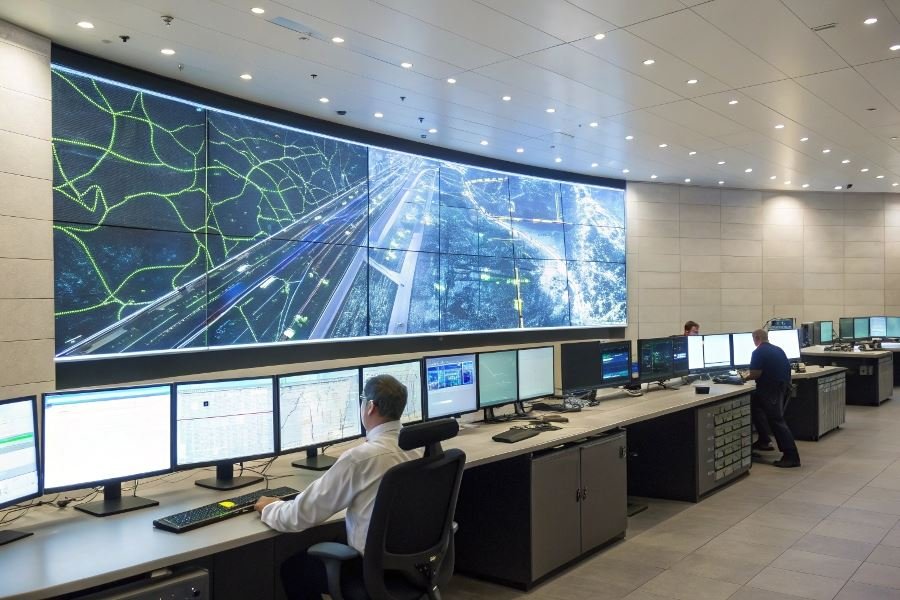
Transport displays don’t exist in isolation—they’re nodes in complex information networks. Integration capabilities determine whether a display becomes an asset or a liability.
Communication protocol compatibility stands paramount. Modern transit management systems typically utilize:
- MQTT for lightweight messaging
- GTFS-RT for real-time transit data
- CANbus for vehicle systems integration
- API-based connections to central management platforms
The ability to receive and display data from Clever Devices or INIT transit management systems without proprietary gateways significantly reduces implementation complexity and long-term maintenance costs.
Power considerations also impact integration. Displays supporting wide-range DC input (9-36V) simplify installation across diverse vehicle types. Advanced displays from manufacturers like Luminator Technology Group offer intelligent power management, automatically adjusting brightness based on ambient conditions to reduce power consumption by up to 40%.
Remote management capabilities complete the integration picture. Displays supporting SNMP monitoring and OTA (Over-The-Air) updates minimize maintenance requirements while maximizing uptime—critical when each display serves thousands of passengers daily.
Making the Smart Investment in Transport Displays
The true cost beyond the price tag
When finalizing your transport display decision, looking beyond the initial purchase price reveals the complete financial picture. The Total Cost of Ownership (TCO) typically includes four major components that dramatically impact your long-term budget:
Purchase costs represent just 30-40% of the lifetime expense for most display systems. LED displays generally command higher upfront prices (3, 000−15,000 per unit) compared to LCD options (1, 200−5,000), but their extended lifespan often justifies the premium.
Installation expenses vary dramatically based on complexity:
| Installation Type | Average Cost Range | Typical Timeline |
|---|---|---|
| Simple mounting | 500−1,500 | 1-2 days |
| Complex integration | 2, 000−8,000 | 3-7 days |
| Full system overhaul | 10, 000−30,000 | 2-4 weeks |
Maintenance requirements create the most significant cost variance between technologies. LCD displays typically require replacement every 3-5 years, while premium LED systems can operate effectively for 7-10 years with proper care. Annual maintenance costs average 8-12% of the initial purchase price.
Energy consumption becomes particularly relevant for always-on transit displays. LED technology consumes approximately 40% less power than comparable LCD systems, potentially saving thousands in operational costs over the display lifetime.
Selecting the right partner matters
Vendor selection deserves equal attention to the hardware itself. Evaluate potential partners using these critical criteria:
- Technical expertise and transit-specific experience – Vendors with public transportation portfolios understand the unique challenges of transit environments
- Service level agreements – Look for guaranteed response times under 4 hours for critical failures
- Warranty coverage – Premium vendors offer 3-5 year comprehensive warranties including on-site service
- Parts availability – Confirm spare parts commitment for at least 7 years post-purchase
The strongest vendors provide comprehensive support packages including remote monitoring, preventative maintenance, and driver training programs. These services typically add 15-20% to initial costs but dramatically reduce system downtime.
Building for tomorrow’s needs today
Implementing transport displays requires careful timeline planning. Most successful deployments follow a phased approach:
- Assessment and planning: 4-6 weeks
- Procurement and manufacturing: 6-12 weeks
- Installation and testing: 2-8 weeks depending on scale
- Staff training and full deployment: 2-4 weeks
Future-proofing your investment requires anticipating technological evolution. The most adaptable display systems offer:
- Modular hardware allowing component-level upgrades rather than complete replacement
- Open API architecture supporting integration with emerging transit technologies
- Software-defined functionality enabling feature expansion through updates rather than hardware changes
- Scalable network infrastructure accommodating additional displays without system redesign
Smart transit authorities build 5-7 year technology roadmaps aligning display investments with broader system modernization efforts. This approach prevents costly incompatibilities and maximizes return on technology investments.
The most successful transport display implementations aren’t chosen solely on specifications or price—they’re selected based on how seamlessly they integrate into both current operations and future transit visions.
Discover how to select optimal transport displays for public transit systems with our comprehensive guide covering visibility requirements, durability specifications, integration capabilities, and cost considerations for modern transit solutions.
Discover how to select optimal transport displays for public transit systems with our comprehensive guide covering visibility requirements, durability specifications, integration capabilities, and cost considerations for modern transit solutions.