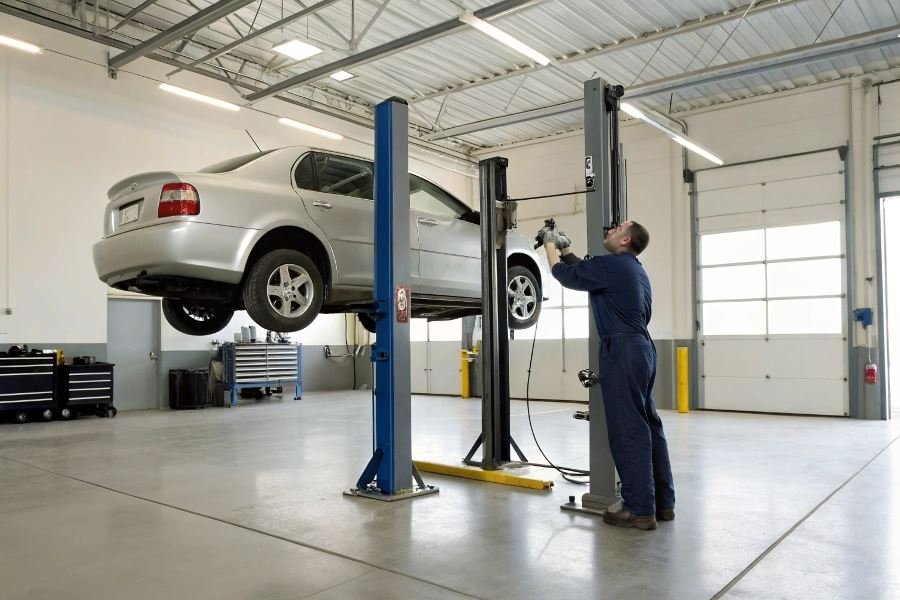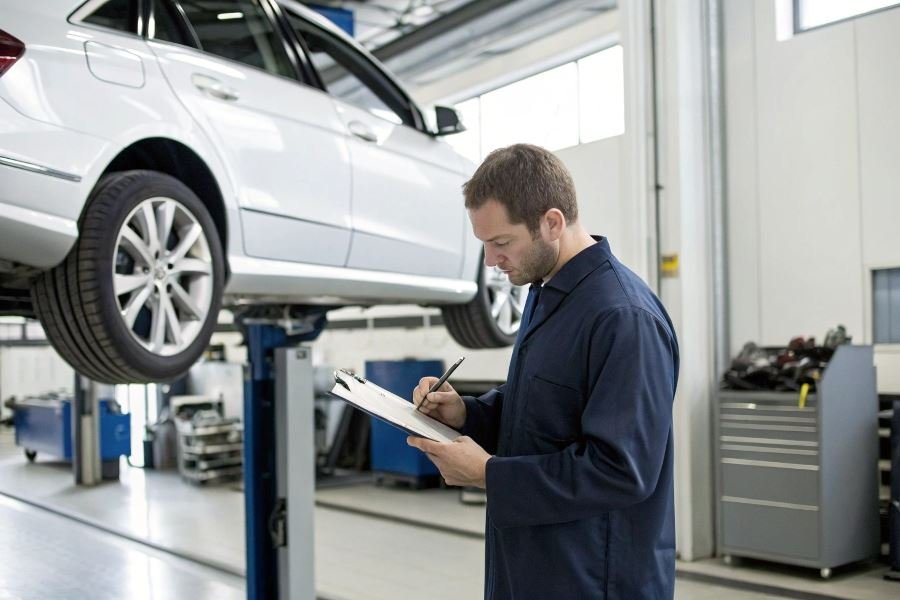
Ever watched a 5,000-pound SUV suspended in mid-air and wondered what keeps it from crashing down? That invisible margin of safety isn’t magic—it’s mathematics. And in the high-stakes world of auto repair, getting those numbers wrong isn’t just bad business—it’s potentially catastrophic.
When selecting a car lift for your service center, lifting capacity isn’t just another specification—it’s the cornerstone of your operation’s safety and efficiency. Think of it as the foundation upon which your entire business stands. A properly calculated lifting capacity ensures technicians can work confidently beneath vehicles while maximizing your shop’s service capabilities.
The capacity spectrum: Not all lifts are created equal
The market offers diverse lift options, each with distinct capacity ranges:
| Lift Type | Typical Capacity Range | Best For |
|---|---|---|
| Two-Post | 7,000-15,000 lbs | Standard repairs, oil changes |
| Four-Post | 8,000-40,000 lbs | Wheel alignments, heavy vehicles |
| Scissor | 6,000-10,000 lbs | Quick service, limited space |
| In-Ground | 9,000-30,000 lbs | High-volume shops, clean aesthetics |
Beyond the weight rating: What really determines your needs
Several critical factors influence your actual lifting requirements:
- Vehicle demographics: The types of vehicles your shop typically services (compact cars vs. commercial trucks)
- Service specialization: Transmission work requires different support than cosmetic repairs
- Future-proofing: Vehicle weights continue trending upward—what seems adequate today may prove insufficient tomorrow
- Safety margins: The smartest shops never operate at 100% of rated capacity
Remember: The right lift capacity isn’t about handling what you can lift—it’s about lifting what you handle with absolute confidence.
Calculating the Perfect Lift Capacity for Your Auto Shop
When setting up or upgrading your auto service business, few decisions impact your operational capabilities more than selecting the right car lift. The foundation of this decision rests on understanding exactly how much weight your lifts need to handle safely and efficiently.
Auto shop owners frequently underestimate the importance of precisely calculating lifting capacity requirements. Determining the lifting capacity of a car lift involves more than just knowing the weight of an average vehicle—it requires strategic planning, mathematical precision, and foresight about your business trajectory. This calculation process becomes the cornerstone of both safety and profitability in your service operations.
The Five-Step Calculation Method
Let’s break down the process into actionable steps:
- Identify your current vehicle mix – Document every type of vehicle you service over a 30-day period
- Determine maximum weights – Research the curb weight plus maximum payload for each vehicle type
- Apply a safety factor – Multiply your heaviest expected load by 1.5
- Consider future growth – Add 20-25% capacity for business expansion
- Account for lift accessories – Add 100-200 pounds for adapters and attachments
This methodical approach prevents the costly mistake of purchasing inadequate equipment that limits your service capabilities or creates safety hazards.
Critical Formulas for Accurate Calculations
The basic formula looks deceptively simple:
Required Lift Capacity = (Heaviest Vehicle Weight × Safety Factor) + Accessories Weight + Growth AllowanceBut let’s examine a practical application:
| Vehicle Type | Max Weight | With Safety Factor (×1.5) | With Accessories (+150 lbs) | With Growth (+20%) |
|---|---|---|---|---|
| Sedan | 4,500 lbs | 6,750 lbs | 6,900 lbs | 8,280 lbs |
| SUV | 6,000 lbs | 9,000 lbs | 9,150 lbs | 10,980 lbs |
| Light Truck | 7,500 lbs | 11,250 lbs | 11,400 lbs | 13,680 lbs |
The American Lift Institute recommends never operating a lift at more than 80% of its rated capacity during regular service operations, adding another layer to your calculations.
Adapting for Specialty Vehicles
The automotive landscape continues evolving, with electric vehicles from Tesla and heavy-duty trucks requiring special consideration:
Electric Vehicles: Despite their sleek appearance, EVs often weigh 20-30% more than comparable gas vehicles due to battery packs. A Tesla Model S weighs approximately 4,940 pounds—nearly a ton heavier than many similar-sized sedans.
Commercial Vehicles: If your business services commercial vehicles, your calculations must account for these substantially heavier loads:
- Medium-duty trucks can weigh 14,000+ pounds
- Specialized equipment may require lifts rated for 18,000+ pounds
Specialty Modifications: Vehicles with aftermarket modifications like heavy-duty suspensions, additional equipment, or armor plating can significantly exceed manufacturer weight specifications.
When planning for business growth, consider not just increased volume but expanded service offerings. The lift capacity that serves your needs today might become a limitation tomorrow if you decide to service heavier vehicles or specialty equipment.
Remember that undercalculating lift capacity creates not just operational bottlenecks but genuine safety hazards. The investment in properly rated equipment pays dividends through expanded service capabilities, enhanced safety, and equipment longevity.
Implementing Lifting Capacity Standards That Last
Industry Certification Requirements That Matter
The automotive lift industry operates under strict guidelines that protect both technicians and vehicles. The gold standard comes from the Automotive Lift Institute (ALI), which has been setting the benchmark for lift safety since 1945. Every lift in your shop should carry the ALI/ETL certification label – this isn’t just a recommendation, it’s essential for insurance compliance and workplace safety regulations.
ANSI/ALI ALCTV is the North American standard that governs automotive lift construction, testing, and validation. This certification ensures lifts can consistently perform at their rated capacity while maintaining a safety factor of at least 150%. What does this mean in practical terms? A lift rated for 10,000 pounds must actually be capable of supporting 15,000 pounds during certification testing.
“The certification label isn’t just a sticker – it’s your protection against liability and your commitment to technician safety.”
The Occupational Safety and Health Administration (OSHA) requires all lifting equipment to meet manufacturer specifications and be properly maintained. Non-compliance can result in penalties starting at $15,625 per violation as of 2025, with repeat offenders facing substantially higher fines.
Inspection Protocols That Protect Your Business
Regular inspection isn’t just good practice – it’s mandatory for maintaining certification compliance. Here’s what a comprehensive inspection program looks like:
| Inspection Type | Frequency | Performed By | Documentation |
|---|---|---|---|
| Daily visual check | Before first use each day | Lift operator | Daily log entry |
| Operational test | Weekly | Service manager | Maintenance log |
| Thorough inspection | Monthly | Qualified technician | Detailed checklist |
| Certification inspection | Annually | ALI-certified inspector | Official certification |
The daily inspection should focus on critical wear components like cables, chains, and hydraulic connections. Technicians should verify that load-holding devices, adapters, and safety locks function properly before lifting any vehicle.
For load testing, the industry standard requires periodic verification that the lift can handle its rated capacity. This doesn’t mean loading it to maximum capacity daily – instead, use calibrated load cells during annual inspections to confirm performance without risking equipment damage.
Strategic Investment In Lifting Infrastructure
When planning your lift capacity needs, consider the total lifecycle cost rather than just the initial purchase price. A properly specified lift system typically represents about 8-12% of a new service bay’s setup cost but impacts productivity for 10-15 years.
Forward-thinking shop owners are increasingly selecting lifts with capacity ratings 25% above their current needs. This strategic buffer accommodates:
- Future vehicle weight increases (electric vehicles with battery packs often weigh 20-30% more than their ICE counterparts)
- Specialty service opportunities that might emerge
- Extended equipment lifespan due to reduced stress on components
Preventative maintenance contracts from manufacturers like Rotary Lift or Challenger Lifts typically cost $800-1,200 annually but can extend equipment life by 30-40% while ensuring continuous safety compliance.
The most successful auto service operations view their lifting systems not as expenses but as productivity multipliers. Each properly functioning lift bay can generate $150,000-250,000 in annual service revenue when properly maintained and certified – making rigorous capacity standards and maintenance protocols an investment that pays dividends in both safety and profitability.
Learn how to accurately calculate car lift capacity for your auto service. Our comprehensive guide covers safety factors, vehicle diversity considerations, and industry standards to ensure optimal equipment selection and workshop safety.
Learn how to accurately calculate car lift capacity for your auto service. Our comprehensive guide covers safety factors, vehicle diversity considerations, and industry standards to ensure optimal equipment selection and workshop safety.