
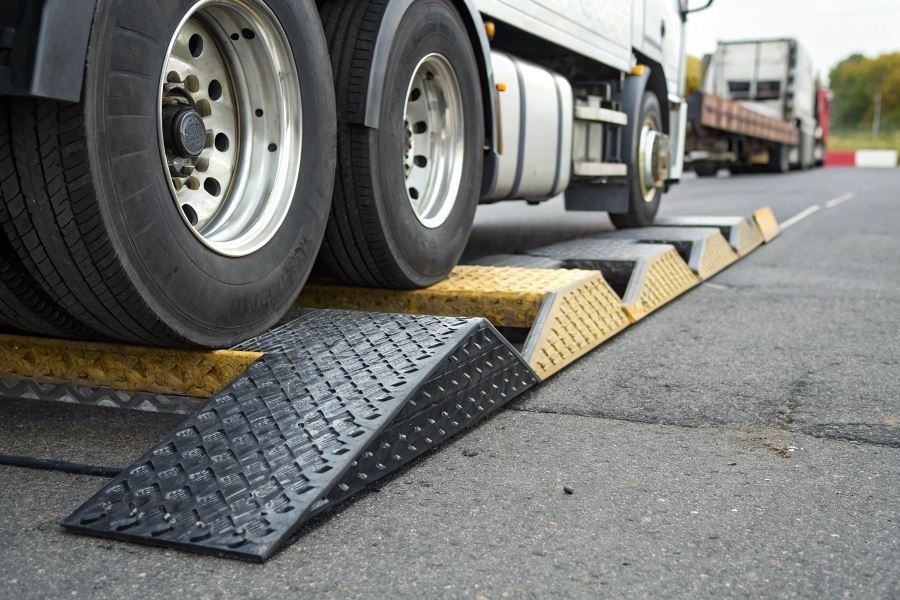
Ever wondered what’s stopping a 33,000-pound truck from rolling away when parked on an incline? The answer might be smaller than you think.
When it comes to truck safety equipment, wheel chocks might not get the spotlight, but these humble devices prevent catastrophic accidents every single day. These wedge-shaped blocks placed against a vehicle’s wheels are the last line of defense against unintended movement—and selecting the right ones could mean the difference between security and disaster.
What exactly are truck chocks?
Truck chocks are specially designed blocks that prevent vehicles from rolling when parked or during maintenance. Unlike passenger vehicle chocks, truck variants must withstand enormous weight and pressure. They’re not just accessories—they’re critical safety devices that keep massive vehicles firmly in place when brakes alone aren’t enough.
“The most expensive wheel chock is still cheaper than the least expensive accident.” — Common wisdom among fleet safety managers
Regulatory landscape: Not just good practice, it’s the law
The Federal Motor Carrier Safety Administration (FMCSA) and OSHA have specific requirements regarding commercial vehicle chocking. Since 1971, OSHA regulation 29 CFR 1910.178(k) has mandated that wheels must be blocked (chocked) when loading or unloading trucks to prevent movement. These aren’t merely suggestions—violations can result in substantial fines and increased liability.
When chocks fail: The domino effect
Using inadequate chocks—or worse, improvised solutions like rocks or wooden blocks—creates a false sense of security with potentially devastating consequences:
- Property damage: A rolling truck can destroy equipment, facilities, and other vehicles
- Severe injuries or fatalities: Workers caught in the path have little chance to react
- Business interruption: Accidents trigger investigations, delays, and operational shutdowns
- Insurance implications: Improper chocking can void coverage and increase premiums
Selecting appropriate truck chocks isn’t merely a procurement decision—it’s a critical safety investment that protects lives, property, and your business reputation.
Essential Factors for Truck Chock Selection
Selecting the right wheel chocks for your truck isn’t just about compliance—it’s about creating a safety system you can trust when lives and equipment are on the line. The difference between adequate and optimal chock selection can mean thousands of dollars in prevented damage and immeasurable peace of mind.
When evaluating how to choose a chock for a truck, three critical factors stand above all others: weight compatibility, environmental conditions, and design features. Each element plays a crucial role in ensuring your vehicle remains securely immobilized exactly when and where you need it to.
Weight Capacity Meets Reality
The foundation of effective chock selection begins with understanding load ratings. Your chock’s capacity must exceed your truck’s gross vehicle weight rating (GVWR) with a substantial safety margin.
Heavy-duty commercial trucks typically require chocks rated for 30,000+ pounds, while medium-duty vehicles might function safely with 20,000-pound rated options. The consequences of underrating are severe—a chock that fails under pressure becomes a dangerous projectile rather than a safety device.
| Truck Classification | Recommended Minimum Chock Rating | Example Vehicles |
|---|---|---|
| Light-duty (Class 1-3) | 10,000-15,000 lbs | Ford F-350, Chevy Silverado 3500 |
| Medium-duty (Class 4-6) | 20,000-26,000 lbs | Freightliner M2, International MV |
| Heavy-duty (Class 7-8) | 30,000+ lbs | Peterbilt 579, Kenworth W900 |
Remember: these ratings assume optimal conditions. For slopes exceeding 5 degrees or challenging surfaces, increase your rating requirements by at least 25%.
Surface Conditions Drive Material Choices
The interface between chock and ground determines stopping power. Different materials excel in specific environments:
- Rubber compounds provide superior grip on smooth concrete and asphalt but may deteriorate in extreme temperatures or chemical exposure.
- Polyurethane offers excellent durability and moderate grip across varied surfaces, maintaining performance between -40°F and 120°F.
- Aluminum delivers unmatched strength-to-weight ratios for portable applications but requires aggressive tread patterns to compensate for reduced friction.
Environmental factors demand equal consideration. Buyers Industrial Group chocks with UV inhibitors prevent sun damage, while Vestil Manufacturing offers corrosion-resistant options for coastal or chemical environments.
Design Features That Deliver Performance
The most effective chocks incorporate thoughtful design elements that enhance both function and usability:
Grip patterns should match your typical operating environment. Aggressive sawtooth designs excel on loose gravel, while broad, textured surfaces provide maximum contact area on smooth concrete. Monster Motion Safety offers dual-pattern designs that perform across multiple surfaces.
Handling features significantly impact daily usability. Look for:
- Recessed handles positioned to keep hands away from pinch points
- Weight-optimized designs (under 15 pounds per chock when possible)
- Stacking or nesting capabilities for efficient storage
Visibility elements transform good chocks into great ones. High-contrast colors (particularly safety yellow) improve identification in low-light conditions, while reflective strips or embedded reflectors enhance nighttime visibility by up to 300%. Checkers Industrial Safety Products leads the industry with their reflective technology integration.
The most effective chock systems combine these elements into a cohesive safety solution that addresses your specific operational needs while providing confidence in every application.
The Ultimate Guide to Truck Wheel Chocks
When it comes to securing heavy vehicles, the humble wheel chock plays a critical role that’s often overlooked until it’s needed most. These seemingly simple devices are engineering marvels designed with specific materials and features to meet different operational demands. Let’s dive into the three primary types of truck chocks and discover which ones deserve a permanent spot in your safety arsenal.
Rubber wheel chocks that grip like champions
Rubber chocks have earned their reputation as the workhorses of the vehicle stabilization world. Made from recycled tire materials or virgin rubber compounds, these chocks offer exceptional grip on virtually any surface.
Key advantages:
- Superior friction coefficient prevents slippage even on wet surfaces
- Natural shock absorption qualities
- Relatively quiet deployment (no metallic clanging)
- Resistant to cracking in moderate temperature ranges
The limitation? Weight. Quality rubber chocks typically weigh 8-12 pounds each, making them less portable than alternatives. They also tend to deteriorate faster when exposed to extreme heat, UV radiation, or petroleum products.
The ideal scenario for rubber chocks is indoor warehouse operations or loading docks where grip is paramount and environmental exposure is limited.
Aluminum and metal chocks built for the long haul
When durability becomes the primary concern, aluminum and steel chocks enter the conversation. These metal warriors are designed to withstand punishing conditions that would destroy lesser materials.
Durability factors:
- Aluminum chocks resist corrosion and typically last 10+ years with proper care
- Steel variants offer maximum strength for the heaviest vehicles (50+ tons)
- Both withstand extreme temperature fluctuations without degradation
The weight consideration is significant here. Steel chocks can weigh upwards of 15 pounds each, while aluminum offers a middle ground at 5-8 pounds. This makes them less ideal for frequent manual repositioning.
| Metal Type | Weight Range | Corrosion Resistance | Relative Cost |
|---|---|---|---|
| Aluminum | 5-8 lbs | Excellent | Higher |
| Steel | 12-20 lbs | Good (when coated) | Moderate |
These chocks excel in mining operations, construction sites, and industrial environments where durability trumps portability and vehicles remain stationary for extended periods.
Plastic and composite chocks for all-weather versatility
The newest generation of truck chocks leverages advanced polymers and composite materials to deliver impressive performance without the weight penalty of traditional options.
Weather resistance advantages:
- Completely impervious to water, salt, and most chemicals
- UV-stabilized formulations prevent sun damage and color fading
- Temperature stable from -40°F to 180°F without becoming brittle or soft
The portability factor is where these modern marvels truly shine. Most plastic chocks weigh just 3-5 pounds while supporting vehicles up to 40,000 pounds. Many feature ergonomic handles or rope attachments for easy placement and retrieval.
Application sweet spots:
- Delivery fleets with frequent stops
- Emergency vehicles requiring rapid deployment
- Aviation ground support equipment
- Recreational vehicles and trailers
The primary drawback is reduced friction on some surfaces compared to rubber, though textured designs and rubber inserts have largely addressed this concern in premium models.
These three distinct chock categories each serve specific operational needs. The optimal choice depends on your unique combination of vehicle weight, deployment frequency, storage constraints, and environmental conditions. Investing in the right wheel chock isn’t just about compliance—it’s about confidence in your vehicle’s stability when it matters most.
Learn how to choose the right truck chocks for maximum safety and compliance. Discover essential factors like weight capacity, surface conditions, and material types to prevent dangerous vehicle movement and meet industry regulations.
Learn how to choose the right truck chocks for maximum safety and compliance. Discover essential factors like weight capacity, surface conditions, and material types to prevent dangerous vehicle movement and meet industry regulations.
