Ever walked through a sleek, automated turnstile and wondered what makes it tick? Behind that smooth entry experience lies a complex security ecosystem that balances accessibility with protection. The humble turnstile has evolved from simple mechanical barriers to sophisticated access control systems that can recognize faces, scan credentials, and even detect threats.
Turnstiles serve as the first physical line of defense in public venues, controlling flow while collecting valuable data on attendance and movement patterns. They’re the silent sentinels of stadiums, transit systems, corporate headquarters, and government buildings—anywhere that requires regulated access.
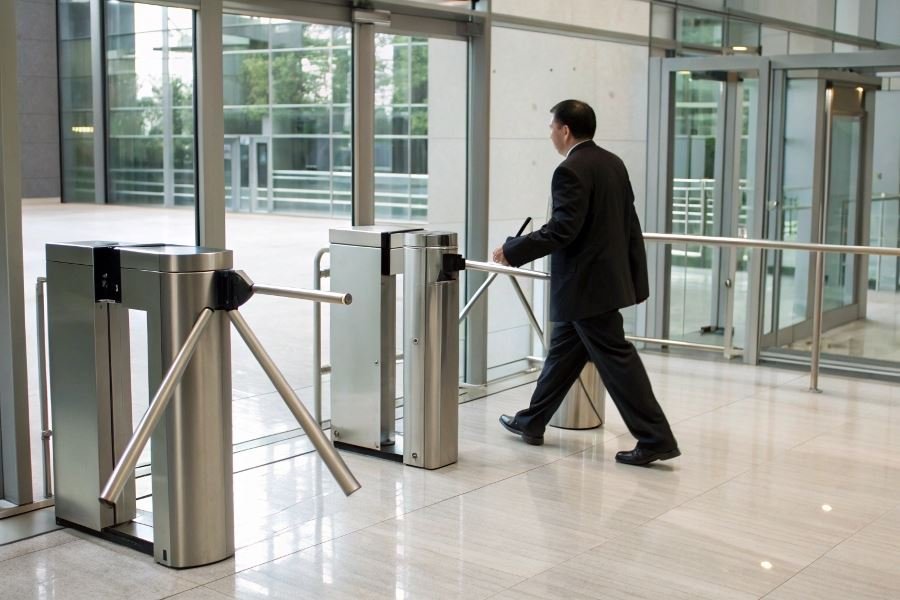
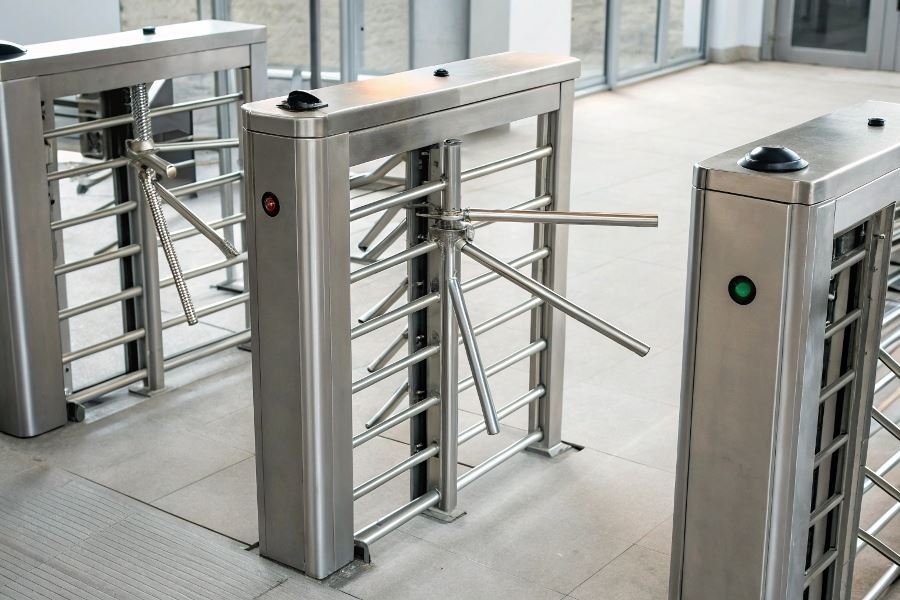
The turnstile landscape has diversified dramatically, offering solutions for virtually every security scenario. Tripod turnstiles provide basic entry control with their familiar three-arm design, while full-height turnstiles create impenetrable barriers for maximum security environments. Optical turnstiles blend aesthetics with functionality, using sensors instead of physical barriers, while swing gates accommodate accessibility requirements without compromising security.
Beyond the barrier: Critical selection factors
When evaluating turnstile systems, decision-makers must consider:
- Throughput capacity: How many people need to move through in peak periods?
- Integration capabilities: Will the system connect with existing security infrastructure?
- Environmental conditions: Indoor installation differs dramatically from outdoor exposure
- Aesthetic alignment: The visual impact matters in premium spaces
- Compliance requirements: ADA accessibility isn’t optional—it’s mandatory
The most successful implementations balance security objectives with user experience. A turnstile that creates bottlenecks during rush periods fails regardless of its security credentials. Similarly, an easily bypassed system undermines your entire security posture.
“The right turnstile doesn’t just control access—it enhances the entire visitor journey while providing actionable intelligence about facility usage.”
Technical Essentials That Make or Break Turnstile Systems
When evaluating turnstiles for public spaces, the technical specifications often determine whether your installation will be a seamless success or a daily frustration. The criteria for choosing turnstiles for public places must extend beyond aesthetics to focus on performance metrics that directly impact user experience and operational efficiency.
Traffic Flow: The Lifeblood of Public Spaces
The throughput capacity of a turnstile system represents perhaps its most critical performance metric. Modern tripod turnstiles from manufacturers like Gunnebo can process 25-30 people per minute, while optical turnstiles may handle up to 60 passages per minute during peak times.
Real-world capacity often differs from manufacturer specifications. A turnstile rated for 30 people per minute might achieve only 22-25 in actual deployment due to:
- User familiarity with the system
- Credential verification speed
- Physical space constraints around the installation
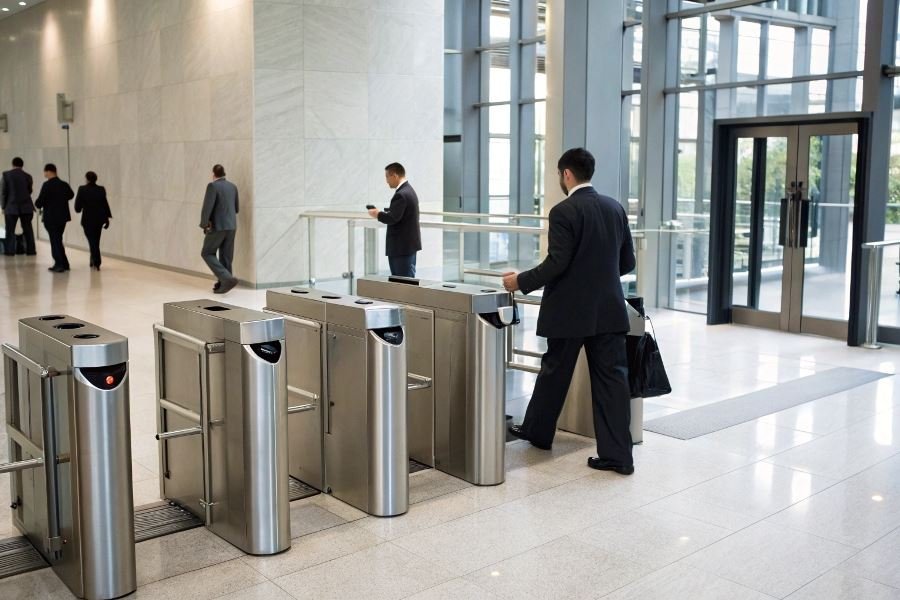
For high-volume venues like stadiums or transit stations, implementing multiple lanes with dedicated entry/exit paths becomes essential. The Automatic Systems SlimLane series demonstrates how intelligent lane configuration can increase throughput by 35% compared to standard installations.
Smart turnstiles now incorporate predictive algorithms that adjust operation based on historical traffic patterns, reducing congestion before it occurs.
Authentication: Balancing Security with Convenience
| Authentication Method | Security Level | Processing Speed | User Experience |
|---|---|---|---|
| Barcode/QR | Low-Medium | Very Fast | Excellent |
| RFID/NFC | Medium-High | Fast | Very Good |
| Biometric | Very High | Medium | Good |
| Multi-factor | Highest | Slow | Fair |
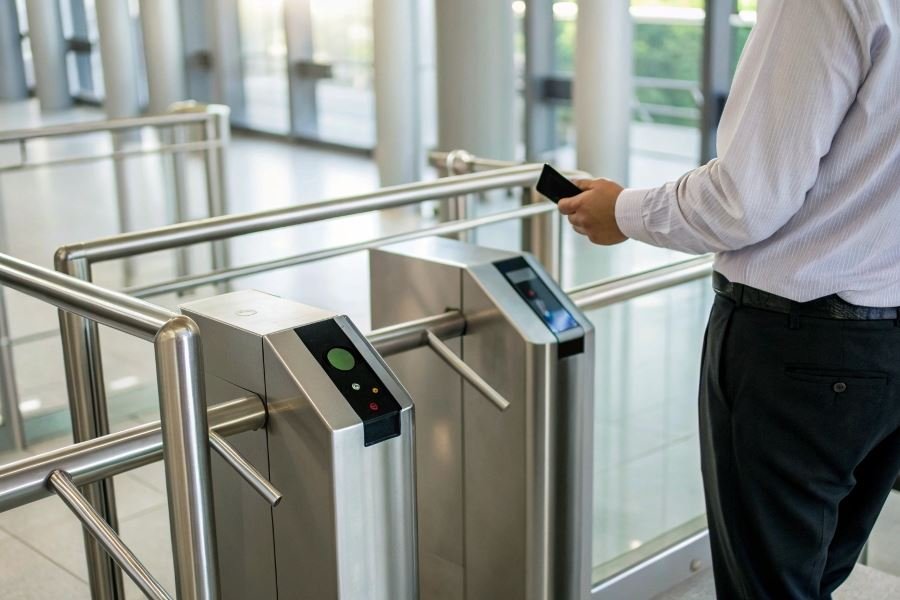
The security requirements of your facility should dictate authentication methods. Government facilities typically require multi-factor authentication combining physical credentials with biometrics, while retail environments might prioritize speed with simple barcode scanning.
HID Global offers integration-ready readers that support multiple credential types, allowing facilities to upgrade security protocols without replacing entire turnstile systems—a significant cost consideration for large installations.
Durability: The Hidden Cost Calculator
Turnstile durability directly impacts total ownership costs. Industrial-grade systems from Boon Edam are rated for 10+ million cycles before requiring major maintenance, translating to approximately 8-10 years of operation in high-traffic environments.
Key durability factors include:
- Motor and mechanical component quality
- Environmental resistance (indoor vs. outdoor ratings)
- Material construction (304 vs. 316 stainless steel for corrosion resistance)
- IP rating for water/dust protection
Maintenance requirements vary dramatically between models. Optical turnstiles typically require quarterly sensor cleaning and annual software updates, while mechanical tripod turnstiles need monthly lubrication and bi-annual mechanical inspections.
The expected lifespan of a quality turnstile system ranges from 7-15 years, though electronic components may require updates every 3-5 years to maintain compatibility with evolving security standards.
For outdoor installations, weather resistance becomes paramount. Magnetic Autocontrol offers turnstiles with operating temperature ranges from -40°F to 122°F with appropriate heating and cooling systems, essential for installations in extreme climates.
When calculating total cost of ownership, factor in not just purchase price but also installation complexity, energy consumption, and spare parts availability. The most cost-effective systems often prove to be mid-tier products with robust manufacturer support rather than either budget or premium options.
Making Turnstiles Work For Your Space
Seamless Security Integration
When implementing turnstiles in public spaces, compatibility with existing security infrastructure isn’t just convenient—it’s critical. Modern turnstiles need to function as part of a cohesive ecosystem rather than standalone barriers. The most effective installations connect directly with access control systems, visitor management platforms, and emergency protocols.
Integration capabilities have evolved dramatically since the widespread adoption of IP-based security in the early 2010s. Today’s premium turnstiles offer native compatibility with major platforms like Lenel OnGuard, Software House C•CURE, and Genetec Security Center.
Consider these integration checkpoints:
- API availability for custom connections
- SDK access for specialized development
- Credential technology compatibility (RFID, biometric, mobile)
- Real-time monitoring capabilities
- Alarm system coordination
The difference between partial and complete integration can mean the difference between a security solution that merely functions and one that excels.
Space Planning and Installation Requirements
Turnstiles demand thoughtful spatial consideration. The physical footprint varies dramatically between models—from compact tripod turnstiles requiring just 2.5 square feet to full-height security gates needing upwards of 15 square feet per lane.
| Turnstile Type | Minimum Space Required | Ideal Installation Environment |
|---|---|---|
| Tripod | 2.5-3 sq ft | High-volume, moderate security |
| Optical/Barrier-Free | 4-5 sq ft | Premium spaces, ADA compliance |
| Waist-High | 6-8 sq ft | Medium security applications |
| Full-Height | 12-15 sq ft | Maximum security zones |
Installation requirements extend beyond mere square footage. Infrastructure prerequisites include:
- Adequate power supply (typically 110-240V AC)
- Network connectivity for integrated systems
- Floor strength to support anchoring (particularly for optical barriers)
- Ceiling height clearance (especially for full-height models)
- Environmental considerations (indoor vs. weatherproof outdoor models)
The most successful installations begin with a comprehensive site survey conducted by specialists who understand both security needs and architectural limitations.
Financial Intelligence in Turnstile Selection
The true cost of turnstile implementation stretches far beyond the initial purchase price. A thorough Total Cost of Ownership (TCO) analysis reveals that acquisition costs typically represent just 40-60% of lifetime expenses.
Critical financial factors include:
- Initial investment: Hardware (2, 000−15,000 per lane), installation (800−3,000 per lane), and integration services
- Operational expenses: Power consumption (50-300W per unit), maintenance contracts, software licensing
- Lifecycle costs: Typical lifespan (7-15 years), parts replacement, firmware updates
- Indirect savings: Reduced security personnel requirements, insurance premium reductions, liability mitigation
Return on Investment calculations should factor both tangible and intangible benefits. Organizations implementing comprehensive turnstile solutions typically report:
- 30-40% reduction in unauthorized access incidents
- 15-25% decrease in security staffing requirements
- Measurable improvement in emergency evacuation compliance
- Enhanced visitor experience through streamlined entry processes
The most cost-effective solution isn’t necessarily the cheapest upfront—it’s the one that delivers the greatest value throughout its operational life.
When properly selected and implemented, turnstiles transform from mere access control points into strategic assets that enhance security, improve operational efficiency, and contribute to organizational success.
Discover the 7 essential criteria for selecting optimal turnstiles for public spaces. Learn about throughput capacity, security levels, durability, and integration requirements to maximize your investment in access control systems.
Discover the 7 essential criteria for selecting optimal turnstiles for public spaces. Learn about throughput capacity, security levels, durability, and integration requirements to maximize your investment in access control systems.