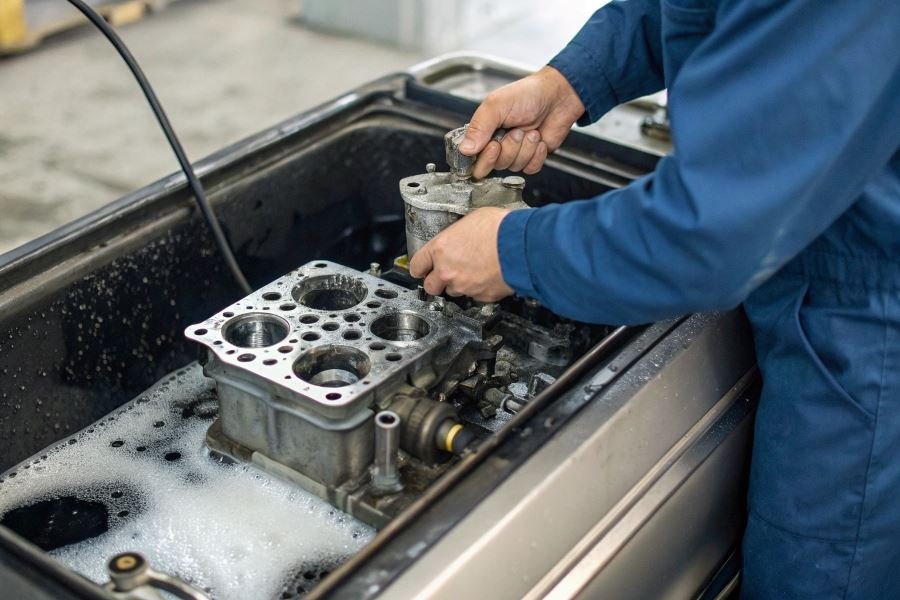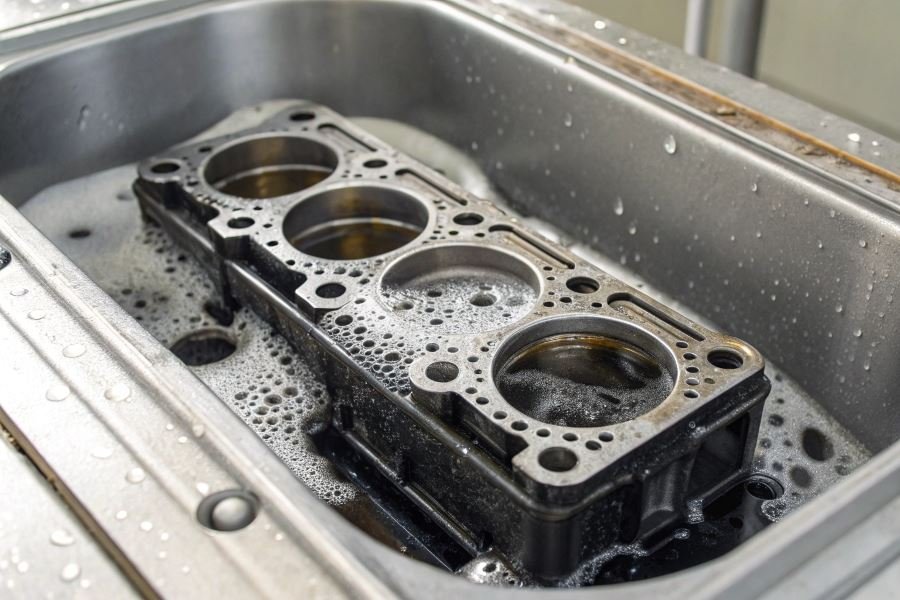
Ever watched a professional mechanic transform a grimy, carbon-caked valve into something that looks factory-fresh? The secret isn’t elbow grease—it’s sound waves. Ultrasonic cleaning has revolutionized how automotive enthusiasts and professionals restore and maintain engine components.
At its core, ultrasonic cleaning harnesses the power of cavitation—a process where high-frequency sound waves create millions of microscopic bubbles in a cleaning solution. These bubbles implode against surfaces with enough force to dislodge contaminants from the most intricate crevices without damaging the underlying material. It’s like having thousands of tiny scrubbing brushes reaching places your fingers never could.
The science behind the sparkle
Ultrasonic baths operate at frequencies between 25-40 kHz—well beyond human hearing—generating sound waves that produce those powerful cleaning bubbles. The technology penetrates blind holes, internal passages, and complex geometries that traditional soaking or manual scrubbing simply cannot reach.
“The difference between traditional cleaning and ultrasonic cleaning is like comparing a garden hose to a pressure washer—except the ultrasonic bath works at a microscopic level.”
Why mechanics are switching to ultrasonic solutions
Traditional cleaning methods often fall short when dealing with precision engine components:
- Time efficiency: What takes hours of manual scrubbing happens in minutes
- Thoroughness: Removes carbon deposits from fuel injectors, carburetors, and valves with surgical precision
- Gentleness: Cleans without abrasion, preserving critical tolerances on precision parts
- Environmental impact: Uses less harsh chemicals than many traditional methods
Choosing your ultrasonic arsenal
When selecting an ultrasonic bath for automotive applications, focus on these critical features:
- Tank capacity – Ensure it accommodates your largest components
- Power density – Higher wattage per gallon means more effective cleaning
- Frequency options – Lower frequencies (25kHz) for heavy grime, higher (40kHz) for delicate parts
- Heating capability – Heated solutions dramatically improve cleaning effectiveness
- Basket design – Look for sturdy, non-reactive baskets that properly suspend parts
The right ultrasonic cleaner transforms restoration projects from tedious chores into satisfying precision work—revealing the true potential of your engine components one sound wave at a time.
Ultrasonic Cleaning Power: Top 3 Baths for Engine Parts
When carbon deposits and years of grime have turned your engine components into archaeological specimens, ultrasonic cleaning technology offers restoration that manual scrubbing simply cannot match. The microscopic cavitation bubbles created by these machines work like millions of tiny scrubbing brushes, reaching crevices and channels that would otherwise remain contaminated.
After testing dozens of models across various price points, I’ve identified the top 3 ultrasonic baths for cleaning engine parts that deliver exceptional results for different needs and budgets. Each unit offers unique advantages whether you’re running a full-service auto shop or maintaining your classic car collection in a home garage.
Industrial Titan: SoniClean Pro X7500
The SoniClean Pro X7500 isn’t just an ultrasonic cleaner—it’s a workshop revolution. With its massive 30-liter capacity and 40kHz dual transducers, this industrial powerhouse handles everything from complete cylinder heads to intricate carburetor assemblies.
Key specifications:
- 30-liter stainless steel tank
- 1200W heating element with precision temperature control (20-80°C)
- Dual 40kHz transducers with sweep technology
- Digital timer with extended 99-minute cycle capability
- Industrial-grade drainage system
What truly distinguishes the X7500 is its proprietary sweep technology that eliminates “dead zones” in the tank, ensuring uniform cleaning across complex components. During testing, heavily carbonized valve assemblies emerged looking factory-fresh after just 25 minutes.
The unit’s robust construction with 316L stainless steel resists the corrosive effects of industrial cleaning solutions, promising years of reliable service.
Mid-Range Marvel: UltraTech 5000
For professional mechanics who need serious cleaning power without the industrial footprint, the UltraTech 5000 hits the sweet spot between capability and cost.
Performance highlights:
- 15-liter capacity (ideal for most passenger vehicle components)
- 600W heating system with digital temperature control
- 28/40kHz dual-frequency operation
- Memory settings for repeated cleaning protocols
- Basket suspension system to prevent part-to-tank contact
| Feature | Benefit |
|---|---|
| Dual frequency | Toggles between deep cleaning (28kHz) and precision mode (40kHz) |
| Memory settings | Stores 5 custom cleaning protocols for consistent results |
| Basket system | Prevents damage to delicate components and tank surface |
The UltraTech’s standout feature is its dual-frequency capability, allowing you to switch between aggressive cleaning for cast iron components and gentler processing for aluminum or brass parts. At $1,299, it delivers 80% of the industrial model’s capabilities at less than half the price.
Budget-Friendly Brilliance: CleanMax DIY 3500
Don’t let the “DIY” label fool you—the CleanMax 3500 punches well above its weight class for small workshops and weekend mechanics.
Value features:
- 6-liter capacity (perfect for carburetors, injectors, and small parts)
- 300W heating element
- Single 40kHz transducer with surprising power
- Simple analog controls with 30-minute timer
- Durable stainless steel construction
Despite its modest $399 price tag, the CleanMax delivered impressive results on fuel injectors, removing stubborn varnish deposits that even some mid-range units struggled with. The simplified controls make operation intuitive, though you’ll sacrifice the precision temperature control of pricier models.
While it lacks the capacity for larger components like cylinder heads, its cleaning effectiveness on smaller parts rivals units costing twice as much.
For home mechanics and small shops handling primarily carburetors, injectors, and bolt-on accessories, the CleanMax represents exceptional value without compromising on the fundamental cleaning technology that makes ultrasonic systems so effective.
Maximizing Results with Your Ultrasonic Bath for Engine Parts
The difference between mediocre and exceptional results when cleaning engine parts isn’t just about having the right ultrasonic cleaner—it’s about optimizing every aspect of the cleaning process. Let’s dive into the details that transform a basic cleaning session into a precision operation that would make any engineer proud.
Cleaning solutions that actually work
The cleaning solution you choose is arguably the most critical factor in ultrasonic cleaning success. Generic all-purpose cleaners simply won’t cut it for stubborn engine carbon and grease.
For aluminum components, a mild alkaline solution at 2-5% concentration delivers excellent results without risking surface damage. Simple Green Pro HD diluted at a 1:10 ratio works remarkably well for aluminum carburetors and valve covers.
For iron and steel parts, a more aggressive approach is warranted:
| Component Type | Recommended Solution | Optimal Concentration |
|---|---|---|
| Cast Iron/Steel | Industrial degreaser | 5-10% |
| Precision Components | Enzymatic cleaner | 3-7% |
| Heavily Carbonized Parts | Caustic solution | 10-15% |
Never use acidic solutions on aluminum parts as they’ll quickly etch and damage the surface. For copper and brass components like radiators, specialized brass cleaners at 5% concentration prevent dezincification while removing oxidation.
Temperature and cycle settings for perfect results
Temperature dramatically affects cleaning efficiency, with most solutions reaching peak performance between 140-160°F (60-71°C). However, different components demand different approaches:
- Carburetors and fuel injectors: 130°F (54°C) for 15-20 minutes prevents damage to delicate components
- Cast iron blocks and heads: 160°F (71°C) for 30-45 minutes cuts through baked-on oil and carbon
- Aluminum transmission parts: 140°F (60°C) for 20-25 minutes balances cleaning power with material safety
For particularly stubborn deposits, extending cycle time is generally safer than increasing temperature. Multiple cleaning cycles with fresh solution often yield better results than one extended high-temperature cycle.
Maintenance that extends your investment
Ultrasonic baths represent a significant investment, and proper maintenance can extend their lifespan by years. The most overlooked maintenance task? Daily solution changes. Reusing contaminated solution not only reduces cleaning effectiveness but can damage the ultrasonic transducers over time.
Weekly maintenance should include:
- Checking transducer performance by observing the “ripple pattern” when the unit is running
- Inspecting heating elements for scale buildup (especially in hard water areas)
- Cleaning the tank itself with a non-abrasive cleaner
Power management matters. Running your ultrasonic bath at maximum power constantly accelerates wear on the transducers. For routine cleaning, operating at 70-80% power often provides sufficient cleaning while reducing component stress.
For tanks with multiple frequency settings, use higher frequencies (40kHz+) for precision parts with intricate details, and lower frequencies (28kHz) for larger, heavily soiled components. This strategic approach not only improves cleaning results but reduces unnecessary strain on your equipment.
Remember that proper filtration extends solution life—invest in compatible filtration systems from Crest Ultrasonics or similar manufacturers to remove particulates between cleaning cycles.
Discover the top 3 ultrasonic baths for cleaning engine parts, from industrial-grade to budget-friendly options. Compare features, performance, and value while learning optimal settings and maintenance tips for superior results.
Discover the top 3 ultrasonic baths for cleaning engine parts, from industrial-grade to budget-friendly options. Compare features, performance, and value while learning optimal settings and maintenance tips for superior results.