Did you know that sound waves—something we can’t even see—are now responsible for sterilizing the surgical instruments used in over 80% of modern medical procedures? The technology that seemed like science fiction just decades ago has become the gold standard for cleanliness across multiple industries.
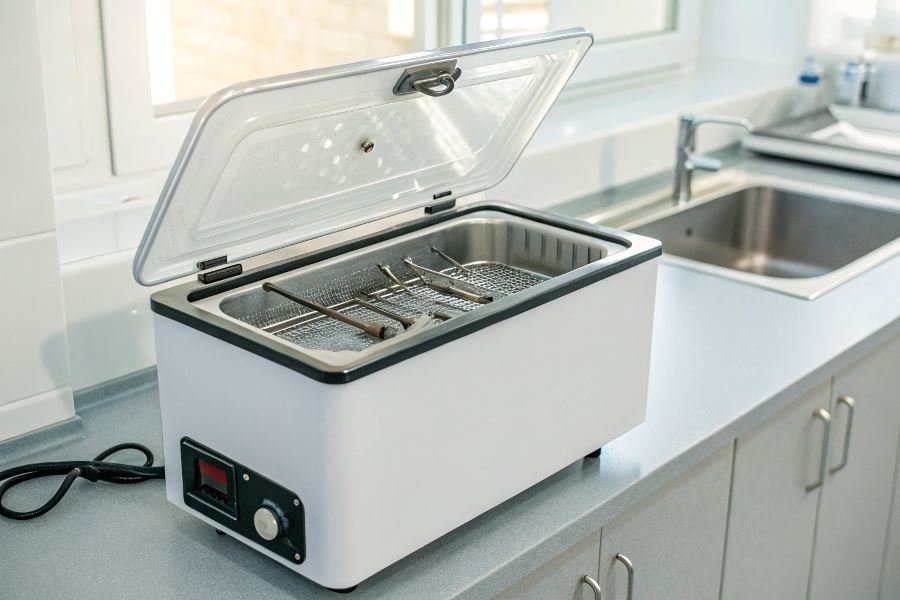
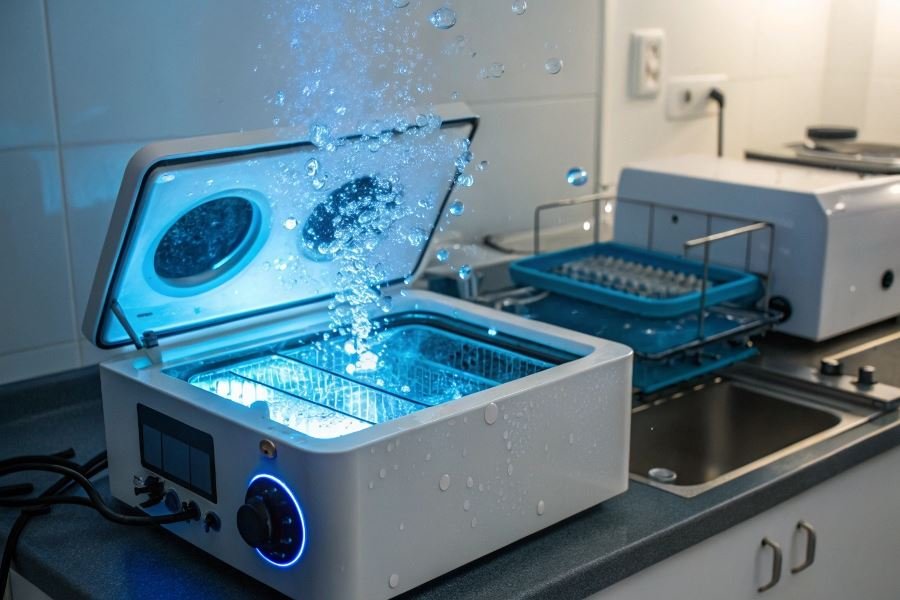
Professional ultrasonic sterilizers harness the power of high-frequency sound waves to create microscopic bubbles in a cleaning solution. When these bubbles collapse, they release energy that effectively dislodges contaminants from even the most intricate surfaces and crevices. This process, known as cavitation, works at a molecular level to achieve sterilization that traditional methods simply cannot match.
Not all ultrasonic cleaners are created equal. Professional-grade systems differ dramatically from their consumer counterparts in several critical ways. Professional units typically operate at frequencies between 25-40 kHz (compared to consumer models at 20-25 kHz), offer precise temperature control systems, and feature industrial-grade transducers that deliver consistent power distribution. While a consumer unit might cost $100-300, professional systems start at $1,500 and can exceed $15,000 for advanced models with specialized features.
Where precision meets necessity
The applications for professional ultrasonic sterilization span numerous high-stakes environments:
- Medical facilities rely on these systems to sterilize surgical instruments with complex geometries that harbor dangerous pathogens
- Dental practices use them to thoroughly clean everything from handpieces to impression trays
- Industrial manufacturing depends on ultrasonic cleaning for precision components where even microscopic contaminants can cause catastrophic failures
What truly sets professional systems apart is their validation capabilities—the ability to verify and document that proper sterilization parameters were achieved, a critical requirement in regulated industries where lives literally depend on sterility assurance.
Technical Specifications That Make or Break Ultrasonic Sterilizers
When evaluating professional ultrasonic sterilizers, the difference between adequate and exceptional performance often comes down to technical specifications that many buyers overlook. These critical parameters determine not just cleaning effectiveness but also long-term reliability and return on investment.
Selecting the right ultrasonic sterilizer requires careful attention to several key technical aspects. Professional ultrasonic sterilizers: what to pay attention to includes frequency ranges, power output, tank construction, and temperature control systems—specifications that separate industrial-grade equipment from basic consumer models. Let’s dive into the technical details that truly matter when making this investment.
Frequency Range and Power Output Dynamics
The ultrasonic frequency range is perhaps the most crucial specification to evaluate. Most professional units operate between 25-40 kHz, with specialized applications requiring up to 170 kHz.
Lower frequencies (25-28 kHz) deliver more aggressive cleaning power, ideal for removing stubborn contaminants from robust instruments. Higher frequencies (40+ kHz) provide gentler cleaning action suitable for delicate components with intricate details.
Many leading manufacturers now offer dual or multi-frequency systems that provide versatility across different cleaning requirements:
| Frequency Range | Ideal Applications | Cavitation Intensity |
|---|---|---|
| 25-28 kHz | Heavy contamination, robust items | Maximum |
| 33-37 kHz | General purpose cleaning | Moderate |
| 40-80 kHz | Precision instruments, delicate parts | Gentle |
| 80-170 kHz | Micro-components, electronics | Minimal |
Power density (watts per gallon) is equally important—professional units typically deliver 50-100 watts per gallon, ensuring sufficient cavitation throughout the cleaning solution.
Tank Construction and Material Integrity
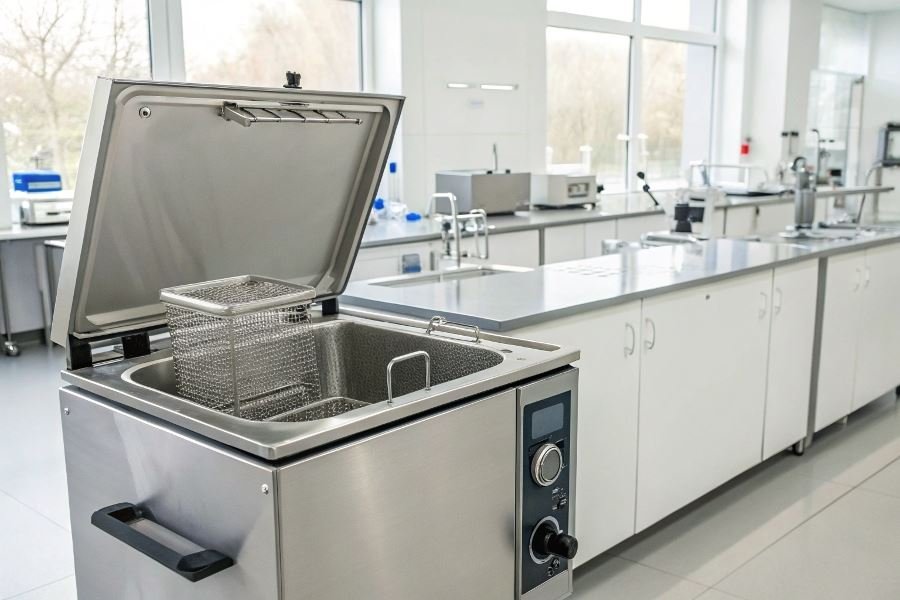
The tank’s construction directly impacts cleaning performance and equipment longevity. Premium sterilizers feature seamless welding techniques that eliminate potential bacterial harboring points, a critical factor in medical and laboratory environments.
Tank materials fall into three primary categories:
- 316L stainless steel – The gold standard, offering superior corrosion resistance against aggressive chemicals
- 304 stainless steel – Suitable for most applications but less resistant to certain solutions
- Aluminum or coated steel – Found in budget models, generally unsuitable for professional applications
Tank capacity should align with your typical batch size, with most professional units ranging from 3 to 30 liters. Oversized tanks waste energy and cleaning solution, while undersized units limit productivity.
Temperature Control Systems and Heating Elements
Temperature management dramatically influences cleaning efficacy. Professional-grade sterilizers incorporate precision temperature control systems capable of maintaining optimal temperatures within ±1°C.
The heating element configuration deserves particular scrutiny:
- Sandwich-type elements provide even heat distribution and prevent “hot spots” that can damage delicate instruments
- Integrated temperature sensors enable automated cycle management
- Programmable heating profiles allow customization for specific cleaning protocols
Advanced models from manufacturers like Crest Ultrasonics and Elma Schmidbauer feature digital temperature controllers with programmable presets, reducing operator error and ensuring consistent results.
The most sophisticated systems now incorporate adaptive power modulation that automatically adjusts ultrasonic intensity based on load size and contamination level, maximizing cleaning effectiveness while minimizing energy consumption and wear on components.
Top 3 Operational Features That Make or Break Ultrasonic Sterilizers
When investing in professional ultrasonic sterilization equipment, the difference between adequate and exceptional performance often lies in the operational details. These sophisticated machines leverage high-frequency sound waves to create microscopic bubbles that implode against surfaces, removing contaminants with remarkable precision. But not all ultrasonic sterilizers deliver equal results.
Timer precision transforms cleaning outcomes
The most sophisticated ultrasonic sterilizers feature multi-stage timing systems that allow for precise control over the sterilization process. The Coltene BioSonic UC300 offers programmable cycles ranging from 5 to 60 minutes with incremental adjustments as small as 30 seconds—critical when sterilizing delicate instruments that require exact exposure times.
Digital memory settings have revolutionized workflow efficiency. Premium models store up to 10 custom cycles, allowing operators to create specialized protocols for different instrument categories. This eliminates guesswork and ensures consistent results across multiple operators.
The difference between a 3-minute and 5-minute cycle might seem negligible, but it can mean the difference between effective sterilization and potential cross-contamination risks.
Temperature-controlled timing functions represent the gold standard in ultrasonic technology. Systems like the Tuttnauer Clean & Simple automatically adjust cycle duration based on solution temperature, compensating for thermal variables that affect cavitation efficiency.
Solution compatibility dictates long-term performance
Professional-grade ultrasonic sterilizers aren’t one-solution-fits-all devices. The Midmark QuickClean accommodates both enzymatic and quaternary ammonium solutions without corrosion risks—versatility that dramatically extends equipment lifespan.
Solution filtration systems separate contaminants during operation, preventing redeposition of debris. Advanced models incorporate multi-stage filtration that captures particles as small as 2 microns, protecting both instruments and internal components.
Maintenance requirements vary dramatically between models:
| Maintenance Feature | Basic Models | Professional Models |
|---|---|---|
| Solution Change Frequency | Every 1-2 days | Weekly with filtration |
| Transducer Lifespan | 2-3 years | 5-7 years with protection |
| Tank Cleaning | Manual | Self-cleaning cycles |
| Descaling Requirements | Monthly | Quarterly with water softening |
The most advanced units feature self-diagnostic systems that monitor solution efficacy and alert operators when performance degrades—before cleaning quality suffers.
Certifications and support reveal true value
UL and CE certifications represent minimum safety standards, but leading manufacturers exceed these baselines. The SciCan STATIM carries additional ISO 13485 certification, verifying that manufacturing processes meet medical device quality standards.
Warranty coverage reveals manufacturer confidence. While basic units typically offer 1-year limited coverage, premium sterilizers from established brands provide comprehensive 3-5 year warranties that include transducer replacement—often the most expensive repair.
After-sales support creates substantial value differences:
- Technical support availability (24/7 vs. business hours only)
- Replacement parts delivery timeframes (same-day vs. weeks)
- Preventative maintenance programs with scheduled service visits
- Software updates for programmable models
Remote diagnostics capabilities represent the cutting edge in ultrasonic sterilizer support. Advanced systems connect to manufacturer support centers for real-time troubleshooting, dramatically reducing downtime when issues arise.
When evaluating ultrasonic sterilizers, these operational features ultimately determine whether your investment delivers consistent, reliable performance or becomes a source of ongoing frustration and additional expense.
Discover the essential features of professional ultrasonic sterilizers for medical, dental, and industrial applications. Learn about frequency ranges, tank specifications, temperature controls, and key operational considerations for optimal sterilization performance.
Discover the essential features of professional ultrasonic sterilizers for medical, dental, and industrial applications. Learn about frequency ranges, tank specifications, temperature controls, and key operational considerations for optimal sterilization performance.