What if I told you that sound—something you can’t see or touch—could eliminate dangerous pathogens more effectively than methods we’ve relied on for centuries? The science behind ultrasonic sterilization isn’t just impressive; it’s reshaping our approach to safety across multiple industries.
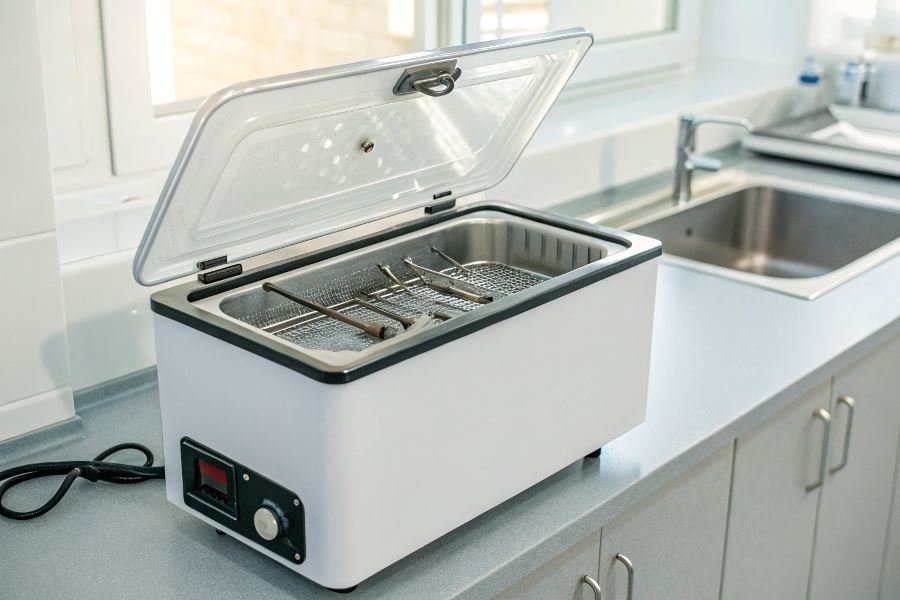
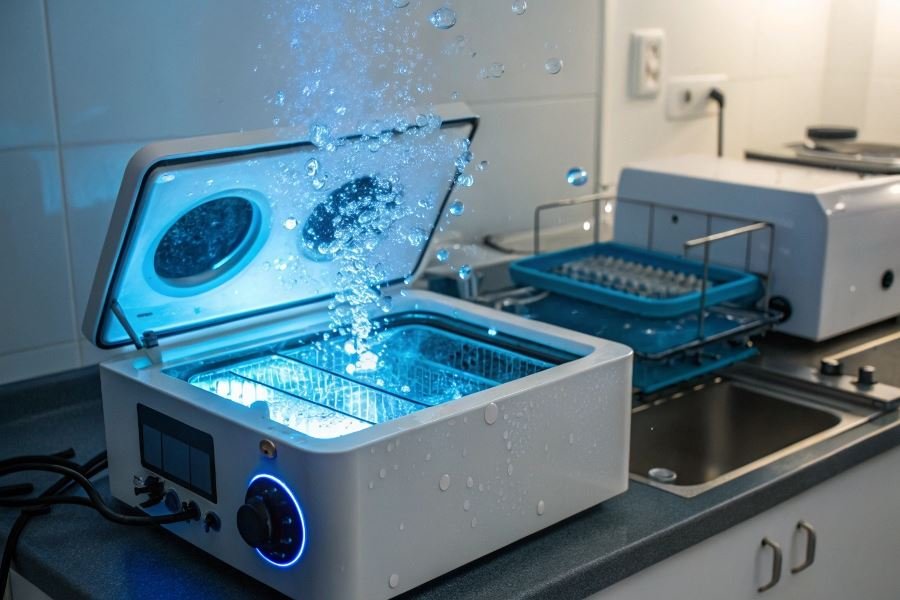
Ultrasonic sterilization harnesses high-frequency sound waves (typically above 20 kHz) to create microscopic bubbles in liquid. When these bubbles collapse, they generate intense localized heat and pressure—a phenomenon called cavitation—that physically ruptures microbial cell walls. Unlike traditional methods, this approach requires no harsh chemicals and works at lower temperatures.
For generations, we’ve depended on three primary sterilization workhorses: heat (autoclaves reaching 250°F), chemicals (like ethylene oxide or hydrogen peroxide), and radiation (gamma rays or electron beams). Each comes with significant tradeoffs—heat damages sensitive materials, chemicals leave residues, and radiation requires specialized facilities and safety protocols.
The stakes couldn’t be higher. In healthcare, inadequate sterilization contributes to approximately 99,000 deaths annually from hospital-acquired infections. Food processing facilities face similar challenges, with foodborne illnesses affecting millions each year. Industrial applications demand sterilization that won’t compromise material integrity or production efficiency.
“The difference between traditional and ultrasonic sterilization is like comparing a sledgehammer to a precision instrument—both get the job done, but one offers significantly more control with less collateral damage.”
As we face increasingly resistant microorganisms and more complex sterilization needs, the question isn’t just academic—it’s essential for public health, food safety, and industrial innovation.
Ultrasonic Sterilization vs Traditional Methods: The Effectiveness Showdown
Microbial Elimination Performance
When comparing sterilization methods, effectiveness against microorganisms is the ultimate benchmark. Ultrasonic sterilization leverages high-frequency sound waves (typically 20-40 kHz) to create cavitation bubbles that implode, generating localized areas of extreme pressure and temperature. This mechanism physically disrupts bacterial cell walls, viral envelopes, and fungal structures.
Traditional methods like autoclaving, chemical disinfection, and UV radiation have long dominated the sterilization landscape, but ultrasonic sterilization vs traditional methods: which is more effective depends largely on the target microorganisms. Research published in the Journal of Hospital Infection shows ultrasonic methods achieve a 99.9% reduction in common bacteria like E. coli and S. aureus within 30 seconds, comparable to chemical disinfectants that require 5-10 minutes of contact time.
Where ultrasonic technology truly shines is against biofilms—those stubborn microbial communities that traditional methods struggle to penetrate. Ultrasonic waves physically disrupt biofilm matrices, allowing for sterilization of surfaces that chemical agents cannot effectively reach.
Speed and Efficiency Factors
| Method | Average Processing Time | Setup Requirements | Throughput Capacity |
|---|---|---|---|
| Ultrasonic | 3-10 minutes | Minimal | High (continuous processing possible) |
| Autoclave | 30-60 minutes | Moderate | Limited by chamber size |
| Chemical | 10-30 minutes | Low | Variable (requires rinse cycles) |
| UV | 15-30 minutes | Moderate | Limited by exposure area |
The time efficiency advantage of ultrasonic systems becomes particularly evident in high-volume settings. While autoclaves require heating, pressurization, sterilization, and cooling cycles, ultrasonic systems operate at room temperature with virtually instantaneous activation and deactivation.
Healthcare facilities implementing ultrasonic systems report processing time reductions of up to 75% compared to traditional autoclave methods.
Material Compatibility Considerations
Material compatibility represents perhaps the most significant divergence between these approaches. Traditional heat-based methods like autoclaving can damage heat-sensitive materials including many plastics, adhesives, and electronic components. Chemical sterilants often cause material degradation through oxidation or chemical reactions.
Ultrasonic sterilization offers superior compatibility with delicate instruments including:
- Precision surgical tools with fine cutting edges
- Optical components and lenses
- Electronic medical devices
- Polymer-based materials
However, ultrasonic methods aren’t universally superior—porous materials and items with sealed air pockets may resist ultrasonic penetration, requiring traditional approaches for complete sterilization.
Environmental and Energy Profiles
The environmental impact differential between these technologies is substantial. Traditional autoclave systems consume between 2-5 kWh per cycle, while comparable ultrasonic systems typically operate at 0.3-0.7 kWh—an energy reduction of approximately 80%.
Chemical sterilization methods produce hazardous waste requiring specialized disposal protocols. Glutaraldehyde and formaldehyde-based disinfectants pose significant environmental and occupational health concerns.
Ultrasonic systems primarily use water as the transmission medium, occasionally with mild detergents that pose minimal environmental impact. The reduced water consumption—typically 60-70% less than traditional methods—further enhances their sustainability profile.
The combination of reduced energy consumption, minimal chemical usage, and lower water requirements makes ultrasonic sterilization the clear environmental frontrunner, with some facilities reporting utility cost reductions exceeding $10,000 annually after switching from traditional methods.
Making the Right Choice: Ultrasonic vs Traditional Sterilization
When selecting a sterilization method for your operation, the decision extends far beyond simple preference—it’s about matching the right technology to your specific needs, budget constraints, and future growth plans. After examining both ultrasonic and traditional sterilization methods in detail, let’s navigate the decision-making process with precision and foresight.
Tailored Solutions for Specific Applications
Different industries demand different sterilization approaches:
Healthcare settings benefit most from ultrasonic sterilization for intricate surgical instruments with complex geometries. The cavitation effect reaches crevices that traditional autoclave methods might miss, particularly with minimally invasive surgical tools.
Food processing operations often require a hybrid approach. While ultrasonic cleaning excels for production equipment with hard-to-reach areas, high-temperature methods remain essential for meeting regulatory standards in many jurisdictions.
Pharmaceutical manufacturing presents unique challenges where ultrasonic methods shine for cleaning validation processes, but traditional methods like gamma irradiation remain indispensable for terminal sterilization of finished products.
The most effective sterilization strategy isn’t choosing between technologies—it’s deploying them strategically where each performs best.
For dental practices, ultrasonic cleaning has become nearly universal for initial instrument processing, with traditional autoclaving serving as the final sterilization step—demonstrating how these technologies often work best in tandem rather than in opposition.
Economic Implications Across Industries
The cost-benefit analysis varies dramatically by sector:
| Industry | Initial Investment (Ultrasonic) | Operating Costs | ROI Timeline |
|---|---|---|---|
| Healthcare | 8, 000−25,000 | Lower water/chemical usage | 12-18 months |
| Food Processing | 15, 000−100,000+ | Higher energy costs | 18-36 months |
| Laboratory | 3, 000−12,000 | Reduced labor costs | 6-12 months |
Small-scale operations often find traditional methods more economically viable initially, but ultrasonic systems typically deliver superior long-term value through reduced chemical consumption, water usage, and labor costs.
Enterprise-level implementations reveal that ultrasonic systems from manufacturers like Crest Ultrasonics can reduce overall sterilization costs by 22-35% over five years despite higher acquisition costs.
Tomorrow’s Sterilization Landscape
The sterilization technology roadmap shows several promising developments:
AI-enhanced ultrasonic systems are emerging with adaptive frequency modulation that optimizes cavitation patterns based on load sensing—increasing efficiency while reducing energy consumption by up to 40%.
Hybrid technologies combining ultrasonic pre-treatment with plasma sterilization show remarkable promise, particularly for heat-sensitive materials and complex medical devices.
Sustainability metrics increasingly favor ultrasonic methods as water conservation and chemical reduction become operational priorities. New systems from Blue Wave Ultrasonics have reduced water consumption by 65% compared to traditional cleaning methods.
The integration of IoT capabilities into sterilization equipment enables predictive maintenance and process validation documentation—critical advantages in highly regulated industries where compliance verification is mandatory.
The future clearly favors intelligent, resource-efficient sterilization solutions that combine technologies rather than relying on single-method approaches. Organizations that strategically implement complementary sterilization technologies position themselves for optimal outcomes in efficacy, efficiency, and economic performance.
Discover which sterilization method delivers superior results in our comprehensive comparison of ultrasonic vs traditional techniques. Learn key effectiveness factors across medical, food, and industrial applications to make informed decisions.
Discover which sterilization method delivers superior results in our comprehensive comparison of ultrasonic vs traditional techniques. Learn key effectiveness factors across medical, food, and industrial applications to make informed decisions.