When a $50,000 precision aircraft component fails because of microscopic contaminants, the cost isn’t just the part—it’s safety, reputation, and potentially lives. This reality faces thousands of manufacturers and maintenance facilities daily.
Behind every gleaming engine, flawless circuit board, and reliable medical device lies an unsung hero: the cleaning process. The quest for immaculate parts has evolved into a sophisticated science where two titans dominate the field: ultrasonic and chemical cleaning technologies.
The industrial cleaning challenge isn’t just about appearance—it’s about performance. When oil residues, metal shavings, or microscopic debris remain on components, they become ticking time bombs in sensitive equipment. A study by the Manufacturing Technology Center found that improper cleaning contributes to approximately 37% of premature part failures in precision industries.
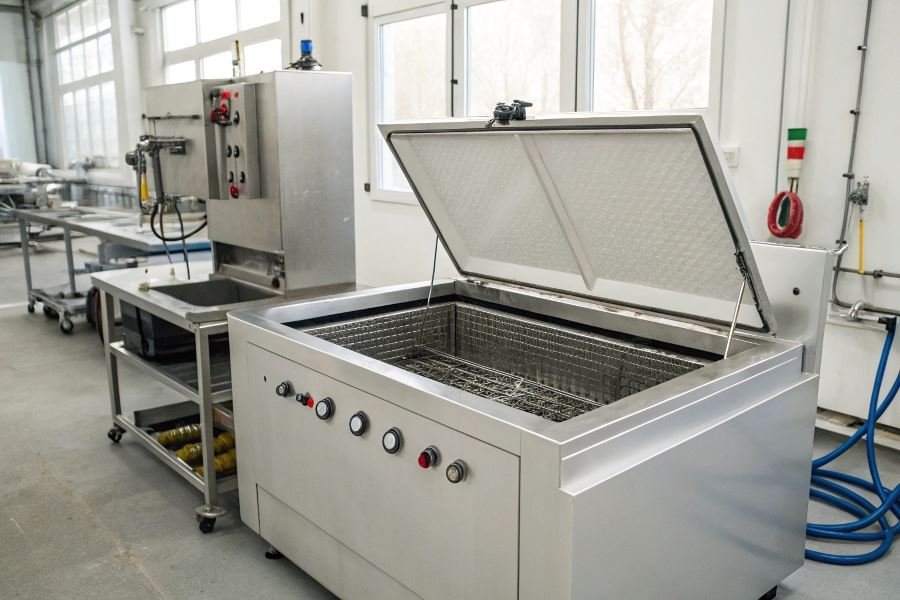
Ultrasonic cleaning harnesses the power of sound waves to create microscopic bubbles that implode against surfaces, literally blasting contaminants away. This process, called cavitation, reaches crevices and geometries that mechanical scrubbing simply cannot touch.
Chemical cleaning, meanwhile, relies on specialized solvents and solutions that dissolve, emulsify, or suspend contaminants through carefully calibrated chemical reactions. These formulations can be tailored to specific metals, plastics, or contaminant types.
“The difference between 99% and 99.999% clean might seem trivial on paper, but in aerospace, medical device manufacturing, or electronics, it’s the difference between success and catastrophic failure.” — American Society for Testing and Materials
The stakes couldn’t be higher. As manufacturing tolerances tighten and performance expectations soar, choosing the right cleaning technology has become a critical business decision that impacts everything from operational efficiency to product reliability.
The Battle of Clean: Ultrasonic vs Chemical Methods
How Each Method Attacks Contaminants
When precision parts need cleaning, two heavyweight champions enter the ring: ultrasonic and chemical cleaning systems. Each employs fundamentally different mechanisms to achieve the same goal. Ultrasonic cleaning harnesses the power of cavitation—microscopic bubbles that form and collapse in a liquid medium, creating shockwaves that blast contaminants from surfaces. These tiny implosions generate forces reaching up to 10,000 PSI at the microscopic level, dislodging particles from even the most complex geometries.
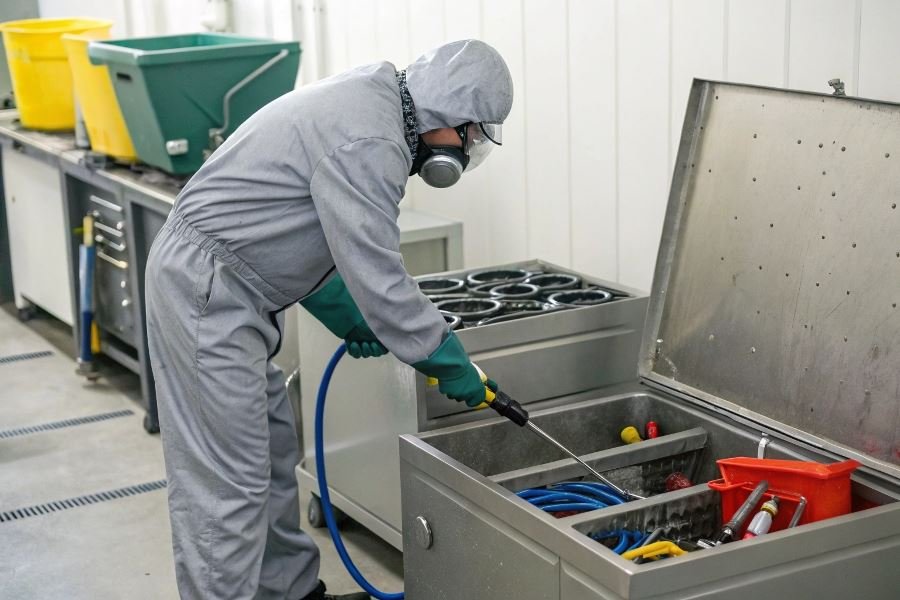
Chemical cleaning, by contrast, relies on solvent properties and chemical reactions to dissolve, emulsify, or suspend contaminants. The effectiveness of ultrasonic vs chemical parts cleaning depends largely on the specific application, with each method offering distinct advantages in different scenarios. Chemical baths work through molecular interaction, breaking bonds between contaminants and surfaces through processes like saponification for oils or chelation for mineral deposits.
Performance Metrics That Matter
Cleaning power varies significantly between these methods. Ultrasonic systems excel at removing particulates and contaminants from blind holes, internal passages, and intricate geometries where mechanical agitation can’t reach. A typical 40kHz ultrasonic cleaner can remove particles as small as 0.3 microns—smaller than most bacteria.
Chemical cleaning’s strength lies in its selectivity. Specialized formulations target specific contaminants with remarkable precision:
| Contaminant Type | Ultrasonic Effectiveness | Chemical Effectiveness |
|---|---|---|
| Particulates | Excellent | Moderate |
| Oils & Greases | Good with detergent | Excellent |
| Mineral Deposits | Moderate | Excellent |
| Biological Films | Good | Excellent |
| Adhesives | Moderate | Excellent |
Time efficiency typically favors ultrasonic methods, which can complete cleaning cycles in 3-10 minutes compared to chemical immersion processes that might require 30+ minutes. However, this advantage diminishes with heavily oxidized or chemically bonded contaminants where chemical pre-treatment becomes necessary.
Material Compatibility: The Critical Factor
Perhaps the most decisive consideration when choosing between these methods is material compatibility. Ultrasonic cleaning generates localized heat and mechanical stress that can damage delicate components. Materials with these characteristics require special consideration:
- Soft metals like lead and zinc may erode under intense cavitation
- Thin-plated surfaces risk delamination
- Elastomers and soft plastics can suffer surface damage
- Electronic components with sensitive elements may fail
Chemical cleaning presents its own compatibility challenges. Aggressive solvents can attack substrate materials, causing:
“The right cleaning method protects your investment. The wrong one becomes more expensive than the part itself.”
Alkaline cleaners (pH 10-14) excel at removing organic soils but can etch aluminum. Acidic solutions effectively remove rust and scale but attack many metals. Even neutral pH cleaners may contain components that affect certain polymers.
The optimal approach often combines both methods—using gentle ultrasonic cleaning with carefully selected chemical solutions. Modern Crest Ultrasonics systems offer programmable frequency modulation that adjusts cavitation intensity to protect sensitive materials while maintaining cleaning effectiveness.
For maximum effectiveness and material safety, the decision between ultrasonic and chemical cleaning shouldn’t be either/or—it should be which combination delivers the best results for your specific application.
Making the Right Choice: Ultrasonic vs Chemical Cleaning
When deciding between ultrasonic and chemical cleaning methods, the choice isn’t always black and white. Each approach offers distinct advantages depending on your specific needs, budget constraints, and the nature of the parts being cleaned. Let’s break down the decision-making process to help you invest wisely in the right cleaning solution.
The dollars and sense of cleaning technology
The financial equation of parts cleaning extends far beyond the initial purchase price. Ultrasonic cleaning systems typically require a higher upfront investment—quality industrial units start at $3,000 and can exceed $20,000 for advanced systems. Chemical cleaning setups generally cost less initially, with basic immersion systems available from $1,000.
However, the long-term operational costs tell a different story:
| Cost Factor | Ultrasonic Cleaning | Chemical Cleaning |
|---|---|---|
| Initial equipment | Higher (3, 000−20,000+) | Lower (1, 000−10,000) |
| Consumables | Lower (primarily water + mild detergents) | Higher (specialized solvents) |
| Energy consumption | Moderate | Low to moderate |
| Waste disposal | Minimal environmental impact | Potentially significant |
| Labor hours | Lower (automated process) | Higher (often requires monitoring) |
| Maintenance | Moderate (transducer replacement) | Variable (depends on chemical aggressiveness) |
The return on investment for ultrasonic systems often becomes apparent within 12-18 months for high-volume operations, particularly when factoring in reduced labor costs and improved cleaning consistency.
Matching methods to your cleaning challenges
The complexity of your parts and the nature of contaminants should heavily influence your decision:
For intricate components with hidden recesses:
- Ultrasonic cleaning excels with its ability to reach blind holes, internal passages, and complex geometries
- The cavitation effect penetrates where brushes and sprays simply cannot reach
For heavy, carbonized deposits:
- Chemical cleaning with appropriate solvents often provides superior results
- Longer soak times can break down stubborn contaminants without mechanical stress
For delicate or precision parts:
- Ultrasonic cleaning at higher frequencies (40kHz+) offers gentle yet thorough cleaning
- Chemical methods may be preferable for extremely fragile items sensitive to vibration
The material composition of your parts also matters significantly. Aluminum, for instance, may be damaged by highly alkaline chemical cleaners, while certain plastics might not withstand the temperatures used in ultrasonic cleaning.
The best of both worlds: hybrid cleaning solutions
Many forward-thinking operations are discovering that the ultrasonic vs. chemical debate has a third answer: use both.
Hybrid cleaning approaches typically follow one of these effective sequences:
-
Pre-soak in chemical solution → Ultrasonic cleaning: This combination pre-loosens stubborn contaminants before ultrasonic cavitation provides the final cleaning action.
-
Ultrasonic cleaning with specialized chemistry: Modern ultrasonic systems can utilize specially formulated cleaning solutions that enhance cavitation effects while chemically attacking specific contaminants.
-
Multi-stage cleaning lines: For manufacturing environments, a progressive cleaning line might incorporate chemical degreasing, followed by ultrasonic precision cleaning, and finishing with a chemical passivation step.
Branson Ultrasonics and other industry leaders have developed integrated systems that precisely control both ultrasonic parameters and chemical concentrations, offering unprecedented cleaning performance for the most demanding applications.
The most effective cleaning solution often isn’t choosing between technologies—it’s strategically deploying them in concert to leverage their complementary strengths.
Discover which cleaning method delivers superior results for industrial components. Compare ultrasonic and chemical cleaning technologies based on effectiveness, material compatibility, and cost-efficiency for your specific manufacturing needs.
Discover which cleaning method delivers superior results for industrial components. Compare ultrasonic and chemical cleaning technologies based on effectiveness, material compatibility, and cost-efficiency for your specific manufacturing needs.