Ever wondered why some engines purr like contented cats while others cough and sputter? The answer often lies in a simple diagnostic procedure that professional mechanics consider their secret weapon: compression testing.
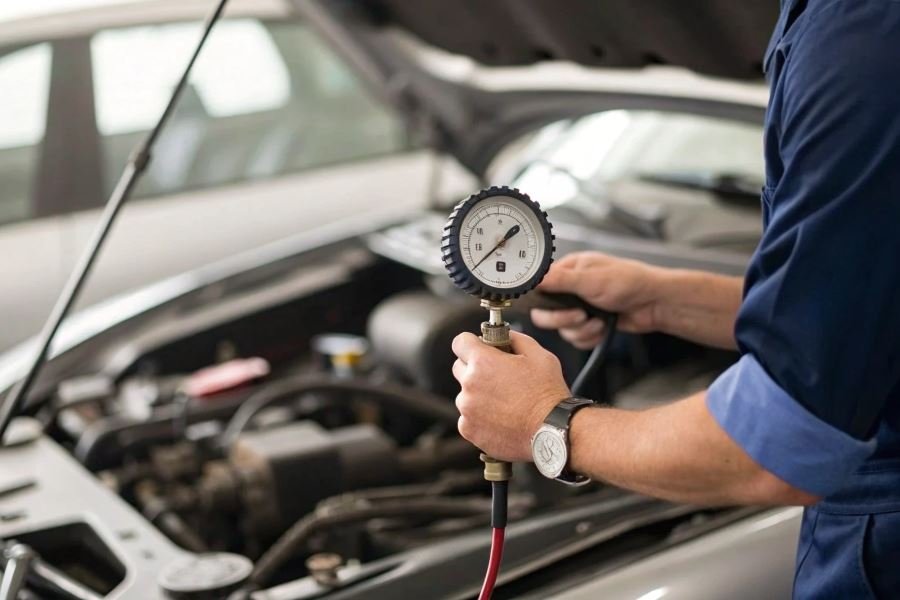
At its core, a compression tester is a precision instrument that measures the pressure generated within an engine’s cylinders during the compression stroke. This seemingly simple measurement tells a remarkably detailed story about what’s happening inside your engine. Think of it as taking your engine’s blood pressure – a fundamental vital sign that reveals its overall health.
Universal compression testers have transformed from basic mechanical gauges to sophisticated diagnostic tools that work across gasoline, diesel, and even alternative fuel engines. The evolution has been remarkable – from the rudimentary pressure gauges mechanics used in the 1930s to today’s digital systems that can simultaneously monitor multiple cylinders and integrate with diagnostic software.
Why does this matter? Because compression is the lifeblood of internal combustion. When compression falters, everything from fuel efficiency to power output suffers. A 10% drop in compression can translate to a 20% loss in engine performance – a difference you’ll feel every time you press the accelerator.
“The compression test remains the single most cost-effective diagnostic procedure for evaluating an engine’s mechanical condition.” – SAE International Technical Paper
For engine longevity, regular compression testing serves as an early warning system, detecting issues like worn piston rings, leaking valves, or head gasket problems before they escalate into catastrophic failures. This preventive approach can extend engine life by years and save thousands in potential repair costs.
The Engine Whisperer’s Toolkit
Inside the Modern Compression Tester
The heart of any engine diagnostic process lies in understanding cylinder compression. Universal compression testers for different types of engines have evolved from simple gauges into sophisticated diagnostic systems that reveal the soul of an engine’s health. Today’s professional-grade testers feature precision-machined adapters, digital pressure gauges accurate to within 1 PSI, and quick-connect fittings that make switching between engine types effortless.
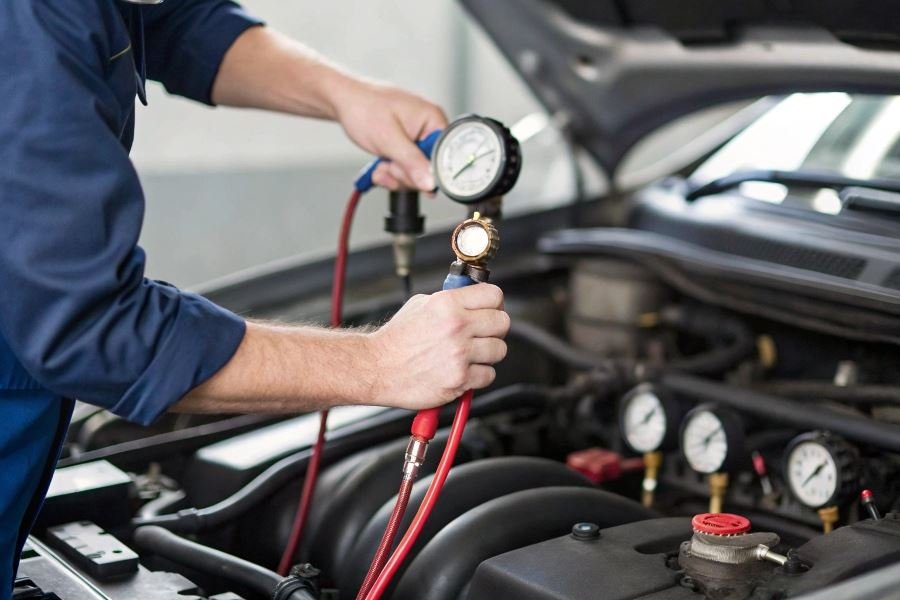
Core components of a quality compression tester include a high-pressure gauge (typically reading up to 300 PSI for diesel applications), a flexible high-pressure hose, and an assortment of threading adapters. Premium models from manufacturers like OTC Tools and Snap-on incorporate digital memory functions that store multiple cylinder readings, allowing for immediate comparison across all cylinders.
Cross-Platform Engine Compatibility
The true value of modern compression testers lies in their versatility across engine types. While earlier generations required separate tools for gasoline and diesel applications, today’s universal systems bridge this gap seamlessly.
Gasoline engine testing typically requires 14mm and 18mm spark plug port adapters, while diesel applications demand specialized glow plug and injector port fittings. High-end kits include adapters for:
- Standard automotive gasoline engines (40-200 PSI range)
- High-compression performance engines (up to 250 PSI)
- Light and heavy-duty diesel engines (250-500 PSI range)
- Small displacement engines (motorcycles, ATVs, marine applications)
- Specialty applications (aircraft engines, vintage vehicles)
Decoding Engine Health Through Compression Data
The diagnostic capabilities of compression testing extend far beyond simple “good or bad” readings. When properly interpreted, compression test results provide a detailed map of an engine’s internal condition.
The master technician’s rule: Cylinder readings within 10% of each other indicate balanced wear; variations beyond 15% demand further investigation.
Consider this typical data interpretation framework:
| Compression Pattern | Likely Cause | Recommended Next Steps |
|---|---|---|
| All cylinders low | Timing issues or worn rings | Check timing chain/belt, perform leakdown test |
| Single cylinder low | Valve issues or head gasket | Perform wet compression test, check valve clearance |
| Adjacent cylinders low | Head gasket failure | Perform cooling system pressure test, check for contamination |
| Gradually decreasing readings | Piston ring wear | Consider oil consumption test, examine oil for metal |
Advanced diagnostic techniques include wet compression testing, where a small amount of oil is introduced into the cylinder to temporarily seal worn rings. A significant increase in compression during wet testing (more than 10-15%) typically indicates ring issues rather than valve problems.
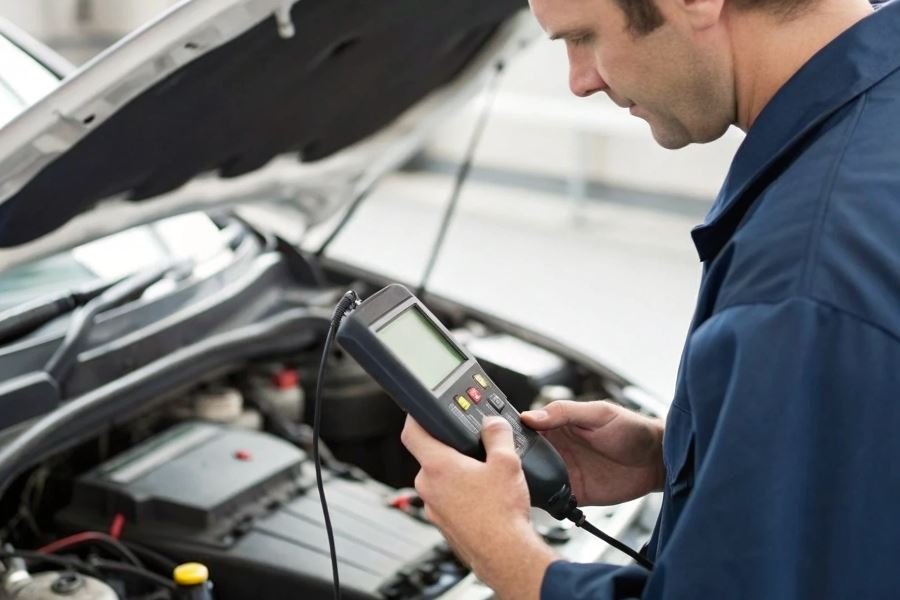
The latest digital compression testers from Autel and Launch Tech integrate with vehicle diagnostic systems, allowing technicians to correlate compression readings with other engine parameters like fuel trim, ignition timing, and exhaust gas analysis. This holistic approach transforms compression testing from an isolated procedure into a comprehensive diagnostic strategy.
For the discerning engine builder or performance enthusiast, these insights translate directly into competitive advantage, reliability improvements, and the deep satisfaction that comes from truly understanding what’s happening inside those cylinders.
Top 3 Universal Compression Testers That Dominate Engine Diagnostics
When precision meets versatility in engine diagnostics, universal compression testers become the unsung heroes of the workshop. These essential tools have evolved dramatically, with today’s models offering capabilities that would have seemed like science fiction just a decade ago.
Professional-Grade Powerhouses for Commercial Applications
At the top tier, professional-grade universal compression testers deliver laboratory-level accuracy with workshop-ready durability.
The OTC 5606 stands as the gold standard for commercial applications, featuring digital pressure readings accurate to within 0.5 PSI across gasoline, diesel, and even marine engines. What separates this model from competitors is its adaptive coupling system that connects to virtually any cylinder configuration without additional adapters.
The difference between diagnosing with precision tools versus basic equipment is like comparing surgical instruments to kitchen utensils—both cut, but only one is designed for precision.
For high-volume shops, the Snap-on EEPV304A delivers exceptional durability with its aircraft-grade aluminum construction and calibration stability that maintains accuracy even after thousands of tests. Its proprietary quick-connect system reduces testing time by approximately 40% compared to conventional models.
The Mityvac MV5532 rounds out the professional category with its comprehensive digital data logging capabilities, allowing technicians to store and compare compression readings across multiple vehicles—a game-changer for fleet maintenance operations.
Mid-Range Marvels for Independent Mechanics
Independent mechanics and serious DIY enthusiasts need tools that balance professional capabilities with reasonable investment.
The Innova 3612 hits this sweet spot perfectly, offering compatibility with both gasoline and diesel engines through its modular adapter system. Its reinforced 2.5-inch gauge face remains readable even in poor lighting conditions, while the dual-scale PSI/BAR readings accommodate both domestic and import vehicles.
| Feature | Innova 3612 | Competitor Average |
|---|---|---|
| Pressure Range | 0-300 PSI | 0-200 PSI |
| Adapter Count | 8 | 5 |
| Hose Length | 25 inches | 18 inches |
| Case Quality | Molded EVA | Nylon Bag |
For those who prioritize versatility, the OEMTOOLS 27198 delivers exceptional value with its comprehensive adapter set that covers everything from small motorcycle engines to heavy-duty diesels. Its color-coded connection system virtually eliminates the risk of incorrect setup.
The ATD Tools 5578 deserves recognition for its exceptional build quality at a mid-range price point. The brass fittings and reinforced hose connections withstand daily use while maintaining accurate readings—a rare combination at this price tier.
Investment Considerations and Long-Term Value
When evaluating compression testers as long-term investments, several factors beyond initial price deserve consideration.
Calibration stability represents perhaps the most overlooked value factor. Premium models like the OTC 5606 maintain accuracy for years between calibrations, while budget options often require recalibration after just months of regular use—an invisible cost that can exceed the initial price difference.
Adapter compatibility directly impacts future-proofing. Universal testers with standardized threading can accept aftermarket adapters as engine technologies evolve, while proprietary systems may become obsolete when manufacturers discontinue support.
The warranty structure reveals manufacturers’ confidence in their products. The Snap-on EEPV304A commands a premium price but includes lifetime calibration services—a value proposition that transforms it from an expense into an asset for high-volume operations.
For independent shops, the Innova 3612 offers the optimal balance between initial investment and long-term utility, with replacement parts readily available and a modular design that allows for component upgrades rather than complete replacement.
Discover the best universal compression testers for all engine types in 2025. Compare professional-grade and DIY options to diagnose gasoline, diesel, and specialty engines for optimal performance and longevity.
Discover the best universal compression testers for all engine types in 2025. Compare professional-grade and DIY options to diagnose gasoline, diesel, and specialty engines for optimal performance and longevity.