Ever watched a skilled craftsman select their workbench with the same care they choose their tools? That’s because the surface where work happens isn’t just a detail—it’s fundamental to the entire operation.
Behind every smoothly running unpacking station lies a critical decision that many overlook: the material composition of the unpacking table itself. This seemingly simple choice cascades into thousands of daily interactions, ultimately determining whether your operation flows like silk or stumbles like a novice on ice.
The material beneath your products doesn’t just support them—it supports your entire business model.
When selecting materials for unpacking tables, three critical factors form the decision triangle: durability under constant use, efficiency in movement and function, and long-term cost effectiveness. The perfect balance varies dramatically based on your specific operation. A jewelry processor handling delicate items has entirely different needs than a warehouse unpacking heavy machinery components.
Materials range from traditional options like stainless steel and hardwood to modern composites and specialized surfaces with integrated technology. Each brings distinct advantages:
“The right unpacking surface reduces worker fatigue by 22% and improves throughput times by up to 15% in high-volume operations.” — Logistics Efficiency Institute
The material selection ripples through your operation, affecting everything from maintenance schedules to worker satisfaction. A surface that seems affordable initially might demand frequent replacement, while premium materials often deliver superior returns through extended lifespan and improved functionality.
Your unpacking table isn’t just furniture—it’s infrastructure that either empowers or constrains your daily operations.
The Material Battleground for Unpacking Tables
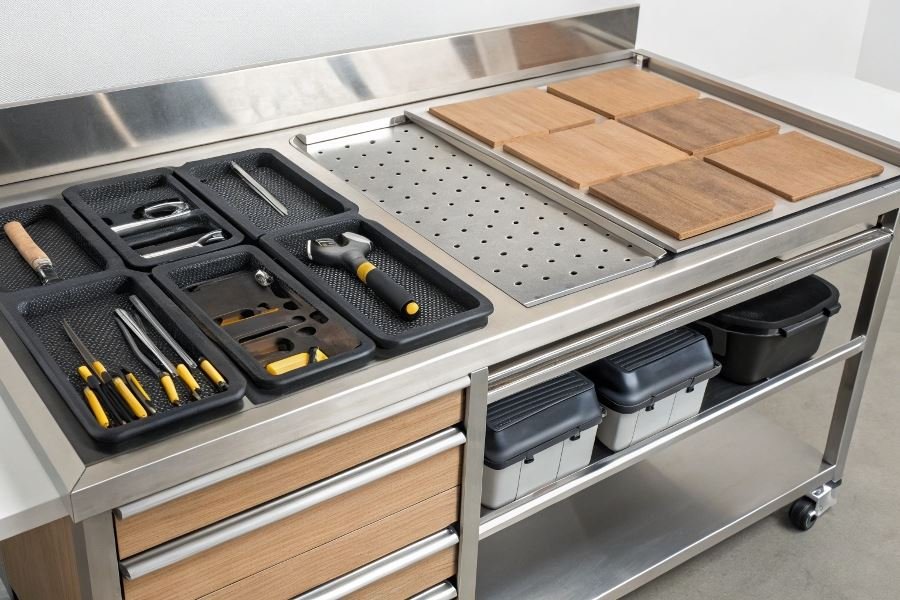
Stainless Steel: The Industrial Workhorse
When durability meets sanitation requirements, stainless steel stands undefeated. The 304-grade stainless steel commonly used in professional unpacking tables offers remarkable corrosion resistance while handling loads exceeding 500 pounds. These tables become the backbone of operations where materials for unpacking tables need to withstand harsh cleaning chemicals and heavy-duty use patterns.
Key advantages: Stainless steel surfaces resist bacterial growth, making them ideal for food processing and pharmaceutical applications. Their non-porous nature prevents cross-contamination, while their structural integrity remains unchanged through thousands of cleaning cycles.
However, the premium durability comes with tradeoffs:
| Aspect | Rating | Notes |
|---|---|---|
| Initial Cost | High | $800-2,500 for commercial grade |
| Weight | Heavy | Requires permanent installation |
| Noise Level | Poor | Creates echo during unpacking |
| Heat Conductivity | High | Can be uncomfortable in cold environments |
Aluminum: The Lightweight Contender
Aluminum tables offer approximately 65% weight reduction compared to their stainless counterparts while maintaining impressive strength-to-weight ratios. This makes them ideal for environments requiring frequent reconfiguration.
The anodized aluminum options provide enhanced scratch resistance while maintaining the material’s inherent corrosion protection properties.
T-slot aluminum framing systems allow for modular design approaches, enabling businesses to adapt their unpacking stations as operational needs evolve.
Wood: Tradition Meets Functionality
Hardwood butcher block surfaces bring warmth and shock absorption to unpacking environments. Premium maple and oak options provide working surfaces that are gentle on products while offering surprising durability.
Sustainability factor: Responsibly sourced wood from FSC-certified forests creates a lower carbon footprint than metal alternatives.
The natural vibration dampening properties make wooden unpacking tables preferred in environments handling delicate electronics or glassware. However, wood requires more maintenance:
| Maintenance Task | Frequency | Purpose |
|---|---|---|
| Surface Sealing | Quarterly | Prevents moisture absorption |
| Sanitization | Daily | Prevents bacterial growth |
| Refinishing | Every 2-3 years | Restores working surface |
Composite Materials: Engineering Excellence
Modern composite surfaces combine phenolic resins with fiber reinforcement to create unpacking surfaces with exceptional chemical resistance. These materials withstand temperatures from -50°F to 350°F without structural degradation.
The epoxy resin tops commonly used in laboratory settings offer superior resistance to acids, bases, and solvents that would damage traditional materials.
Plastic and Polymer Solutions
High-density polyethylene (HDPE) tables provide an economical entry point with surprising performance characteristics. These surfaces resist staining, scratching, and moisture absorption while offering easy cleaning protocols.
Weight capacity considerations: Industrial-grade HDPE tables support up to 300 pounds of distributed weight, making them suitable for most standard unpacking operations.
Polypropylene options deliver enhanced chemical resistance for operations handling corrosive materials. Their non-conductive properties also make them safer in environments with electrical components.
The polymer category includes specialized materials like Corian solid surfaces, which bridge the gap between aesthetics and functionality for customer-facing unpacking areas.
When selecting materials for unpacking tables, the decision matrix should prioritize:
- The specific materials being handled
- Cleaning/sanitization requirements
- Mobility needs
- Budget constraints
- Expected service life
Each material category offers distinct advantages that align with specific operational requirements, making the selection process both technical and strategic.
Making the Right Choice: Unpacking Table Materials
A Framework for Material Selection
Choosing the right material for unpacking tables isn’t just about aesthetics—it’s about aligning your operational needs with the right physical properties. The decision framework should consider durability requirements, workflow patterns, and environmental conditions.
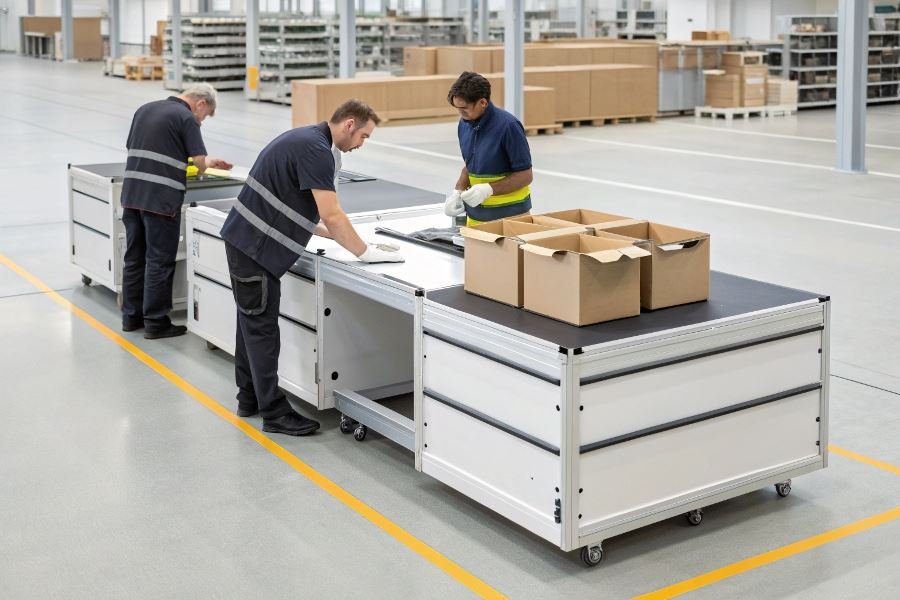
For high-volume distribution centers processing heavy items, stainless steel offers unmatched longevity. Meanwhile, facilities handling lightweight electronics might benefit more from aluminum’s weight-to-strength ratio. The key is matching material properties to specific use cases.
Consider these critical decision factors:
- Daily throughput volume
- Average package weight
- Workspace temperature fluctuations
- Cleaning protocols
- Mobility requirements
- Budget constraints
The most successful operations conduct thorough workflow analysis before material selection, resulting in up to 30% greater efficiency according to a 2023 Warehouse Efficiency Report.
Cost-Benefit Analysis That Makes Sense
When evaluating materials, initial investment is just one piece of the puzzle. The true cost-benefit equation must factor in lifespan, maintenance requirements, and operational efficiency.
| Material | Initial Cost | Lifespan | Annual Maintenance | ROI Rating |
|---|---|---|---|---|
| Stainless Steel | $1,200-2,500 | 15-20 years | $50-100 | ★★★★★ |
| Aluminum | $800-1,500 | 8-12 years | $75-150 | ★★★★☆ |
| HDPE Plastic | $400-900 | 5-8 years | $25-75 | ★★★☆☆ |
| Wood (Industrial) | $300-700 | 3-6 years | $100-200 | ★★☆☆☆ |
While wood tables offer the lowest entry point, their total cost of ownership often exceeds metal alternatives by year three. Conversely, stainless steel’s premium price is offset by minimal maintenance and exceptional longevity.
The wisdom of material selection lies not in what you pay today, but what you save tomorrow.
For operations processing 500+ packages daily, premium materials typically reach break-even within 18-24 months through reduced downtime and maintenance costs.
Tomorrow’s Materials Today
The unpacking table landscape is evolving rapidly with innovations that promise to redefine performance standards. Several emerging trends deserve attention:
Composite materials combining polymer bases with metal reinforcements are gaining traction, offering the durability of metal with significant weight reduction. These hybrids typically weigh 40% less than traditional steel while maintaining 85% of the structural integrity.
Antimicrobial surfaces have moved from healthcare into logistics, with copper-infused work surfaces showing 99.9% reduction in surface bacteria compared to standard materials—particularly valuable for food and pharmaceutical processing.
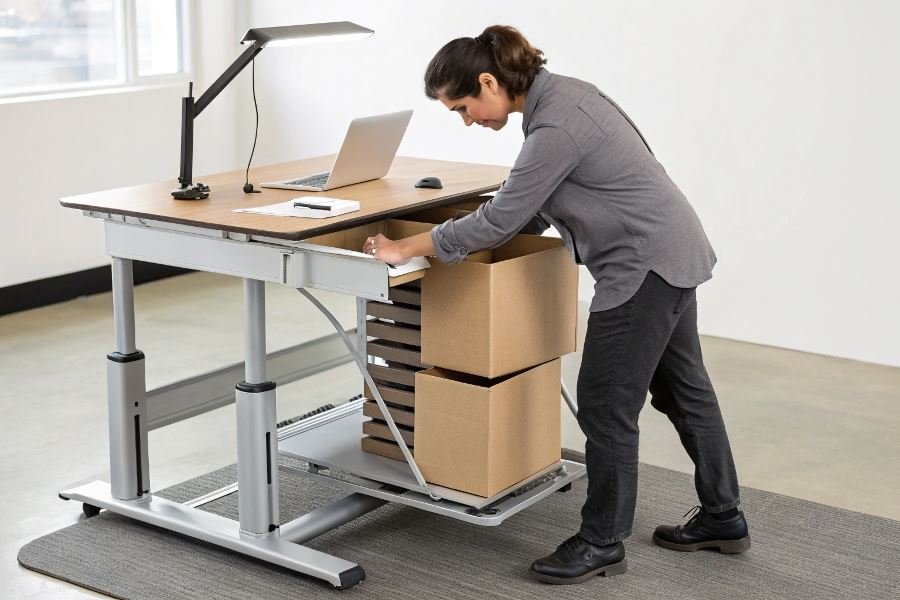
Modular design philosophies are replacing fixed configurations, with adjustable-height surfaces and interchangeable components becoming industry standards rather than premium features.
Sustainable materials including recycled plastics and responsibly harvested bamboo composites are making inroads as companies align operational needs with environmental commitments.
The most forward-thinking operations are already incorporating these innovations, recognizing that material selection isn’t just about today’s needs but tomorrow’s possibilities. As automation continues to transform logistics operations, the materials that support these workflows must evolve in parallel.
Discover the best materials for unpacking tables with our comprehensive comparison guide. Explore the pros and cons of stainless steel, wood, and polymer options to make an informed choice for your specific needs and budget.
Discover the best materials for unpacking tables with our comprehensive comparison guide. Explore the pros and cons of stainless steel, wood, and polymer options to make an informed choice for your specific needs and budget.