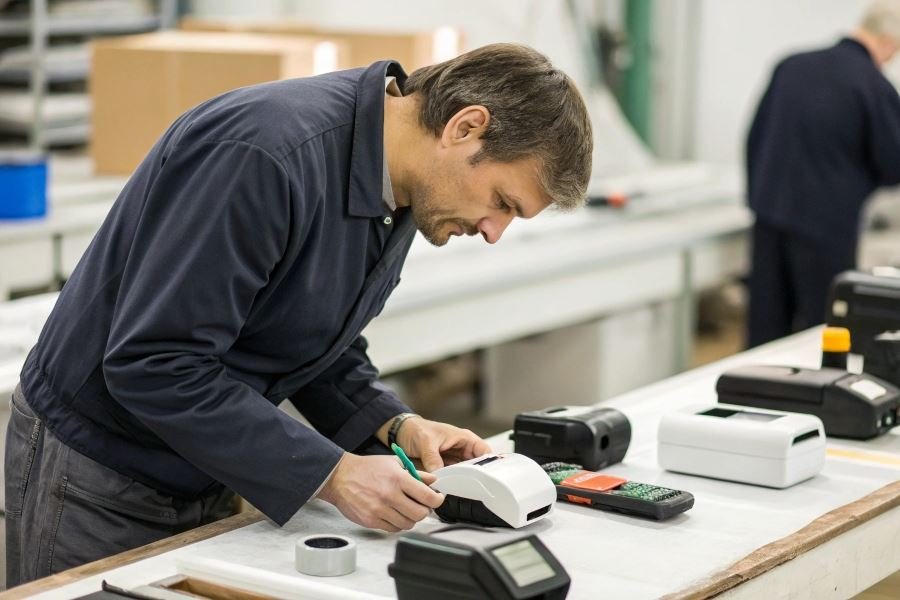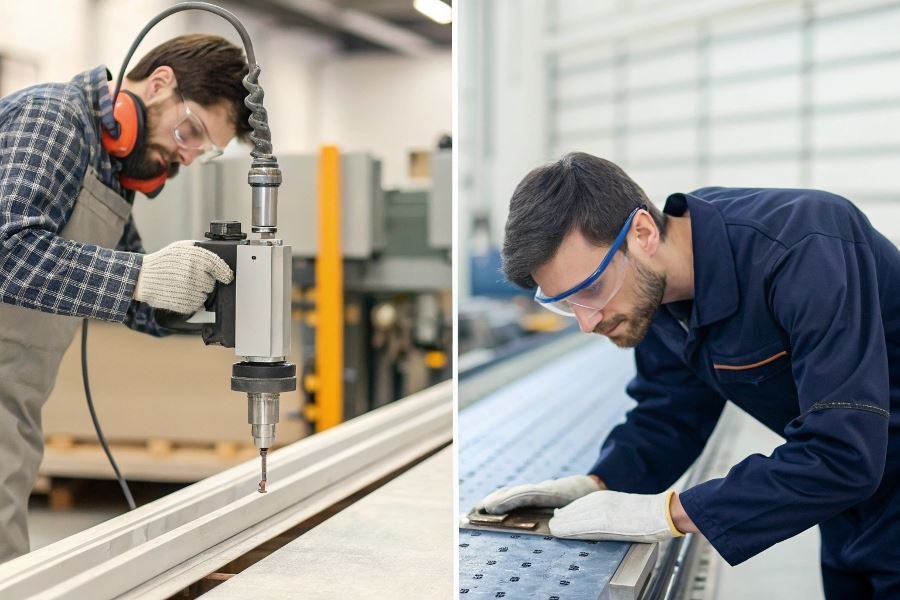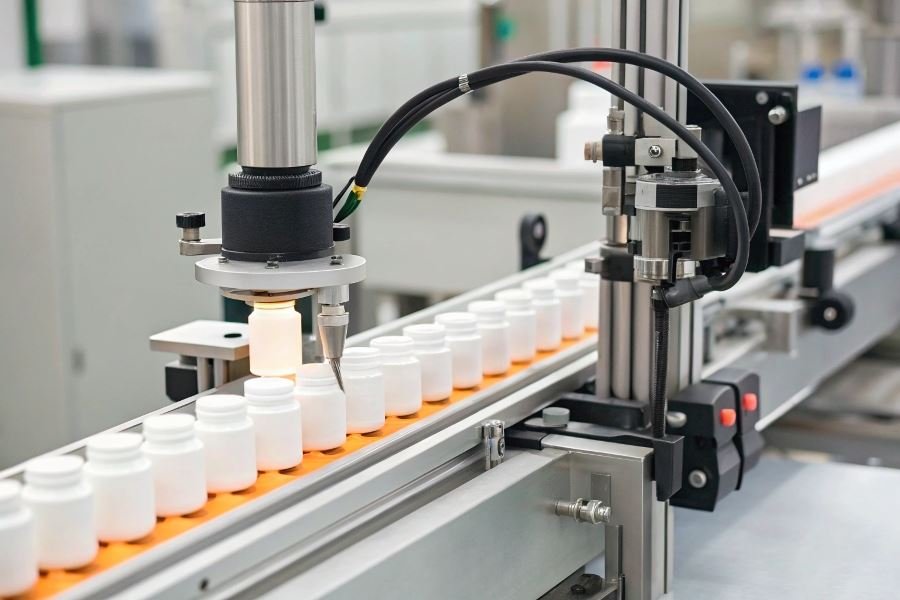
Ever watched a production line and wondered how each product gets its unique identifier? That small code—whether laser-etched, inkjet-printed, or stamped—represents the fascinating world of variable data marking, a technology that’s revolutionizing product identification, traceability, and brand protection.
Variable data markers are customizable identification systems that apply unique, changeable information to products during manufacturing. Unlike static labels, these markers can encode batch numbers, production dates, serial numbers, and even custom customer data—all in real-time as products move through production. They’re the silent heroes ensuring your morning medication is authentic, your food hasn’t expired, and your automotive parts meet safety standards.
The journey of marking technology has been remarkable. What began as rudimentary stamping methods in the early 20th century has evolved into sophisticated systems using lasers, continuous inkjet printing, and RFID technology. The global industrial marking market now exceeds $7 billion annually, with variable data solutions representing the fastest-growing segment.
Before investing in a variable data marking system, manufacturers must consider several critical factors:
Substrate compatibility
Not all marking technologies work on all materials. Glass, metal, plastic, and cardboard each require specific approaches for optimal results.
Production speed requirements
Your marking solution must keep pace with your production line—whether that’s 10 units per minute or 1,000.
Environmental conditions
Will your marks need to withstand extreme temperatures, moisture, or abrasion? The pharmaceutical industry, for example, requires marks that remain legible after sterilization processes.
Data integration capabilities
Modern marking systems must communicate seamlessly with your existing enterprise software, pulling production data and pushing verification results in real-time.
The right variable data marking solution isn’t just a compliance checkbox—it’s a strategic asset that enhances quality control, streamlines logistics, and builds consumer trust through unprecedented traceability.
The Technology Behind Variable Data Marking
When precision meets identification needs, the right marking technology becomes your competitive edge. The landscape of variable data marking systems offers diverse solutions for tracking, authenticating, and personalizing products across industries. Let’s dive into the technological powerhouses that make real-time customization possible.
Advanced Marking Technologies
Laser Marking Systems: Permanent Precision
Laser marking represents the gold standard for permanent, high-contrast identification. These systems use focused light beams to alter material surfaces at the microscopic level, creating marks that withstand harsh environments where other methods fail.
Laser systems excel on metals, plastics, ceramics, and glass, but each material demands specific laser types:
- Fiber lasers (1064nm wavelength) dominate metal marking applications with exceptional speed and contrast
- CO2 lasers (10600nm wavelength) perform brilliantly on organic materials like wood and certain plastics
- UV lasers (355nm wavelength) create microscopic marks ideal for medical devices and electronics
| Laser Type | Ideal Materials | Mark Permanence | Initial Investment |
|---|---|---|---|
| Fiber | Metals, hard plastics | Excellent | 30, 000−100,000 |
| CO2 | Wood, paper, soft plastics | Good | 15, 000−60,000 |
| UV | Medical plastics, PCBs | Excellent | 50, 000−150,000 |
The Keyence MD-X series exemplifies modern laser marking capabilities, offering programmable variable data integration with enterprise systems.
Inkjet Technology: Versatile Marking Solutions
Inkjet systems provide non-contact marking suitable for nearly any surface, including porous, non-porous, irregular, and delicate substrates. Two distinct technologies dominate this space:
Continuous Inkjet (CIJ)
- Generates a continuous stream of electrically charged ink droplets
- Excels in high-speed production environments (1000+ feet per minute)
- Ideal when variable information changes frequently
- Works effectively on curved or irregular surfaces
The Videojet 1880 represents cutting-edge CIJ technology with predictive maintenance capabilities and remote monitoring.
Drop-on-Demand (DOD)
- Ejects ink droplets only when needed
- Offers higher resolution (up to 600 DPI)
- Reduces consumable usage
- Provides greater ink compatibility options
- Requires lower maintenance
For industrial applications requiring exceptional print quality, the HP Thermal Inkjet technology delivers remarkable resolution while maintaining production speeds.
Thermal Technologies: Cost-Effective Clarity
Thermal Transfer Printing
- Uses heat-activated ribbons to transfer ink onto substrates
- Delivers exceptional barcode readability
- Provides chemical and abrasion resistance
- Ensures long-term image stability
- Offers multi-color capability
The Zebra ZT600 series exemplifies industrial-grade thermal transfer printing with variable data capabilities.
Direct Thermal Marking
- Creates images by applying heat directly to chemically treated substrates
- Requires no ribbons or inks
- Offers lower operational costs
- Features simplified maintenance
- Ideal for short-term applications like shipping labels, receipts, and temporary identification
Selecting the optimal variable data marking technology requires balancing application requirements, substrate compatibility, production speeds, and total cost of ownership. The right system transforms product identification from a necessity into a competitive advantage.
Maximizing ROI Through Strategic Variable Data Marker Implementation
Seamless Integration Drives Production Efficiency
The difference between a variable data marking system that enhances your operation and one that becomes a bottleneck often comes down to integration capabilities. Today’s manufacturing environments demand marking solutions that communicate flawlessly with existing infrastructure.
Leading systems like the Videojet 1880 and Domino Ax350i offer comprehensive connectivity options including Ethernet/IP, Profinet, and OPC UA protocols. This connectivity isn’t just a technical specification—it’s the foundation for real-time production monitoring and automated quality control.
The integration sweet spot: When your marking system becomes virtually invisible in your workflow, you’ve achieved optimal integration.
Manufacturing facilities implementing fully integrated marking systems report productivity increases of 15-22% compared to those using standalone units. This productivity boost stems from:
- Automated data population from ERP/MES systems
- Elimination of manual data entry errors
- Real-time production analytics
- Synchronized line control
A medical device manufacturer in Minneapolis recently integrated variable data markers with their SAP system, reducing product changeover times from 45 minutes to under 8 minutes—a transformation that added 300+ production hours annually.
Beyond Purchase Price: The True Cost Equation
The sticker price of variable data marking equipment represents just 23-30% of total ownership costs over a five-year period. Smart buyers look beyond acquisition costs to understand the complete financial picture.
Maintenance requirements vary dramatically between technologies and manufacturers. Thermal inkjet systems typically require minimal maintenance but have higher consumable costs. Continuous inkjet (CIJ) systems need regular service but offer lower per-mark costs for high-volume applications.
| Technology | Annual Maintenance Hours | Consumable Cost Per 1000 Marks | Average Downtime Hours/Year |
|---|---|---|---|
| Laser | 25-40 | $0.01-0.03 | 12-18 |
| CIJ | 50-75 | $0.08-0.15 | 24-36 |
| TIJ | 15-25 | $0.20-0.40 | 8-15 |
| DOD | 60-90 | $0.10-0.25 | 30-45 |
The maintenance equation extends beyond scheduled service. Consider:
- Availability of local technical support
- Mean time between failures (MTBF)
- Spare parts logistics and costs
- Operator training requirements
Companies that implement predictive maintenance programs for their marking systems reduce unplanned downtime by up to 78%, according to a study by the Manufacturing Enterprise Solutions Association.
Future-Proofing: The Scalability Imperative
The marking solution perfect for today’s needs may become a limitation tomorrow without proper scalability considerations. Forward-thinking manufacturers evaluate marking systems against their three-to-five-year production roadmap.
Key scalability factors include:
- Print resolution flexibility – Can the system adjust to future packaging or regulatory changes?
- Speed capabilities – Does the system offer headroom beyond current line speeds?
- Data handling capacity – Will it accommodate increasing variable data complexity?
- Software upgradability – Is the platform designed for regular feature enhancements?
The Markem-Imaje 9450 exemplifies this approach with modular hardware design and quarterly software updates that extend functionality without requiring hardware replacement.
Adaptability to emerging standards represents another crucial dimension of future-proofing. Marking systems supporting open data standards like GS1 and EPCIS position manufacturers to respond quickly to evolving traceability requirements across industries.
Manufacturers who select marking systems with scalability as a primary criterion report 40% longer useful equipment life and 35% lower total upgrade costs compared to those who prioritize initial purchase price alone.
Discover how to select the ideal variable data marking system for your industrial needs. Compare laser, inkjet, and thermal technologies while maximizing ROI through proper integration and maintenance considerations.
Discover how to select the ideal variable data marking system for your industrial needs. Compare laser, inkjet, and thermal technologies while maximizing ROI through proper integration and maintenance considerations.