
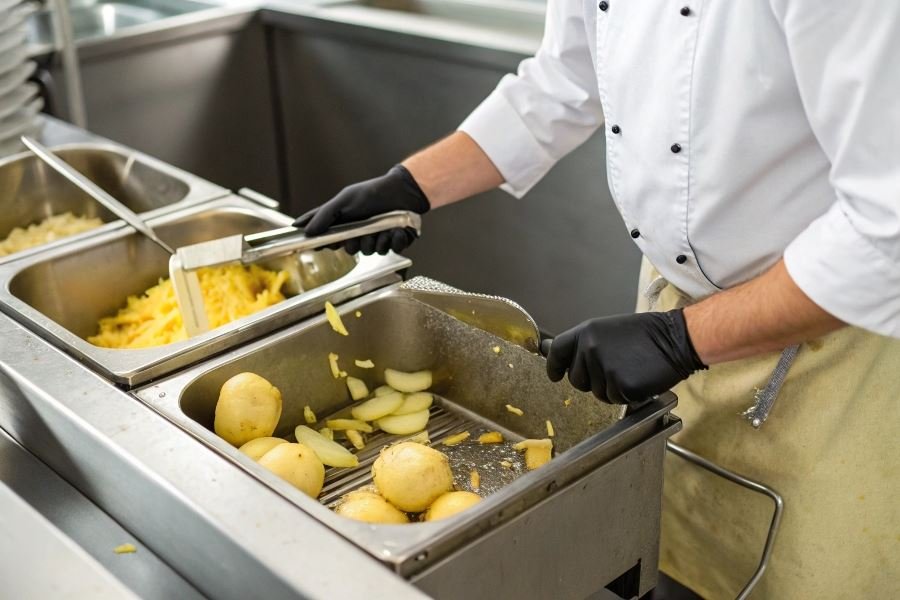
Ever watched a professional chef effortlessly process 50 pounds of potatoes in minutes while your kitchen staff struggles with handheld peelers? Commercial vegetable peeler machines are game-changers—but only when properly maintained. The difference between a machine that lasts 3 years versus 10+ years often comes down to one factor: maintenance discipline.
Proper care of your vegetable peeler isn’t just about extending its lifespan—it directly impacts your bottom line. A well-maintained machine processes vegetables more efficiently, produces less waste, and dramatically reduces the risk of unexpected breakdowns during peak service hours.
Understanding peeler types and their maintenance personalities
Different peeler machines demand different care approaches:
- Abrasive drum peelers require regular inspection of the abrasive lining and thorough cleaning to prevent food particle buildup
- Knife blade peelers need frequent blade sharpening and careful alignment checks
- Brush-type peelers demand bristle inspection and replacement schedules
The commercial kitchen graveyard is filled with perfectly good machines abandoned because owners didn’t understand their specific maintenance requirements.
Pre-purchase maintenance considerations that save thousands
Before investing in any vegetable peeler, evaluate these critical maintenance factors:
“The most expensive peeler isn’t the one with the highest price tag—it’s the one that costs you daily in maintenance headaches.” – Professional Kitchen Equipment Association
Look for machines with easily accessible parts, readily available replacement components, and clear maintenance documentation. The best manufacturers provide comprehensive care guides and responsive technical support when issues arise.
Keeping Your Vegetable Peeler Machine in Prime Condition
When you invest in a quality vegetable peeler machine, you’re not just buying a piece of equipment—you’re acquiring a kitchen workhorse that can dramatically transform your food prep efficiency. But like any hardworking tool, these machines require attentive care to deliver consistent results year after year.
Understanding the maintenance and care for a vegetable peeler machine is absolutely critical before making your purchase decision. Many buyers focus exclusively on capacity and power specs, only to discover later that proper maintenance is the true secret to longevity and performance. Let’s dive into the essential practices that will keep your investment running smoothly.
Daily cleaning: your first line of defense
Immediate post-use cleaning isn’t just good practice—it’s non-negotiable. Food particles left to dry become stubborn residue that can harbor bacteria and affect performance.
Follow this power-cleaning sequence:
- Disconnect from power source
- Remove detachable components
- Rinse with warm water to remove loose debris
- Apply food-safe detergent with a soft brush
- Pay special attention to abrasive discs and cutting surfaces
- Thoroughly rinse all components
- Air dry completely before reassembly
Never submerge the motor housing in water. Instead, wipe it down with a damp cloth and mild detergent.
For commercial models like the Hobart FP100, sanitizing solutions should be used according to manufacturer specifications—typically a 200ppm chlorine solution or quaternary ammonium compound.
Inspection and maintenance: the professional approach
| Maintenance Task | Frequency | Tools Required |
|---|---|---|
| Blade inspection | Weekly | Flashlight, magnifying glass |
| Belt tension check | Monthly | Tension gauge |
| Bearing lubrication | Quarterly | Food-grade lubricant |
| Motor assessment | Bi-annually | Multimeter |
Weekly blade inspections reveal early signs of wear before they become operational problems. Look for:
- Dullness along cutting edges
- Chips or cracks in abrasive surfaces
- Uneven wear patterns
- Corrosion spots
The Waring Commercial WFP14SC and similar models benefit from monthly belt inspections. A properly tensioned belt should deflect approximately ¼ inch when pressed firmly.
Pro tip: Create a maintenance log to track patterns and predict when components might need replacement.
Storage techniques that extend machine life
How you store your vegetable peeler between uses significantly impacts its lifespan. The cardinal rules:
- Store completely dry – Moisture is the enemy of both electrical components and cutting surfaces
- Assemble loosely – Tight assembly during storage can stress gaskets and seals
- Cover properly – Use manufacturer covers or food-safe alternatives to prevent dust accumulation
- Climate control matters – Avoid extreme temperature fluctuations that can affect rubber components
For the Robot Coupe CL50, storing blades in the provided blade caddy prevents dulling and potential injuries.
Remember: proper storage isn’t just about extending lifespan—it’s about food safety and consistent performance.
By implementing these maintenance practices, your vegetable peeler machine will deliver reliable performance through thousands of prep cycles. The small time investment in proper care yields enormous dividends in equipment longevity and operational efficiency—making your initial purchase decision all the more valuable.
Making the Smart Investment in Vegetable Peeler Machines
When investing in commercial kitchen equipment, the decision extends far beyond the initial purchase price. Vegetable peeler machines represent a significant operational asset, but their true value emerges through the lens of long-term maintenance requirements and operational fit. Let’s examine how to make a decision you won’t regret when the warranty expires.
Aligning Maintenance with Your Kitchen Operations
The most sophisticated peeler on the market becomes worthless if its maintenance demands exceed your operational capacity. Consider these critical alignment factors:
- Staff expertise: Do you have personnel trained to perform regular maintenance, or will you need external technicians?
- Operational downtime: Can your kitchen workflow accommodate the recommended maintenance schedule?
- Cleaning complexity: Some models require disassembly for thorough cleaning, while others feature tool-free components designed for quick sanitization.
A high-volume restaurant operating 14 hours daily needs a workhorse with minimal maintenance requirements, while a specialty caterer with intermittent usage might prioritize performance over maintenance simplicity.
Wisdom nugget: The most expensive maintenance isn’t the scheduled kind—it’s the emergency repair that shuts down your kitchen during peak service hours.
Warranty Protection and Manufacturer Support
Warranty terms reveal a manufacturer’s confidence in their product. Look beyond the standard “1-year parts and labor” to evaluate:
| Warranty Feature | What It Tells You | Why It Matters |
|---|---|---|
| Duration | Manufacturer confidence | Longer periods indicate expected durability |
| Parts vs. Labor | True coverage scope | Labor often expires before parts |
| Transferability | Resale value protection | Valuable if you upgrade equipment regularly |
| Response time guarantee | Operational protection | Critical for high-volume operations |
The best manufacturers offer comprehensive training during installation and maintain robust technical support departments. Before purchasing, call the support line with a technical question—their response quality previews your future experience when facing actual problems.
The True Cost Calculation
The initial purchase price typically represents only 15-30% of a vegetable peeler’s lifetime cost. Develop a comprehensive cost analysis by calculating:
- Acquisition cost: Purchase price plus delivery and installation
- Operational expenses: Energy consumption, water usage, and cleaning supplies
- Maintenance requirements: Scheduled service, replacement parts, and estimated repairs
- Productivity impact: Processing speed, yield rates, and labor savings
- Expected lifespan: How many years before replacement becomes necessary?
Higher upfront costs often translate to lower lifetime expenses. Models from Hobart or Sammic may command premium prices but frequently deliver superior durability and more efficient maintenance protocols.
A commercial-grade machine processing 100 pounds of potatoes daily might cost $3,500 initially but save $12,000 in labor annually compared to manual processing. Meanwhile, maintenance might run $400-600 yearly—a clear return on investment.
The smartest buyers recognize that maintenance requirements serve as predictors of machine longevity. Designs featuring sealed bearings, stainless steel construction, and easily accessible components typically demand less maintenance while delivering longer service lives.
When evaluating vegetable peeler machines, remember: you’re not buying a piece of equipment—you’re investing in operational efficiency, food quality consistency, and kitchen workflow reliability. Choose accordingly.
Discover essential maintenance tips for vegetable peeler machines to maximize performance and longevity. Learn proper cleaning techniques, inspection schedules, and storage methods before investing in this kitchen workhorse for your business.
Discover essential maintenance tips for vegetable peeler machines to maximize performance and longevity. Learn proper cleaning techniques, inspection schedules, and storage methods before investing in this kitchen workhorse for your business.

