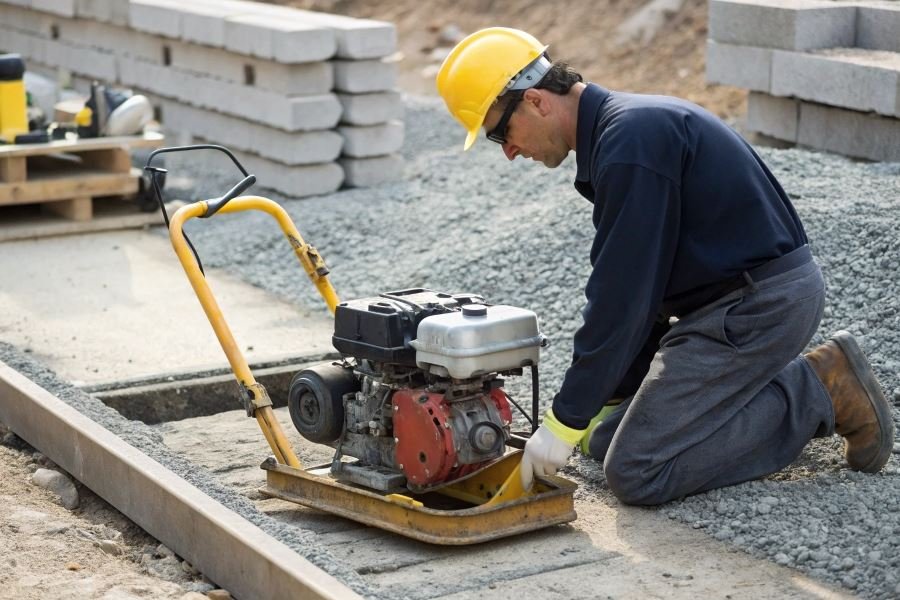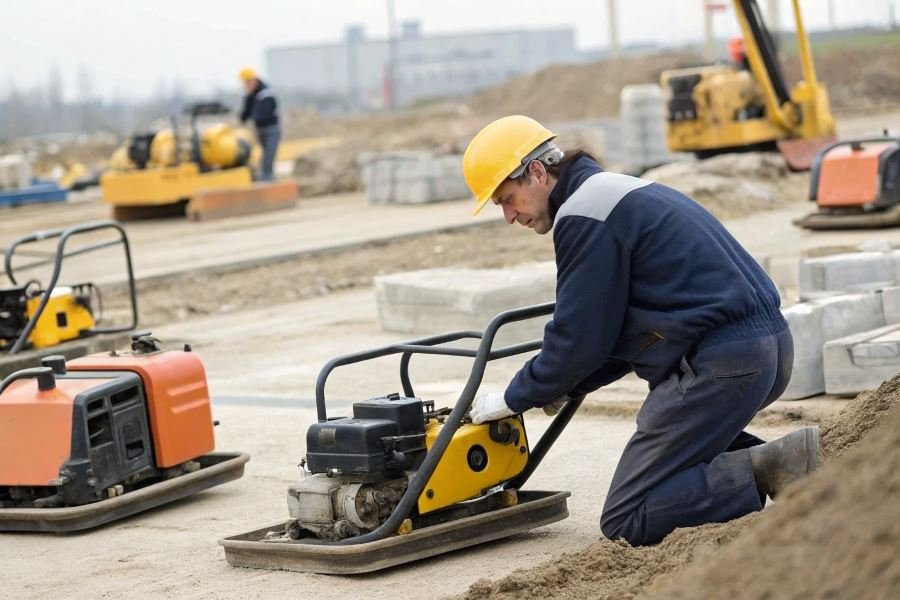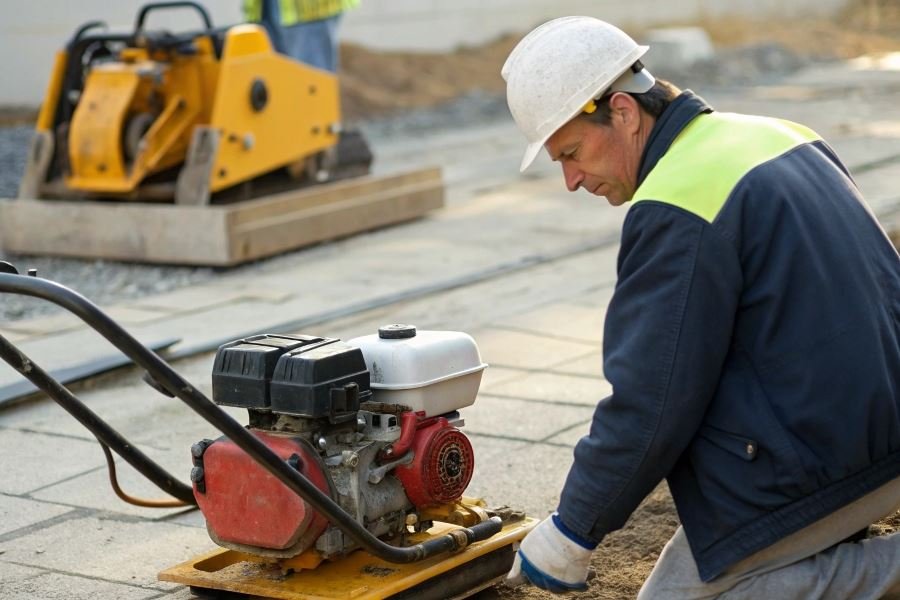
Ever stood next to a construction worker operating what looks like a large, mechanical ironing board that makes the ground tremble? That’s a vibrating plate compactor—the unsung hero of construction that ensures foundations don’t sink and pavements don’t crack years down the road.
At their core, vibrating plates (or plate compactors) are specialized construction equipment designed to increase the density of soil, gravel, sand, or asphalt through vibration. They feature a flat, heavy base plate that oscillates rapidly, applying force to loose materials and eliminating air pockets—creating stable, solid surfaces that can withstand tremendous weight and pressure over time.
When it comes to powering these essential machines, two titans dominate the market: gasoline and electricity. Gasoline-powered plates have traditionally ruled construction sites with their robust performance and mobility, allowing workers to compact soil in remote locations without worrying about power cords or battery life. Meanwhile, electric vibrating plates have quietly revolutionized indoor projects and environmentally sensitive areas with their zero-emission operation and significantly reduced noise levels.
Choosing between these power sources isn’t just about preference—it’s about project requirements. Consider these critical factors:
- Work environment: Indoor spaces demand electric models due to ventilation concerns
- Project duration: Long, continuous operation favors gasoline’s refuel-and-go convenience
- Accessibility: Remote locations without power sources practically necessitate gasoline models
- Environmental impact: Increasingly strict emissions regulations may limit gasoline options in certain areas
The right vibrating plate doesn’t just complete your project—it transforms it, ensuring longevity that can save thousands in future repairs.
The Ultimate Showdown: Gasoline vs Electric Vibrating Plates
When it comes to compaction equipment, the choice between gasoline and electric vibrating plates can significantly impact your project’s efficiency, cost, and environmental footprint. These workhorses of construction sites and road repairs each bring distinct advantages to the table, making a comprehensive comparison essential for making an informed decision.
Raw Power and Performance Metrics
Gasoline vibrating plates traditionally dominate in the power department, delivering impressive compaction force that electric models have historically struggled to match. A typical gas-powered plate compactor generates 3,000-6,000 pounds of centrifugal force, making quick work of challenging materials like clay and gravel. The comparison between gasoline and electric vibrating plates reveals that while electric models have made remarkable strides in recent years, they still typically max out around 2,000-3,500 pounds of force.
Performance depth capabilities tell a similar story:
- Gas-powered units: Typically effective up to 12-18 inches
- Electric models: Generally limited to 8-12 inches
This difference becomes crucial when tackling deeper compaction requirements or working with particularly stubborn materials.
The True Cost Equation
The financial picture extends far beyond the initial price tag:
| Cost Factor | Gasoline Plates | Electric Plates |
|---|---|---|
| Purchase price | 1, 200−3,500 | 900−2,800 |
| Fuel/energy | $5-15 per hour | $0.50-2 per hour |
| Annual maintenance | $200-400 | $50-150 |
| Average lifespan | 5-7 years | 7-10 years |
While gasoline models typically demand a higher upfront investment, the real story emerges in operational costs. Electric plates eliminate fuel expenses and significantly reduce maintenance requirements—no oil changes, spark plug replacements, or carburetor cleanings. However, battery-powered models require eventual battery replacement, typically costing $200-400 every 2-3 years of heavy use.
Mobility and Transportation Considerations
Weight and portability create another significant distinction:
Gasoline models typically weigh 150-300 pounds, making transportation a genuine consideration. Their self-contained nature, however, means they can operate anywhere without external power sources.
Electric plates generally fall into two categories:
- Corded models: Lighter (80-150 pounds) but tethered to power sources
- Battery-powered: Moderately heavier (100-200 pounds) with limited runtime (2-4 hours)
Environmental Impact and Emissions Profile
The environmental equation heavily favors electric models. Gasoline vibrating plates produce approximately 20-30 pounds of CO2 per day of operation, plus nitrogen oxides and particulate matter. Electric alternatives produce zero direct emissions, though their overall carbon footprint depends on the electricity source.
This environmental advantage extends beyond emissions. Electric models eliminate the risk of fuel spills and contamination, a significant consideration for environmentally sensitive projects or indoor applications.
Noise Levels and Workplace Restrictions
The decibel difference between these technologies is substantial:
- Gasoline plates: 95-105 dB (comparable to a chainsaw)
- Electric plates: 70-85 dB (similar to a vacuum cleaner)
This 20+ decibel gap translates to dramatically different workplace implications. Many urban construction sites, indoor renovations, and projects near noise-sensitive areas (hospitals, schools) have strict noise limitations that effectively mandate electric equipment. The quieter operation also reduces worker fatigue and improves on-site communication.
The choice ultimately depends on your specific project requirements, but understanding these fundamental differences ensures you’ll select the right tool for the job.
Making the Right Vibrating Plate Choice
When it comes to compaction equipment, the decision between gasoline and electric vibrating plates isn’t just about preference—it’s about matching the right tool to your specific project requirements. Let’s dive into the ideal applications for each type and explore the critical factors that should guide your final purchase decision.
Where gasoline plates truly excel
Gasoline-powered vibrating plates dominate in scenarios where power and mobility reign supreme. These robust machines shine in:
Large-scale construction projects where extensive ground preparation is required without access to reliable power sources. The Wacker Neuson WP1550 exemplifies this category with its ability to deliver consistent performance across sprawling job sites.
Remote locations and rural developments benefit tremendously from gasoline plates’ self-sufficiency. When you’re compacting soil for a foundation miles from the nearest outlet, the independence these machines provide is invaluable.
Heavy-duty compaction tasks involving dense materials or deeper penetration requirements call for the superior force output that gasoline engines deliver—typically 3,000-4,000 pounds of centrifugal force compared to electric models’ 2,000-3,000 pounds.
The freedom to work without cords makes gasoline plates the undisputed champions of versatility in challenging environments.
Electric vibrating plates shine here
Electric vibrating plates have carved out their own essential niche in the compaction world:
Indoor renovation projects where emissions concerns and noise restrictions apply make electric plates the obvious choice. The Husqvarna Atlas Copco LF75 LAT delivers impressive performance while maintaining air quality.
Residential areas with noise ordinances benefit from electric plates’ significantly quieter operation—typically 10-15 decibels lower than their gasoline counterparts.
Environmentally sensitive zones where fuel spills could cause compliance issues or ecological damage are perfect applications for zero-emission electric models.
Smaller repair jobs where maneuverability in tight spaces matters more than raw power make compact electric plates particularly valuable.
The combination of lower maintenance requirements and instant-start capability makes electric plates increasingly attractive for precision work.
Three deciding factors for your purchase
When making your final decision, focus on these critical considerations:
-
Project scope and duration – Longer projects with varied terrain favor gasoline models, while shorter, more contained work may be better served by electric options.
-
Available infrastructure – Honest assessment of power availability at your typical job sites should heavily influence your choice. If reliable electricity is scarce, gasoline remains the practical option.
-
Total cost of ownership – Look beyond the initial price tag to consider:
| Cost Factor | Gasoline Plates | Electric Plates |
|---|---|---|
| Initial purchase | $1,200-3,500 | $900-2,800 |
| Fuel/power | $5-15/day | $1-3/day |
| Maintenance | Higher (filters, oil, spark plugs) | Lower (fewer moving parts) |
| Lifespan | 5-7 years with proper care | 7-10 years typical |
The right vibrating plate becomes obvious when you align these factors with your specific operational needs. The best equipment investment isn’t necessarily the most powerful or the most affordable—it’s the one that most efficiently addresses your unique compaction challenges while fitting within your operational constraints.
Discover the key differences between gasoline and electric vibrating plates for construction projects. Compare power output, operational costs, mobility, and environmental impact to make the right investment for your specific compaction needs.
Discover the key differences between gasoline and electric vibrating plates for construction projects. Compare power output, operational costs, mobility, and environmental impact to make the right investment for your specific compaction needs.